


Academic Profile

Jianlei Kong received the B.E. degree in industrial automation, the master’s degree in control theory engineering, and the Ph.D. degree in forestry engineering from Beijing Forestry University, China, in 2011, 2013, and 2016. He is currently an Associate Professor of system science with Beijing Technology and Business University. He has published a number of invention patents, software copyrights, and academic papers, including eight ESI hot papers (Top 0.1%) and 16 ESI highly cited papers (Top 1%). His research interests include time-series prediction, pattern recognition, deep learning, and blockchain traceability.

ICCK Publications

Total Publications: 5
Open Access | Research Article | 29 January 2026
Enhanced Air Pollution Prediction via Adam-Optimized Multi-Head Attention and Hybrid Deep Learning
ICCK Transactions on Intelligent Systematics | Volume 3, Issue 1: 11-20, 2026 | DOI: 10.62762/TIS.2025.951370
Abstract
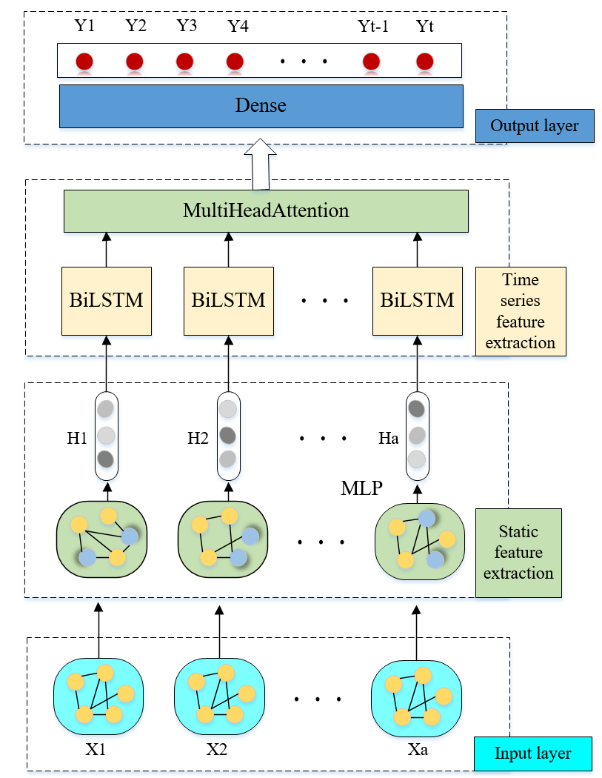
To address the challenge of traditional models in simultaneously capturing local fluctuations and global trends for air pollutant concentration prediction, this paper proposes a multimodal deep learning model named MLP-BiLSTM- MHAT. The model integrates static features via MLP, extracts temporal dependencies through bidirectional LSTM (BiLSTM), and employs a Multi-head Attention mechanism (MHAT) to fuse local and global features while enhancing interactions between static and temporal characteristics. An improved Adam algorithm dynamically optimizes learning rates to balance the influence of heterogenous features. Validated on multi-site air quality data from Beijing, experimental results de... More >

Graphical Abstract
Enhanced Air Pollution Prediction via Adam-Optimized Multi-Head Attention and Hybrid Deep Learning
Free Access | Research Article | 09 July 2025 | Cited: 1 , Scopus 1
Topic Mining and Sentiment Analysis for Consumer Reviews of Automotive Spare Parts on E-commerce Platforms
ICCK Transactions on Intelligent Systematics | Volume 2, Issue 3: 137-148, 2025 | DOI: 10.62762/TIS.2025.106283
Abstract
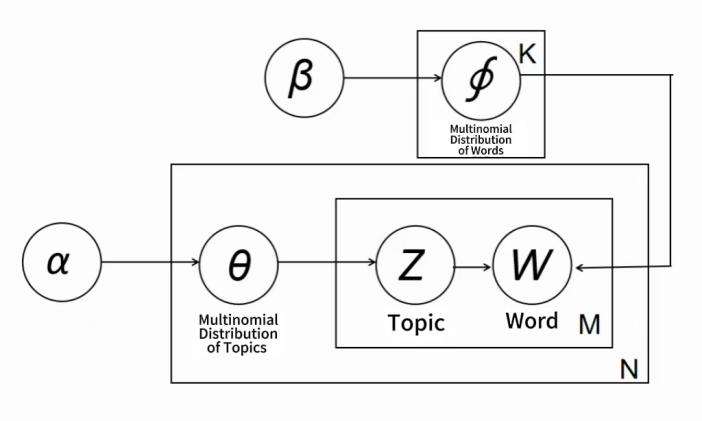
This paper explores factors influencing consumer satisfaction in automotive spare parts e-commerce through text mining and sentiment analysis of Taobao reviews. By applying TF-IDF (Term Frequency-Inverse Document Frequency), semantic network analysis, and LDA (Latent Dirichlet Allocation) topic modeling, four core themes are identified: Logistics, Quality, Price, and Customer Service. A domain-specific sentiment lexicon constructed via the SO-PMI method reveals that positive reviews predominantly emphasize product reliability and logistics efficiency, while negative feedback focuses on installation complexity and inconsistent specifications. Based on these findings, targeted recommendations... More >

Graphical Abstract
Topic Mining and Sentiment Analysis for Consumer Reviews of Automotive Spare Parts on E-commerce Platforms
Free Access | Research Article | 10 February 2025
High-Voltage Power Supply: Design Considerations and Optimization Techniques
ICCK Transactions on Sensing, Communication, and Control | Volume 2, Issue 1: 1-10, 2025 | DOI: 10.62762/TSCC.2024.741277
Abstract
The main goal of this study is to design and develop a half-bridge inverter architecture specifically for high-voltage power supply applications. An effective, small, and affordable system that converts direct current (DC) to alternating current(AC) can be built, thanks to the IR2151 chip’s dependable characteristics and performance. To get the desired output voltage, the transformer first increases the voltage and then the voltage is increased with a voltage-doubling rectifier (VDR) circuit. The study emphasizes how crucial it is to choose components carefully and simulate the circuit design and implementation process to guarantee dependable performance. The experimental results validate... More >

Graphical Abstract

High-Voltage Power Supply: Design Considerations and Optimization Techniques
Free Access | Research Article | 12 December 2024 | Cited: 3 , Scopus 2
Enhancing Fake News Detection with a Hybrid NLP-Machine Learning Framework
ICCK Transactions on Intelligent Systematics | Volume 1, Issue 3: 203-214, 2024 | DOI: 10.62762/TIS.2024.461943
Abstract
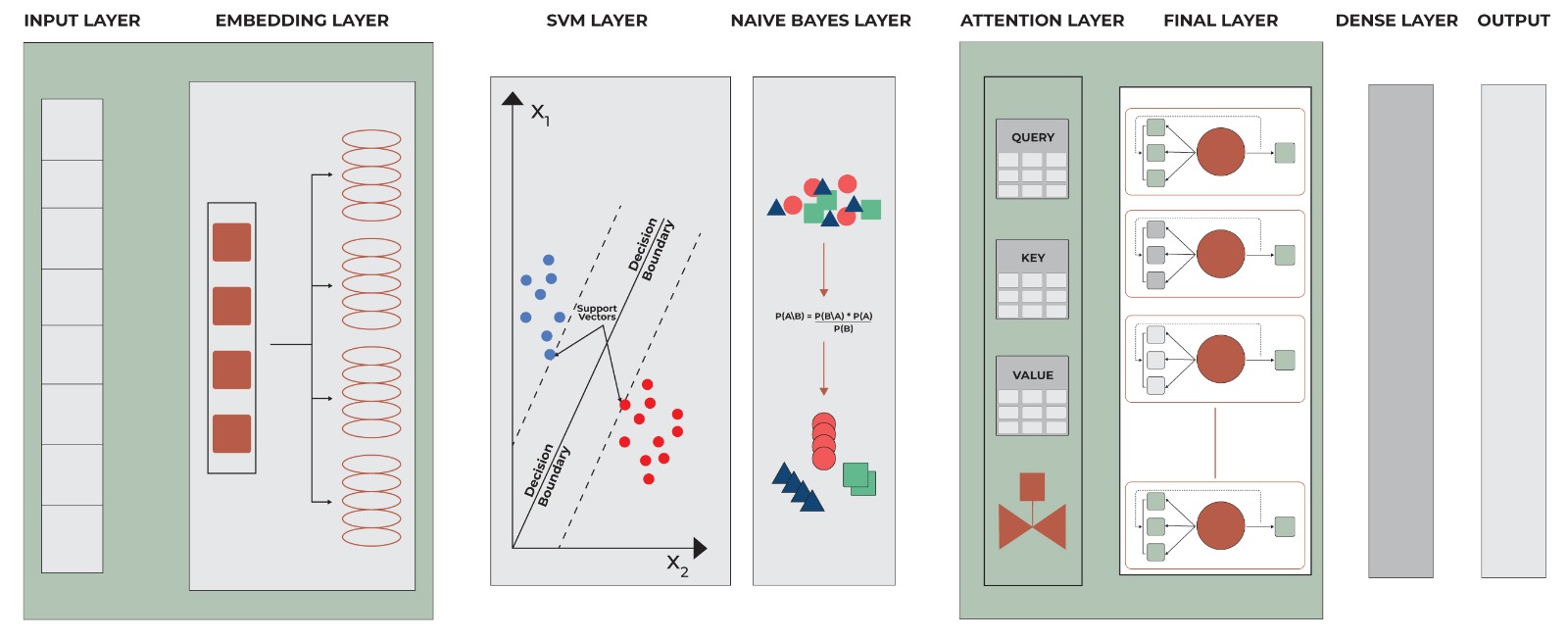
The increasing prevalence of fake news on social media has become a significant challenge in today’s digital landscape. This paper proposes a hybrid framework for fake news detection, combining Natural Language Processing (NLP) techniques and machine learning algorithms. Using Term Frequency-Inverse Document Frequency (TF-IDF) for feature extraction, and classifiers such as Logistic Regression (LR), Naïve Bayes (NB), and Support Vector Machines (SVM), the model integrates Maximum Likelihood Estimation (MLE) with Logistic Regression to achieve 95% accuracy and 92% precision on a Kaggle dataset. The results highlight the potential of combining statistical and NLP approaches to improve fake... More >

Graphical Abstract

Enhancing Fake News Detection with a Hybrid NLP-Machine Learning Framework
Free Access | Research Article | 20 October 2024 | Cited: 12 , Scopus 14
Comparison of Deep Learning Algorithms for Retail Sales Forecasting
ICCK Transactions on Intelligent Systematics | Volume 1, Issue 3: 112-126, 2024 | DOI: 10.62762/TIS.2024.300700
Abstract
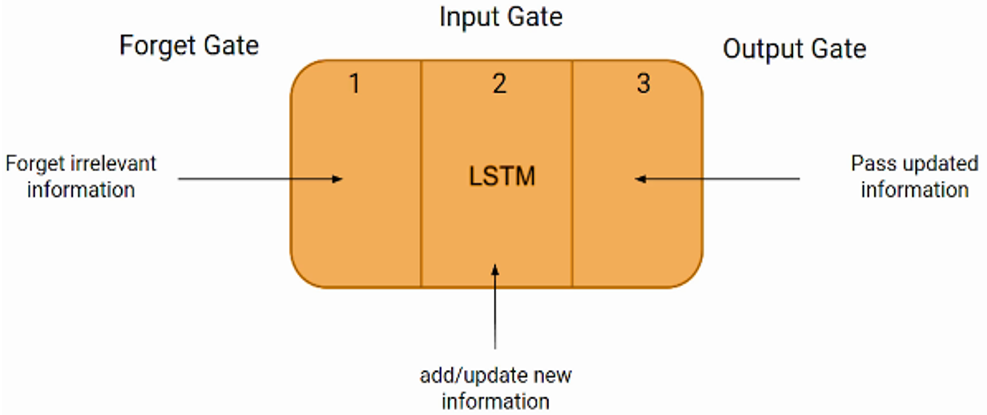
We investigate the use of deep learning models for retail sales predictions in this research. Having a proper sales forecasting can lead to optimization in inventory management, marketing strategies, and other core business operations. This research proposes to assess deep learning models such as Convolutional Neural Network (CNN), Long Short-Term Memory (LSTM), Multilayer Perceptron and hybrid CNN-LSTM model. The models are further improved by using some dense layers to embed daily sales data from the biggest pharmaceutical firm in the study. Models are then trained on 80% of the dataset and tested on remaining 20%. The accuracy of the proposed research is compared using evaluation metrics... More >

Graphical Abstract

Comparison of Deep Learning Algorithms for Retail Sales Forecasting