


Mahmoud A. Shawky is a highly educated professional with a strong background in electronics and electrical engineering. He received his B.Sc. (Hons.) degree in 2012 from the Air Defence College at Alexandria University, and then he received his M.Sc. (Eng.) in Authentication Mechanisms in Computer Network Protocols from Faculty of Engineering - Alexandria University. Moreover, Shawky received his PhD degree from the James Watt School of Engineering at the University of Glasgow in the UK. Shawky served as a Teaching and Research Assistant at the University of Glasgow. His research interests include cryptography and number theory, digital signatures, physical layer security, authentication in wireless communications, and cyber security. Shawky is a dedicated and knowledgeable professional with a passion for his field and a drive to continue expanding his knowledge and skills. He was appointed as an executive officer of the University of Glasgow IEEE Student Branch in 2023, where he is actively involved in organizing events and seminars, managing branch finances, and submitting annual branch reports to IEEE. He served as a technical committee member for the ITC-Egypt 2024 and ITC-Egypt 2025 conferences, the DITID-2024 conference in China, and the ICEENG-2024 conference in the MTC, offering expertise and insights in advancing the field. Shawky has conducted thorough reviews of many papers in highly esteemed journals. He authored $+50$ papers in reputable journals and conferences, predominantly featured in Q1 journals, demonstrating a strong track record of impactful contributions to the field.
Staff Profile: https://www.gla.ac.uk/schools/engineering/staff/mahmoudshawky/
Google Scholar: https://scholar.google.com.eg/citations?user=8fV9-CQAAAAJ&hl=en
LinkedIn Profile: https://www.linkedin.com/in/mahmoud-shawky-9a4829245/
Editorial Roles
No Editorial Roles
This user currently does not serve as an editor for any ICCK journals.
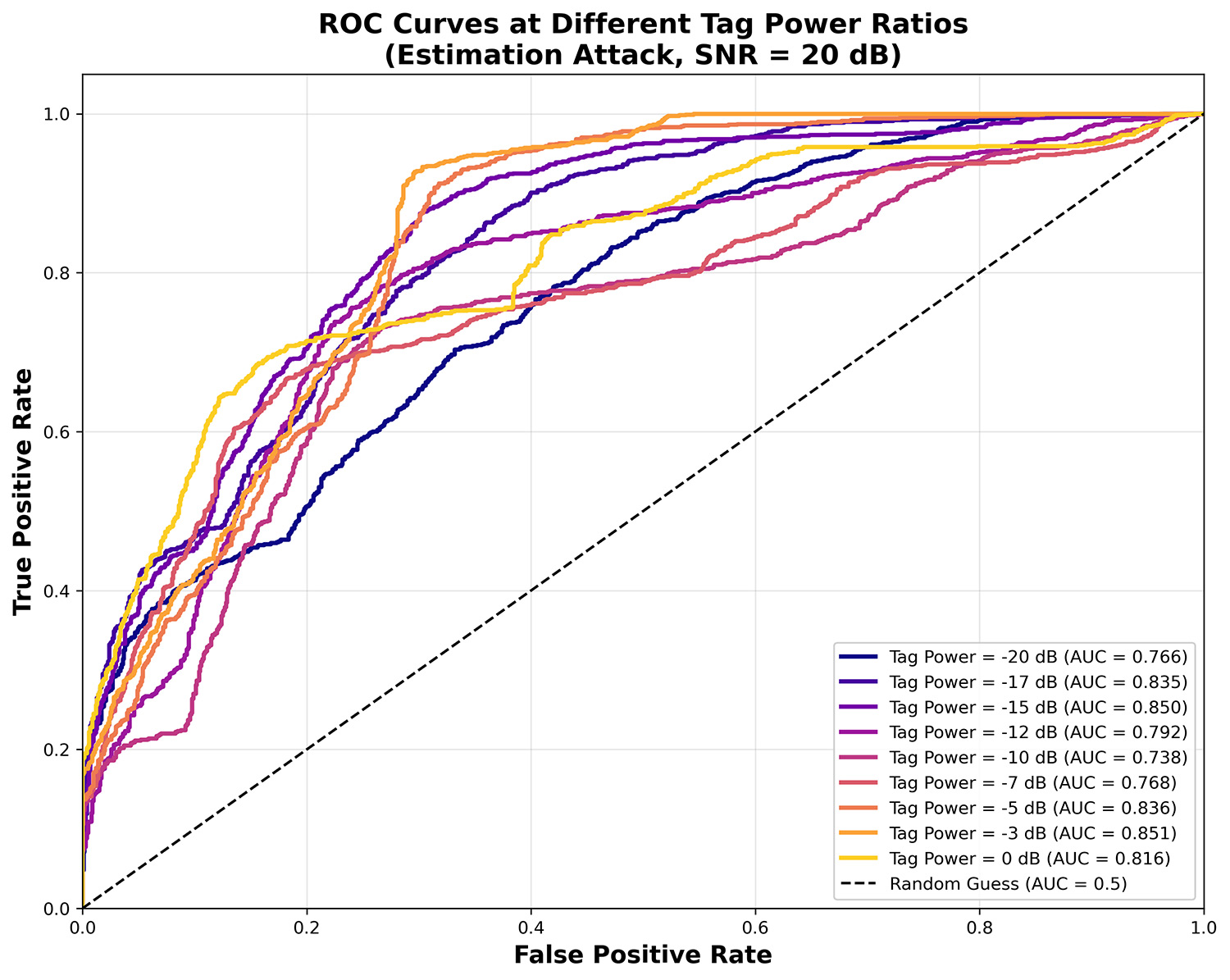
This paper investigates the performance of constellation warping techniques in QAM signals as a novel approach for physical layer authentication. We introduce a dynamic watermarking method that embeds subtle warping patterns into QAM constellations, enabling receivers to authenticate legitimate transmissions while detecting spoofing attacks. Our time-varying watermarking scheme employs secure key-based pattern generation to resist replay and estimation attacks. Extensive simulations analyze the system's resilience against various attack types (replay, blind spoofing, and estimation-based) across different signal-to-noise ratios. Results demonstrate that the proposed approach achieves high de... More >
Graphical Abstract
We use cookies to improve your experience. By continuing to browse, you agree to our use of essential cookies.
Learn more