
Academic Profile

Chunxi Yang received the B.S. degree in process control from the Qingdao University of Science and Technology, Qingdao, China, in 1999, the M.S. degree from the Wuhan Institute of Technology, Wuhan, China, in 2005, and the Ph.D. degree from the Huazhong University of Science and Technology, Wuhan, in 2009. He is currently a Professor with the Faculty of Chemical Engineering, Kunming University of Science and Technology. His current research interests include time-delay system and networked control system. His main research interests include networked control systems, distributed filtering, and fusion and process control.

ICCK Publications

Total Publications: 2
Free Access | Research Article | 30 November 2025
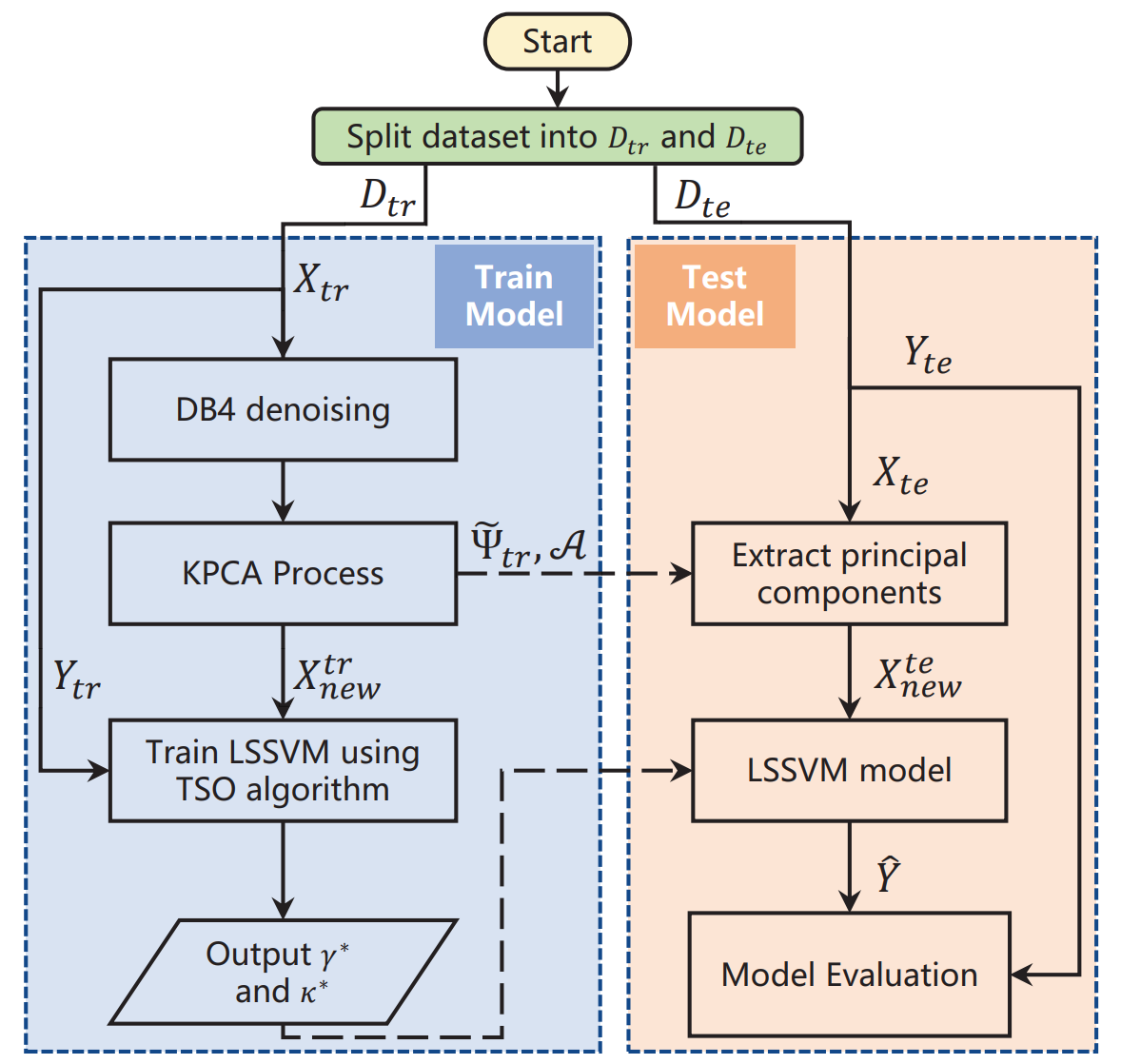
RUL Prediction of the Injection Lance in Copper Top-Blown Smelting Using KPCA and TSO-Optimized LSSVM
ICCK Transactions on Sensing, Communication, and Control | Volume 2, Issue 4: 238-249, 2025 | DOI: 10.62762/TSCC.2025.978286
Abstract
As the core component of the copper top-blown smelting, the service life of the injection lance critically affects production stability. To monitor the operating condition of the injection lance, a data-driven model is proposed to predict the Remaining Useful Life (RUL) or service life, namely, the DKT-LSSVM model. Firstly, to reduce noise interference, the Daubechies wavelet with four vanishing moments (DB4) denoising is used to process the raw data. Then, the Kernel Principal Component Analysis (KPCA) method is utilized to extract the principal components from the denoised data, which retains at least 90% information content (18 principal components are obtained). These principal component... More >

Graphical Abstract
RUL Prediction of the Injection Lance in Copper Top-Blown Smelting Using KPCA and TSO-Optimized LSSVM
Free Access | Research Article | 29 September 2024 | Cited: 5 , Scopus 5
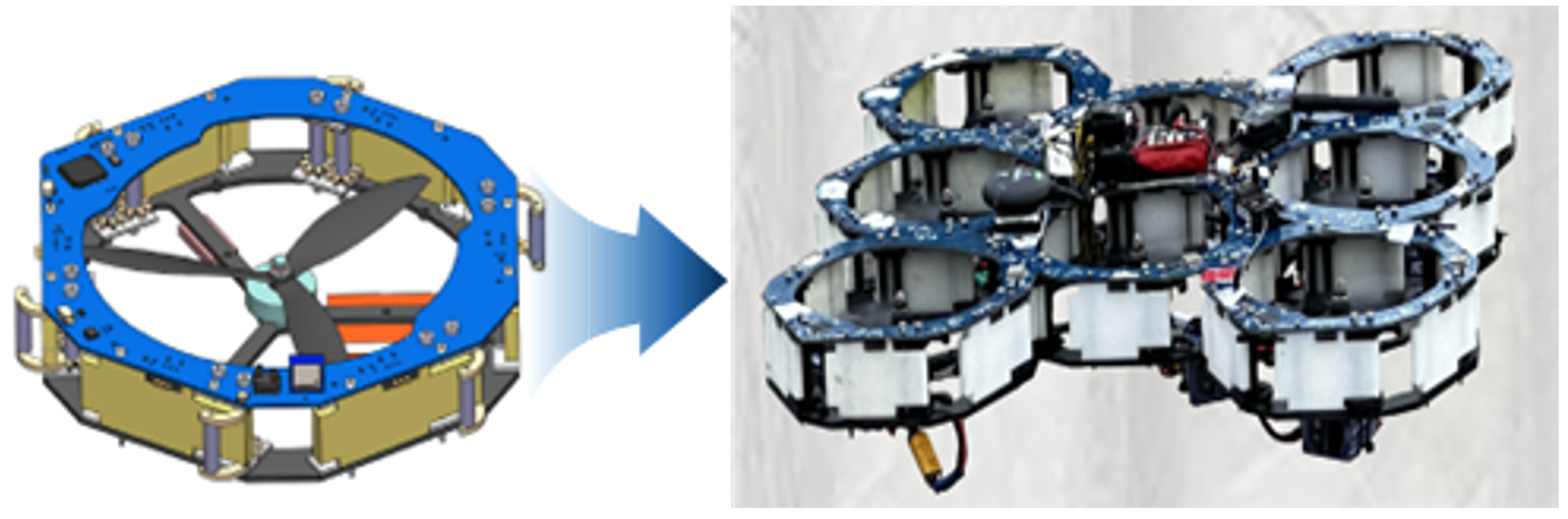
On-line Configuration Identification and Control of Modular Reconfigurable Flight Array
ICCK Transactions on Intelligent Systematics | Volume 1, Issue 2: 91-101, 2024 | DOI: 10.62762/TIS.2024.681878
Abstract
With the increasing complexity of the working environment and the diversification of mission requirements of UAVs, traditional UAVs have a fixed structure and single function. It is difficult to be applied in occasions with complex environments and changing load demands. The modular reconfigurable flight array (MRFA) is composed of no less than four isomorphic unit modules that are freely spliced together. By adding or removing flight unit modules and adjusting the arrangement of flight unit modules, the configuration of the MRFA can be changed, so that it can adapt to complex environments and then complete different flight missions. In the process of MRFA research and development, online co... More >

Graphical Abstract
On-line Configuration Identification and Control of Modular Reconfigurable Flight Array