



ICCK

Atif Ur Rahman

Department of Computer Science, IQRA National University, Swat Campus, Pakistan

Section 01

Academic Profile

No academic profile information available at the moment.

Section 02

Editorial Roles

This user currently does not serve as an editor for any ICCK journals.

Section 03

ICCK Publications

Free Access | Research Article | 25 March 2025 | Cited: Crossref logo  3 , Scopus 4
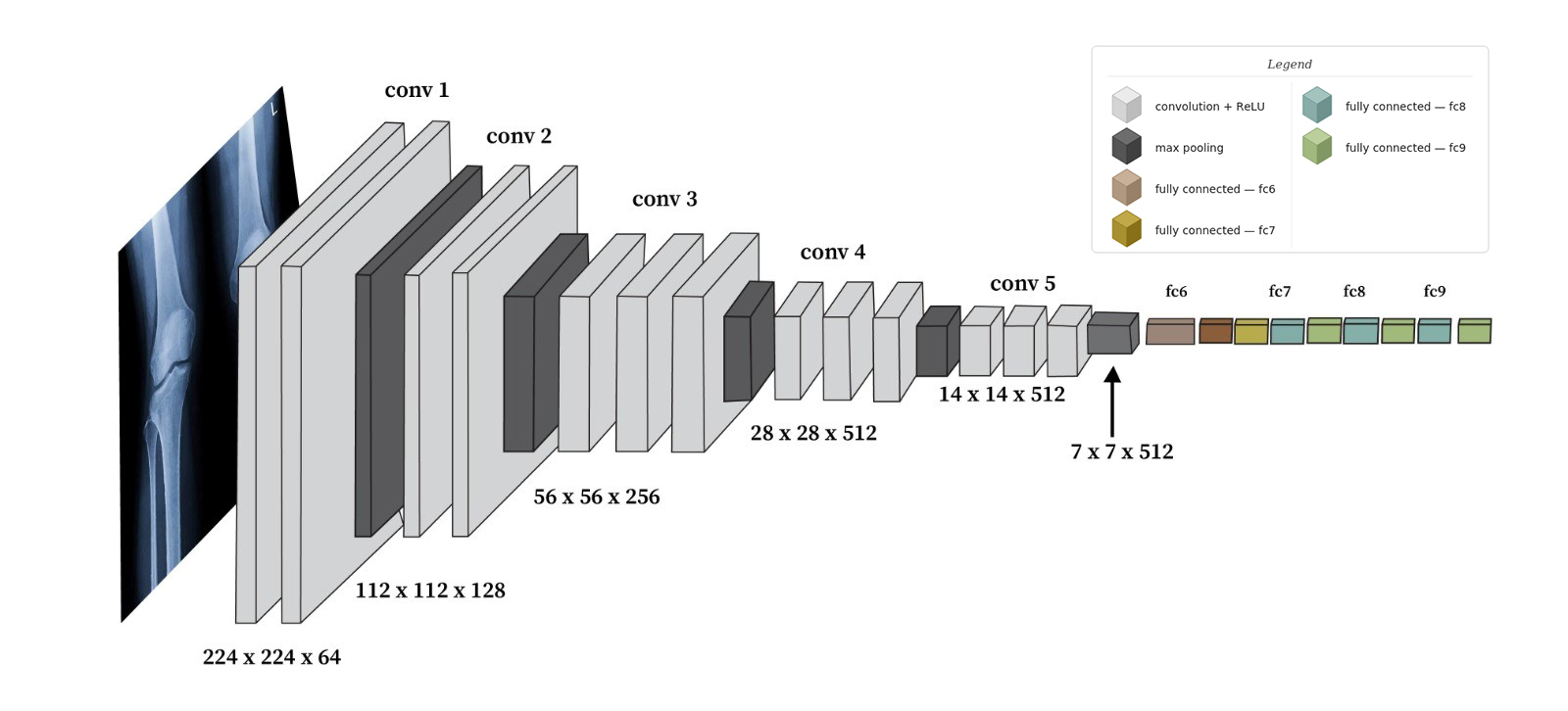
Comparative Analysis of Automated Knee Osteoarthritis Severity Classification from X-Ray Images Using CNNs and VGG16 Architecture
ICCK Transactions on Sensing, Communication, and Control | Volume 2, Issue 1: 36-47, 2025 | DOI: 10.62762/TSCC.2025.378503
Abstract
Osteoarthritis (OA) is a degenerative joint disease that primarily affects the knee, causing cartilage deterioration and discomfort. Early diagnosis is crucial for effective management, as it can slow disease progression and improve the quality of life. This study proposes a deep learning approach to automatically classify knee OA severity from X-ray images using Convolutional Neural Networks (CNNs) and the VGG16 model. The models were trained on a dataset of knee X-ray images, and performance was evaluated using accuracy, precision, recall, and F1-score. The proposed CNNs model achieved 99% training accuracy and 80% testing accuracy after 50 epochs, while the VGG16 model, after fine-tuning... More >

Graphical Abstract
Comparative Analysis of Automated Knee Osteoarthritis Severity Classification from X-Ray Images Using CNNs and VGG16 Architecture
Free Access | Research Article | 09 November 2024 | Cited: Scopus 3
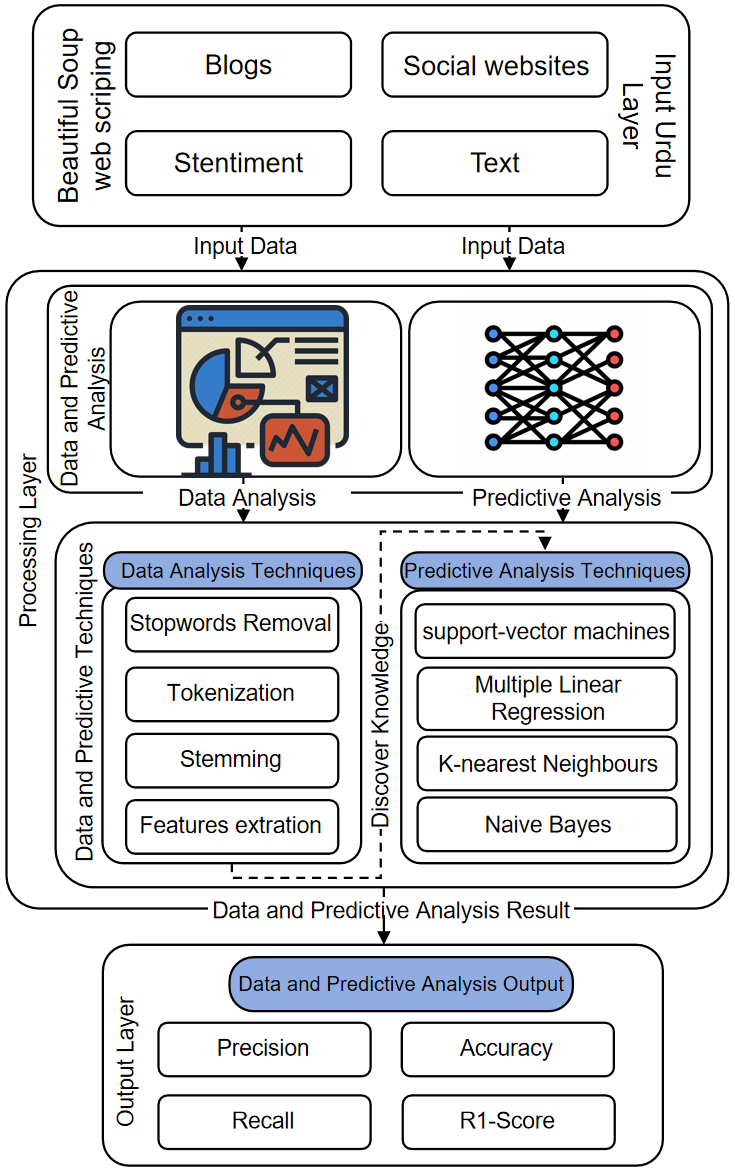
In-depth Urdu Sentiment Analysis Through Multilingual BERT and Supervised Learning Approaches
ICCK Transactions on Intelligent Systematics | Volume 1, Issue 3: 161-175, 2024 | DOI: 10.62762/TIS.2024.585616
Abstract
Sentiment analysis is a crucial component of intelligent information processing systems, enabling machines to understand and categorize human opinions expressed in text. While extensively studied for high-resource languages such as English and Chinese, it remains underexplored for low-resource languages like Urdu. This paper presents an intelligent multilingual sentiment analysis framework for Urdu text by integrating supervised machine learning techniques with a transformer-based model. We manually annotated and preprocessed a dataset collected from various Urdu blog websites, categorizing sentiments into positive, neutral, and negative classes. Four machine learning classifiers—Support V... More >

Graphical Abstract
In-depth Urdu Sentiment Analysis Through Multilingual BERT and Supervised Learning Approaches