Forecasting Earthquake-induced Ground Movement under Seismic Activity Using Response Surface











Article Information
Abstract
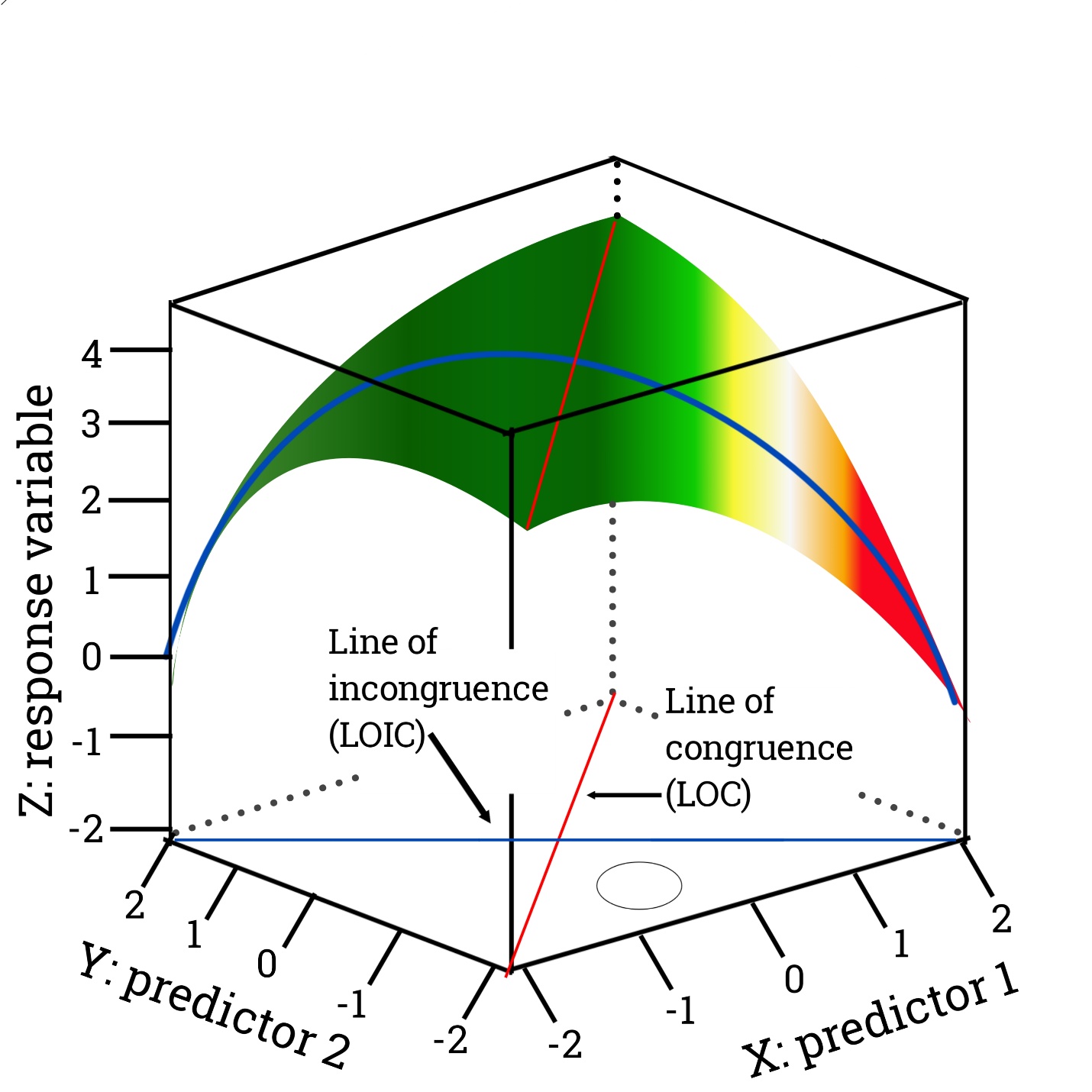
This study employs Response Surface Methodology (RSM) to model and optimize earthquake-induced ground movements in gravelly geohazard-prone environments. RSM efficiently evaluates the interactions of seismic parameters, including soil type, fault distance, and peak ground acceleration (PGA), reducing computational and experimental efforts. A dataset of 234 entries encompassing 11 seismic and soil stress variables was curated and analyzed, yielding a high-precision predictive model with an R² of 0.9997. The resulting closed-form equation facilitates accurate risk assessment, structural safety optimization, and seismic resilience planning. By identifying critical thresholds and nonlinear relationships, RSM supports cost-effective mitigation strategies, infrastructure design, and retrofitting in earthquake-prone regions.
Graphical Abstract
Keywords
Data Availability Statement
Funding
Conflicts of Interest
Ethical Approval and Consent to Participate
References
- Liu, J., Zhang, Y., Wei, J., Xiang, C., Wang, Q., Xu, P., & Fu, H. (2021). Hazard assessment of earthquake-induced landslides by using permanent displacement model considering near-fault pulse-like ground motions. Bulletin of Engineering Geology and the Environment, 80, 8503-8518.
[CrossRef] [Google Scholar] - Liu, J., Zhang, Y., Xu, P., Zeng, Y., Xiang, C., Fu, H., ... & He, Y. (2024). Predictive displacement models considering the probability of pulse-like ground motions for earthquake-induced landslides hazard assessment. Journal of Earthquake Engineering, 28(7), 1793-1817.
[CrossRef] [Google Scholar] - Dupuis, M., Schill, C., Lee, R., & Bradley, B. (2023). A deep-learning-based model for quality assessment of earthquake-induced ground-motion records. Earthquake spectra, 39(4), 2492-2517.
[CrossRef] [Google Scholar] - Otárola, K., Gentile, R., Sousa, L., & Galasso, C. (2023). Accounting for earthquake‐induced ground‐motion duration in building‐portfolio loss assessment. Earthquake Engineering & Structural Dynamics, 52(4), 887-909.
[CrossRef] [Google Scholar] - Armstrong, R., Kishida, T., & Park, D. (2021). Efficiency of ground motion intensity measures with earthquake-induced earth dam deformations. Earthquake Spectra, 37(1), 5-25.
[CrossRef] [Google Scholar] - Chen, G., Xia, M., Thuy, D. T., & Zhang, Y. (2021). A possible mechanism of earthquake-induced landslides focusing on pulse-like ground motions. Landslides, 18, 1641-1657.
[CrossRef] [Google Scholar] - Hacıefendioğlu, K., Başağa, H. B., & Demir, G. (2021). Automatic detection of earthquake-induced ground failure effects through Faster R-CNN deep learning-based object detection using satellite images. Natural Hazards, 105, 383-403.
[CrossRef] [Google Scholar] - Li, B., Gong, A., Zeng, T., Bao, W., Xu, C., & Huang, Z. (2021). A zoning earthquake casualty prediction model based on machine learning. Remote Sensing, 14(1), 30.
[CrossRef] [Google Scholar] - Gitis, V. G., & Derendyaev, A. B. (2019). Machine learning methods for seismic hazards forecast. Geosciences, 9(7), 308.
[CrossRef] [Google Scholar] - Liu, C., & Macedo, J. (2022). Machine Learning-Based Models for Estimating Seismically-Induced Slope Displacements in Subduction Earthquake Zones. Soil Dynamics and Earthquake Engineering, 160, 107323.
[CrossRef] [Google Scholar] - Noman, B. J., & Albuaoda, B. S. (2023). Seismic hazard assessment in machine foundation design: a review study. In E3S Web of Conferences (Vol. 427, p. 01029). EDP Sciences.
[CrossRef] [Google Scholar] - Harirchian, E., Hosseini, S. E. A., Novelli, V., Lahmer, T., & Rasulzade, S. (2024). Utilizing advanced machine learning approaches to assess the seismic fragility of non-engineered masonry structures. Results in engineering, 21, 101750.
[CrossRef] [Google Scholar] - Bouckovalas, G., Stamatopoulos, C. A., & Whitman, R. V. (1991). Analysis of seismic settlements and pore pressures in centrifuge tests. Journal of Geotechnical Engineering, 117(10), 1492-1508.
[CrossRef] [Google Scholar] - Xie, Y., Sichani, M. E., Padgett, J., & DesRoches, R. (2020). Machine learning applications in earthquake engineering: Literature review and case studies. In 17th World Conference on Earthquake Engineering.
[Google Scholar] - Matsagar, V. (2022). Earthquake Engineering and Technology. In Theory and Practice in Earthquake Engineering and Technology, Springer, 1–53.
[CrossRef] [Google Scholar] - Ahmad, M., Alsulami, B. T., Hakamy, A., Majdi, A., Alqurashi, M., Sabri Sabri, M. M., ... & Bin Ibrahim, M. R. (2023). The performance comparison of the decision tree models on the prediction of seismic gravelly soil liquefaction potential based on dynamic penetration test. Frontiers in Earth Science, 11, 1105610.
[Google Scholar] - Ofuyatan, O. M., Agbawhe, O. B., Omole, D. O., Igwegbe, C. A., & Ighalo, J. O. (2022). RSM and ANN modelling of the mechanical properties of self-compacting concrete with silica fume and plastic waste as partial constituent replacement. Cleaner Materials, 4, 100065.
[CrossRef] [Google Scholar] - Khuri, A. I., & Mukhopadhyay, S. (2010). Response surface methodology. Wiley interdisciplinary reviews: Computational statistics, 2(2), 128-149.
[CrossRef] [Google Scholar] - Adeniyi, A. G., Ighalo, J. O., & Odetoye, T. E. (2020). Response surface modelling and optimisation of biodiesel production from Avocado plant (Persea americana) oil. Indian Chemical Engineer, 62(3), 243-250.
[CrossRef] [Google Scholar] - De Oliveira, L. G., de Paiva, A. P., Balestrassi, P. P., Ferreira, J. R., da Costa, S. C., & da Silva Campos, P. H. (2019). Response surface methodology for advanced manufacturing technology optimization: theoretical fundamentals, practical guidelines, and survey literature review. The International Journal of Advanced Manufacturing Technology, 104, 1785-1837.
[CrossRef] [Google Scholar] - Barton, R. R. (2013). Response surface methodology. Encyclopedia of operations research and management science, 1307-1313.
[CrossRef] [Google Scholar] - Pirhadi, N., Tang, X., Yang, Q., & Kang, F. (2018). A new equation to evaluate liquefaction triggering using the response surface method and parametric sensitivity analysis. Sustainability, 11(1), 112.
[CrossRef] [Google Scholar] - Onyelowe, K. C., Moghal, A. A. B., Ahmad, F., Rehman, A. U., & Hanandeh, S. (2024). Numerical model of debris flow susceptibility using slope stability failure machine learning prediction with metaheuristic techniques trained with different algorithms. Scientific Reports, 14(1), 19562.
[CrossRef] [Google Scholar]
Cited By (2)
-
Viroon Kamchoom, Kennedy C. Onyelowe, Obinna Onyebuchi Barah, Ahmed M. Ebid, Paul Awoyera, Krishna Prakash Arunachalam. Developing a data-driven framework to predict the compressive strength of manufactured sand and fly ash concrete under varying curing ages.
Discover Sustainability, 2026 , 7 (1).
[CrossRef] -
Denise-Penelope N. Kontoni, Ambrosios-Antonios Savvides, Panagiotis Zafeiropoulos. Data-driven analysis of the tectonic history in Greece (1975–2025) and neural network-based modeling of seismic response spectra.
Mediterranean Geoscience Reviews, 2025 , 7 (4).
[CrossRef]
Cite This Article
TY  - JOUR
AU  - Onyelowe, Kennedy C.
AU  - Kontoni, Denise-Penelope N.
AU  - Onyelowe, Fortune K. C.
AU  - Kamchoom, Viroon
AU  - Hanandeh, Shadi
AU  - Ebid, Ahmed M.
AU  - Ulloa, Nestor
AU  - Moghal, Arif Ali Baig
AU  - Vishnupriyan, M.
PY  - 2025
DA  - 2025/03/24
TI  - Forecasting Earthquake-induced Ground Movement under Seismic Activity Using Response Surface
JO  - Sustainable Intelligent Infrastructure
T2  - Sustainable Intelligent Infrastructure
JF  - Sustainable Intelligent Infrastructure
VL  - 1
IS  - 1
SP  - 4
EP  - 18
DO  - 10.62762/SII.2025.846883
UR  - https://www.icck.org/article/abs/SII.2025.846883
KW  - earthquake
KW  - ground movement
KW  - geohazard
KW  - seismic activity
KW  - response surface methodology (RSM)
KW  - liquefaction potential
AB  - This study employs Response Surface Methodology (RSM) to model and optimize earthquake-induced ground movements in gravelly geohazard-prone environments. RSM efficiently evaluates the interactions of seismic parameters, including soil type, fault distance, and peak ground acceleration (PGA), reducing computational and experimental efforts. A dataset of 234 entries encompassing 11 seismic and soil stress variables was curated and analyzed, yielding a high-precision predictive model with an R² of 0.9997. The resulting closed-form equation facilitates accurate risk assessment, structural safety optimization, and seismic resilience planning. By identifying critical thresholds and nonlinear relationships, RSM supports cost-effective mitigation strategies, infrastructure design, and retrofitting in earthquake-prone regions.
SN  - 3067-8137
PB  - Institute of Central Computation and Knowledge
LA  - English
ER  -
@article{Onyelowe2025Forecastin,
  author = {Kennedy C. Onyelowe and Denise-Penelope N. Kontoni and Fortune K. C. Onyelowe and Viroon Kamchoom and Shadi Hanandeh and Ahmed M. Ebid and Nestor Ulloa and Arif Ali Baig Moghal and M. Vishnupriyan},
  title = {Forecasting Earthquake-induced Ground Movement under Seismic Activity Using Response Surface},
  journal = {Sustainable Intelligent Infrastructure},
  year = {2025},
  volume = {1},
  number = {1},
  pages = {4-18},
  doi = {10.62762/SII.2025.846883},
  url = {https://www.icck.org/article/abs/SII.2025.846883},
  abstract = {This study employs Response Surface Methodology (RSM) to model and optimize earthquake-induced ground movements in gravelly geohazard-prone environments. RSM efficiently evaluates the interactions of seismic parameters, including soil type, fault distance, and peak ground acceleration (PGA), reducing computational and experimental efforts. A dataset of 234 entries encompassing 11 seismic and soil stress variables was curated and analyzed, yielding a high-precision predictive model with an R² of 0.9997. The resulting closed-form equation facilitates accurate risk assessment, structural safety optimization, and seismic resilience planning. By identifying critical thresholds and nonlinear relationships, RSM supports cost-effective mitigation strategies, infrastructure design, and retrofitting in earthquake-prone regions.},
  keywords = {earthquake, ground movement, geohazard, seismic activity, response surface methodology (RSM), liquefaction potential},
  issn = {3067-8137},
  publisher = {Institute of Central Computation and Knowledge}
}
Publisher's Note
ICCK stays neutral with regard to jurisdictional claims in published maps and institutional affiliations.
Rights and Permissions
 Copyright © 2025 by the Author(s). Published by Institute of Central Computation and Knowledge. This article is an open access article distributed under the terms and conditions of the Creative Commons Attribution (CC BY) license (https://creativecommons.org/licenses/by/4.0/), which permits use, sharing, adaptation, distribution and reproduction in any medium or format, as long as you give appropriate credit to the original author(s) and the source, provide a link to the Creative Commons licence, and indicate if changes were made.


Portico