

Surface Defect Detection and Size Measurement of Bearings Based on Machine Vision



Article Information
Abstract
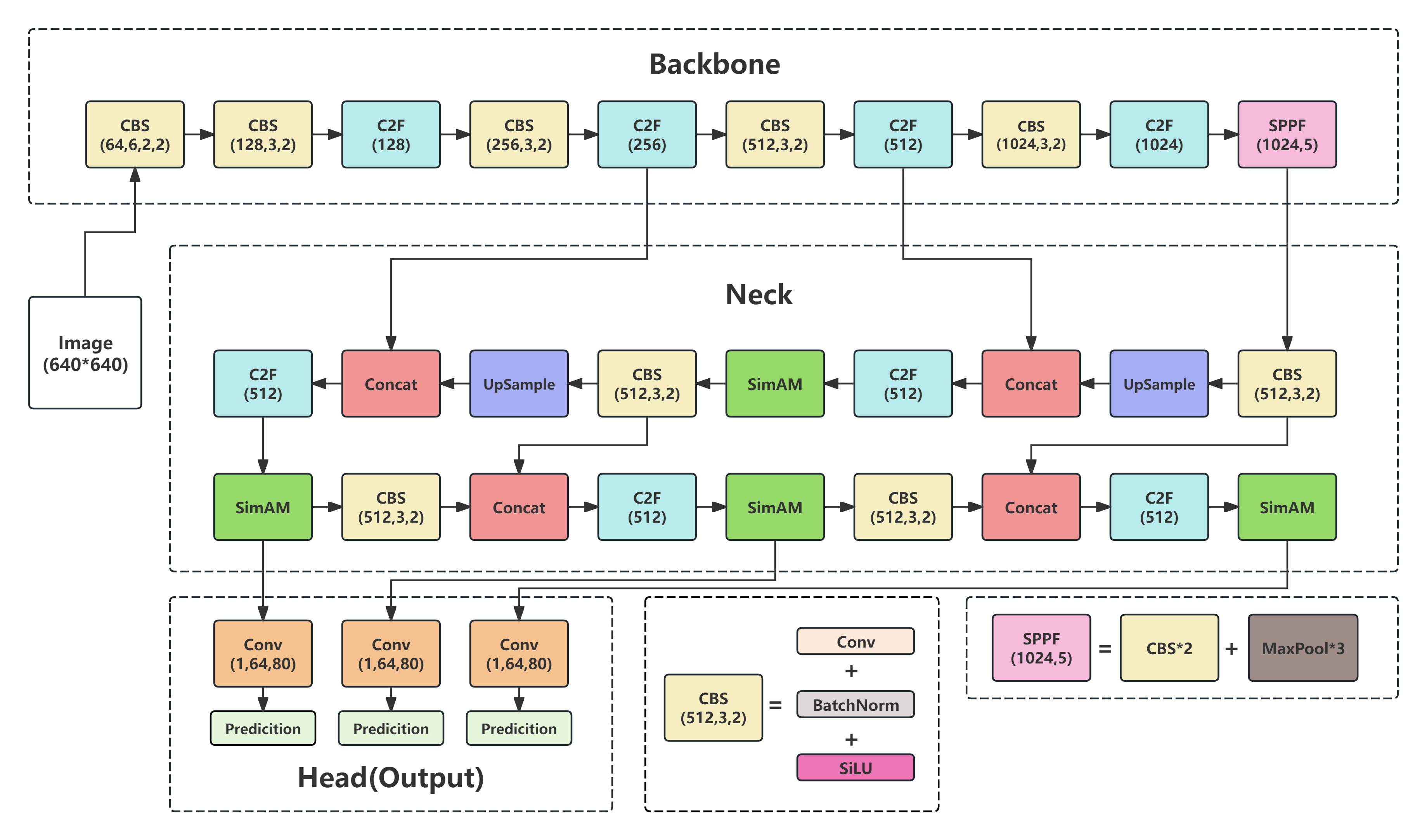
Aiming at the problems of low efficiency, strong subjectivity in traditional bearing surface defect detection and insufficient dimensional measurement accuracy, this paper proposes an integrated detection scheme SimAM-YOLO that combines the improved YOLOv5 algorithm with size measurement technology. Based on YOLOv5, the scheme replaces the original C3 module with the C2F network structure and embeds the SimAM attention mechanism to enhance the model's ability to extract defect features. Combined with OpenCV, it realizes the real-time measurement of the key dimension of bearing radius and constructs a visual system for bearing size measurement. Experimental results show that the improved model achieves an average detection precision of 86.03%, a recall rate of 78%, and an mAP-0.5 of 82.17% for bearing defects such as cracks, scratches, and grooves, which are 14.8%, 8.77%, and 9.2% higher than the original YOLOv5 respectively. The dimensional measurement error is controlled within ±0.000061mm, meeting the requirements of industrial detection. The system has high automation and strong real-time performance, can adapt to the detection needs of bearings of different specifications, and provides an efficient and reliable technical support for bearing quality control.
Graphical Abstract
Keywords
Data Availability Statement
Funding
Conflicts of Interest
AI Use Statement
Ethical Approval and Consent to Participate
References
- Harris, T. A., & Crecelius, W. J. (1986). Rolling bearing analysis.
[CrossRef] [Google Scholar] - Bhushan, B. (2013). Principles and applications of tribology. John wiley & sons.
[CrossRef] [Google Scholar] - Malamas, E. N., Petrakis, E. G., Zervakis, M., Petit, L., & Legat, J. D. (2003). A survey on industrial vision systems, applications and tools. Image and vision computing, 21(2), 171-188.
[CrossRef] [Google Scholar] - Lynagh, N., Rahnejat, H., Ebrahimi, M., & Aini, R. (2000). Bearing induced vibration in precision high speed routing spindles. International Journal of Machine Tools and Manufacture, 40(4), 561-577.
[CrossRef] [Google Scholar] - Kumar, S., Goyal, D., Dang, R. K., Dhami, S. S., & Pabla, B. S. (2018). Condition based maintenance of bearings and gears for fault detection–A review. Materials Today: Proceedings, 5(2), 6128-6137.
[CrossRef] [Google Scholar] - Bearings—Damage, R. (2017). Failures—Terms, Characteristics and Causes. International Organization for Standardization: Geneva, Switzerland.
[Google Scholar] - Raj, K. K., Kumar, S., & Kumar, R. R. (2025). Systematic review of bearing component failure: Strategies for diagnosis and prognosis in rotating machinery. Arabian Journal for Science and Engineering, 50(8), 5353-5375.
[CrossRef] [Google Scholar] - Patil, M. S., Mathew, J., Rajendrakumar, P. K., & Desai, S. (2010). A theoretical model to predict the effect of localized defect on vibrations associated with ball bearing. International Journal of Mechanical Sciences, 52(9), 1193-1201.
[CrossRef] [Google Scholar] - Tandon, N., & Choudhury, A. (1999). A review of vibration and acoustic measurement methods for the detection of defects in rolling element bearings. Tribology International, 32(8), 469-480.
[CrossRef] [Google Scholar] - Sun, J., Yan, C., & Wen, J. (2017). Intelligent bearing fault diagnosis method combining compressed data acquisition and deep learning. IEEE Transactions on Instrumentation and Measurement, 67(1), 185-195.
[CrossRef] [Google Scholar] - Vansia, D. A., & Patel, M. (2025, May). Defect Detection in Bearings Using Machine Learning and Computer Vision. In 2025 Global Conference in Emerging Technology (GINOTECH) (pp. 1-5). IEEE.
[CrossRef] [Google Scholar] - Sanjrani, A. N., Huang, H. Z., Shah, S. A., Hussain, F., Punhal, M., Narejo, A., & Zhang, B. (2025). High-speed train wheel set bearing analysis: Practical approach to maintenance between end of life and useful life extension assessment. Results in Engineering, 25, 103696.
[CrossRef] [Google Scholar] - Golnabi, H., & Asadpour, A. (2007). Design and application of industrial machine vision systems. Robotics and Computer-Integrated Manufacturing, 23(6), 630-637.
[CrossRef] [Google Scholar] - Dron, J.-P., Bolaers, F., & Rasolofondraibe, L. (2010). A comparative experimental study on the use of three denoising methods for bearing defect detection. Meccanica, 45(2), 265–277.
[CrossRef] [Google Scholar] - Liu, M., Zhang, W., Jiang, L., & Shen, J. (2024). Bearing-detr: A lightweight deep learning model for bearing defect detection based on rt-detr. Sensors, 24(13), 4262.
[CrossRef] [Google Scholar] - Chen, B., Zhao, Y., Zhang, Y., Jiang, Y., Zhang, H., & Pan, H. (2024). Analysis of hot spots and trends in rolling bearing fault diagnosis research based on scientific knowledge mapping. Engineering Research Express, 6(2), 025536.
[CrossRef] [Google Scholar] - Deng, S., Cai, W., Xu, Q., & Liang, B. (2010, October). Defect detection of bearing surfaces based on machine vision technique. In 2010 International Conference on Computer Application and System Modeling (ICCASM 2010) (Vol. 4, pp. V4-548). IEEE.
[CrossRef] [Google Scholar] - Le, H. F., Zhang, L. J., & Liu, Y. X. (2022). Surface defect detection of industrial parts based on YOLOv5. IEEE Access, 10, 130784-130794.
[CrossRef] [Google Scholar] - Zhang, W., Liu, M., Jiang, L., & Shen, J. (2025). Research on Complex Defect Detection Method on Steel Surface based on EBA-YOLO. IAENG International Journal of Computer Science, 52(7).
[Google Scholar] - Zhang, R., Liu, D., Bai, Q., Fu, L., Hu, J., & Song, J. (2024). Research on X-ray weld seam defect detection and size measurement method based on neural network self-optimization. Engineering Applications of Artificial Intelligence, 133, 108045.
[CrossRef] [Google Scholar] - Wen, S., Chen, Z., & Li, C. (2018). Vision-based surface inspection system for bearing rollers using convolutional neural networks. Applied Sciences, 8(12), 2565.
[CrossRef] [Google Scholar] - Ping, Z., Chuangchuang, Z., Gongbo, Z., Zhenzhi, H., Xiaodong, Y., Shihao, W., ... & Bing, H. (2023). Whole surface defect detection method for bearing rings based on machine vision. Measurement Science and Technology, 34(1), 015017.
[CrossRef] [Google Scholar] - Nabhan, A., Mousa, M., & Ghazaly, N. (2015). Bearing fault detection techniques-a review. Turkish Journal of Engineering, Sciences and Technology, 3(2), 1–18.
[Google Scholar] - Ding, P., Zhang, W., & Liu, M. (2024). A bearing surface defect detection method based on multi-attention mechanism Yolov8. Measurement Science and Technology, 35(8), 086003.
[CrossRef] [Google Scholar] - Song, K. K., Zhao, M., Liao, X., Tian, X., Zhu, Y., Xiao, J., & Peng, C. (2022, February). An improved bearing defect detection algorithm based on yolo. In 2022 International Symposium on Control Engineering and Robotics (ISCER) (pp. 184-187). IEEE.
[CrossRef] [Google Scholar] - Wang, Y., Xia, H., Yuan, X., Li, L., & Sun, B. (2018). Distributed defect recognition on steel surfaces using an improved random forest algorithm with optimal multi-feature-set fusion. Multimedia Tools and Applications, 77(13), 16741-16770.
[CrossRef] [Google Scholar] - Wang, H., Yang, J., & Hu, Z. (2011). Current status and prospect of roller bearing surface defect detection. Procedia Engineering, 15, 4331–4336.
[CrossRef] [Google Scholar] - Han, L., Tian, Y., & Qi, Q. (2020). Research on edge detection algorithm based on improved sobel operator. In MATEC Web of Conferences (Vol. 309, p. 03001). EDP Sciences.
[CrossRef] [Google Scholar] - Yuan, L., & Xu, X. (2015). Adaptive image edge detection algorithm based on canny operator. In 2015 4th International Conference on Advanced Information Technology and Sensor Application (AITS) (pp. 1–4). IEEE.
[CrossRef] [Google Scholar] - Jiang, P., Ergu, D., Liu, F., Cai, Y., & Ma, B. (2022). A Review of Yolo algorithm developments. Procedia Computer Science, 199, 1066–1073.
[CrossRef] [Google Scholar] - Girshick, R. (2015, December). Fast R-CNN. In Proceedings of the 2015 IEEE International Conference on Computer Vision (ICCV) (pp. 1440-1448).
[CrossRef] [Google Scholar] - Horvat, M., Jelečević, L., & Gledec, G. (2022). A comparative study of YOLOv5 models performance for image localization and classification. In Central European Conference on Information and Intelligent Systems (pp. 349-356). Faculty of Organization and Informatics Varazdin.
[Google Scholar] - Yang, L., Zhang, R.-Y., Li, L., & Xie, X. (2021). Simam: A simple, parameter-free attention module for convolutional neural networks. In International Conference on Machine Learning (pp. 11863–11874). PMLR.
[Google Scholar] - Hu, J., Shen, L., Albanie, S., Sun, G., & Wu, E. (2019). Squeeze-and-Excitation Networks. IEEE Transactions on Pattern Analysis and Machine Intelligence, 42(8), 2011-2023.
[CrossRef] [Google Scholar] - Wang, X., Girshick, R., Gupta, A., & He, K. (2018, June). Non-local Neural Networks. In 2018 IEEE/CVF Conference on Computer Vision and Pattern Recognition (pp. 7794-7803). IEEE.
[CrossRef] [Google Scholar] - Woo, S., Park, J., Lee, J. Y., & Kweon, I. S. (2018, September). CBAM: Convolutional Block Attention Module. In European Conference on Computer Vision (pp. 3-19). Cham: Springer International Publishing.
[CrossRef] [Google Scholar] - Wang, Q., Wu, B., Zhu, P., Li, P., Zuo, W., & Hu, Q. (2020, June). ECA-Net: Efficient Channel Attention for Deep Convolutional Neural Networks. In 2020 IEEE/CVF Conference on Computer Vision and Pattern Recognition (CVPR) (pp. 11531-11539). IEEE Computer Society.
[CrossRef] [Google Scholar] - Zhang, Q. L., & Yang, Y. B. (2021, June). Sa-net: Shuffle attention for deep convolutional neural networks. In ICASSP 2021-2021 IEEE international conference on acoustics, speech and signal processing (ICASSP) (pp. 2235-2239). IEEE.
[CrossRef] [Google Scholar] - Dai, Z., Liu, H., Le, Q. V., & Tan, M. (2021). Coatnet: Marrying convolution and attention for all data sizes. Advances in Neural Information Processing Systems, 34, 3965–3977.
[Google Scholar] - Liu, Z., Mao, H., Wu, C. Y., Feichtenhofer, C., Darrell, T., & Xie, S. (2022, June). A ConvNet for the 2020s. In 2022 IEEE/CVF Conference on Computer Vision and Pattern Recognition (CVPR) (pp. 11966-11976). IEEE.
[CrossRef] [Google Scholar]
Cite This Article
TY  - JOUR
AU  - Lin, Liwei
PY  - 2026
DA  - 2026/02/09
TI  - Surface Defect Detection and Size Measurement of Bearings Based on Machine Vision
JO  - ICCK Transactions on Intelligent Cyber-Physical Systems
T2  - ICCK Transactions on Intelligent Cyber-Physical Systems
JF  - ICCK Transactions on Intelligent Cyber-Physical Systems
VL  - 1
IS  - 1
SP  - 10
EP  - 25
DO  - 10.62762/TICPS.2025.819879
UR  - https://www.icck.org/article/abs/TICPS.2025.819879
KW  - bearing detection
KW  - YOLOv5
KW  - C2F network
KW  - SimAM attention mechanism
KW  - machine vision
KW  - size measurement
AB  - Aiming at the problems of low efficiency, strong subjectivity in traditional bearing surface defect detection and insufficient dimensional measurement accuracy, this paper proposes an integrated detection scheme SimAM-YOLO that combines the improved YOLOv5 algorithm with size measurement technology. Based on YOLOv5, the scheme replaces the original C3 module with the C2F network structure and embeds the SimAM attention mechanism to enhance the model's ability to extract defect features. Combined with OpenCV, it realizes the real-time measurement of the key dimension of bearing radius and constructs a visual system for bearing size measurement. Experimental results show that the improved model achieves an average detection precision of 86.03%, a recall rate of 78%, and an mAP-0.5 of 82.17% for bearing defects such as cracks, scratches, and grooves, which are 14.8%, 8.77%, and 9.2% higher than the original YOLOv5 respectively. The dimensional measurement error is controlled within ±0.000061mm, meeting the requirements of industrial detection. The system has high automation and strong real-time performance, can adapt to the detection needs of bearings of different specifications, and provides an efficient and reliable technical support for bearing quality control.
SN  - 3071-2947
PB  - Institute of Central Computation and Knowledge
LA  - English
ER  -
@article{Lin2026Surface,
  author = {Liwei Lin},
  title = {Surface Defect Detection and Size Measurement of Bearings Based on Machine Vision},
  journal = {ICCK Transactions on Intelligent Cyber-Physical Systems},
  year = {2026},
  volume = {1},
  number = {1},
  pages = {10-25},
  doi = {10.62762/TICPS.2025.819879},
  url = {https://www.icck.org/article/abs/TICPS.2025.819879},
  abstract = {Aiming at the problems of low efficiency, strong subjectivity in traditional bearing surface defect detection and insufficient dimensional measurement accuracy, this paper proposes an integrated detection scheme SimAM-YOLO that combines the improved YOLOv5 algorithm with size measurement technology. Based on YOLOv5, the scheme replaces the original C3 module with the C2F network structure and embeds the SimAM attention mechanism to enhance the model's ability to extract defect features. Combined with OpenCV, it realizes the real-time measurement of the key dimension of bearing radius and constructs a visual system for bearing size measurement. Experimental results show that the improved model achieves an average detection precision of 86.03\%, a recall rate of 78\%, and an mAP-0.5 of 82.17\% for bearing defects such as cracks, scratches, and grooves, which are 14.8\%, 8.77\%, and 9.2\% higher than the original YOLOv5 respectively. The dimensional measurement error is controlled within ±0.000061mm, meeting the requirements of industrial detection. The system has high automation and strong real-time performance, can adapt to the detection needs of bearings of different specifications, and provides an efficient and reliable technical support for bearing quality control.},
  keywords = {bearing detection, YOLOv5, C2F network, SimAM attention mechanism, machine vision, size measurement},
  issn = {3071-2947},
  publisher = {Institute of Central Computation and Knowledge}
}
Article Metrics
Publisher's Note
ICCK stays neutral with regard to jurisdictional claims in published maps and institutional affiliations.
Rights and Permissions


Portico
