

Optimized Sentiment Analysis with PSO-BERT for Generation Z’s Emotional Response to Popular Songs




Article Information
Abstract
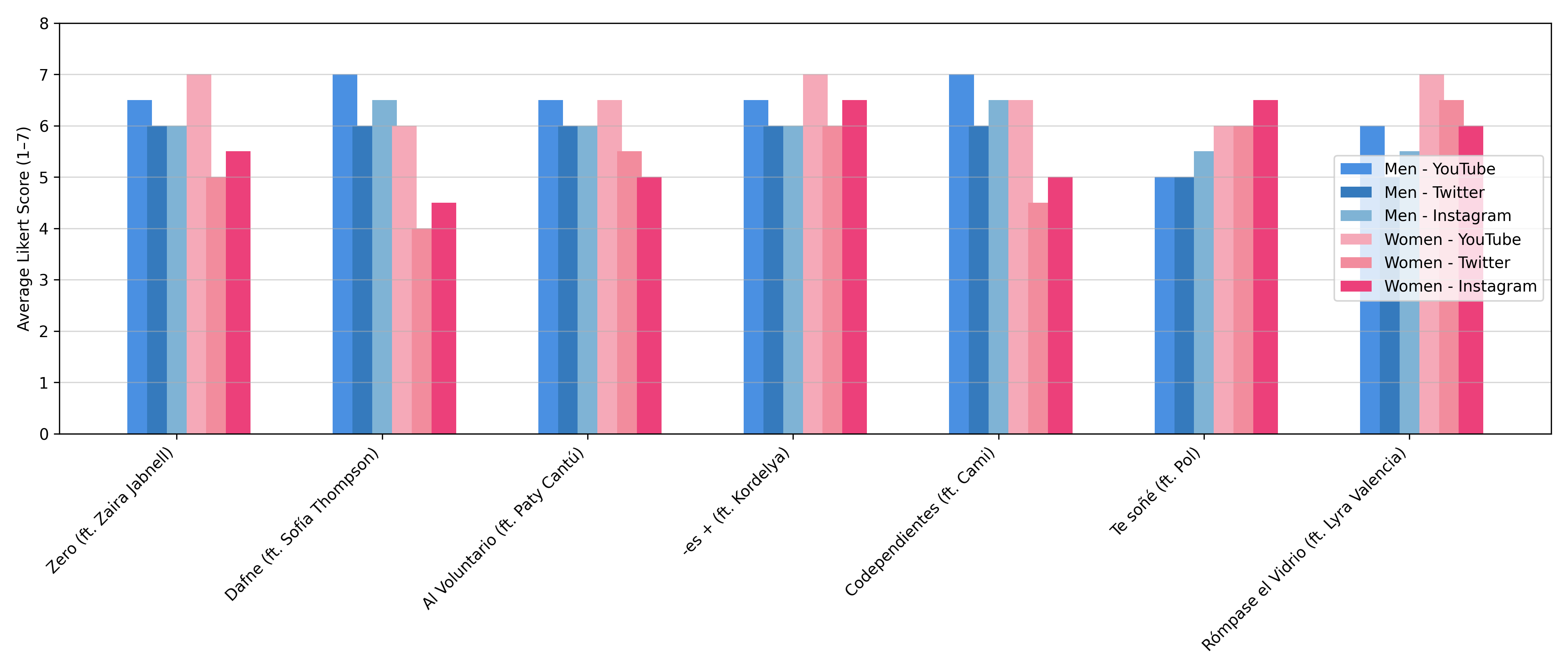
This study investigates the sentiment polarity (positive, negative, neutral) and specific emotions (joy, sadness, anger, surprise, trust, anticipation, disgust, and fear) expressed by Generation Z in digital platform comments regarding seven female duets with famous male singer. A dataset of 500 digital comments (250 from YouTube, 125 from Twitter, 125 from Instagram) was collected. The sample was then refined to include comments from 100 individuals (50 men, 50 women) affiliated with a private university in Mexico City, ensuring gender balance. Sentiment polarity was classified using a Bidirectional Encoder Representations from Transformers (BERT) model, with its hyperparameters (learning rate, epochs, batch size) optimized via a Particle Swarm Optimization (PSO) metaheuristic, leading to a 4% accuracy improvement over default settings. Emotion detection was performed concurrently using the NRC Emotion Lexicon, a lexical database mapping terms to eight emotional categories. Results indicate a clear correlation between musical tone and expressed sentiment: melancholic duets elicited predominantly negative sentiments, whereas more energetic collaborations generated a higher proportion of positive comments and the emotion 'joy.' Furthermore, significant differences using $\chi^2$ ($p < 0.01$) were observed in the distribution of 'anger' and 'sadness' between intimate and collaborative duets. These findings offer valuable insights into how Generation Z, segmented by gender, emotionally interprets this singer's musical productions. This research has significant implications for developing targeted music marketing strategies and content production for digitally native audiences.
Graphical Abstract
Keywords
Data Availability Statement
Funding
Conflicts of Interest
Ethical Approval and Consent to Participate
References
- Makhdom, N., Verma, H. N., & Yadav, A. K. (2024). A review on sentiment and emotion analysis for computational literary studies. International Journal of Scientific Research in Computer Science Engineering and Information Technology.
[CrossRef] [Google Scholar] - Shen, X. (2024). Sentiment analysis of modern Chinese literature based on deep learning. JES.
[CrossRef] [Google Scholar] - Ghatiya, L., Dhaketa, M., Saraf, K., Neema, J., & Vatsa, M. (2024). MoodSphere an approach to analyze sentiments using deep learning. International Research Journal of Modernization in Engineering Technology and Science.
[CrossRef] [Google Scholar] - Horvat, M., Gledec, G., & Leontić, F. (2024). Hybrid natural language processing model for sentiment analysis during natural crisis. Electronics, 13(10), 1991.
[CrossRef] [Google Scholar] - Ravichandiran, S. (2021). Getting started with Google BERT: Build and train state-of-the-art natural language processing models using BERT. Packt Publishing Ltd.
[Google Scholar] - Pang, B., & Lee, L. (2008). Opinion mining and sentiment analysis. Foundations and Trends® in Information Retrieval, 2(1-2), 1-135.
[CrossRef] [Google Scholar] - Maas, A., Daly, R. E., Pham, P. T., Huang, D., Ng, A. Y., & Potts, C. (2011). Learning word vectors for sentiment analysis. In Proceedings of the 49th Annual Meeting of the Association for Computational Linguistics: Human Language Technologies (pp. 142-150).
[Google Scholar] - Socher, R., Perelygin, A., Wu, J., Chuang, J., Manning, C. D., Ng, A. Y., & Potts, C. (2013). Recursive deep models for semantic compositionality over a sentiment treebank. In Proceedings of the 2013 Conference on Empirical Methods in Natural Language Processing (pp. 1631-1642).
[Google Scholar] - Kim, Y. (2014). Convolutional neural networks for sentence classification. arXiv preprint arXiv:1408.5882.
[Google Scholar] - Samih, A., Ghadi, A., & Fennan, A. (2023). Enhanced sentiment analysis based on improved word embeddings and XGboost. International Journal of Electrical and Computer Engineering (IJECE), 13(2), 1827-1836.
[CrossRef] [Google Scholar] - Ferdous, S. M., Shah Newaz, S. H., Shabbir Mugdha, S. B., & Uddin, M. (2024). Sentiment analysis in the transformative era of machine learning: A comprehensive review. Statistics Optimization & Information Computing.
[CrossRef] [Google Scholar] - Wu, Y., Jin, Z., Shi, C., Liang, P., & Zhan, T. (2024). Research on the application of deep learning-based BERT model in sentiment analysis. Applied and Computational Engineering.
[CrossRef] [Google Scholar] - Chaisen, T., Charoenkwan, P., Kim, C. G., & Thiengburanathum, P. (2024). A zero-shot interpretable framework for sentiment polarity extraction. IEEE Access.
[CrossRef] [Google Scholar] - Moudhich, I., & Fennan, A. (2024). Graph embedding approach to analyze sentiments on cryptocurrency. International Journal of Electrical and Computer Engineering (IJECE), 14(1), 690-697.
[CrossRef] [Google Scholar] - Dhole, Y. B., Sharma, D. K., Patil, S. B., & Chavan, D. (2024). Unveiling market sentiments: Finbert-powered analysis of stock news headlines. Interantional Journal of Scientific Research in Engineering and Management.
[CrossRef] [Google Scholar] - Ilmawan, L. B., Muladi, M., & Prasetya, D. D. (2024). Negation handling for sentiment analysis task: Approaches and performance analysis. International Journal of Electrical and Computer Engineering (IJECE), 14(3), 3382-3393.
[CrossRef] [Google Scholar] - Liu, B. (2010). Sentiment analysis and subjectivity. Synthesis Lectures on Human Language Technologies.
[CrossRef] [Google Scholar] - Feldman, R. (2013). Techniques and applications for sentiment analysis. Communications of the ACM, 56(4), 82-89.
[Google Scholar] - Cambria, E., & White, B. (2014). Jumping NLP curves: A review of natural language processing research. IEEE Computational Intelligence Magazine, 9(2), 48-57.
[Google Scholar] - Zeng, Y., Li, Z., Chen, Z., & Ma, H. (2023). Aspect-level sentiment analysis based on semantic heterogeneous graph convolutional network. Frontiers of Computer Science, 17(6), 176340.
[Google Scholar] - Chu, M., Chen, Y., Yang, L., & Wang, J. (2022). Language interpretation in travel guidance platform: Text mining and sentiment analysis of TripAdvisor reviews. Frontiers in Psychology.
[CrossRef] [Google Scholar] - Gajbhiye, P., & Agrawal, A. J. (2022). Pragmatic approach for Twitter analysis and perform prediction. International Journal of Health Sciences.
[CrossRef] [Google Scholar] - Joseph, T. (2024). Natural language processing (NLP) for sentiment analysis in social media. International Journal of Computing and Engineering.
[CrossRef] [Google Scholar] - Yacoub, A. D., Slim, S., & Aboutabl, A. (2024). A survey of sentiment analysis and sarcasm detection: Challenges, techniques, and trends. International Journal of Electrical and Computer Engineering Systems, 15(1), 69-78.
[Google Scholar] - Bazai, S. U., Marjan, S., Aslam, S., Amphawan, A., & Neo, T. K. (2023). A comprehensive survey on sentiment analysis techniques. International Journal of Technology, 14(6).
[CrossRef] [Google Scholar] - Low, H. Q., Keikhosrokiani, P., & Asl, M. P. (2024). Decoding violence against women: Analysing harassment in Middle Eastern literature with machine learning and sentiment analysis. Humanities and Social Sciences Communications.
[CrossRef] [Google Scholar] - Khalid, E. T., Khalefa, M. S., Yassen, W., & Yassin, A. A. (2023). Omicron virus emotions understanding system based on deep learning architecture. Journal of Ambient Intelligence and Humanized Computing.
[CrossRef] [Google Scholar] - Mermer, G., & Özsezer, G. (2022). Discussions about COVID-19 vaccination on Twitter in Turkey: Sentiment analysis. Disaster Medicine and Public Health Preparedness.
[CrossRef] [Google Scholar] - He, W., Yuan, Q., & Li, N. (2023). Research on the characteristics of internet public opinion and public sentiment after the Sichuan earthquake based on the perspective of Weibo. Applied Sciences, 13(3), 1335.
[CrossRef] [Google Scholar] - Chen, M., Ubul, K., Xu, X., Aysa, A., & Muhammat, M. (2022). Connecting text classification with image classification: A new preprocessing method for implicit sentiment text classification. Sensors, 22(5), 1899.
[CrossRef] [Google Scholar] - Jin, C., Liu, R., Tang, B., & Cai, B. (2023). Predict FTSE100 stock movements using business news sentiment and machine learning. Theoretical and Natural Science.
[CrossRef] [Google Scholar] - Sultan, S., Javaid, Q., Rehman, E., Alahmadi, A. A., Ullah, N., & Khan, W. (2022). MELex: The construction of Malay-English sentiment lexicon. Computers Materials & Continua.
[CrossRef] [Google Scholar] - Alshahrani, H. J., Hassan, A. Q. A., Almalki, N. S., Alnfiai, M. M., Salama, A. S., & Hamza, M. A. (2023). Applied linguistics with red-tailed hawk optimizer-based ensemble learning strategy in natural language processing. IEEE Access.
[CrossRef] [Google Scholar] - Mohammad, S. M., & Turney, P. D. (2013). NRC Emotion Lexicon. National Research Council Canada. https://saifmohammad.com/WebPages/NRC-Emotion-Lexicon.htm
[Google Scholar] - Hutto, C., & Gilbert, E. (2014). Vader: A parsimonious rule-based model for sentiment analysis of social media text. In Proceedings of the International AAAI Conference on Web and Social Media (Vol. 8, No. 1, pp. 216-225).
[Google Scholar] - Baccianella, S., Esuli, A., & Sebastiani, F. (2010). Sentiwordnet 3.0: An enhanced lexical resource for sentiment analysis and opinion mining. In Proceedings of the Seventh International Conference on Language Resources and Evaluation (pp. 2200-2204).
[Google Scholar] - Eberhart, R., & Kennedy, J. (1995). Particle swarm optimization. In Proceedings of the IEEE International Conference on Neural Networks (Vol. 4, pp. 1942-1948).
[Google Scholar]
Cite This Article
TY  - JOUR
AU  - Contreras-Masse, Roberto
AU  - Ochoa-Zezzatti, Alberto
AU  - Castellanos, Humberto Garcia
AU  - Contreras-Moheno, Roberto
PY  - 2025
DA  - 2025/11/18
TI  - Optimized Sentiment Analysis with PSO-BERT for Generation Z’s Emotional Response to Popular Songs
JO  - ICCK Transactions on Swarm and Evolutionary Learning
T2  - ICCK Transactions on Swarm and Evolutionary Learning
JF  - ICCK Transactions on Swarm and Evolutionary Learning
VL  - 1
IS  - 2
SP  - 32
EP  - 49
DO  - 10.62762/TSEL.2025.125300
UR  - https://www.icck.org/article/abs/TSEL.2025.125300
KW  - generation Z
KW  - sentiment analysis
KW  - emotion analysis
KW  - BERT (Bidirectional Encoder Representations from Transformers)
KW  - PSO Metaheuristics (Particle Swarm Optimization)
KW  - NRC Emotion Lexicon
AB  - This study investigates the sentiment polarity (positive, negative, neutral) and specific emotions (joy, sadness, anger, surprise, trust, anticipation, disgust, and fear) expressed by Generation Z in digital platform comments regarding seven female duets with famous male singer. A dataset of 500 digital comments (250 from YouTube, 125 from Twitter, 125 from Instagram) was collected. The sample was then refined to include comments from 100 individuals (50 men, 50 women) affiliated with a private university in Mexico City, ensuring gender balance. Sentiment polarity was classified using a Bidirectional Encoder Representations from Transformers (BERT) model, with its hyperparameters (learning rate, epochs, batch size) optimized via a Particle Swarm Optimization (PSO) metaheuristic, leading to a 4% accuracy improvement over default settings. Emotion detection was performed concurrently using the NRC Emotion Lexicon, a lexical database mapping terms to eight emotional categories. Results indicate a clear correlation between musical tone and expressed sentiment: melancholic duets elicited predominantly negative sentiments, whereas more energetic collaborations generated a higher proportion of positive comments and the emotion 'joy.' Furthermore, significant differences using $\chi^2$ ($p < 0.01$) were observed in the distribution of 'anger' and 'sadness' between intimate and collaborative duets. These findings offer valuable insights into how Generation Z, segmented by gender, emotionally interprets this singer's musical productions. This research has significant implications for developing targeted music marketing strategies and content production for digitally native audiences.
SN  - 3069-2962
PB  - Institute of Central Computation and Knowledge
LA  - English
ER  -
@article{ContrerasMasse2025Optimized,
  author = {Roberto Contreras-Masse and Alberto Ochoa-Zezzatti and Humberto Garcia Castellanos and Roberto Contreras-Moheno},
  title = {Optimized Sentiment Analysis with PSO-BERT for Generation Z’s Emotional Response to Popular Songs},
  journal = {ICCK Transactions on Swarm and Evolutionary Learning},
  year = {2025},
  volume = {1},
  number = {2},
  pages = {32-49},
  doi = {10.62762/TSEL.2025.125300},
  url = {https://www.icck.org/article/abs/TSEL.2025.125300},
  abstract = {This study investigates the sentiment polarity (positive, negative, neutral) and specific emotions (joy, sadness, anger, surprise, trust, anticipation, disgust, and fear) expressed by Generation Z in digital platform comments regarding seven female duets with famous male singer. A dataset of 500 digital comments (250 from YouTube, 125 from Twitter, 125 from Instagram) was collected. The sample was then refined to include comments from 100 individuals (50 men, 50 women) affiliated with a private university in Mexico City, ensuring gender balance. Sentiment polarity was classified using a Bidirectional Encoder Representations from Transformers (BERT) model, with its hyperparameters (learning rate, epochs, batch size) optimized via a Particle Swarm Optimization (PSO) metaheuristic, leading to a 4\% accuracy improvement over default settings. Emotion detection was performed concurrently using the NRC Emotion Lexicon, a lexical database mapping terms to eight emotional categories. Results indicate a clear correlation between musical tone and expressed sentiment: melancholic duets elicited predominantly negative sentiments, whereas more energetic collaborations generated a higher proportion of positive comments and the emotion 'joy.' Furthermore, significant differences using \$\chi^2\$ (\$p < 0.01\$) were observed in the distribution of 'anger' and 'sadness' between intimate and collaborative duets. These findings offer valuable insights into how Generation Z, segmented by gender, emotionally interprets this singer's musical productions. This research has significant implications for developing targeted music marketing strategies and content production for digitally native audiences.},
  keywords = {generation Z, sentiment analysis, emotion analysis, BERT (Bidirectional Encoder Representations from Transformers), PSO Metaheuristics (Particle Swarm Optimization), NRC Emotion Lexicon},
  issn = {3069-2962},
  publisher = {Institute of Central Computation and Knowledge}
}
Article Metrics
Publisher's Note
ICCK stays neutral with regard to jurisdictional claims in published maps and institutional affiliations.
Rights and Permissions


Portico
