Volume 3, Issue 2 (In Progress)


In Progress
Citations: Crossref logo 0,   0   |   Viewed: 2875, Download: 418

Table of Contents

Open Access | Research Article | 15 June 2026
Agrivoltaics Potentials for Food Processing and Water Supply in Rural Electrification-deficient Areas: A Case Study of Anambra Agricultural Zones, Nigeria
Agricultural Science and Food Processing | Volume 3, Issue 2: 95-119, 2026 | DOI: 10.62762/ASFP.2026.324107
Abstract
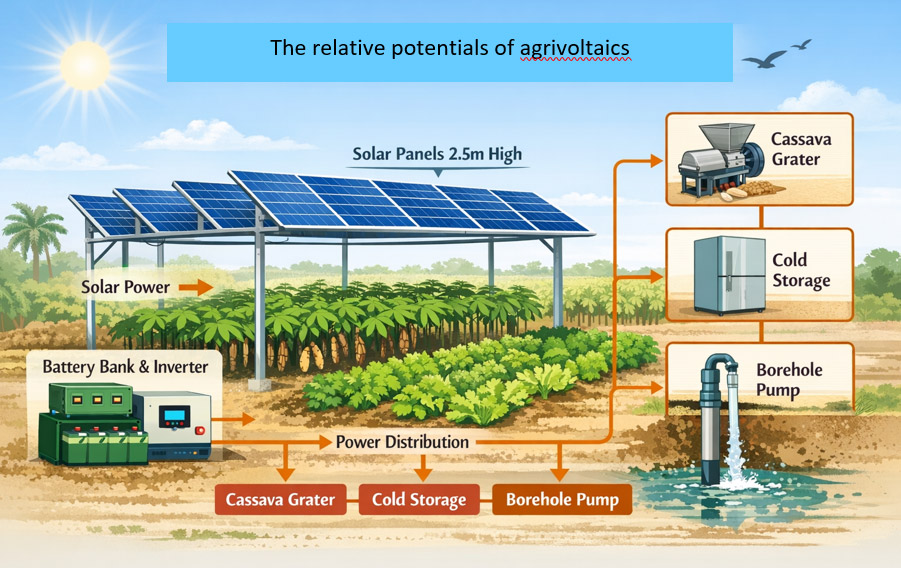
Reliable electricity remains a significant barrier to agricultural productivity in rural Nigeria. This case study investigated the potential of agrivoltaic systems, combining solar energy generation with crop production, to address food processing and water supply challenges in the Anambra State Agricultural Zones. Drawing on the Technology Acceptance Model (TAM), a cross-sectional survey was administered to 845 respondents, of whom 840 returned valid questionnaires, food processors, and water facility operators across 16 communities using probability-proportional-to-size sampling (design effect = 2.0). Descriptive statistics and ordinal logistic regression were used to assess perceptions an... More >

Graphical Abstract
Agrivoltaics Potentials for Food Processing and Water Supply in Rural Electrification-deficient Areas: A Case Study of Anambra Agricultural Zones, Nigeria
Open Access | Research Article | 10 May 2026
Response Surface Methodology Study of the Synergistic Effects of Soaking Pretreatment and Microwave Power on the Proximate Composition of Tiger nut (Cyperus esculentus L.)
Agricultural Science and Food Processing | Volume 3, Issue 2: 73-94, 2026 | DOI: 10.62762/ASFP.2026.613613
Abstract
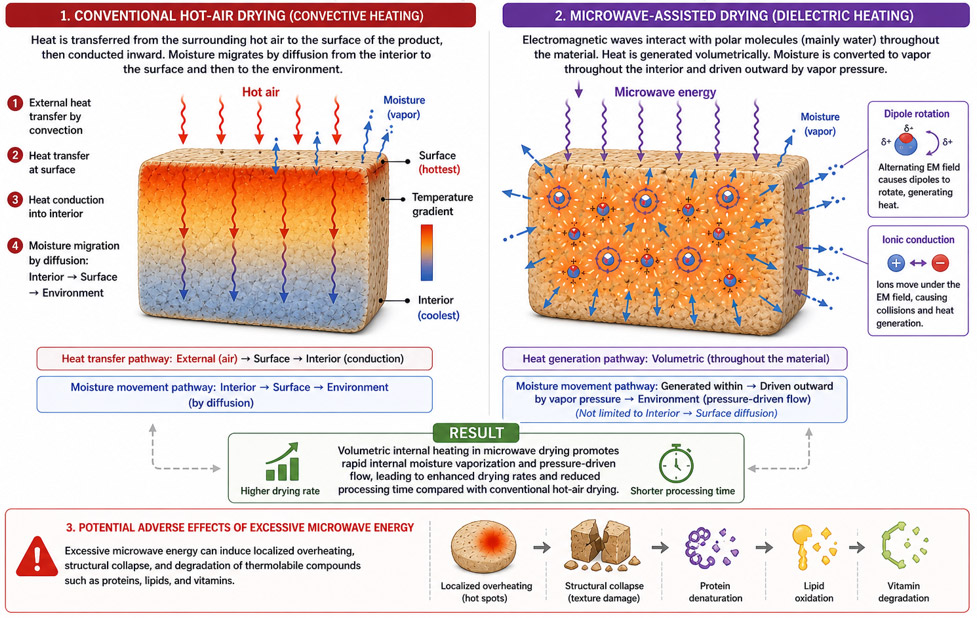
Despite its nutritional potential, Tiger nut remains under-utilized. This study examined the interactive effects of soaking time (24–72\,h) and microwave power (100–280\,W) on its proximate composition using response surface methodology. Commercial tubers (14.33% moisture) were rehydrated to 38.6–46.8% moisture via soaking and then microwave-dried at 2.45\,GHz. Proximate composition was determined by AOAC methods. Ash, fat and carbohydrate followed linear models (\(p<0.0001\)); fiber followed a two-factor interaction model (\(p<0.0001\)); protein showed quadratic behavior (\(p=0.0006\)). Multi-response optimization identified 48\,h soaking and 190\,W power as optimal (desirability=0.87... More >

Graphical Abstract
Response Surface Methodology Study of the Synergistic Effects of Soaking Pretreatment and Microwave Power on the Proximate Composition of Tiger nut (Cyperus esculentus L.)
Open Access | Review Article | 02 April 2026
Advances in the Application of Deep Learning for Antimicrobial Peptide Screening
Agricultural Science and Food Processing | Volume 3, Issue 2: 49-72, 2026 | DOI: 10.62762/ASFP.2026.121905
Abstract
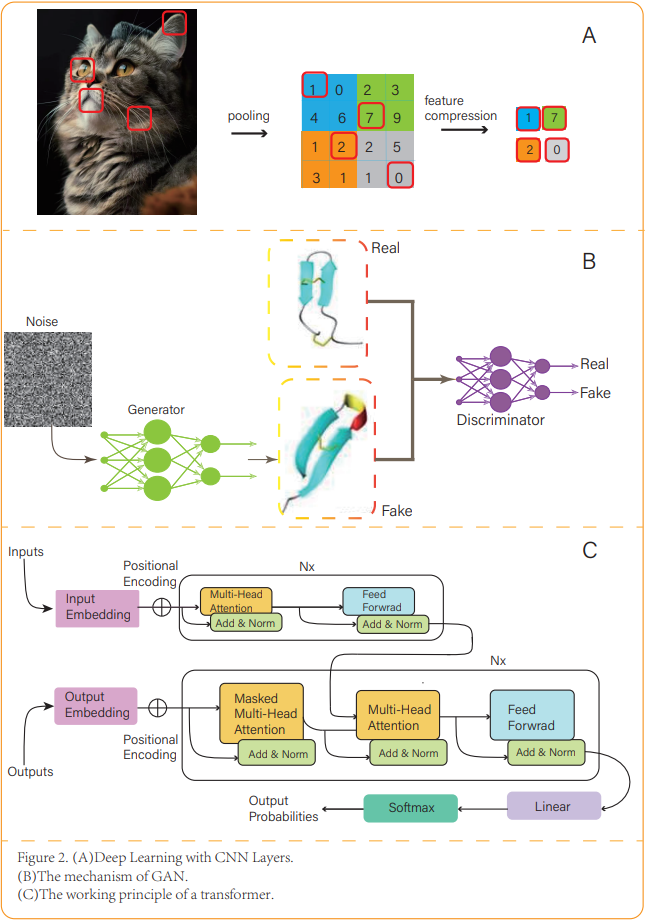
The problem of bacterial resistance to antibiotics is becoming more and more serious, and it is urgent to develop new antibacterial drugs to cope with this situation. Antimicrobial peptides (AMPs) are a group of natural peptides with advantages including broad-spectrum antibacterial activity and a low tendency to induce resistance, and have become attractive alternatives to antibiotics. However, their broad application is constrained by the inefficiency and high cost of conventional screening methods. Recently, deep learning (DL) has enabled more streamlined identification, design, and prediction of AMP activity through advanced data processing and pattern recognition. A few review articles... More >

Graphical Abstract
Advances in the Application of Deep Learning for Antimicrobial Peptide Screening