Volume 1, Issue 1 (In Progress)


Call for Inaugural Papers
Citations: Crossref logo 0,   0   |   Viewed: 2292, Download: 457

Table of Contents

Open Access | Review Article | 30 June 2026
Internet of Things and Artificial Intelligence for Carbon Emissions Monitoring and Forecasting: a Systematic Review of Smart Environmental Accounting Systems
Journal of Carbon Neutrality | Volume 1, Issue 1: 64-82, 2025 | DOI: 10.62762/JCN.2026.644506
Abstract
The growing urgency of climate change mitigation has increased pressure to develop reliable systems capable of monitoring and predicting carbon emissions. Conventional carbon accounting methods based on manual reporting and periodic environmental assessments frequently produce delayed and incomplete emissions data. This systematic review was conducted in accordance with PRISMA guidelines. It examines existing literature on the application of digital technologies for carbon monitoring and management. The review focuses on Internet of Things (IoT) sensor networks, artificial intelligence (AI) forecasting models, carbon accounting frameworks and integrated digital carbon management systems. A s... More >

Open Access | Research Article | 08 June 2026
Extended Micromechanical Model for the Hyperelastic Behavior of Elastomers and Identification of Material Parameters Using the Particle Swarm Optimization (PSO) Algorithm
Journal of Carbon Neutrality | Volume 1, Issue 1: 38-63, 2025 | DOI: 10.62762/JCN.2026.518617
Abstract
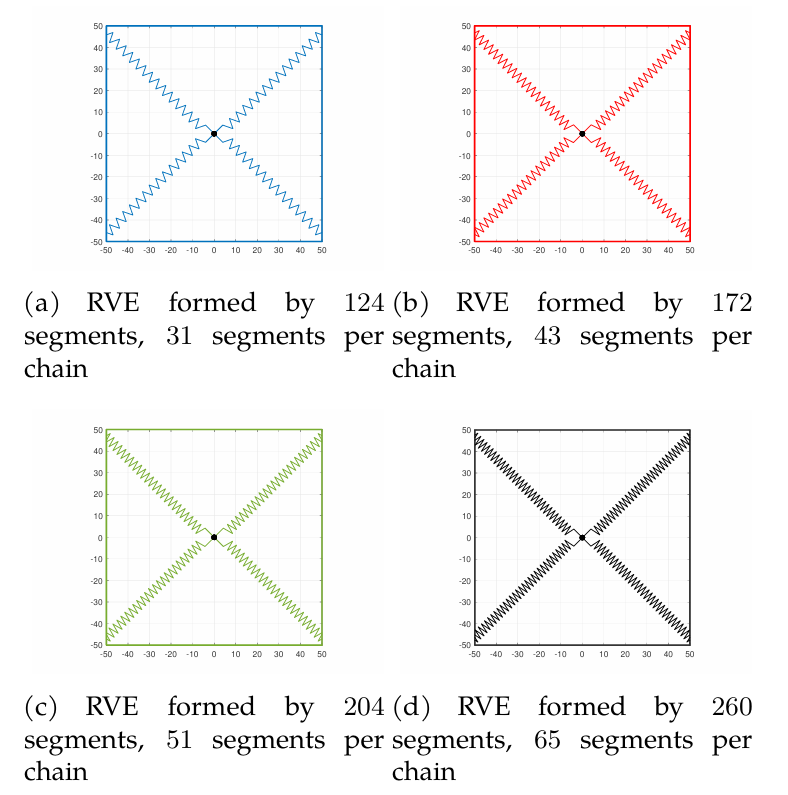
In this work, we propose a new four-parameter micromechanical model to describe the hyperelastic behavior of elastomeric materials. The proposed model extends and improves a previously developed three-parameter micromechanical approach. As in earlier studies, the constitutive behavior is obtained by minimizing the potential energy of a Representative Volume Element (RVE) composed of multiple macromolecular chains. Each chain segment is modeled as a linear spring with stiffness $K$, acting in both tension and compression. To account for rotational flexibility between consecutive segments, nonlinear torsional springs are introduced, whose behavior is described as the sum of two contributions:... More >

Graphical Abstract
Extended Micromechanical Model for the Hyperelastic Behavior of Elastomers and Identification of Material Parameters Using the Particle Swarm Optimization (PSO) Algorithm
Open Access | Research Article | 12 May 2026
Numerical Study of Premixed Hydrogen/Air Flame-Wall Interaction for Confined Systems
Journal of Carbon Neutrality | Volume 1, Issue 1: 29-37, 2025 | DOI: 10.62762/JCN.2026.937655
Abstract
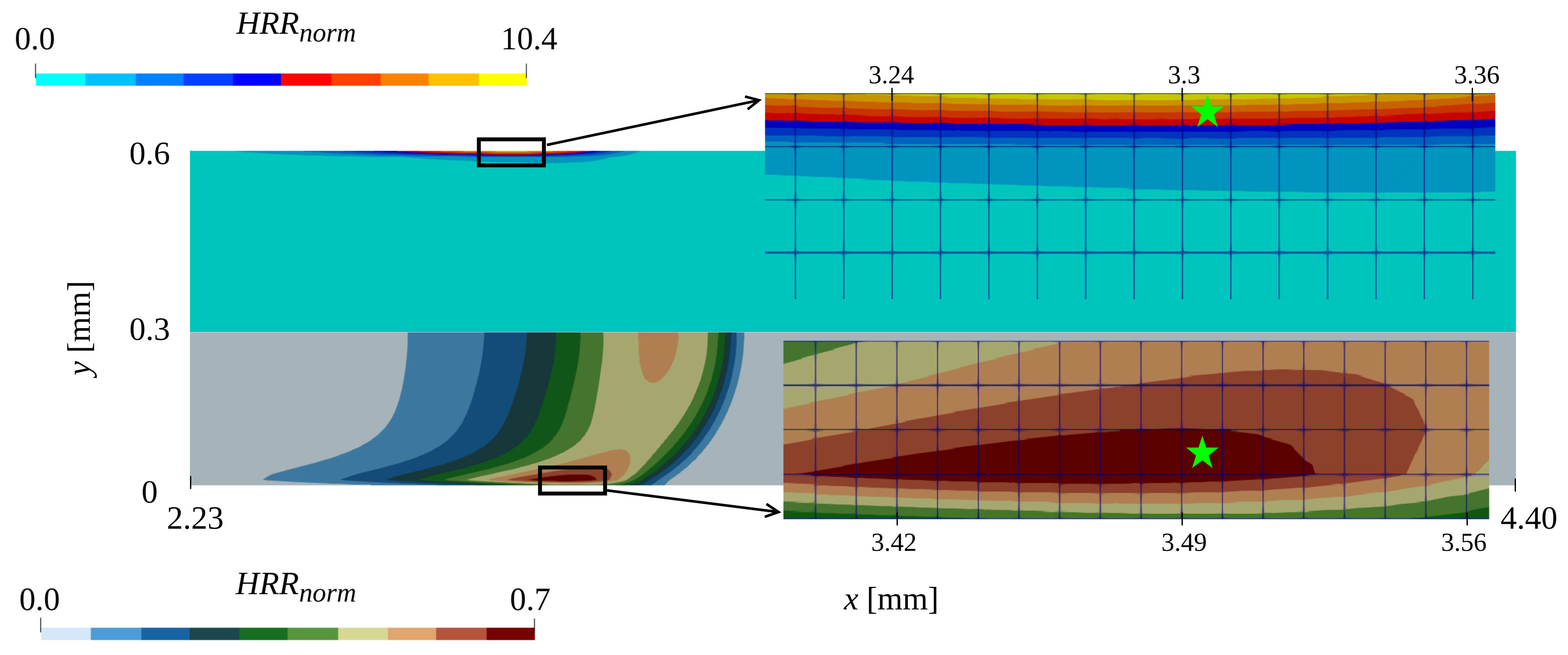
Accurate modeling of flame-wall interaction is essential for predicting premixed hydrogen combustion in confined configurations relevant to hydrogen-based energy systems. Detailed chemical mechanisms often produce unphysical near-wall heat release due to persistent radical-consuming reactions at low temperatures, reducing simulation fidelity and limiting predictive capability. To address this, we apply an H radical recombination model that selectively removes H radicals at the wall through recombination to $\ce{H2}$ while conserving mass. The model is validated using canonical flame-wall interaction scenarios, including head-on quenching of stoichiometric hydrogen/oxygen flames and side-wall... More >

Graphical Abstract
Numerical Study of Premixed Hydrogen/Air Flame-Wall Interaction for Confined Systems
Open Access | Review Article | 18 April 2026
Mechanisms and Optimization Design of Flow-Induced Vibration Energy Harvesting: A Review
Journal of Carbon Neutrality | Volume 1, Issue 1: 10-28, 2025 | DOI: 10.62762/JCN.2026.299279
Abstract
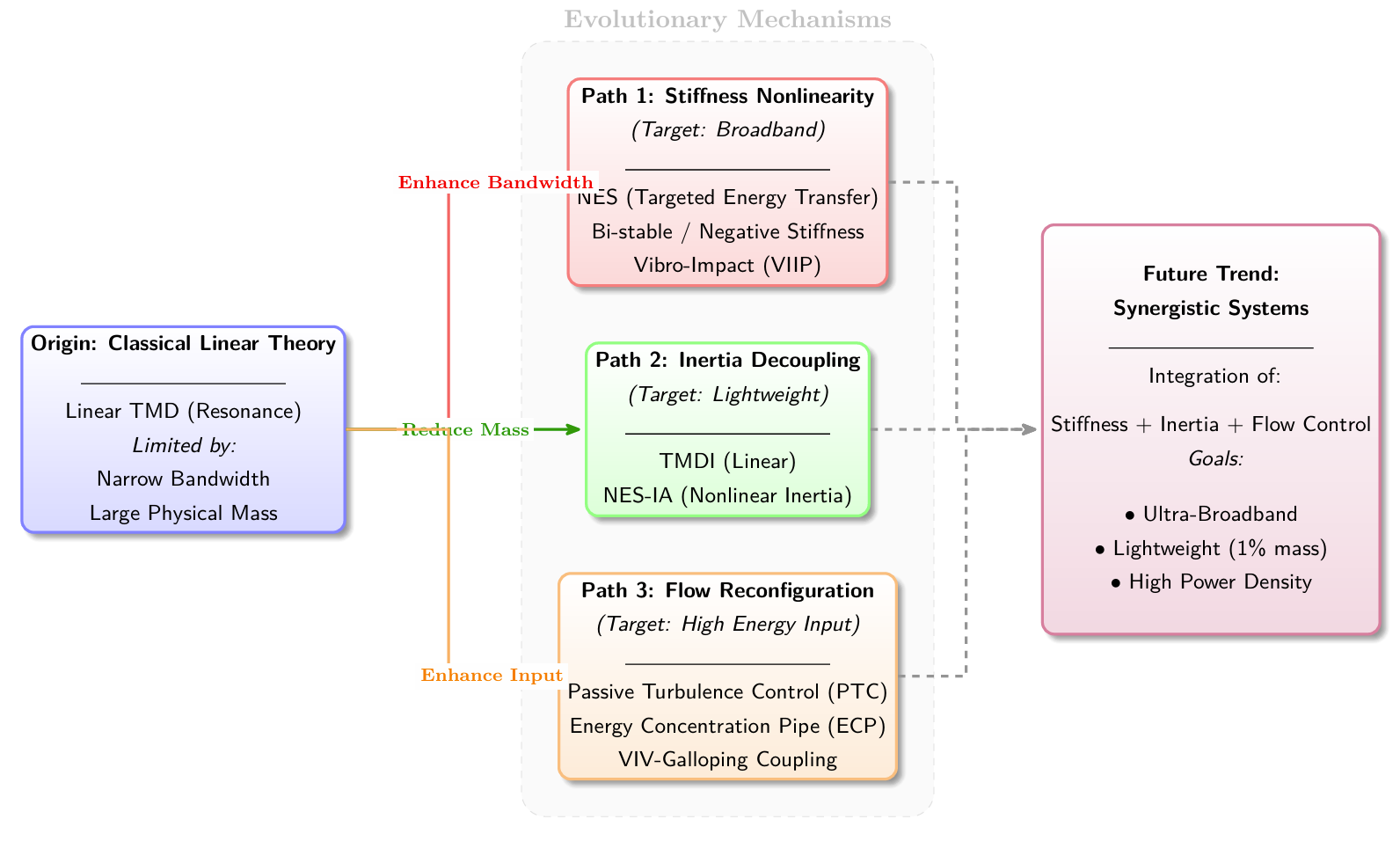
With the widespread deployment of the Internet of Things (IoT) and distributed sensing networks in marine and industrial environments, energy harvesting based on Flow-Induced Vibration (FIV) has garnered significant attention due to its high energy density and environmental adaptability. This paper provides a comprehensive review of the evolution of FIV energy harvesting systems, with a particular focus on absorber-based configurations. First, the classification of existing systems is systematically outlined, and the theoretical foundations of the classic linear Tuned Mass Damper (TMD) are revisited. The review critically analyzes the inherent limitations of linear theories, specifically fre... More >

Graphical Abstract
Mechanisms and Optimization Design of Flow-Induced Vibration Energy Harvesting: A Review
Open Access | Editorial | 06 April 2026
Editorial for Journal of Carbon Neutrality
Journal of Carbon Neutrality | Volume 1, Issue 1: 1-9, 2025 | DOI: 10.62762/JCN.2026.161462
Abstract
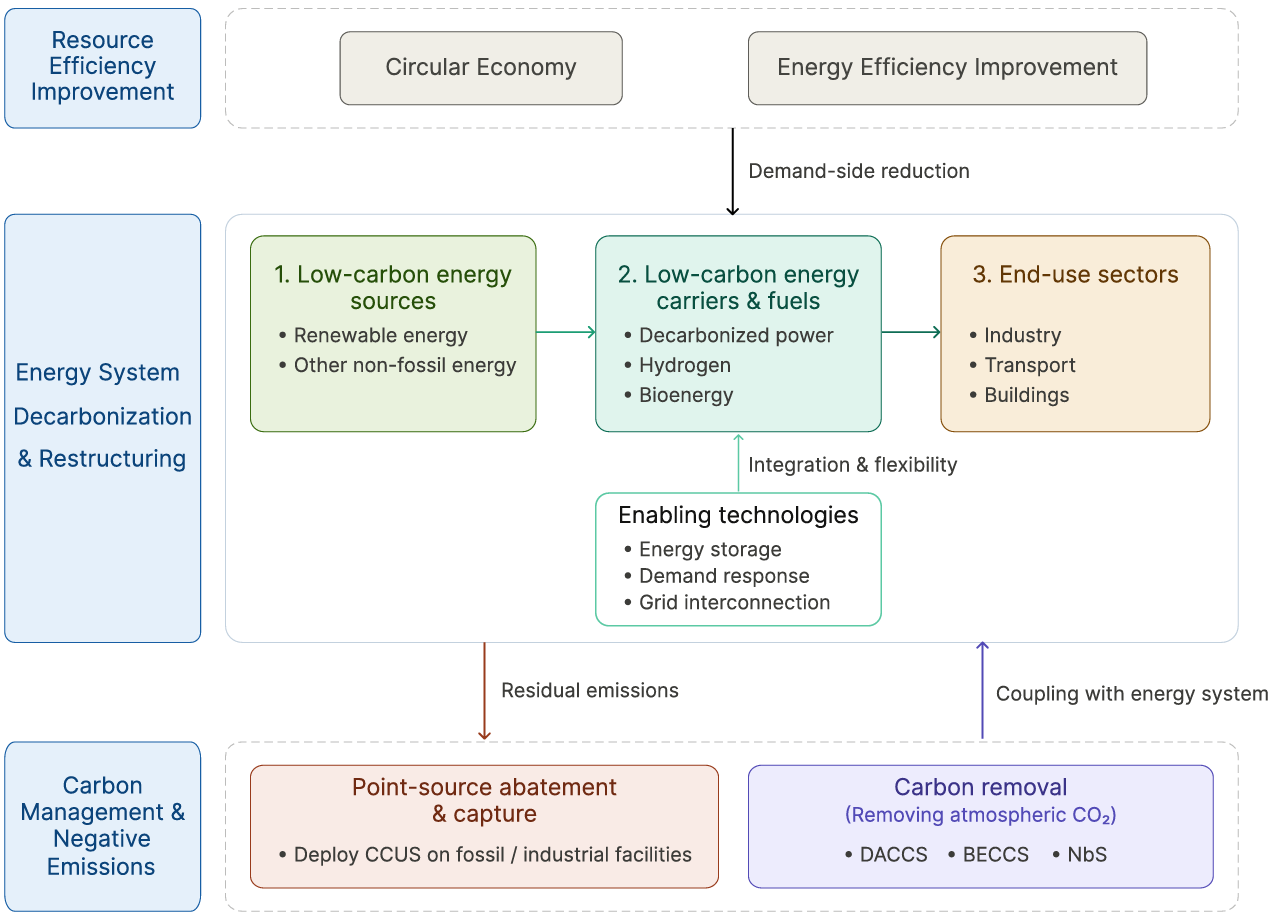
Achieving carbon neutrality demands a fundamental transformation across energy, industry, technology, and policy sectors, supported by interdisciplinary scientific innovation. This paper presents a comprehensive overview of key technological pathways toward carbon neutrality, including energy decarbonization, resource efficiency, and nature-based solutions. It further highlights five emerging scientific frontiers, that is, photovoltaics with energy storage and electric mobility, chemical CO$_2$ valorisation, contrail mitigation, lightweight and low-carbon materials, and AI-driven healthcare decarbonization, to illustrate the breadth of research contributions essential for a net-zero future.... More >

Graphical Abstract
Editorial for Journal of Carbon Neutrality