Volume 1, Issue 2 (In Progress)


In Progress
Citations: Crossref logo 0,   0   |   Viewed: 2270, Download: 453

Table of Contents

Open Access | Research Article | 21 April 2026
Towards a Conscientious Internationalized Curriculum in Sustaining Future Education and Research in the Philippines: A Case Study of the Communication Arts Curriculum at the Philippine Women’s University
PWU Journal of Research, Innovation, and Transformation | Volume 1, Issue 2: 73-91, 2026 | DOI: 10.62762/JRIT.2025.875175
Abstract
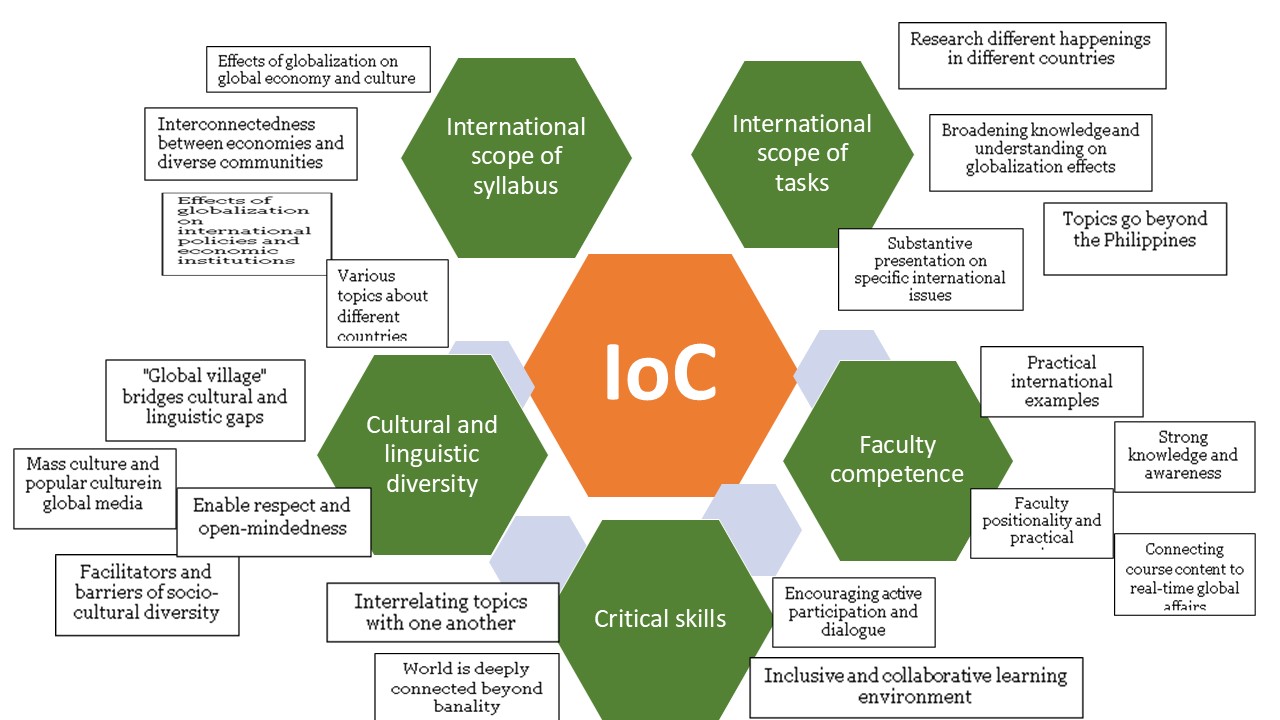
Multilayered processes of globalization have loosened higher education’s nationalistic frameworks by embedding internationalization, a process deemed crucial for preparing students to become global citizens. The core thesis of the paper positions an internationalized curriculum as fostering a disposition toward critical thinking, agency, and empathy in a post-truth world. The argument leans toward developing a conscientious internationalization curriculum grounded in critical pedagogy. This can be achieved by intertwining the syllabus and pedagogy with the ideas of Paulo Freire and Sara Ahmed to cultivate a critical disposition in thinking, doing, and reflecting. The study explores this di... More >

Graphical Abstract
Towards a Conscientious Internationalized Curriculum in Sustaining Future Education and Research in the Philippines: A Case Study of the Communication Arts Curriculum at the Philippine Women’s University
Open Access | Research Article | 08 April 2026
A TAM-based Human-Machine Synergy Model for Automation and Industry 4.0 Adoption
PWU Journal of Research, Innovation, and Transformation | Volume 1, Issue 2: 65-72, 2026 | DOI: 10.62762/JRIT.2026.810897
Abstract
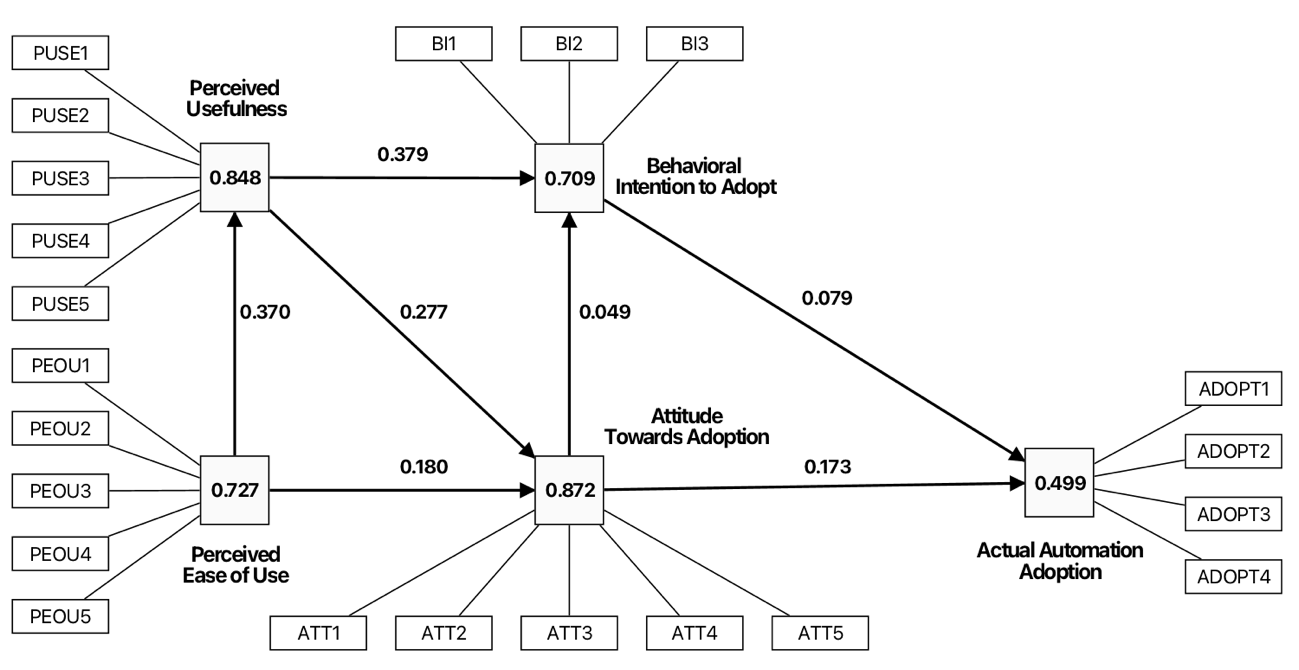
The acceleration of Industry 4.0 has compelled enterprises to integrate automation, cyber-physical systems, and analytics into everyday operations. Despite rapid digitalization, the effectiveness of these initiatives depends largely on the human capacity to accept and collaborate with machines. This study applies the Technology Acceptance Model (TAM) to examine behavioral and organizational factors influencing automation adoption among 900 professionals across manufacturing, logistics, and service sectors. Using descriptive-correlational design and partial least squares structural equation modeling (PLS-SEM), the study investigates how perceived usefulness (PU) and perceived ease of use (PEO... More >

Graphical Abstract
A TAM-based Human-Machine Synergy Model for Automation and Industry 4.0 Adoption