Volume 2, Issue 1 (In Progress)


In Progress
Citations: Crossref logo 0,   0   |   Viewed: 1390, Download: 723

Table of Contents

Free Access | Research Article | 30 June 2026
GHOST: Game-Theoretic Honeytoken Optimization for Strategic Threat Detection
ICCK Transactions on Cybersecurity | Volume 2, Issue 1: 75-92, 2026 | DOI: 10.62762/TC.2026.152584
Abstract
As adversaries deploy advanced persistent threats (APTs), social engineering, and credential-stuffing attacks to circumvent classical reactive defenses, identity security faces a formidable challenge. This paper proposes GHOST (Game-theoretic Honeytoken Optimization for Strategic Threat Detection), a mathematically grounded and empirically evaluated framework that combines deceptive honeytokens with Stackelberg–Nash game-theoretic optimization, Bayesian attacker-type inference, and reinforcement learning (RL). The defender (Stackelberg leader) distributes honeytokens throughout a networked system of heterogeneous assets, while the attacker (follower) operates under imperfect knowledge of t... More >

Graphical Abstract
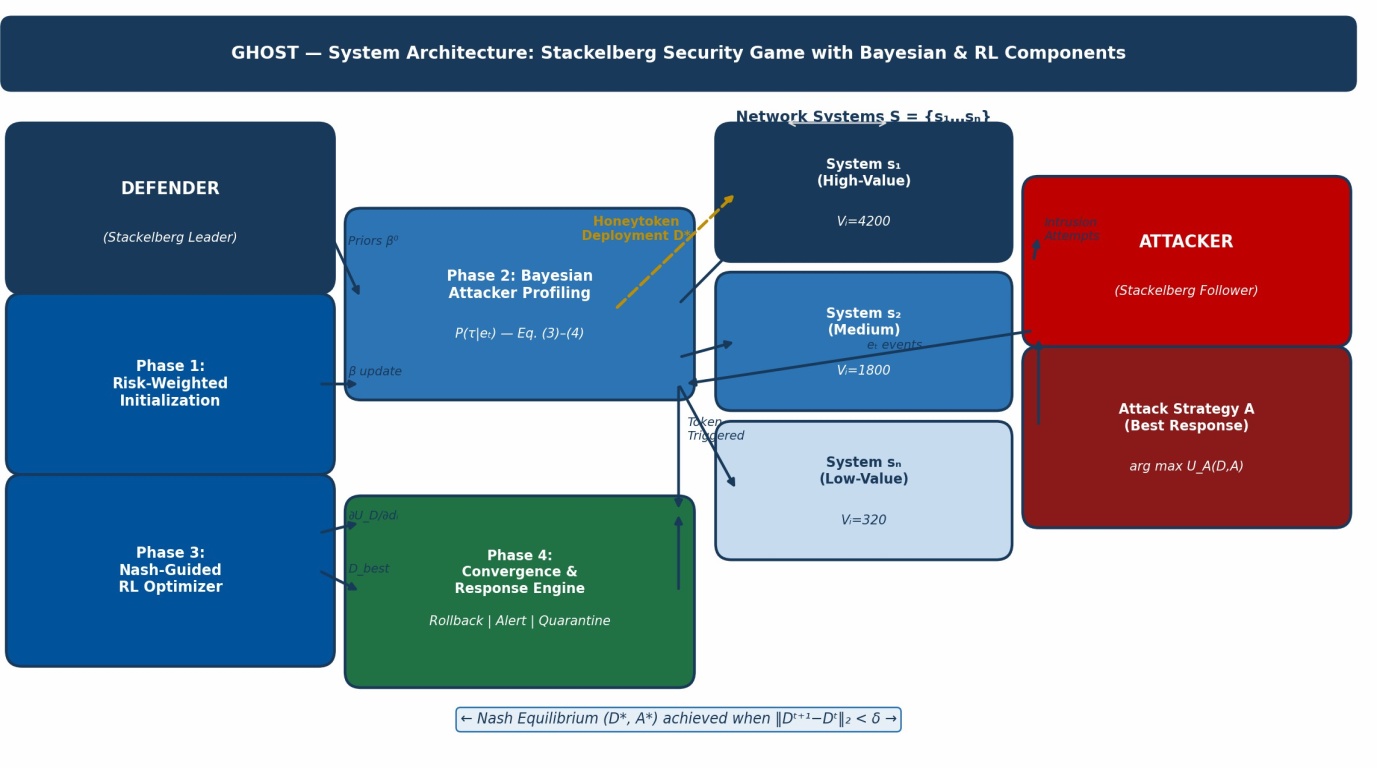
GHOST: Game-Theoretic Honeytoken Optimization for Strategic Threat Detection
Free Access | Research Article | 18 April 2026
Swarm-Enhanced Federated Learning with XAI for Robust and Interpretable Cyber Threat Detection
ICCK Transactions on Cybersecurity | Volume 1, Issue 2: 58-74, 2026 | DOI: 10.62762/TC.2026.123135
Abstract
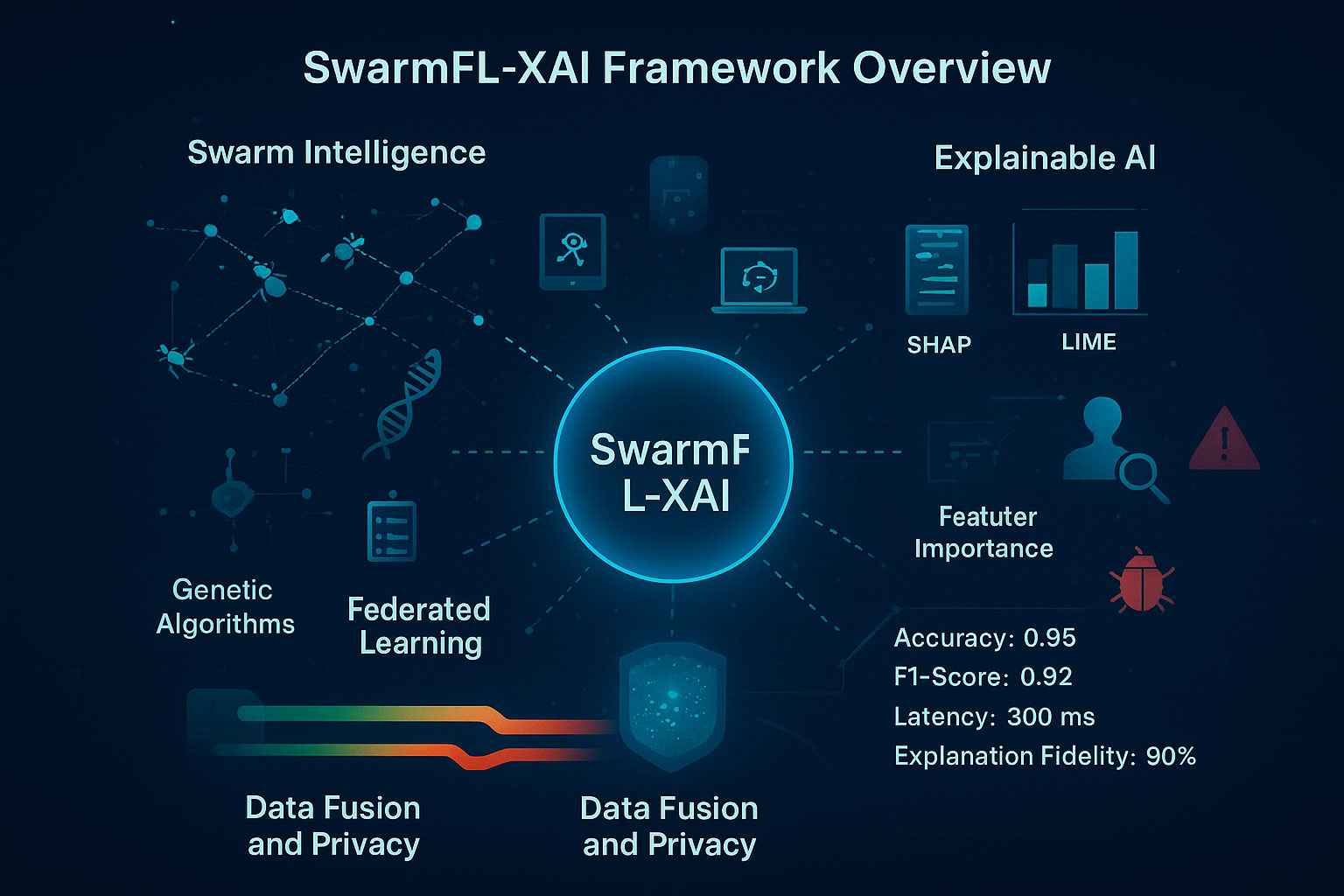
As cyberattacks grow more advanced and privacy laws become stricter, security systems must be powerful, transparent, and privacy-friendly. This paper introduces SwarmFL-XAI, a new framework that blends nature-inspired intelligence, collaborative learning, and explainable AI to deliver secure, scalable, and trustworthy threat detection. By using an ant-based strategy for sharing and updating models across devices, the system handles uneven data and malicious behaviour while avoiding the risks of a central server. Tools like SHAP and LIME explain why decisions are made, giving analysts clear insights and greater confidence. Tests on the UNSW-NB15 and CICIDS2017 datasets show strong results, wi... More >

Graphical Abstract
Swarm-Enhanced Federated Learning with XAI for Robust and Interpretable Cyber Threat Detection
Free Access | Research Article | 25 December 2025
From Phishing to Prompt Bombing: Innovative Game-Theoretic Solutions for Modern Cyber Threats
ICCK Transactions on Cybersecurity | Volume 1, Issue 2: 35-57, 2026 | DOI: 10.62762/TC.2025.969565
Abstract
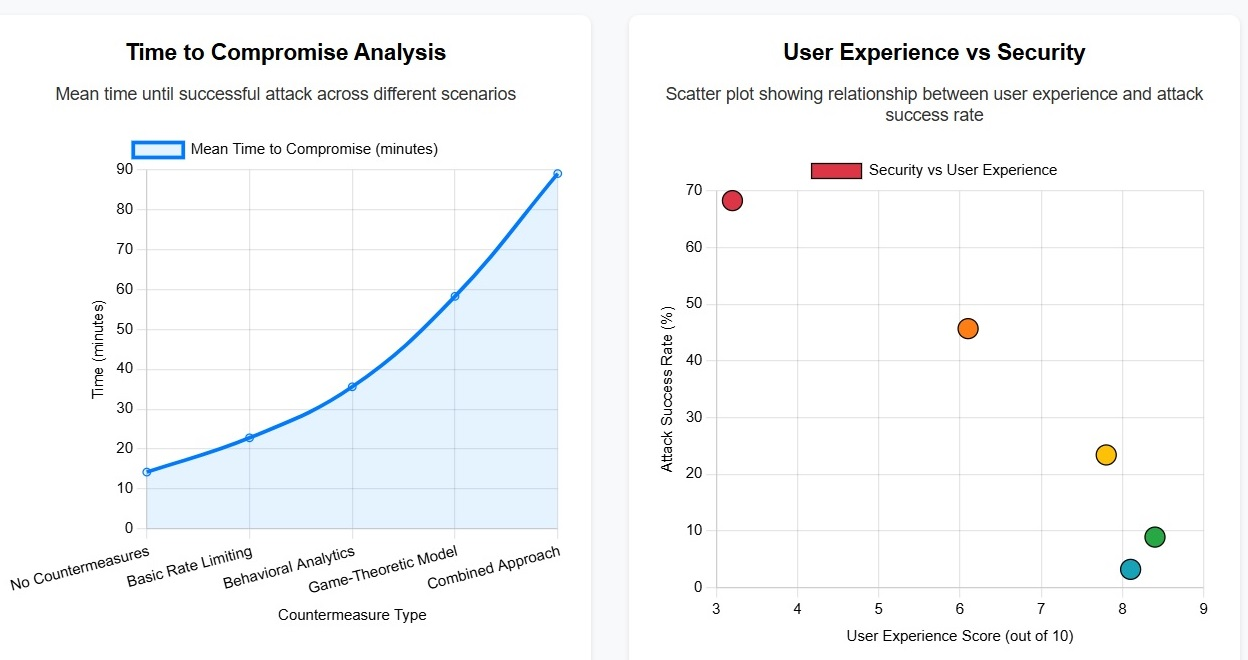
The rise of multi-factor authentication (MFA) has significantly enhanced cybersecurity postures, yet its effectiveness is increasingly challenged by sophisticated social engineering attacks, particularly those exploiting MFA fatigue. MFA fatigue, a tactic where attackers inundate users with authentication prompts, aims to induce erroneous approvals, as notably exemplified by the 2022 Uber breach. This phenomenon undermines the very security MFA is designed to provide by leveraging human vulnerabilities. Game theory, a powerful mathematical framework for analyzing strategic decision-making, offers a robust methodology to model the dynamic interactions between attackers and defenders. By apply... More >

Graphical Abstract
From Phishing to Prompt Bombing: Innovative Game-Theoretic Solutions for Modern Cyber Threats