-
CiteScore
-
Impact Factor
Volume 2, Issue 4 - Table of Contents

×

Volume 2, Issue 4 (December, 2025) – 5 articles
Citations: 0, 0,  0   |   Viewed: 1656, Download: 347

Free Access | Research Article | 24 November 2025
Enhanced Deepfake Detection Through Multi-Attention Mechanisms: A Comprehensive Framework for Synthetic Media Identification
ICCK Transactions on Intelligent Systematics | Volume 2, Issue 4: 248-258, 2025 | DOI: 10.62762/TIS.2025.756872
Abstract
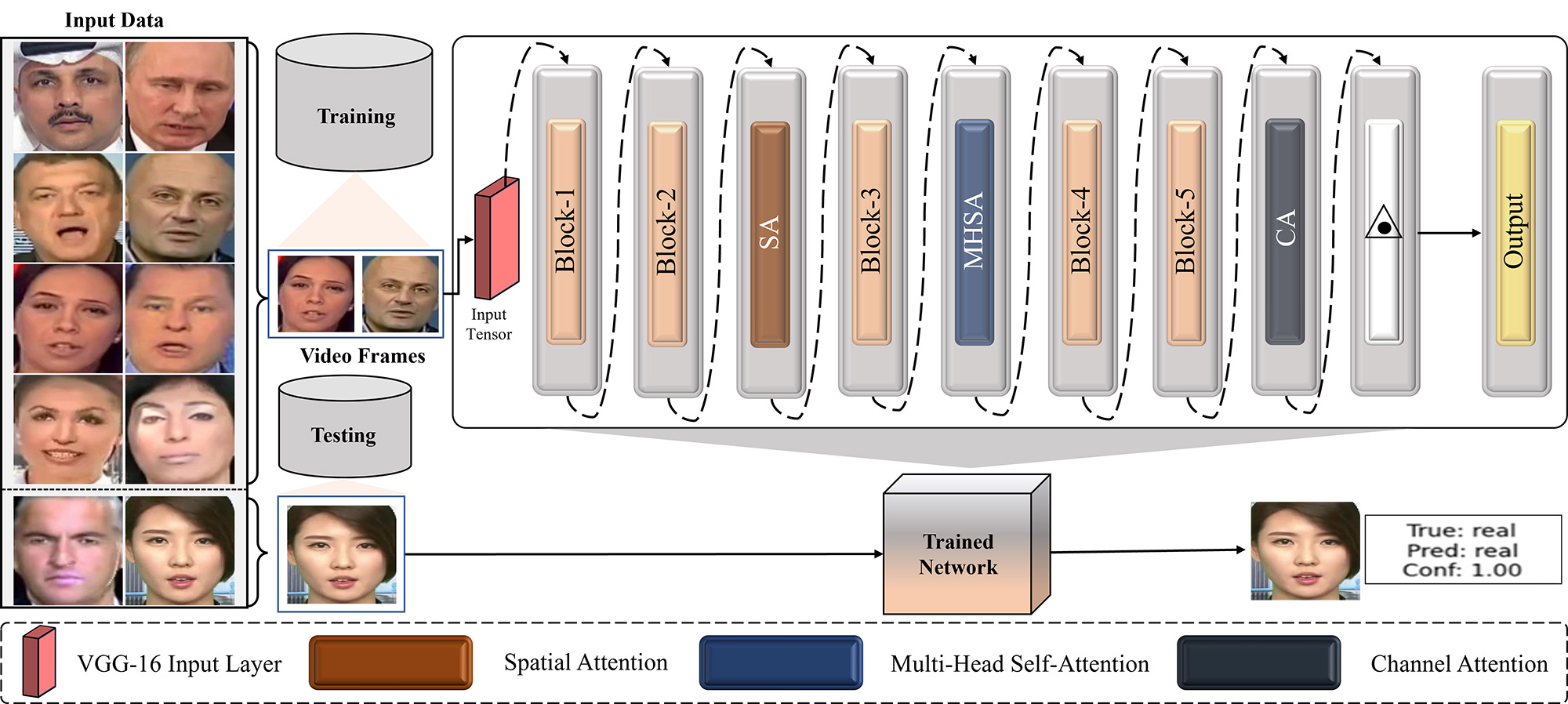
The proliferation of deepfake technology poses significant threats to digital media authenticity, necessitating robust detection systems to combat manipulated content. This paper presents a novel attention-based framework for deepfake detection that systematically integrates multiple complementary attention mechanisms to enhance discriminative feature learning. Our approach combines spatial attention, multi-head self-attention, and channel attention modules with a VGG-16 backbone to capture comprehensive representations across different feature spaces. The spatial attention mechanism focuses on discriminative facial regions, while multi-head self-attention captures long-range spatial depende... More >

Graphical Abstract
Enhanced Deepfake Detection Through Multi-Attention Mechanisms: A Comprehensive Framework for Synthetic Media Identification

Free Access | Research Article | 08 November 2025
Cucumber Leaf Diseases Recognition Based on Deep Convolutional Neural Networks
ICCK Transactions on Intelligent Systematics | Volume 2, Issue 4: 238-247, 2025 | DOI: 10.62762/TIS.2025.363963
Abstract
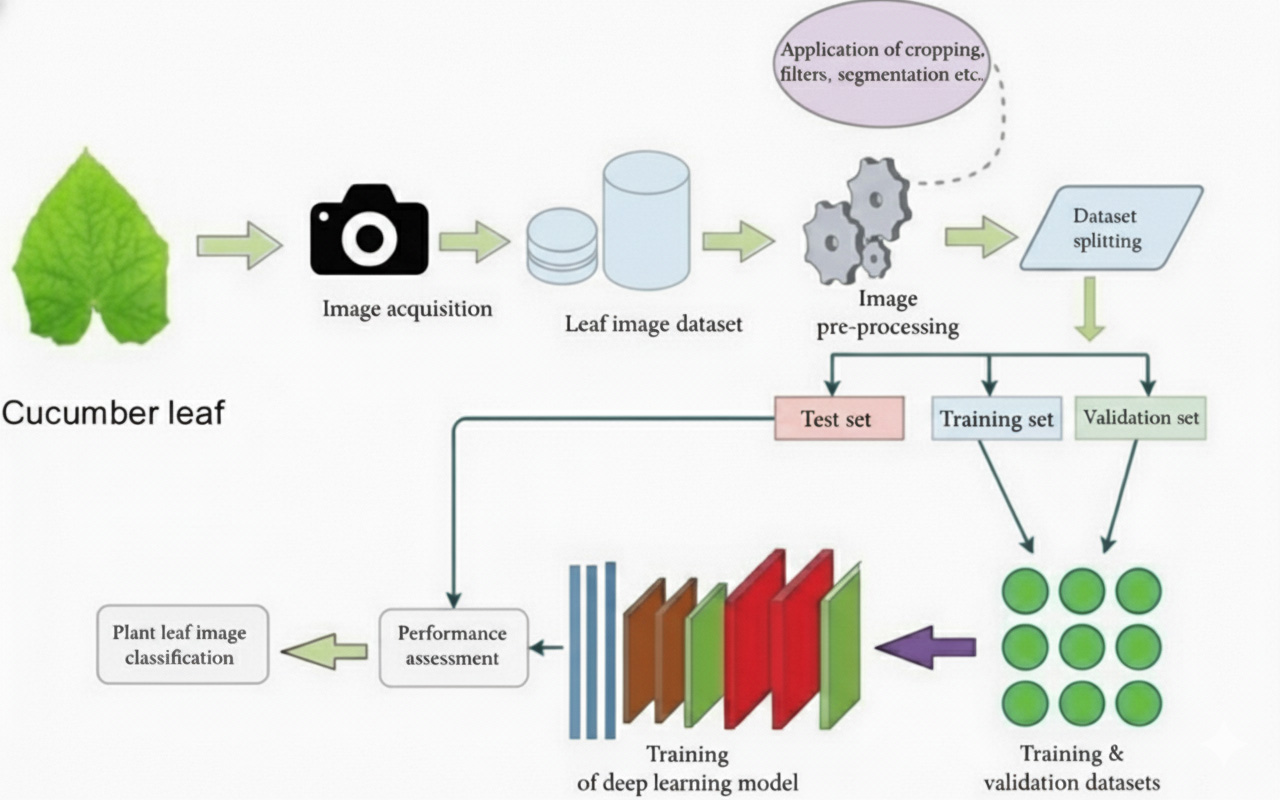
Cucumber cultivation is a vital component of Pakistan's agricultural economy and is a key vegetable in the national diet. However, crop yield and quality are severely threatened by diseases like powdery mildew and downy mildew. Early and accurate disease detection is critical for implementing targeted treatment and preventing widespread infection. This study proposes a deep learning-based framework for the automated recognition of cucumber leaf diseases. We designed and trained a custom Convolutional Neural Network (CNN) from scratch and compared its performance against powerful pre-trained transfer learning models, including VGG16 and InceptionV3. The models were evaluated on a dataset of c... More >

Graphical Abstract
Cucumber Leaf Diseases Recognition Based on Deep Convolutional Neural Networks

Free Access | Research Article | 06 November 2025
Lightweight Cascaded Feature Reweighting for Fall Detection through Context-Aware YOLOv8 Architecture
ICCK Transactions on Intelligent Systematics | Volume 2, Issue 4: 224-237, 2025 | DOI: 10.62762/TIS.2025.196437
Abstract
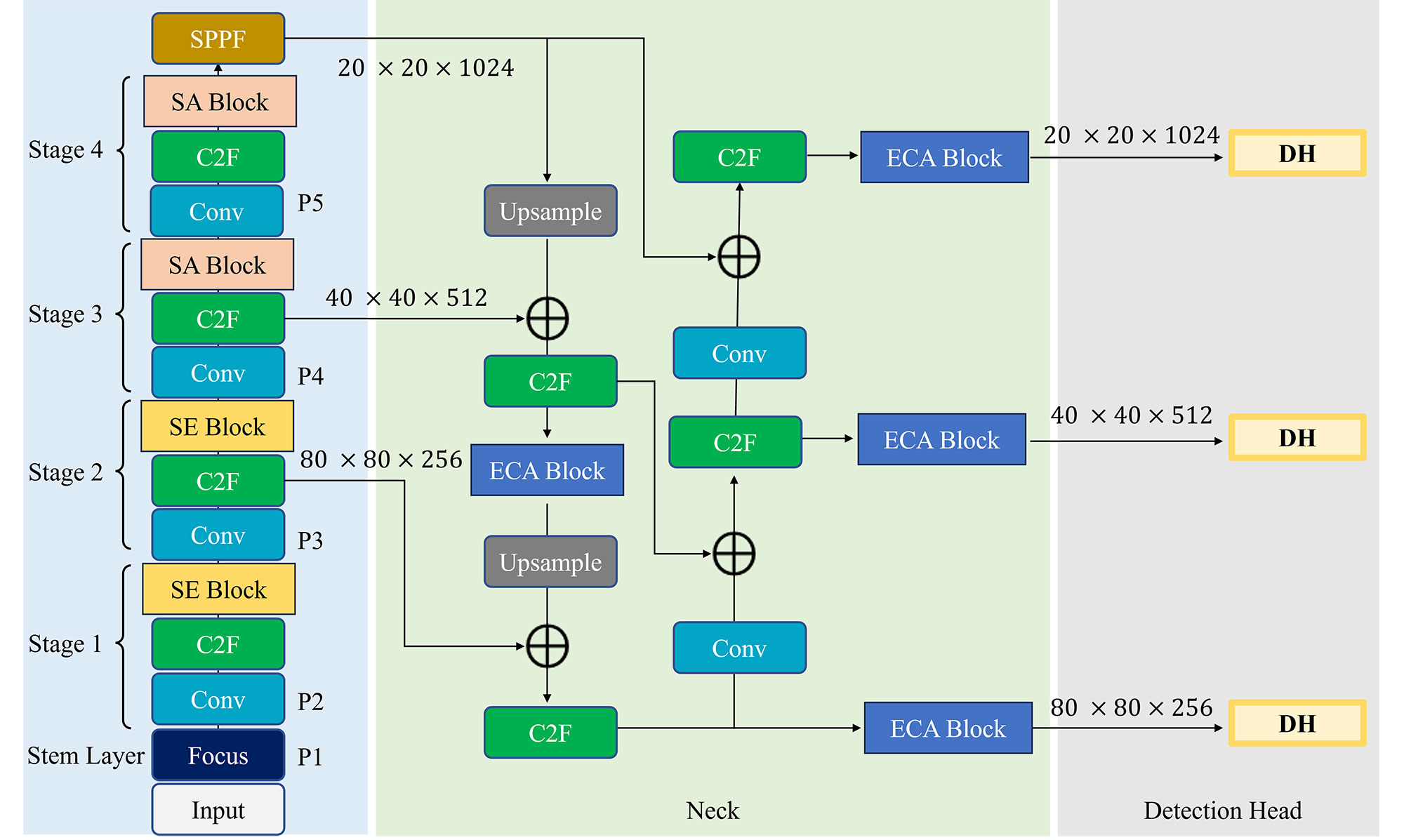
Falls represent a significant global health concern, particularly among older adults, with delayed detection often leading to severe medical complications. Although computer vision-based fall detection systems offer promising solutions, they usually struggle with diverse real-world scenarios and computational efficiency. This paper introduces a novel lightweight cascaded feature reweighting approach that enhances YOLOv8 for reliable fall detection through a context-aware architecture. We strategically integrate three complementary attention mechanisms: Squeeze-and-Excitation blocks in the early stages, Spatial Attention modules in the later stages, and Efficient Channel Attention in the neck... More >

Graphical Abstract
Lightweight Cascaded Feature Reweighting for Fall Detection through Context-Aware YOLOv8 Architecture

Free Access | Research Article | 05 November 2025
Comparative Evaluation of Nearest Regularized Subspace and Machine Learning Techniques for Hyperspectral Image Classification
ICCK Transactions on Intelligent Systematics | Volume 2, Issue 4: 213-223, 2025 | DOI: 10.62762/TIS.2025.224024
Abstract
Hyperspectral imaging (HSI) has become a powerful remote sensing and material analysis tool because it can capture detailed spectral information in hundreds of adjacent bands. Nevertheless, the high dimensionality and redundancy in HSI data make precise and efficient classification challenging. This paper presents an extensive comparative study of both traditional and state-of-the-art Machine Learning algorithms for HSI classification. Classical classifiers like Support Vector Machines (SVM) and K-Nearest Neighbors (KNN) are compared with state-of-the-art methods like Collaborative and Sparse Representation-based approaches, Convolutional Recurrent Neural Networks (CRNN), Classification and... More >

Graphical Abstract
Comparative Evaluation of Nearest Regularized Subspace and Machine Learning Techniques for Hyperspectral Image Classification

Free Access | Research Article | 04 October 2025
Cross-Lingual Multimodal Event Extraction: A Unified Framework for Parameter-Efficient Fine-Tuning
ICCK Transactions on Intelligent Systematics | Volume 2, Issue 4: 203-212, 2025 | DOI: 10.62762/TIS.2025.610574
Abstract
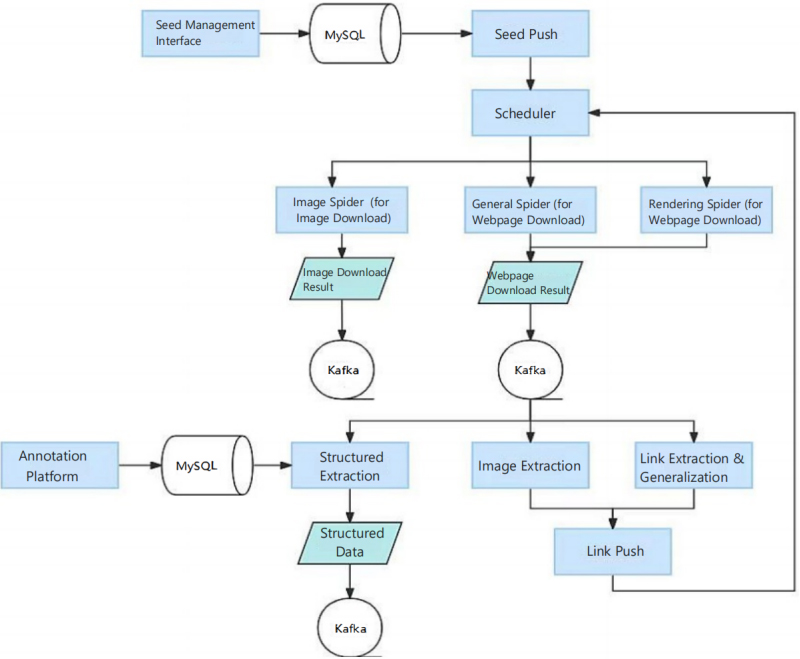
With the rapid development of multimodal large language models (MLLMs), the demand for structured event extraction (EE) in the field of scientific and technological intelligence is increasing. However, significant challenges remain in zero-shot multimodal and cross-language scenarios, including inconsistent cross-language outputs and the high computational cost of full-parameter fine-tuning. This study takes VideoLLaMA2 (VL2) and its improved version VL2.1 as the core models, and builds a multimodal annotated dataset covering English, Chinese, Spanish, and Russian (including 5,728 EE samples). It systematically evaluates the performance differences of zero-shot learning, and parameter-effici... More >

Graphical Abstract
Cross-Lingual Multimodal Event Extraction: A Unified Framework for Parameter-Efficient Fine-Tuning