In 2016, he obtained a Communications and Electronics Engineering degree from the University of Guadalajara. Subsequently, he completed a Master of Science in Electronic Engineering and Computer Science, focusing his research on the design of metaheuristic algorithms and applications in image segmentation. In 2023, he obtained his PhD in Electronic and Computer Engineering at the Centro Universitario de Ciencias Exactas e Ingenierías (CUCEI) in Guadalajara, Mexico, concentrating on the coevolution of metaheuristic strategies to solve various optimization problems. His research interests include artificial intelligence, specifically the design and hybridization of evolutionary algorithms, the development of operators and hyperheuristics to solve high-dimensional problems, and the integration of evolutionary algorithms and machine learning.
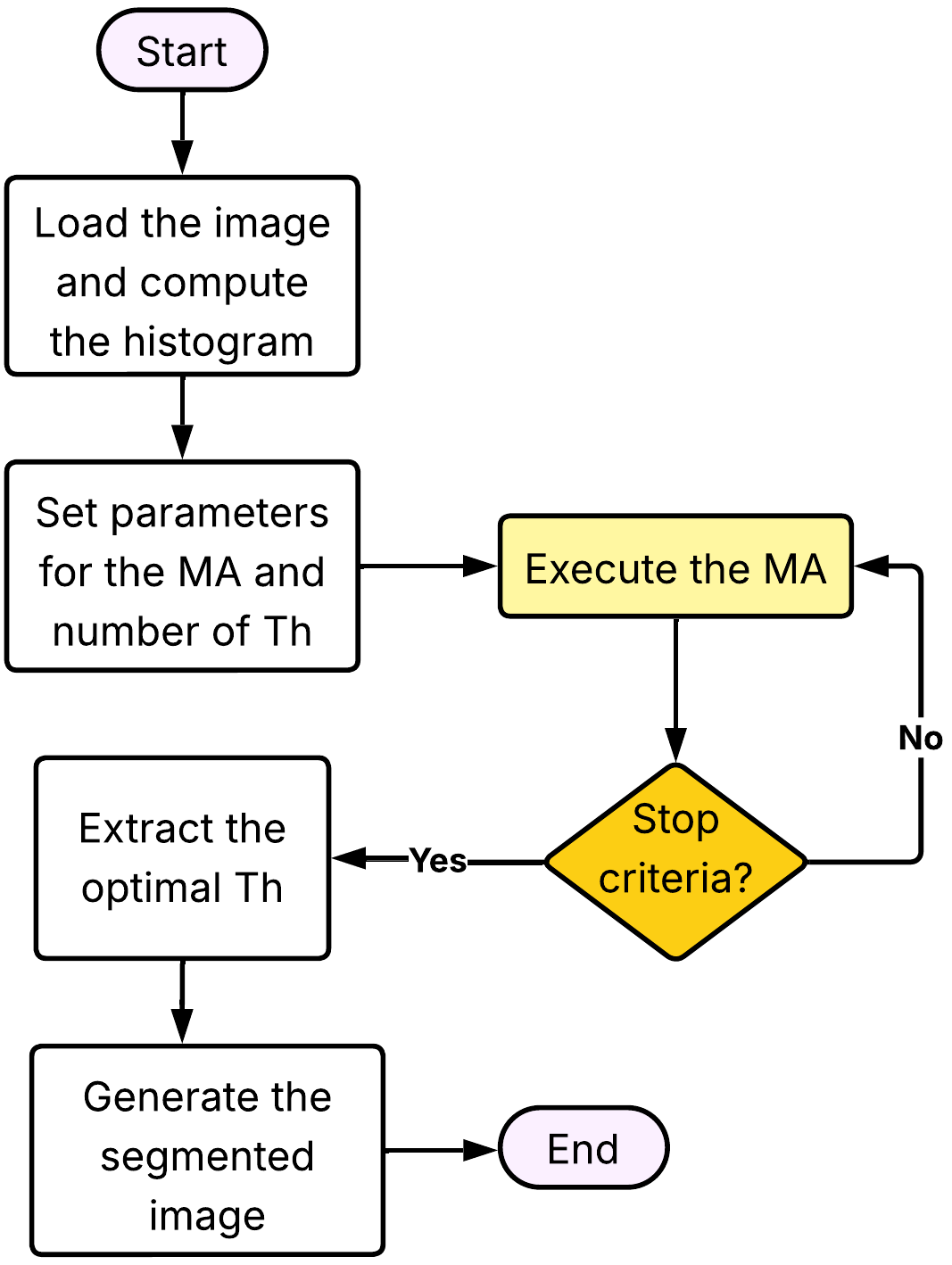
Metaheuristic Algorithms (MAs) are commonly used in the scope of digital image processing, in particular, image segmentation processes. This is evident in Multilevel Thresholding (MTH) methods, where the optimal threshold configuration must be found to produce high-quality segmented images. Minimum Cross-Entropy (MCE) is one of the most prominent techniques for MTH due to its simplicity and efficiency. This article proposes a comparison of recent MAs that have not yet been implemented for image segmentation. Six recently published MAs were implemented and tested on nine complicated images selected from the BSDS300 dataset. Analyzing the results reveals the best algorithm when MCE is used as... More >
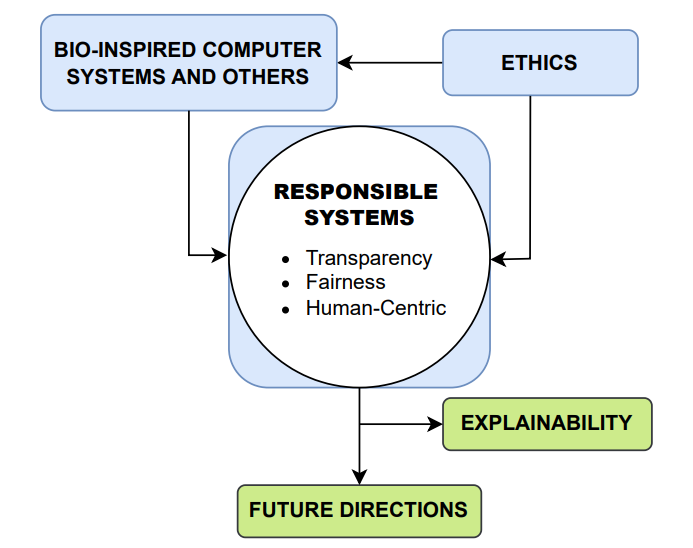
Swarm and evolutionary computation topics has demonstrated remarkable effectiveness in solving complex optimization problems across various scientific and engineering fields. However, as these methods are increasingly used in high-risk applications such as healthcare, finance, and autonomous systems, there is a growing need to address their ethical, interpretability, and social implications. This editorial outlines key guidelines for creating bio-inspired computing systems that are responsible and transparent, highlighting the fundamental role of ethics and explainability in shaping the future of evolutionary and swarm learning. More >
Graphical Abstract
We use cookies to improve your experience. By continuing to browse, you agree to our use of essential cookies.
Learn more