
Summary

ICCK Contributions


Free Access | Research Article | 20 December 2025
A Comparison of Evolutionary Computation Techniques for Parameter Estimation of Chaotic Systems
ICCK Transactions on Swarm and Evolutionary Learning | Volume 1, Issue 2: 83-93, 2025 | DOI: 10.62762/TSEL.2025.913117
Abstract
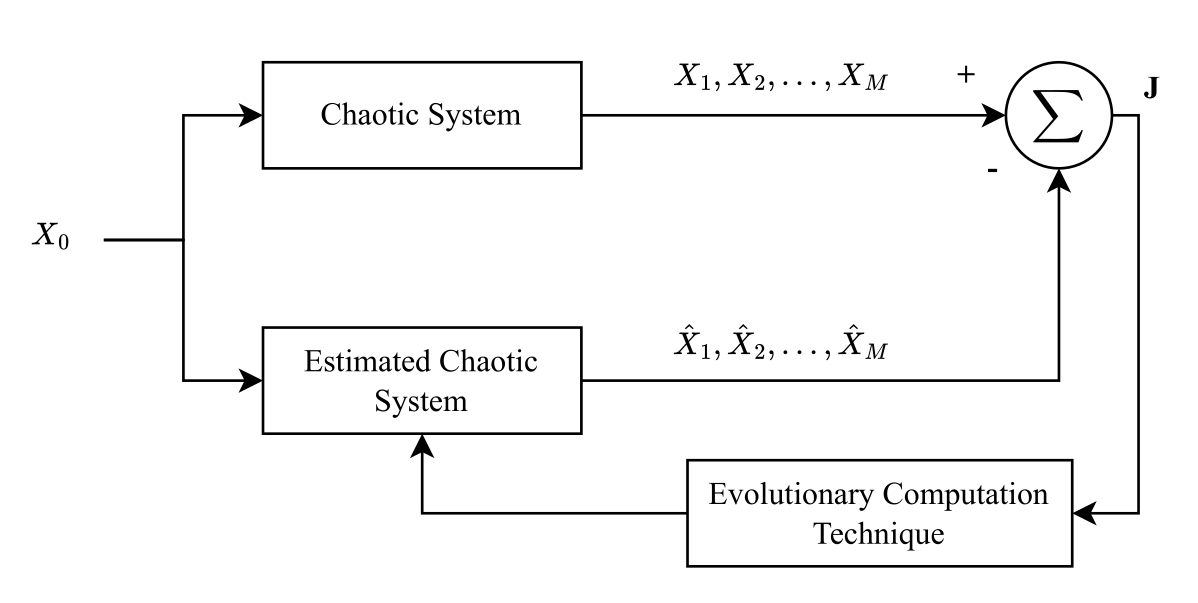
In recent years, Parameter Estimation (PE) has become a topic of growing interest due to its broad applications in science and engineering. An important application is the identification of Chaotic Systems (CS), which enables synchronization and control of chaotic behavior. However, the parameter estimation of CS is a highly nonlinear and multidimensional optimization problem where traditional approaches are often unsuitable. To overcome these limitations, Evolutionary Computation Techniques (ECT) have been widely adopted to tackle complex nonlinear optimization tasks. Recently, classical and modern ECT methods have been proposed for estimating the parameters of chaotic systems. However, mos... More >

Graphical Abstract
A Comparison of Evolutionary Computation Techniques for Parameter Estimation of Chaotic Systems

Free Access | Research Article | 20 November 2025
A Comparative Analysis of Recent Metaheuristic Algorithms for Image Segmentation Using the Minimum Cross-Entropy for Multilevel Thresholding
ICCK Transactions on Swarm and Evolutionary Learning | Volume 1, Issue 2: 50-82, 2025 | DOI: 10.62762/TSEL.2025.417356
Abstract
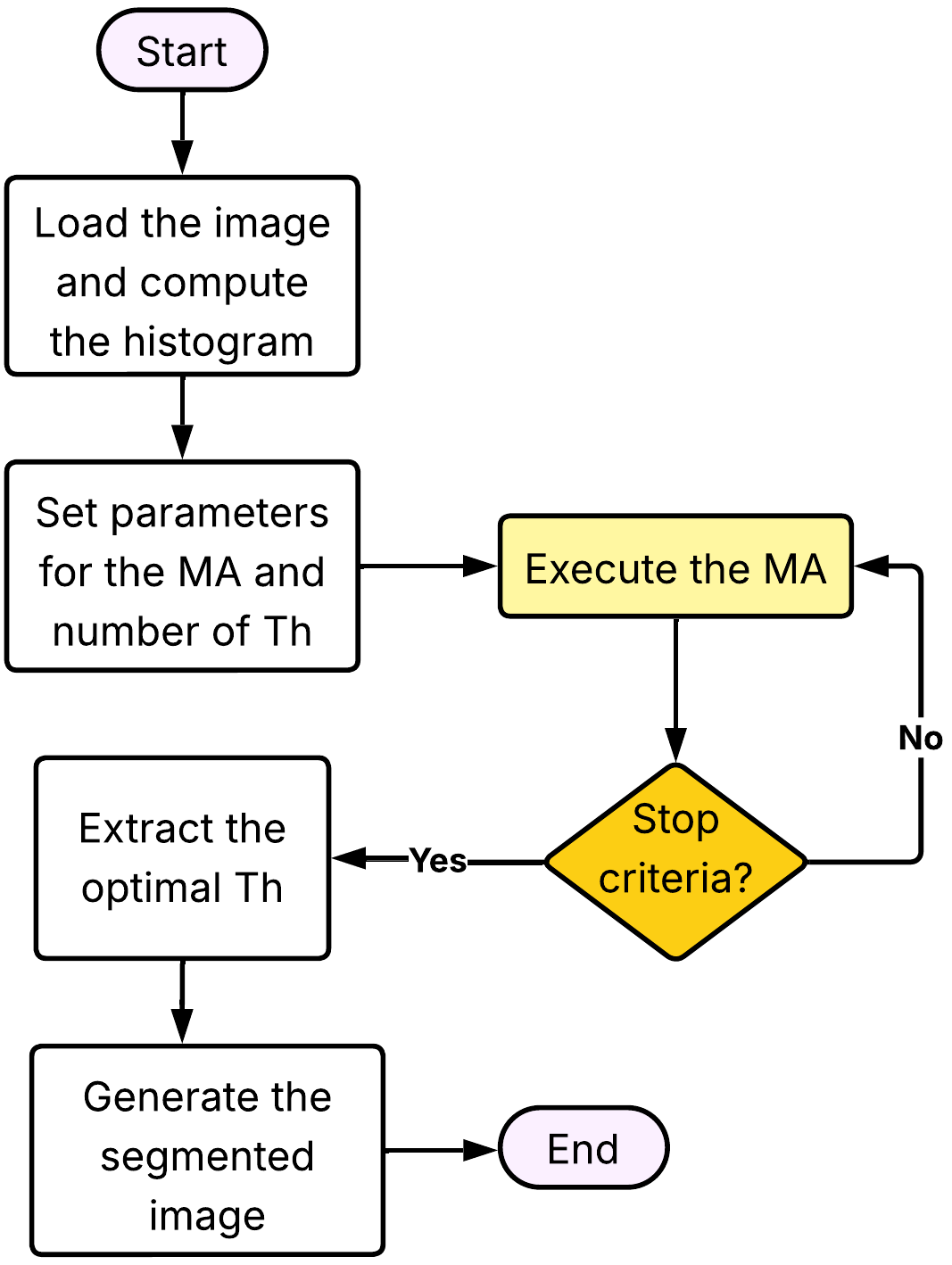
Metaheuristic Algorithms (MAs) are commonly used in the scope of digital image processing, in particular, image segmentation processes. This is evident in Multilevel Thresholding (MTH) methods, where the optimal threshold configuration must be found to produce high-quality segmented images. Minimum Cross-Entropy (MCE) is one of the most prominent techniques for MTH due to its simplicity and efficiency. This article proposes a comparison of recent MAs that have not yet been implemented for image segmentation. Six recently published MAs were implemented and tested on nine complicated images selected from the BSDS300 dataset. Analyzing the results reveals the best algorithm when MCE is used as... More >

Graphical Abstract
A Comparative Analysis of Recent Metaheuristic Algorithms for Image Segmentation Using the Minimum Cross-Entropy for Multilevel Thresholding

Free Access | Research Article | 31 May 2025
Enhanced Differential Evolution: Multi-Strategy Approach with Neighborhood-Based Selection
ICCK Transactions on Swarm and Evolutionary Learning | Volume 1, Issue 1: 12-24, 2025 | DOI: 10.62762/TSEL.2025.182681
Abstract
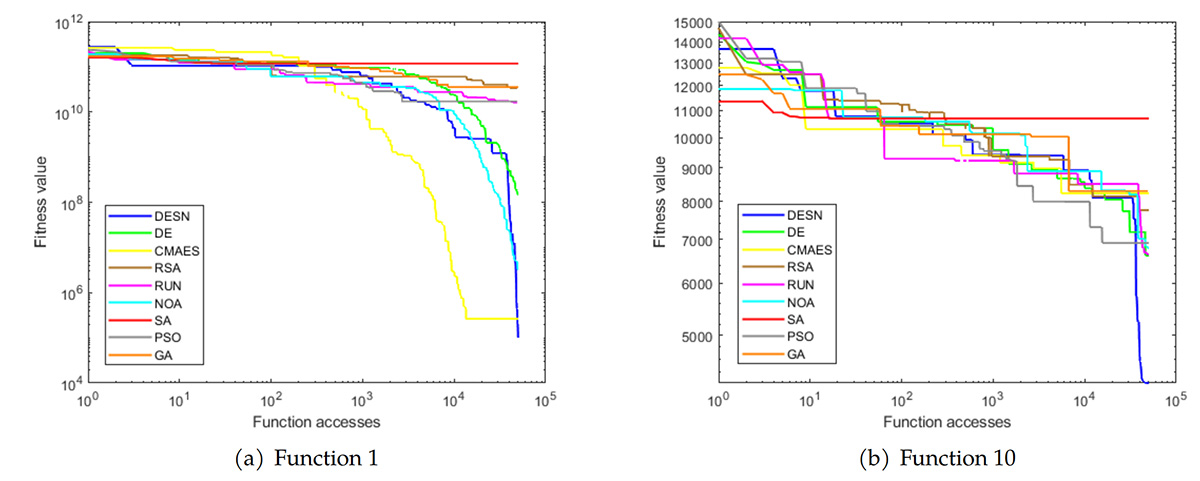
The Differential Evolution (DE) has stood as a cornerstone of Evolutionary Computation (EC), inspiring numerous approaches. Despite its foundational role, the selection stage of DE has received little attention, with only 2% of documented modifications in the literature on this aspect. Recent research has underscored the potential for significant algorithmic improvement through thoughtful modifications to this critical stage, particularly in accelerating the exploitation phase. This study introduces a novel EC strategy rooted in DE principles. To enhance algorithmic exploration, a systematic decision-making process regarding function evaluations is employed to select between two of the most... More >

Graphical Abstract
Enhanced Differential Evolution: Multi-Strategy Approach with Neighborhood-Based Selection

Open Access | Editorial | 19 February 2025
Inaugural Editorial of the Transactions on Swarm and Evolutionary Learning
ICCK Transactions on Swarm and Evolutionary Learning | Volume 1, Issue 1: 1-2, 2025 | DOI: 10.62762/TSEL.2025.550341
Abstract
The ICCK Transactions on Swarm and Evolutionary Learning (TSEL) is a new journal focused on nature-inspired computation. This journal is launched at a time when swarm and evolutionary algorithms have impacted different areas of research. Their progress is not only theoretical but also applications in complex tasks, supporting their adaptability and popularity. In this sense, TSEL aims to be at the forefront of the rapidly evolving landscape of these interdisciplinary fields. On behalf of the editorial team, I warmly welcome scholars, experts, researchers, and readers who support and follow our journal. More >