
ICCK

Haihong Wang

College of Information Science and Technology, Qingdao University of Science and Technology, Qingdao 266061, China

Section 01

Academic Profile

No academic profile information available at the moment.

Section 02

Editorial Roles

This user currently does not serve as an editor for any ICCK journals.

Section 03

ICCK Publications

Free Access | Perspective | 23 September 2025 | Cited: Crossref logo  3 , Scopus 1
Primary Thought on Artificial Intelligence (AI) Enhanced Control Engineering Education
ICCK Transactions on Sensing, Communication, and Control | Volume 2, Issue 3: 215-225, 2025 | DOI: 10.62762/TSCC.2025.254228
Abstract
Artificial intelligence (AI) is reshaping engineering education by offering adaptive, interactive, and data-driven learning environments. This paper examines the primary roles of AI in enhancing control engineering education (CEE), with emphasis on sensing-oriented applications such as sensor-based system modelling, AI-assisted signal processing, and data-driven state estimation-domains that underpin modern sensing, communication, and control systems. The paper discusses how AI tools, particularly MATLAB and Simulink integrated with machine learning and reinforcement learning capabilities, can serve as effective pedagogical instruments for teaching complex topics including nonlinear contro... More >

Graphical Abstract
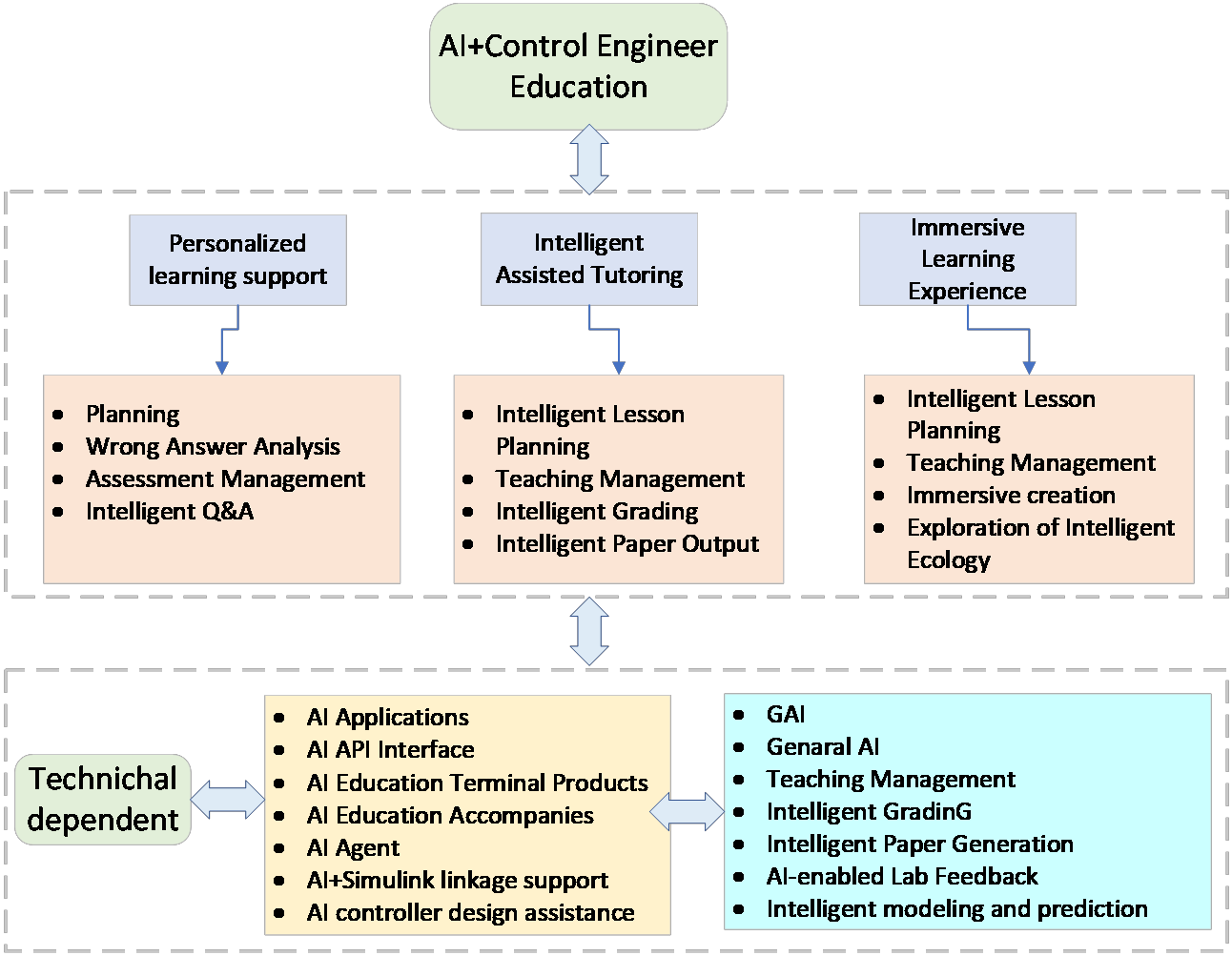
Primary Thought on Artificial Intelligence (AI) Enhanced Control Engineering Education
Free Access | Research Article | 20 July 2025 | Cited: Crossref logo  4 , Scopus 3
Primary Thought on the Incorporation of Intelligent Control and U-control (I-U-control)
ICCK Transactions on Sensing, Communication, and Control | Volume 2, Issue 3: 132-146, 2025 | DOI: 10.62762/TSCC.2025.880778
Abstract
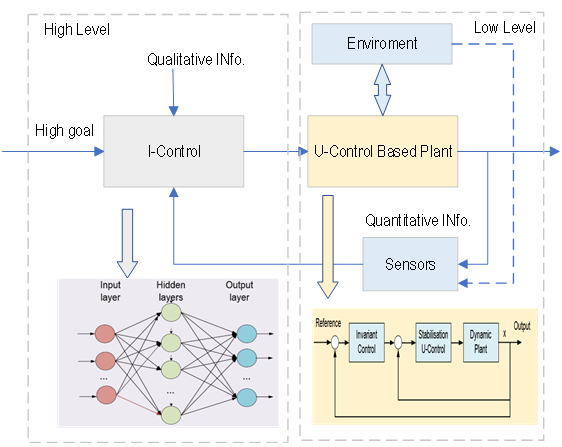
This study explains the main idea and structure of an integrated What-How intelligent control and universal control (I-U-control) system. The proposed framework consists of two control layers. The bottom layer uses the U-control framework to manage 'How' to control within a universal framework. The top layer uses intelligent control (I-control) to coordinate and guide 'What' to achieve both global and local control goals. This study also reviews the configurations, functions, and integration of these two control layers in analysis, design, and applications. More >

Graphical Abstract
Primary Thought on the Incorporation of Intelligent Control and U-control (I-U-control)