ICCK

Inam Ullah

Department of Computer Engineering, Gachon University, Seongnam 13120, Republic of Korea

Section 01

Academic Profile

Inam Ullah (Member, IEEE) received a B.Sc. degree in Electrical Engineering (Telecommunication) from the Department of Electrical Engineering, University of Science and Technology Bannu (USTB), KPK, Pakistan, in 2016 and a Master's and Ph.D. degree in Information and Communication Engineering from the College of Internet of Things (IoT) Engineering, Hohai University (HHU), Changzhou Campus, 213022, China, in 2018 and 2022, respectively. He has completed his postdoc with Brain Korea 2021 (BK21) at the Chungbuk Information Technology Education and Research Center, Chungbuk National University, Cheongju 28644, S Korea, in March 2023. He is currently an Assistant Professor at the Department of Computer Engineering, Gachon University, S Korea. His research interests include Robotics, Internet of Things (IoT), Wireless Sensor Networks (WSNs), Underwater Communication and Localization, Underwater Sensor Networks (USNs), Artificial Intelligence (AI), Big data, Deep learning, etc. He has authored more than 100 peer-reviewed articles on various research topics. He is a TPC member of ACM RACS 2023, Poland, August 6-10, 2023, and IEEE ICC'24 - SAC-10, Denver, CO, USA), 2024. He served as Guest Editors for various journals such as Computers in Human Behavior, Sensors, Electronics, Journal of Marine Science and Engineering, Frontiers in Sensors, Artificial Intelligence and Applications, etc. He is the reviewer of many prominent journals, including IEEE Transactions on Industrial Informatics KSII Transactions on Internet & Information Systems, IEEE Transactions on Vehicular Technology, IEEE Transactions on Intelligent Transportation Systems, Transactions on Sustainable Computing, IEEE ACCESS, Sustainable Energy Technologies and Assessments, Future Generation Computer Systems (FGCS), Computers and Electrical Engineering (Elsevier), Internet of Things (IoT) Journal, Digital Communications & Networks (Elsevier), Springer Nature, Wireless Communication & Mobile Computing (WCMC), Alexandria Engineering Journal Sensors, Electronics, Remote Sensing, Applied Sciences, Computational Intelligence and Neurosciences, etc. His awards and honors include the Best Student Award from the University of Science and Technology Bannu (USTB), KPK, Pakistan, in 2015 and the Prime Minister Laptop Scheme Award from the University of Science and Technology Bannu (USTB), KPK, Pakistan, in April 2015. Top-10 students award of the College of Internet of Things (IoT) Engineering, Hohai University, China in June 2019, Top-100 students award of Hohai University (HHU), China in June 2019, Jiangsu Province Distinguish International Students award (30,000 RMB) in 2019-2020, Certificate of Recognition from Hohai University (HHU), China in 2021 & 2022 both, Top-100 students award of Hohai University (HHU), China in May 2022, Top-10 Outstanding Students Award, Hohai University (HHU), China in June 2022, and Distinguished Alumni Award from University of Science and Technology Bannu (USTB), KPK, Pakistan in Oct. 2022.

Section 02

Editorial Roles

This user currently does not serve as an editor for any ICCK journals.

Section 03

ICCK Publications

Open Access | Review Article | 17 June 2026
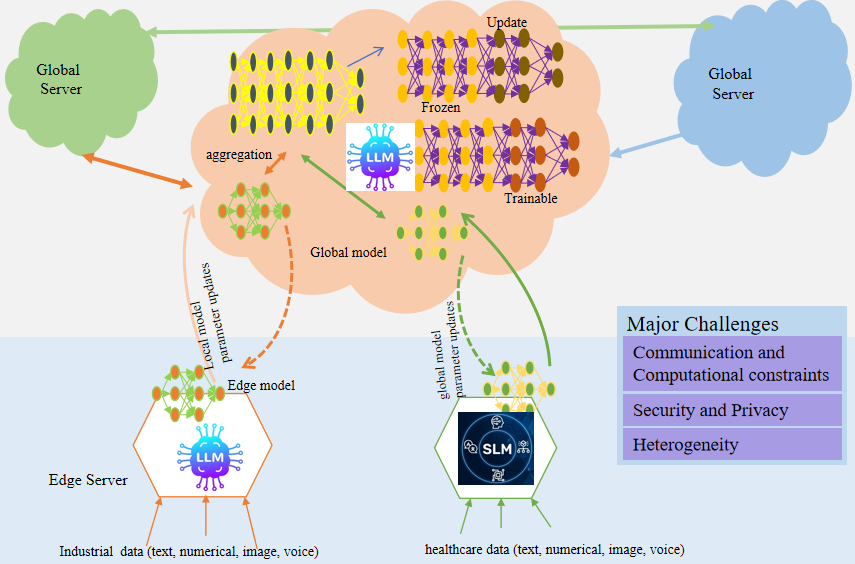
A Comprehensive Survey on Robustness and Privacy in Federated Learning Meets Large Language Model at Edge
Journal of Reliable and Secure Computing | Volume 2, Issue 2: 111-155, 2026 | DOI: 10.62762/JRSC.2026.942513
Abstract
Large Language Models (LLMs) have revolutionized natural language processing, yet their deployment is hindered by data, computation, and privacy constraints. Federated Learning (FL) offers a promising solution by enabling collaborative, privacy-preserving training across distributed devices, while the push for low-latency on-device intelligence further drives LLM integration into FL and edge settings—posing new challenges in heterogeneity and resource limits. This survey comprehensively reviews the integration of LLMs with federated learning, termed FLM, and its deployment at the edge, with particular emphasis on the robustness, privacy, and trustworthiness challenges that emerge across th... More >

Graphical Abstract
A Comprehensive Survey on Robustness and Privacy in Federated Learning Meets Large Language Model at Edge
Free Access | Research Article | 19 May 2025 | Cited: Crossref logo  10 , Scopus 10
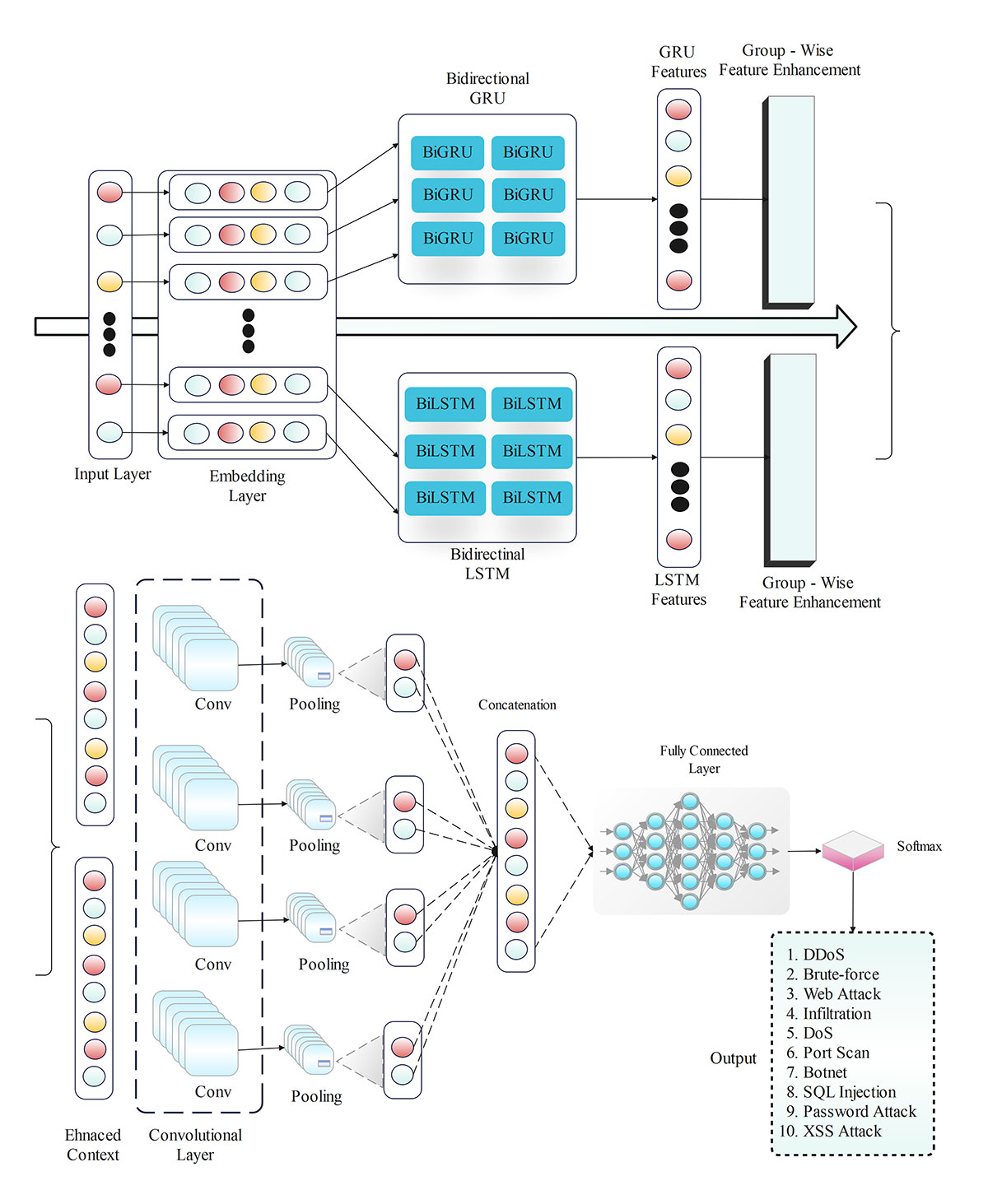
Optimizing Cloud Security with a Hybrid BiLSTM-BiGRU Model for Efficient Intrusion Detection
ICCK Transactions on Sensing, Communication, and Control | Volume 2, Issue 2: 106-121, 2025 | DOI: 10.62762/TSCC.2024.433246
Abstract
To address evolving security challenges in cloud computing, this study proposes a hybrid deep learning architecture integrating Bidirectional Long Short-Term Memory (BiLSTM) and Bidirectional Gated Recurrent Units (BiGRU) for cloud intrusion detection. The BiLSTM-BiGRU model synergizes BiLSTM's long-term dependency modeling with BiGRU's efficient gating mechanisms, achieving a detection accuracy of 96.7% on the CIC-IDS 2018 dataset. It outperforms CNN-LSTM baselines by 2.2% accuracy, 3.3% precision, 3.6% recall, and 3.6% F1-score while maintaining 0.03% false positive rate. The architecture demonstrates operational efficiency through 20% reduced computational latency and 15% lower memory foo... More >

Graphical Abstract
Optimizing Cloud Security with a Hybrid BiLSTM-BiGRU Model for Efficient Intrusion Detection
Open Access | Editorial | 21 November 2024 | Cited: Crossref logo  1 , Scopus 1
Revolutionizing Industries: The Transformative Role of Advanced Computing and Systems
ICCK Transactions on Advanced Computing and Systems | Volume 1, Issue 1: 1-4, 2024 | DOI: 10.62762/TACS.2024.123352
Abstract
I am pleased to introduce a new Transactions focusing on the rapidly evolving field of Advanced Computing and Systems. This journal is intended to serve as a platform for cutting-edge research and technological advancements that have the potential to reshape industries through state-of-the-art computing methodologies. The goal is to foster interdisciplinary collaboration among researchers, practitioners, and industry leaders, facilitating the advancement of computing systems and exploring their impact on real-world applications. Through this publication, I aim to contribute to the academic discourse and help drive innovation in this critical domain. More >
Free Access | Research Article | 09 March 2025
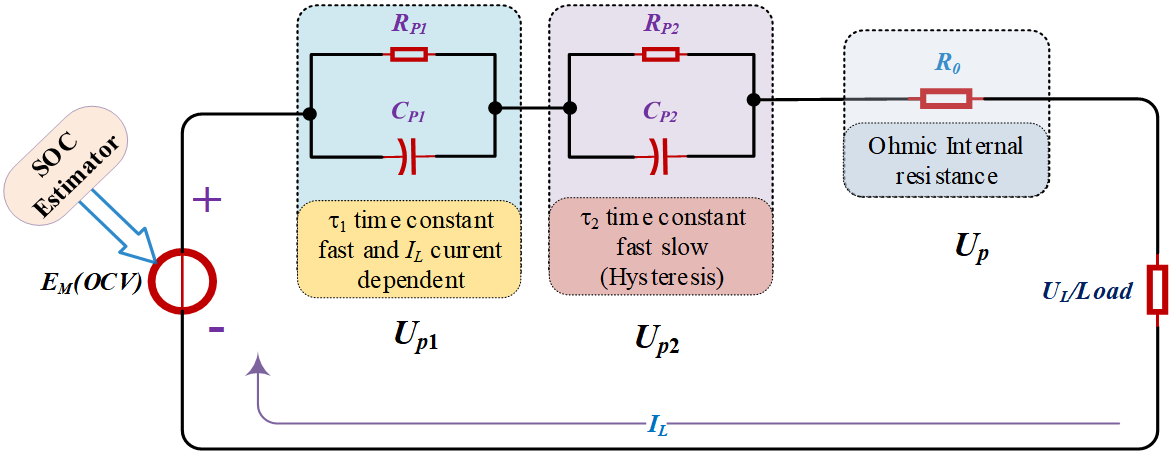
A Novel Time-Variant State of Charge Estimation Based on an Extended Kalman Filtering Algorithm and Dynamic High-Order Modeling of Lithium-Ion Batteries
ICCK Transactions on Power Electronics and Industrial Systems | Volume 1, Issue 1: 1-14, 2025 | DOI: 10.62762/TPEIS.2024.125048
Abstract
Accurately determining the state of charge (SOC) is a critical factor in effective energy management for electric vehicles (EVs). Therefore, SOC variations in battery packs must be assessed with high precision. To simulate the complex processes within EVs that involve lithium-ion batteries (LIBs), an appropriate battery model is essential. Accurate parameter extraction through algorithmic methods is key to reliable SOC estimation. A dynamic, high-order equivalent circuit model, featuring two RC pairs in series with the battery's internal resistance, is employed to enhance parameter extraction. The values of the RC pairs are derived by solving equations that characterize the operational state... More >

Graphical Abstract
A Novel Time-Variant State of Charge Estimation Based on an Extended Kalman Filtering Algorithm and Dynamic High-Order Modeling of Lithium-Ion Batteries
Free Access | Review Article | 04 January 2025 | Cited: Crossref logo  3 , Scopus 3
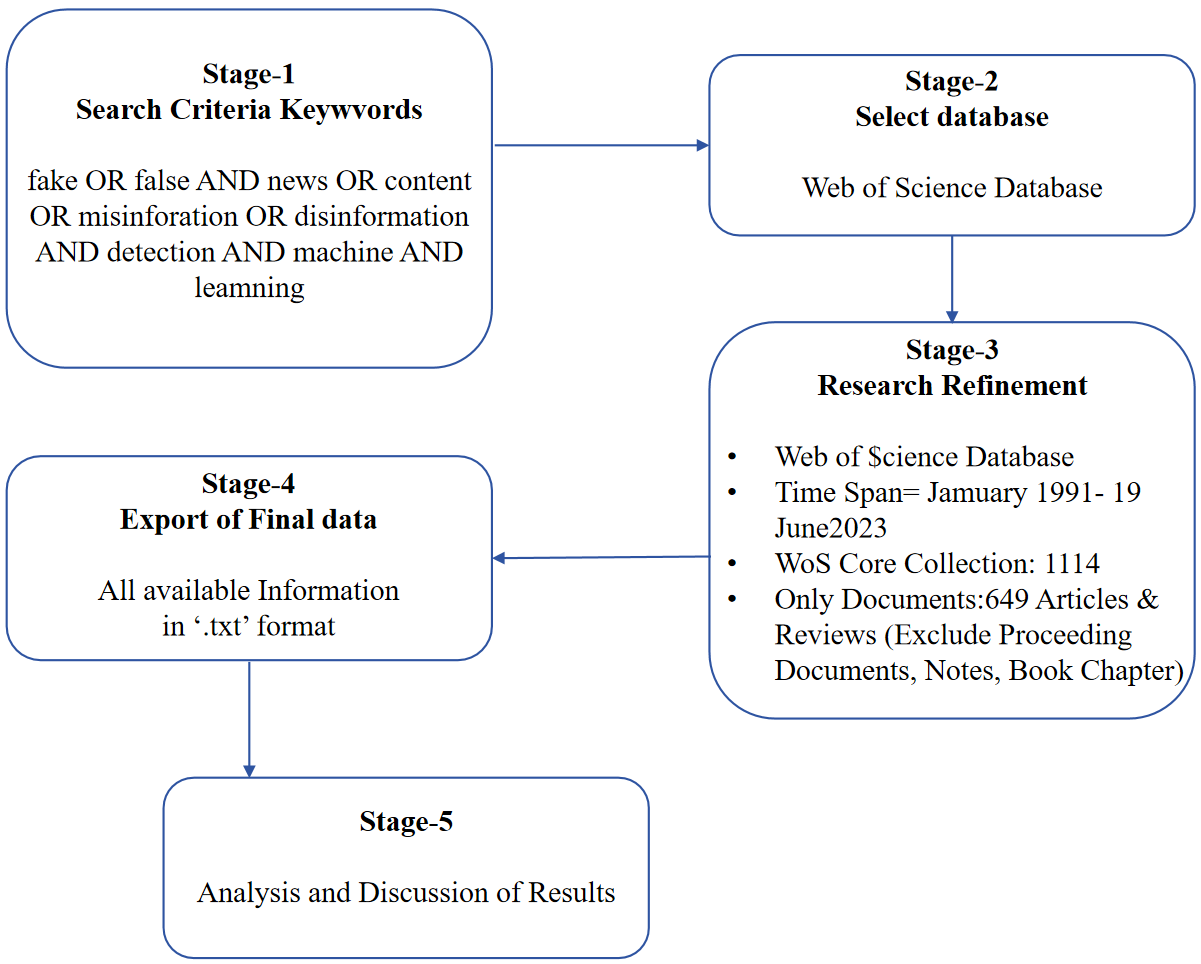
A Machine Learning-Based Scientometric Evaluation for Fake News Detection
ICCK Transactions on Intelligent Systematics | Volume 2, Issue 1: 38-48, 2025 | DOI: 10.62762/TIS.2024.564569
Abstract
Fake news detection has emerged as a critical challenge in the modern information ecosystem, where the rapid proliferation of misinformation threatens democratic processes, public health, and societal stability. Machine learning (ML)-based approaches have demonstrated significant promise in automatically identifying and classifying misleading information across diverse platforms. This study presents a comprehensive scientometric and systematic review of ML-based fake news detection research, drawing on 649 peer-reviewed articles indexed in the Web of Science database (1991--2023). Using bibliometric tools including R-Bibliometrix and VOSviewer, we systematically evaluate publication trends,... More >

Graphical Abstract
A Machine Learning-Based Scientometric Evaluation for Fake News Detection
  • 1
  • 2