

ICCK

Amin Sharafian

College of Mechatronics and Control Engineering, Shenzhen University, Shenzhen 518060, China

Section 01

Academic Profile

No academic profile information available at the moment.

Section 02

Editorial Roles

This user currently does not serve as an editor for any ICCK journals.

Section 03

ICCK Publications

Free Access | Research Article | 09 March 2025
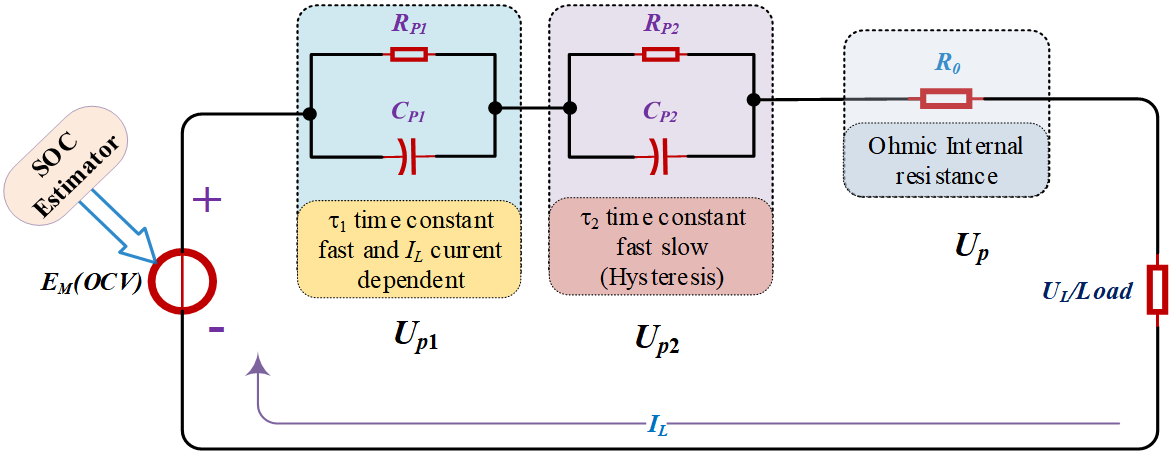
A Novel Time-Variant State of Charge Estimation Based on an Extended Kalman Filtering Algorithm and Dynamic High-Order Modeling of Lithium-Ion Batteries
ICCK Transactions on Power Electronics and Industrial Systems | Volume 1, Issue 1: 1-14, 2025 | DOI: 10.62762/TPEIS.2024.125048
Abstract
Accurately determining the state of charge (SOC) is a critical factor in effective energy management for electric vehicles (EVs). Therefore, SOC variations in battery packs must be assessed with high precision. To simulate the complex processes within EVs that involve lithium-ion batteries (LIBs), an appropriate battery model is essential. Accurate parameter extraction through algorithmic methods is key to reliable SOC estimation. A dynamic, high-order equivalent circuit model, featuring two RC pairs in series with the battery's internal resistance, is employed to enhance parameter extraction. The values of the RC pairs are derived by solving equations that characterize the operational state... More >

Graphical Abstract
A Novel Time-Variant State of Charge Estimation Based on an Extended Kalman Filtering Algorithm and Dynamic High-Order Modeling of Lithium-Ion Batteries
Open Access | Research Article | 19 February 2025
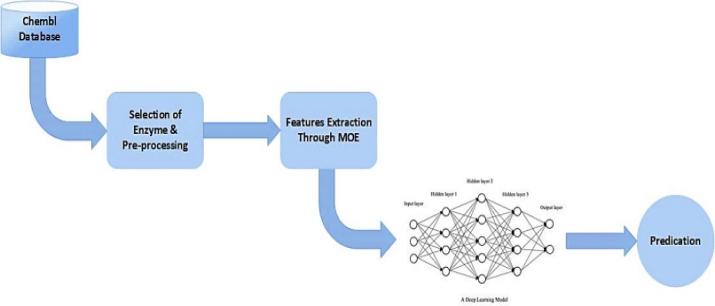
Prediction of Coronavirus Inhibitors in Drug Discovery through Deep Learning
ICCK Transactions on Advanced Computing and Systems | Volume 1, Issue 1: 19-31, 2025 | DOI: 10.62762/TACS.2024.974479
Abstract
In the therapy of Coronavirus, the drug target is a demanding task to find novel medicine. A bunch of pharmaceutics procedures are employed to recognize these mutual actions. But they are exhausting and high-priced. Keeping this in view, computational procedures are widely approached to determine the mutual action of the medicine and their respective proteins. Many scientists have applied ML approaches to deduce attributes from simplified molecular-input line systems (for medicine) and protein sequences. Such approaches dropped the proteins' chemical, physical, and structural characteristics and the respective medicine. Our job is to undertake deep learning approaches to detect coronavirus e... More >

Graphical Abstract
Prediction of Coronavirus Inhibitors in Drug Discovery through Deep Learning
Free Access | Review Article | 04 January 2025 | Cited: Crossref logo  3 , Scopus 3
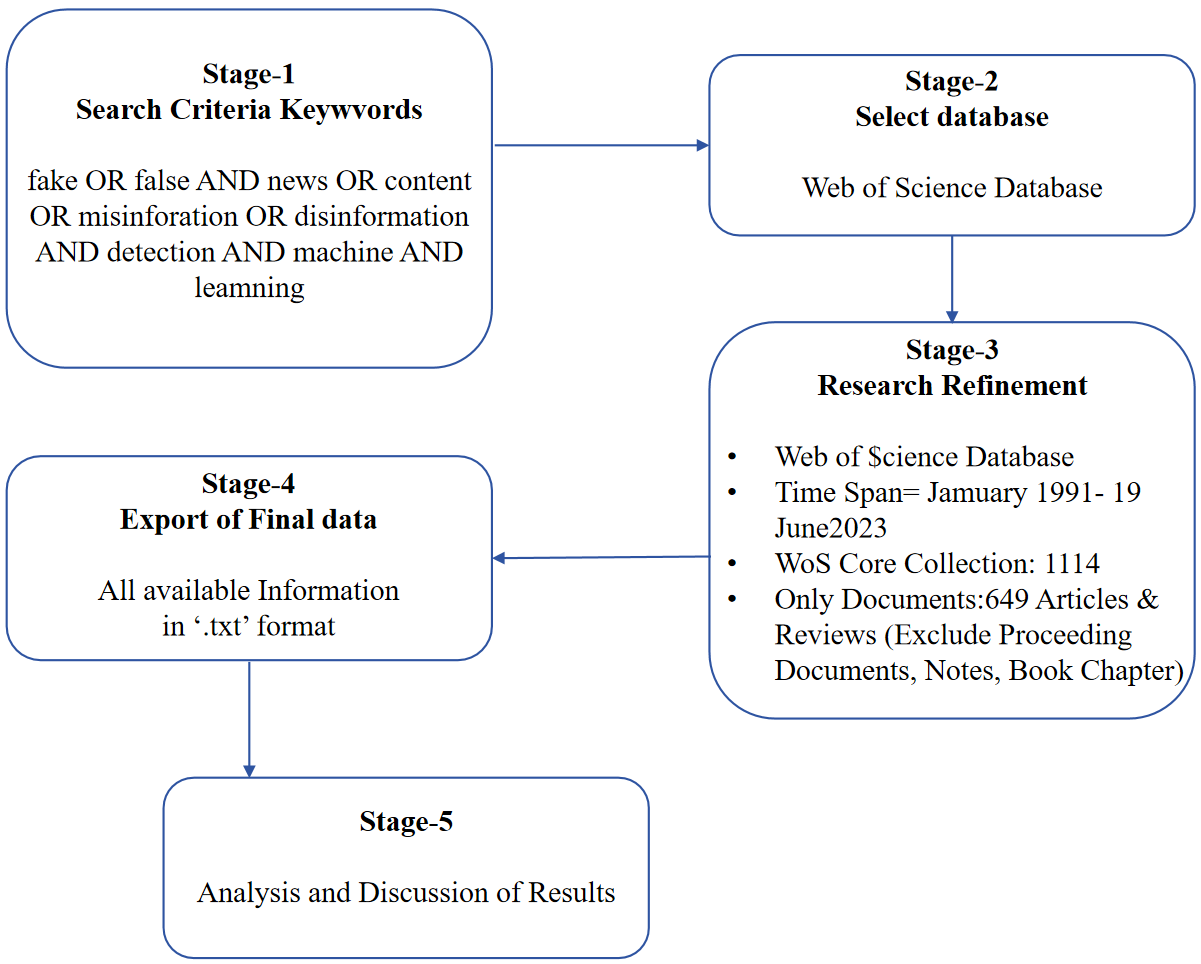
A Machine Learning-Based Scientometric Evaluation for Fake News Detection
ICCK Transactions on Intelligent Systematics | Volume 2, Issue 1: 38-48, 2025 | DOI: 10.62762/TIS.2024.564569
Abstract
Fake news detection has emerged as a critical challenge in the modern information ecosystem, where the rapid proliferation of misinformation threatens democratic processes, public health, and societal stability. Machine learning (ML)-based approaches have demonstrated significant promise in automatically identifying and classifying misleading information across diverse platforms. This study presents a comprehensive scientometric and systematic review of ML-based fake news detection research, drawing on 649 peer-reviewed articles indexed in the Web of Science database (1991--2023). Using bibliometric tools including R-Bibliometrix and VOSviewer, we systematically evaluate publication trends,... More >

Graphical Abstract
A Machine Learning-Based Scientometric Evaluation for Fake News Detection
Open Access | Research Article | 26 December 2024 | Cited: Crossref logo  2 , Scopus 3
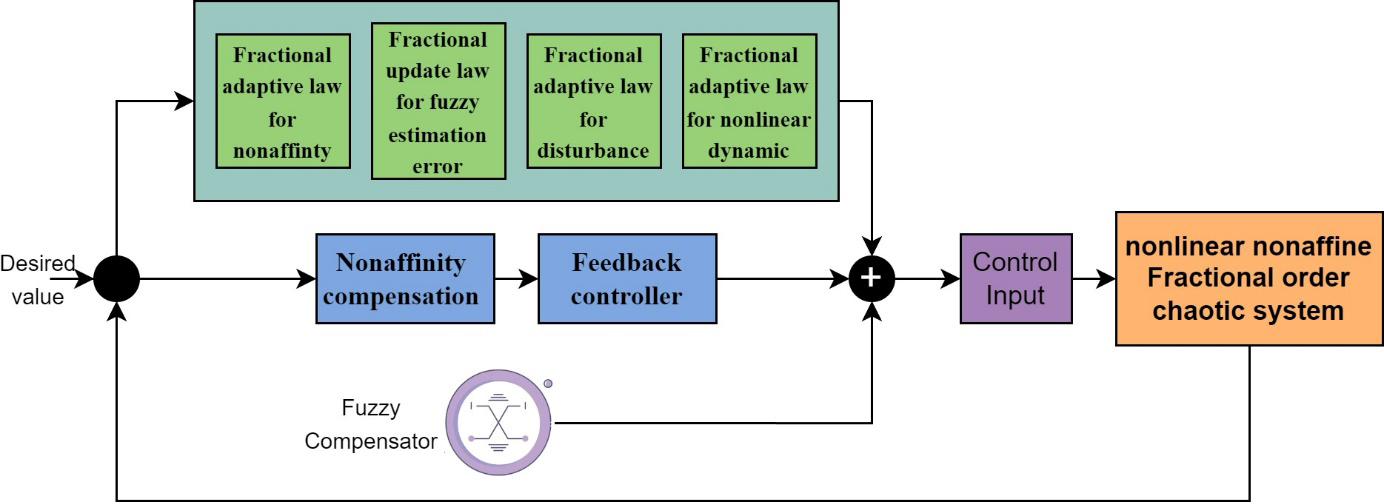
Adaptive Fuzzy Controller for Chaos Suppression in Nonlinear Fractional Order Systems
ICCK Transactions on Advanced Computing and Systems | Volume 1, Issue 1: 5-18, 2024 | DOI: 10.62762/TACS.2024.318686
Abstract
This paper introduces a novel method for controlling a class of nonlinear non-affine systems with fractional-order dynamics, using an adaptive fuzzy technique. By incorporating a novel fractional update law in the design procedure, the controller can effectively suppress chaotic behaviour and smoothly track desired trajectories. The proposed method offers key advantages such as robustness against uncertainties, fast error convergence to the neighbourhood of zero, and satisfactory disturbance rejection performance. To demonstrate the capabilities of the proposed fractional controller, simulation results were conducted using Python on a fractional order Arneodo chaotic system. The results high... More >

Graphical Abstract
Adaptive Fuzzy Controller for Chaos Suppression in Nonlinear Fractional Order Systems