Summary

Altaf Hussain received his Bachelor Degree in Computer Science from University of Peshawar, Pakistan in 2013 & Master Degree in Computer Science from The University of Agriculture Peshawar, Pakistan in 2017, respectively. He has more than 7 years of teaching & research experience. Currently, he is a PhD Scholar in School of Computer Science and Technology, Chongqing University of Posts and Telecommunications, Chongqing, China. His Research interest includes Artificial Intelligence, Machine Learning, Deep Learning, Gesture Detection, Wireless Networks, Sensor Networks, Smart Healthcare, and UAV Networks. He can be contacted at Email: [email protected]

Edited Journals

ICCK Contributions


Open Access | Research Article | 17 December 2025
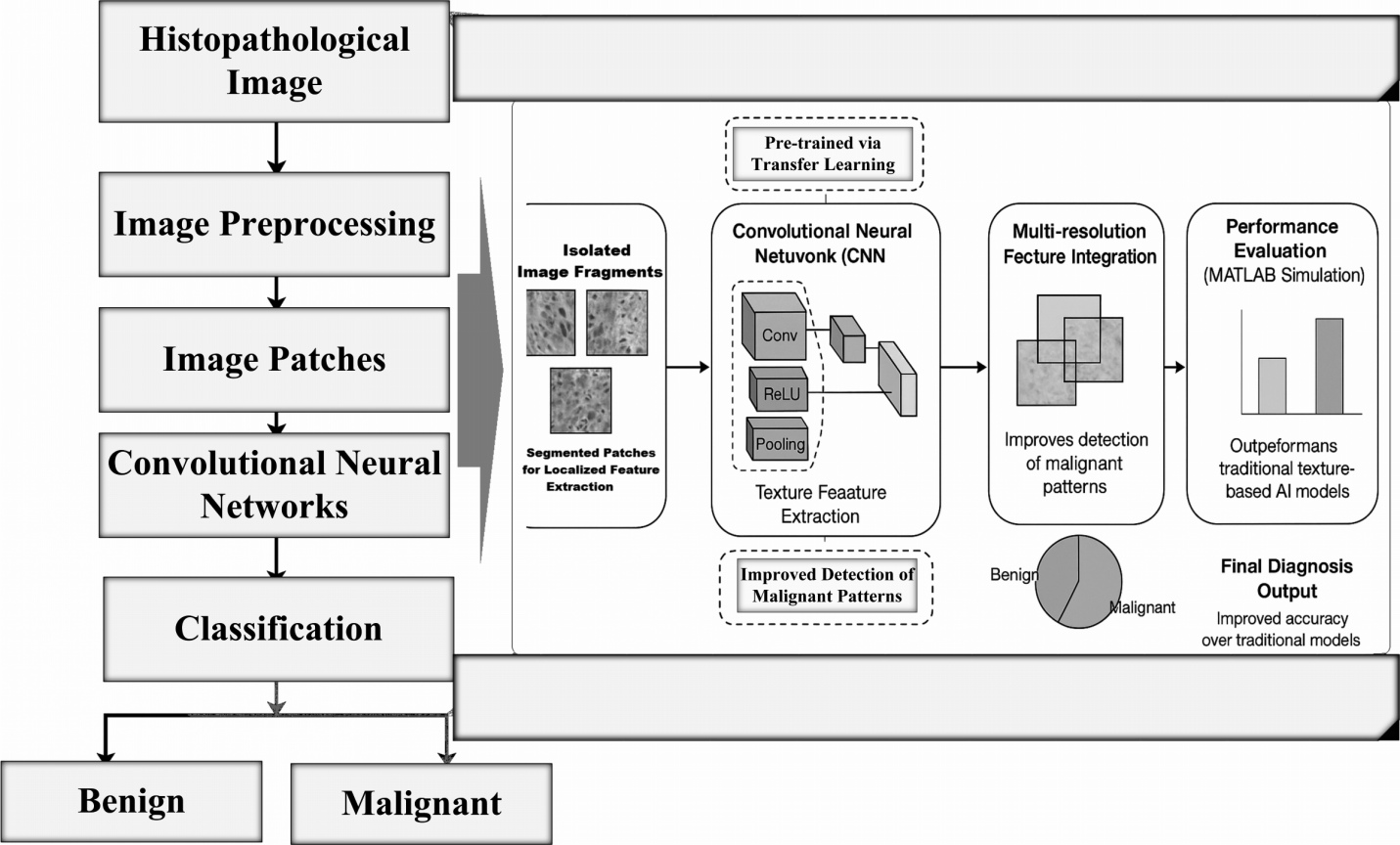
Breast Cancer Image Classification into Benign and Malignant using an Intelligent CNN Framework
Biomedical Informatics and Smart Healthcare | Volume 1, Issue 3: 98-117, 2025 | DOI: 10.62762/BISH.2025.936105
Abstract
Breast cancer is one of the most prevalent and life-threatening diseases among women worldwide. Accurate diagnosis from histopathological biopsy samples is essential, yet manual examination is time-consuming and subject to inter-observer variability, particularly given the shortage of trained pathologists alongside the increasing number of cases. Deep learning, especially Convolutional Neural Networks (CNNs), has emerged as a powerful tool for classifying medical images by automatically extracting discriminative features from raw data. In this study, we investigate the use of the publicly available Breast Cancer Histopathological (BreakHis) image database, which contains benign and malignant... More >

Graphical Abstract
Breast Cancer Image Classification into Benign and Malignant using an Intelligent CNN Framework

Open Access | Research Article | 18 December 2025
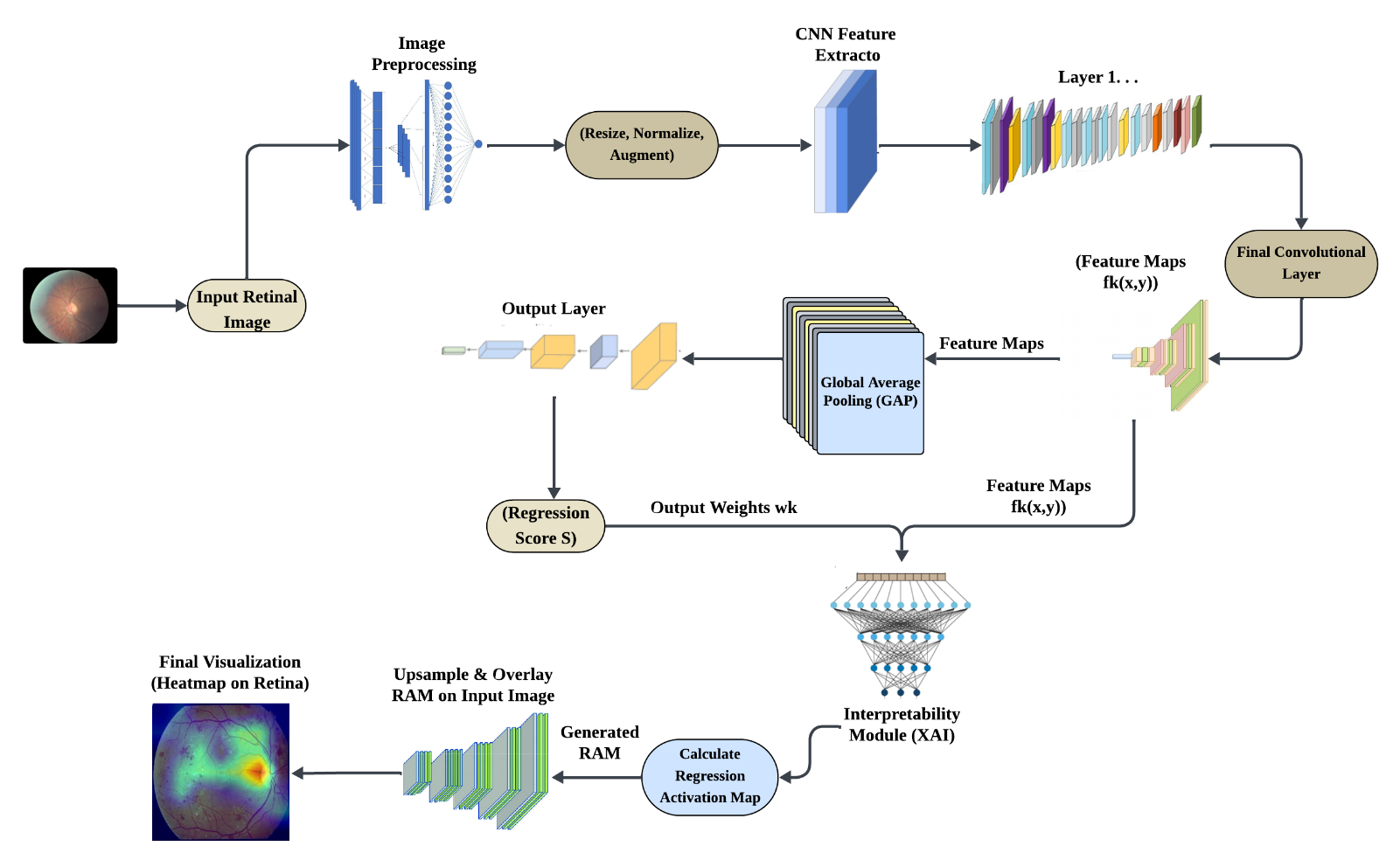
Interpretable Deep Learning for Diabetic Retinopathy Grading using Regression Activation Maps
ICCK Journal of Image Analysis and Processing | Volume 1, Issue 4: 196-209, 2025 | DOI: 10.62762/JIAP.2025.346328
Abstract
The escalating global prevalence of diabetes renders effective screening for Diabetic Retinopathy (DR) indispensable to prevent irreversible vision loss. Although deep learning models, particularly Convolutional Neural Networks (CNNs), attain diagnostic accuracy comparable to that of human experts, their black-box nature erodes clinical trust. To harmonize accuracy with interpretability, this paper proposes a novel CNN architecture that reformulates DR grading as a regression task. By substituting traditional dense layers with a Global Average Pooling (GAP) layer, our approach substantially reduces model complexity and training time while enabling the generation of Regression Activation Maps... More >

Graphical Abstract
Interpretable Deep Learning for Diabetic Retinopathy Grading using Regression Activation Maps

Open Access | Research Article | 14 December 2025
An Integrated Deep Learning Framework for Real-Time Monitoring of Student Engagement in Smart Classrooms
ICCK Journal of Image Analysis and Processing | Volume 1, Issue 4: 172-183, 2025 | DOI: 10.62762/JIAP.2025.377388
Abstract
Studies have established that an ideal environment is critical for maximizing a student's learning potential. For educators, monitoring student behavior, engagement, and psychological state is essential for ensuring effective instruction. This paper introduces an automated learning analytics system designed to assist teachers by analyzing these parameters and providing actionable feedback. The system utilizes multiple cameras in conjunction with deep learning and computer vision to record and analyze classroom sessions, assessing student movement, gestures, and posture to generate summary reports. The framework integrates several high-performance models to achieve this. For facial recognitio... More >

Graphical Abstract
An Integrated Deep Learning Framework for Real-Time Monitoring of Student Engagement in Smart Classrooms

Open Access | Research Article | 21 September 2025
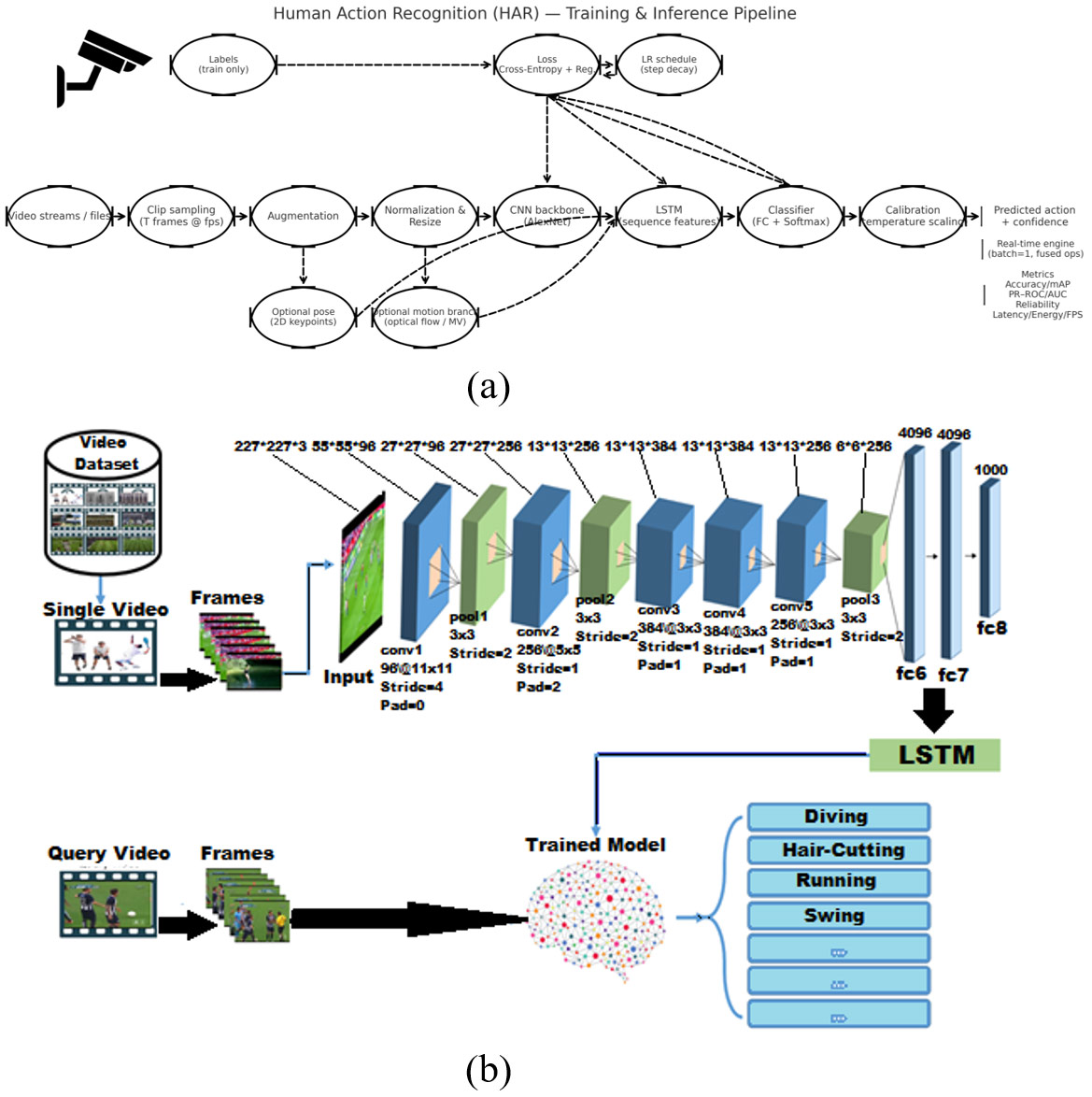
Detection and Recognition of Real-Time Violence and Human Actions Recognition in Surveillance using Lightweight MobileNet Model
ICCK Journal of Image Analysis and Processing | Volume 1, Issue 3: 125-146, 2025 | DOI: 10.62762/JIAP.2025.839123
Abstract
Real-time detection of violent behavior through surveillance technologies is increasingly important for public safety. This study tackles the challenge of automatically distinguishing violent from non-violent activities in continuous video streams. Traditional surveillance depends on human monitoring, which is time-consuming and error-prone, highlighting the need for intelligent systems that detect abnormal behaviors accurately with low computational cost. A key difficulty lies in the ambiguity of defining violent actions and the reliance on large annotated datasets, which are costly to produce. Many existing approaches also demand high computational resources, limiting real-time deployment... More >

Graphical Abstract
Detection and Recognition of Real-Time Violence and Human Actions Recognition in Surveillance using Lightweight MobileNet Model

Free Access | Research Article | 19 May 2025
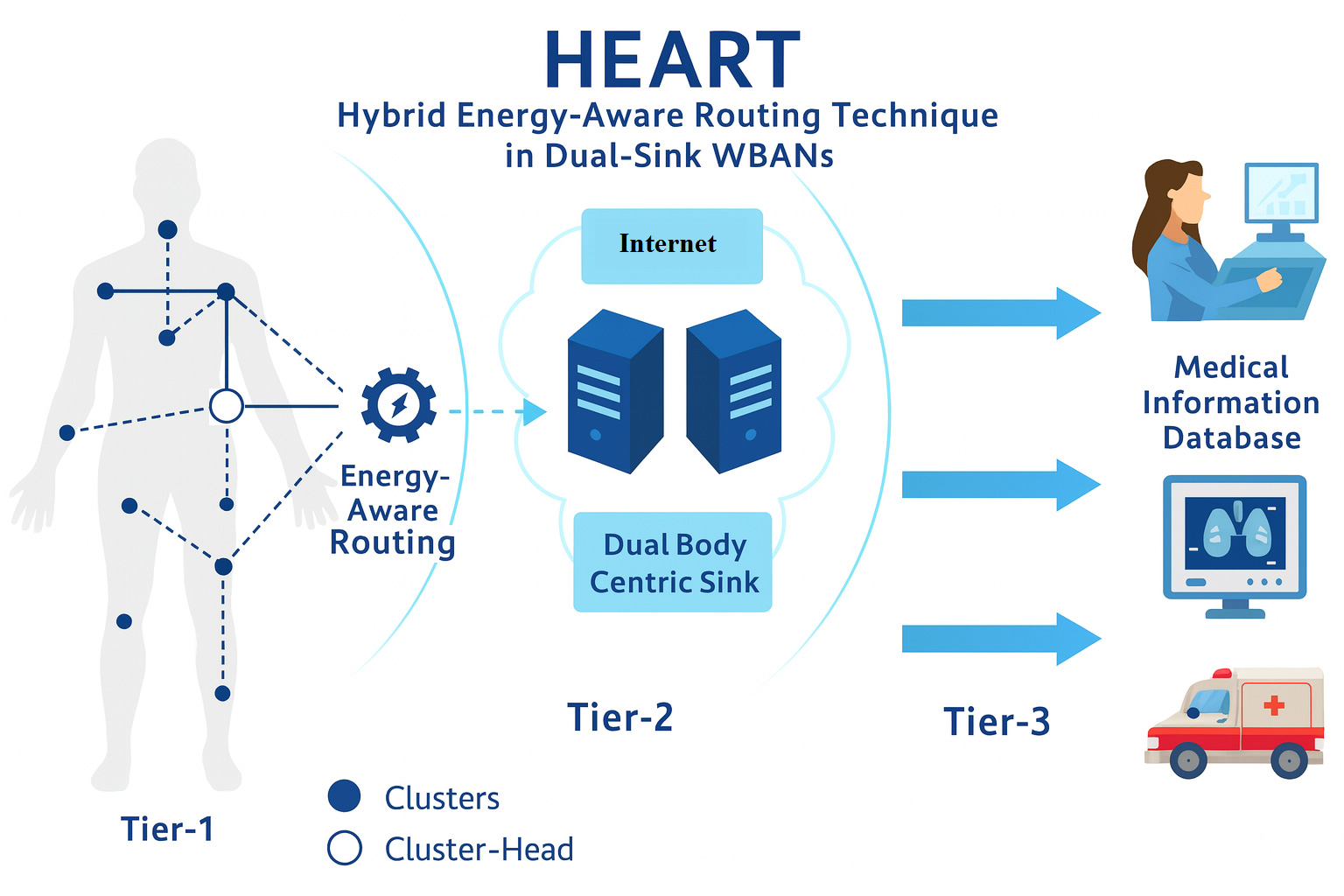
Delay and Energy Aware Routing (DEAR) Protocol for UAV Networks
ICCK Transactions on Intelligent Unmanned Systems | Volume 2, Issue 1: 1-14, 2025 | DOI: 10.62762/TIUS.2024.271748
Abstract
The proliferation of Unmanned Aerial Vehicles (UAVs) in Flying Ad-Hoc Networks (FANETs) has brought about significant advancements in applications such as surveillance, search and rescue, and environmental monitoring. However, the unique characteristics of UAV networks, including high mobility, limited energy resources, and the need for low-latency communication, pose substantial challenges for efficient and reliable communication. As a result, the design of routing protocols that can effectively manage energy consumption and reduce transmission delays has become a critical area of research. In FANETs, energy efficiency and delay minimization are two key concerns that directly affect the per... More >

Graphical Abstract
Delay and Energy Aware Routing (DEAR) Protocol for UAV Networks
1 2