ICCK

Atif Ali Wagan

Chongqing University of Posts and Telecommunications

Section 01

Academic Profile

No academic profile information available at the moment.

Section 02

Editorial Roles

This user currently does not serve as an editor for any ICCK journals.

Section 03

ICCK Publications

Open Access | Research Article | 11 February 2026
GeoGaze: A Real-time, Lightweight Gaze Estimation Framework via Geometric Landmark Analysis
ICCK Transactions on Advanced Computing and Systems | Volume 2, Issue 2: 107-115, 2026 | DOI: 10.62762/TACS.2025.798133
Abstract
Gaze estimation plays a vital role in human-computer interaction, driver monitoring, and psychological analysis. While state-of-the-art appearance-based methods achieve high accuracy using deep learning, they often demand substantial computational resources, including GPU acceleration and extensive training, limiting their use in resource-constrained or real-time scenarios. This paper introduces GeoGaze, a novel, lightweight, training-free framework that infers categorical gaze direction (“Left”, “Center”, “Right”) solely from geometric analysis of facial landmarks. Leveraging the high-precision 478-point face mesh and iris landmarks provided by MediaPipe, GeoGaze computes a simp... More >

Graphical Abstract
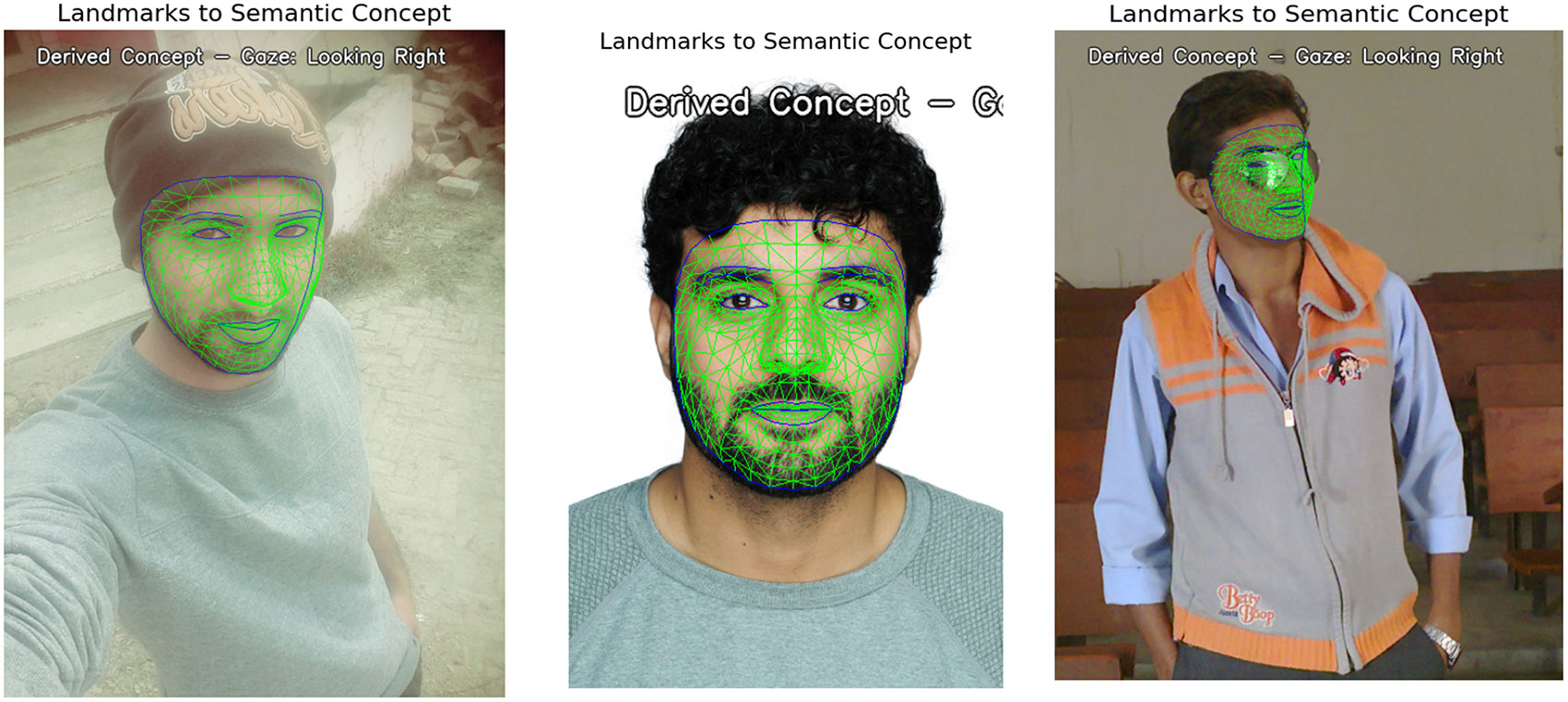
GeoGaze: A Real-time, Lightweight Gaze Estimation Framework via Geometric Landmark Analysis
Open Access | Research Article | 17 December 2025
Breast Cancer Image Classification into Benign and Malignant using an Intelligent CNN Framework
Biomedical Informatics and Smart Healthcare | Volume 1, Issue 3: 98-117, 2025 | DOI: 10.62762/BISH.2025.936105
Abstract
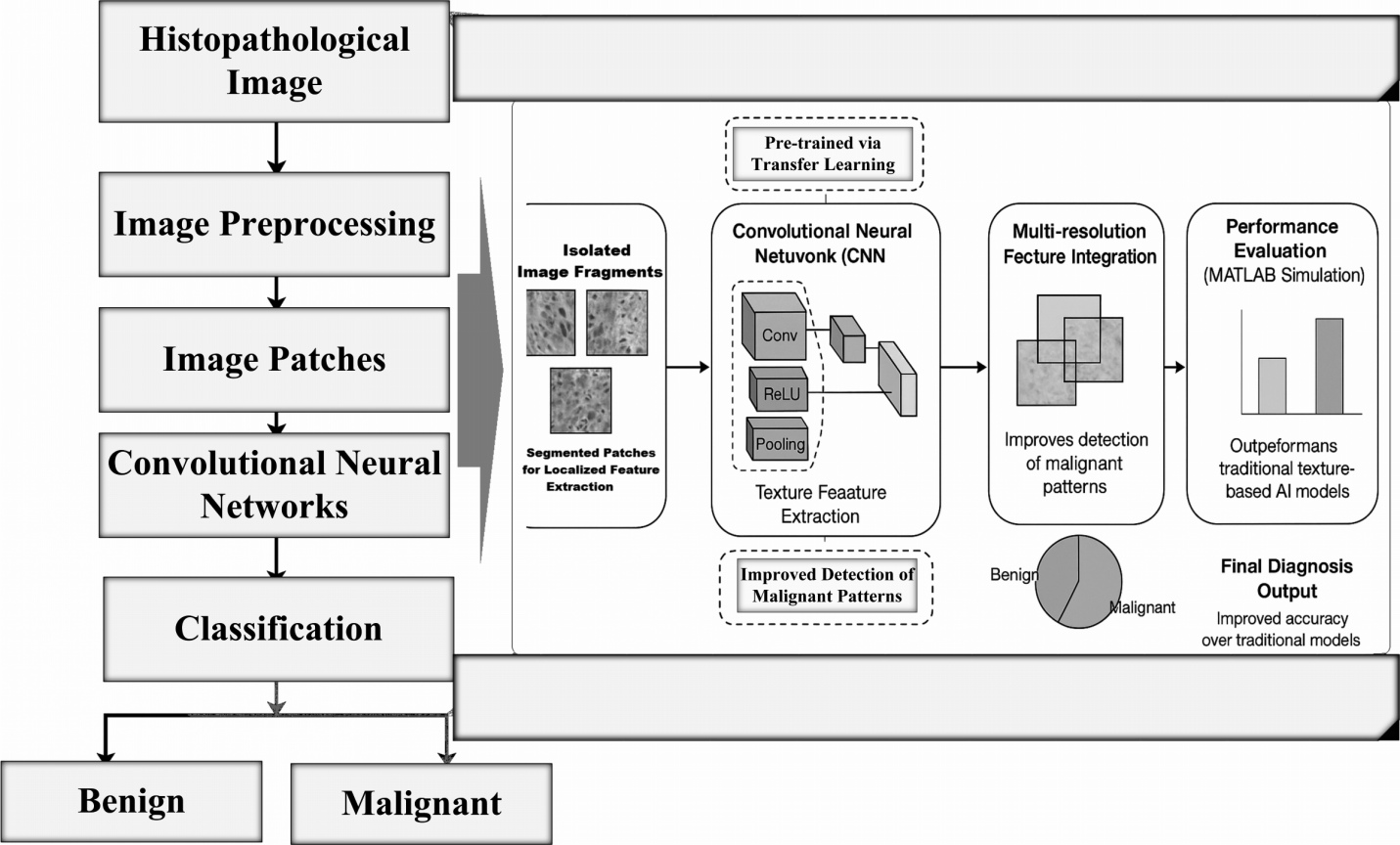
Breast cancer is one of the most prevalent and life-threatening diseases among women worldwide. Accurate diagnosis from histopathological biopsy samples is essential, yet manual examination is time-consuming and subject to inter-observer variability, particularly given the shortage of trained pathologists alongside the increasing number of cases. Deep learning, especially Convolutional Neural Networks (CNNs), has emerged as a powerful tool for classifying medical images by automatically extracting discriminative features from raw data. In this study, we investigate the use of the publicly available Breast Cancer Histopathological (BreakHis) image database, which contains benign and malignant... More >

Graphical Abstract
Breast Cancer Image Classification into Benign and Malignant using an Intelligent CNN Framework
Open Access | Research Article | 18 December 2025
Interpretable Deep Learning for Diabetic Retinopathy Grading using Regression Activation Maps
ICCK Journal of Image Analysis and Processing | Volume 1, Issue 4: 196-209, 2025 | DOI: 10.62762/JIAP.2025.346328
Abstract
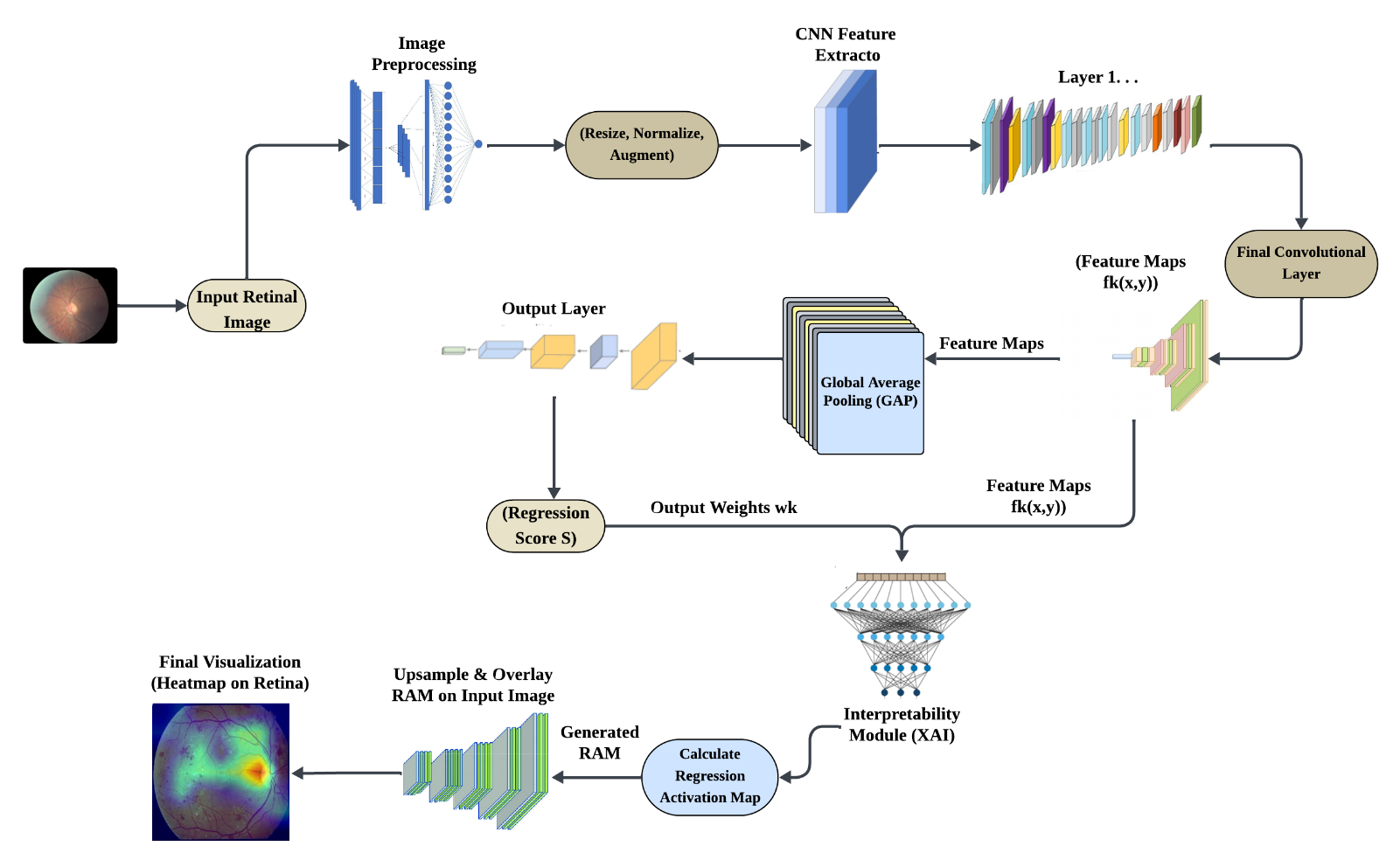
The escalating global prevalence of diabetes renders effective screening for Diabetic Retinopathy (DR) indispensable to prevent irreversible vision loss. Although deep learning models, particularly Convolutional Neural Networks (CNNs), attain diagnostic accuracy comparable to that of human experts, their black-box nature erodes clinical trust. To harmonize accuracy with interpretability, this paper proposes a novel CNN architecture that reformulates DR grading as a regression task. By substituting traditional dense layers with a Global Average Pooling (GAP) layer, our approach substantially reduces model complexity and training time while enabling the generation of Regression Activation Maps... More >

Graphical Abstract
Interpretable Deep Learning for Diabetic Retinopathy Grading using Regression Activation Maps