


ICCK

Xiaoyan Wang

Department of Electronic Information Engineering, Huaiyin Institute of Technology, Huai'an 223001, China

Section 01

Academic Profile

No academic profile information available at the moment.

Section 02

Editorial Roles

This user currently does not serve as an editor for any ICCK journals.

Section 03

ICCK Publications

Free Access | Research Article | 01 September 2026
Low-Light Fire and Smoke Detection in Electric Vehicles via a Lightweight Dual-Branch Architecture with Adaptive Reflectance Enhancement
ICCK Transactions on Intelligent Systematics | Volume 3, Issue 3: 145-161, 2026 | DOI: 10.62762/TIS.2026.406065
Abstract
Fire and smoke detection in electric vehicle environments is essential for safety monitoring, yet existing methods often perform poorly under low-light conditions because of weak feature representation, flame overexposure, and limited nighttime data. In addition, many detection models cannot effectively balance accuracy and real-time efficiency, which restricts their deployment in practical applications. To address these issues, this study proposes a lightweight dual-branch detection framework for low-light fire and smoke recognition in electric vehicle environments. The proposed method integrates reflectance enhancement, adaptive feature weighting, and multi-scale feature learning within a... More >

Graphical Abstract
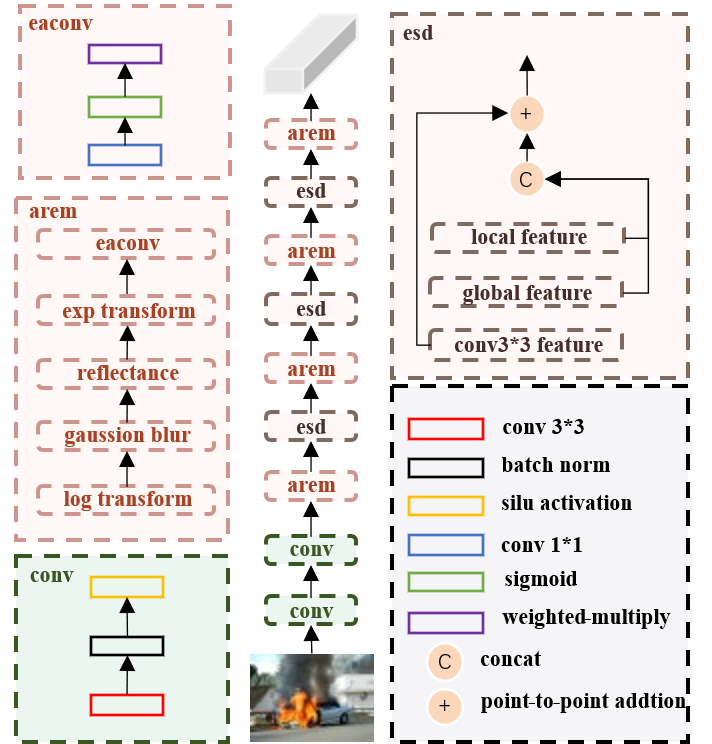
Low-Light Fire and Smoke Detection in Electric Vehicles via a Lightweight Dual-Branch Architecture with Adaptive Reflectance Enhancement
Free Access | Research Article | 29 June 2026
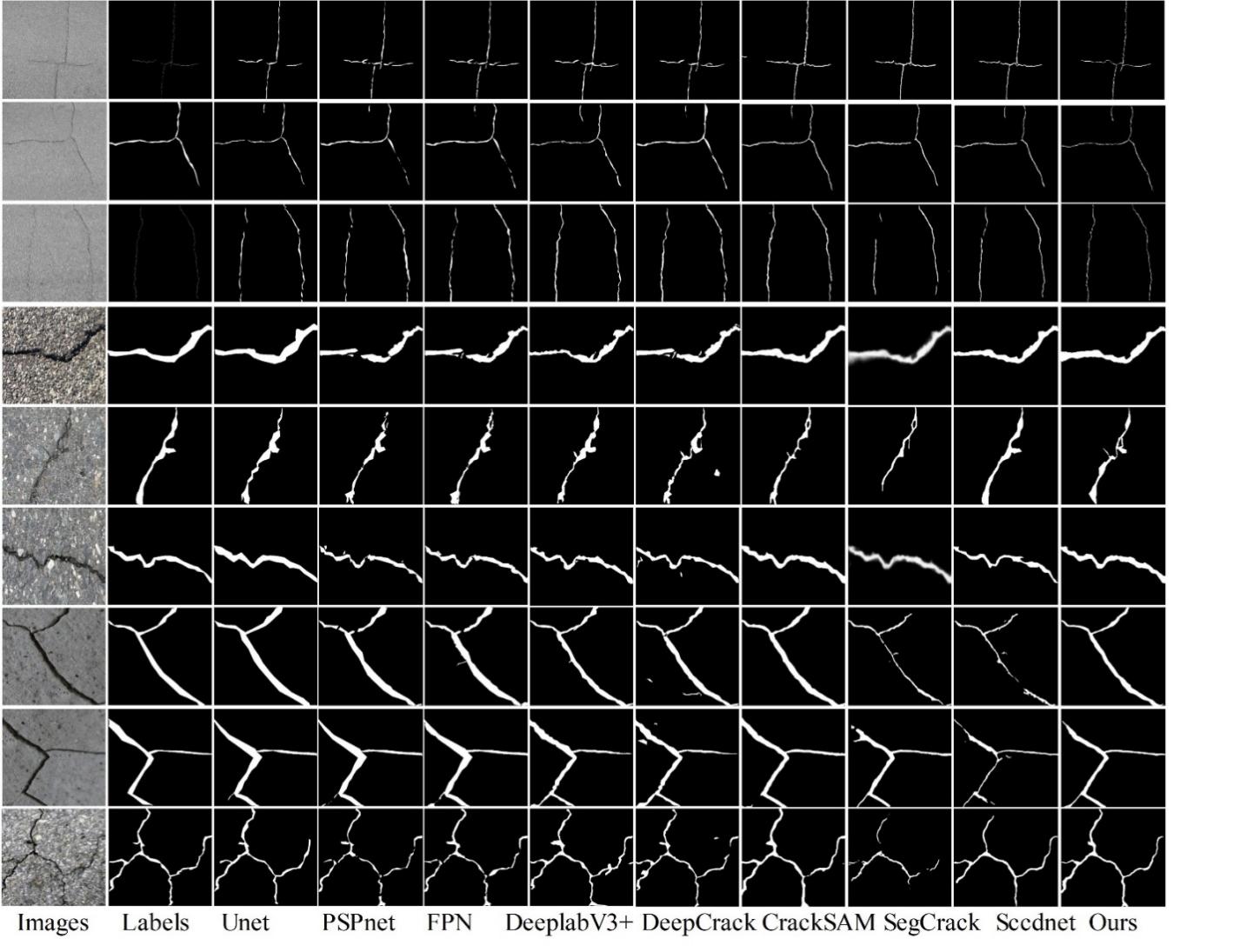
Road Crack Segmentation Algorithm Based on Multiple Attention Fusion and Defect Correction
ICCK Transactions on Intelligent Systematics | Volume 3, Issue 2: 126-144, 2026 | DOI: 10.62762/TIS.2025.325163
Abstract
This paper proposes an enhanced U-Net-based segmentation framework for road crack detection that effectively addresses issues such as incomplete segmentation, detail loss, environmental complexity, and crack-pixel imbalance. The model integrates multiple functional modules to improve segmentation performance across varying crack types and scales. Specifically, an atrous residual convolution (ARC) module is embedded in the encoder to expand the receptive field and capture large-scale features. A multiple attention fusion module (MAFM), combined with an efficient channel attention mechanism, is introduced at the bridge stage to emphasize crack-relevant features. In the decoder, a defect correc... More >

Graphical Abstract
Road Crack Segmentation Algorithm Based on Multiple Attention Fusion and Defect Correction
Free Access | Research Article | 10 March 2026 | Cited: Crossref logo  9 , Scopus 9
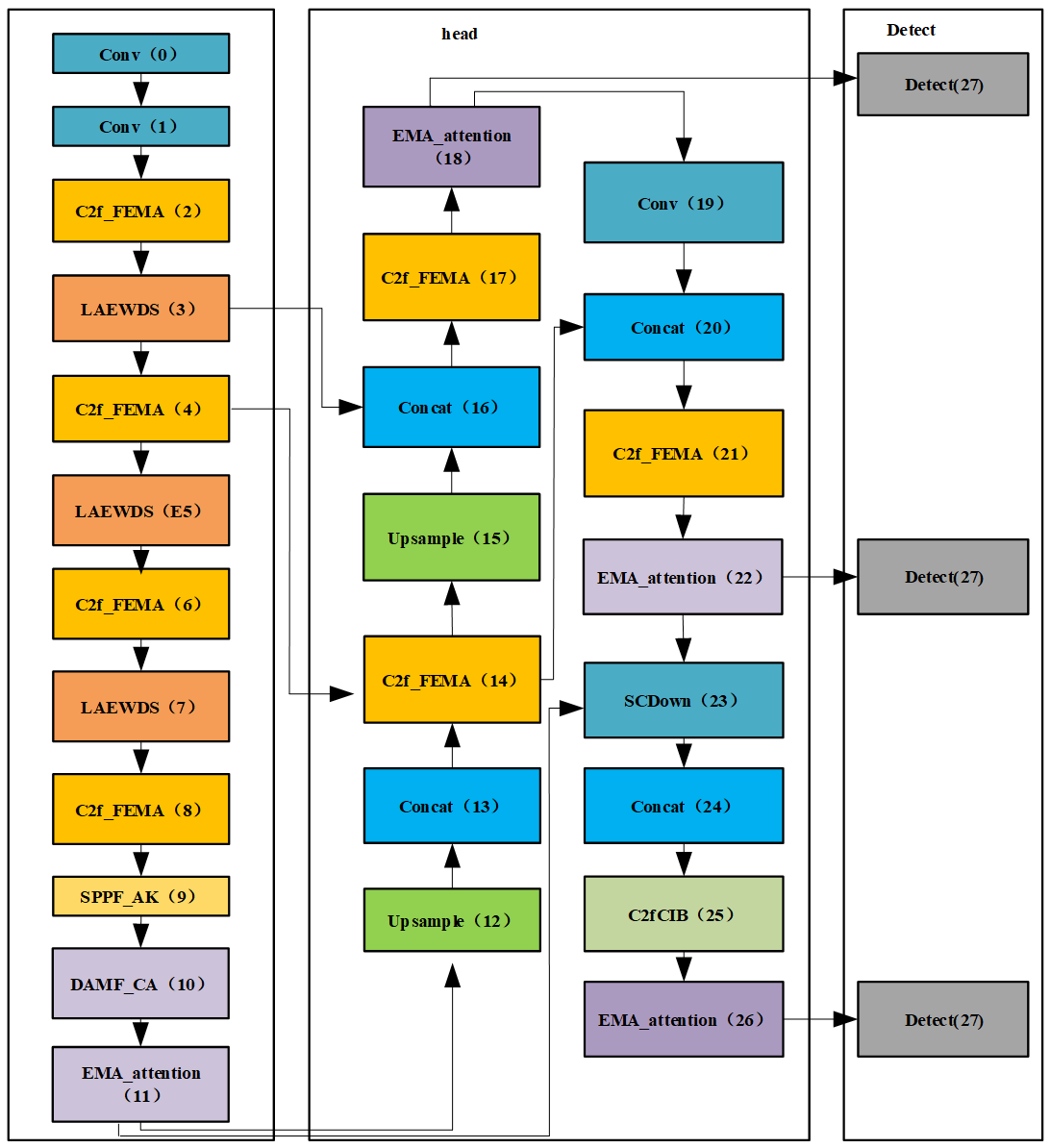
LBSD-YOLO: A Lightweight YOLOv10-Based Network with Multi-Attention Enhancement for Bridge Surface Defect Detection
ICCK Transactions on Sensing, Communication, and Control | Volume 3, Issue 1: 39-53, 2026 | DOI: 10.62762/TSCC.2025.718989
Abstract
Bridge surface defect detection plays a critical role in ensuring traffic safety and facilitating infrastructure maintenance. A lightweight object detection network based on YOLOv10, termed LBSD-YOLO, is developed to achieve high detection accuracy while maintaining high efficiency for deployment on resource-constrained devices. The proposed framework consists of three main components: a feature extraction backbone, a feature fusion neck, and a detection head. In the backbone, the C2f\_FEMA (C2f with Feature Enhancement and Multi-branch Attention) module and the LAEDS (Lightweight Adaptive Encoder–Decoder for Sampling) spatial attention module are incorporated to enhance multi-scale featur... More >

Graphical Abstract
LBSD-YOLO: A Lightweight YOLOv10-Based Network with Multi-Attention Enhancement for Bridge Surface Defect Detection
Free Access | Research Article | 05 March 2026 | Cited: Crossref logo  7 , Scopus 4
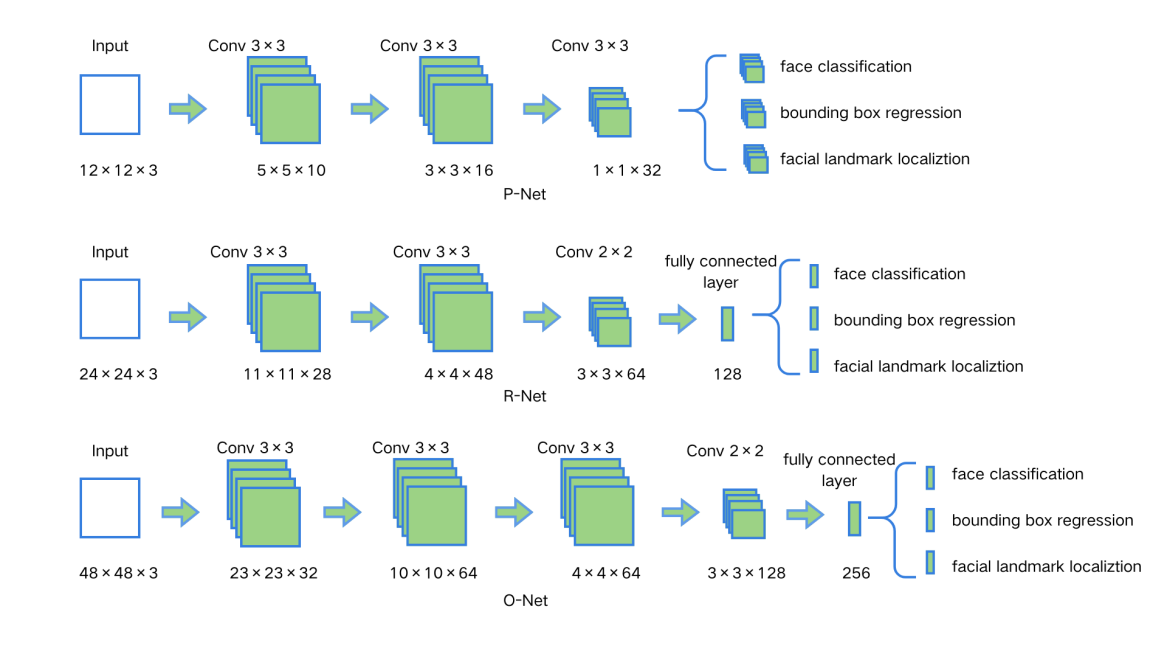
Fatigue Driving Detection via Multi-Head Transformer with Adaptive Weighted Loss
ICCK Transactions on Intelligent Systematics | Volume 3, Issue 1: 55-69, 2026 | DOI: 10.62762/TIS.2025.633754
Abstract
Fatigue driving is widely recognized as one of the major factors contributing to traffic accidents, posing not only a serious threat to road safety but also potential risks to drivers’ health and public security. With the rapid development of modern transportation, how to efficiently and accurately detect and warn against driver fatigue has become a critical issue in the field of intelligent transportation. To effectively address this issue, this paper proposes a novel fatigue driving detection method based on a Multi-Head Transformer with Adaptive Weighted Loss. In the proposed framework, the YOLOv8 model is first employed to efficiently and accurately locate key facial regions of the dri... More >

Graphical Abstract
Fatigue Driving Detection via Multi-Head Transformer with Adaptive Weighted Loss