

Leveraging Polygon Blockchain and Zero-Knowledge Proofs for Secure Electronic Evidence Storage in Court: A Novel Framework


Article Information
Abstract
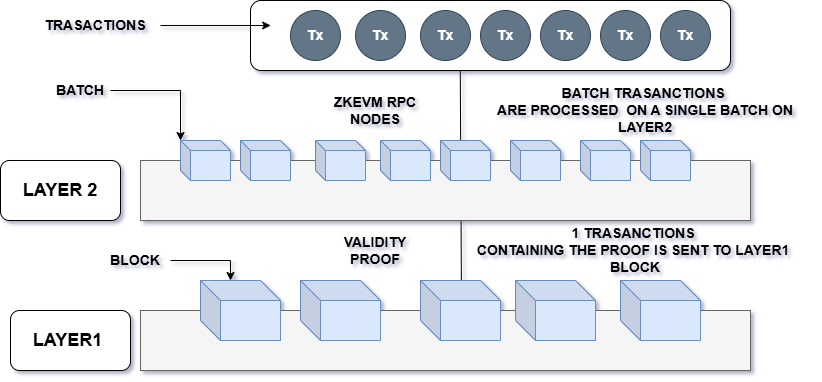
The increasing digitization of modern society has led to a growing volume of digital information---such as emails, photos, videos, and electronic records---being presented as evidence in legal proceedings. However, traditional storage systems are costly, slow, and prone to server failures. To address these challenges, we propose a system leveraging blockchain and IPFS to store electronic evidence securely and reliably. Existing Layer 1 blockchain-based systems face three key limitations: (1) scalability issues with slow throughput and high costs under heavy traffic; (2) privacy risks due to public visibility of transaction data; and (3) impracticality of on-chain storage for large evidentiary files. Our system utilizes Polygon, a faster and more cost-effective Layer 2 blockchain, combined with IPFS for off-chain storage of documents, images, and videos. Each file is assigned a cryptographic hash stored on-chain to ensure integrity and tamper resistance. Smart contracts enforce role-based access control, restricting actions to authorized participants such as police officers, lawyers, and judges. Experimental evaluation with 10,000 transactions achieved approximately 14.29 TPS on modest hardware, with the potential for significantly higher throughput in optimized environments. This demonstrates the system's viability for both high-volume urban courts and resource-constrained rural settings. Overall, the proposed solution offers enhanced security, controlled access, reduced storage costs, and improved efficiency for digital evidence management in judicial systems.
Graphical Abstract
Keywords
Data Availability Statement
Funding
Conflicts of Interest
AI Use Statement
Ethical Approval and Consent to Participate
References
- Klasén, L., Fock, N., & Forchheimer, R. (2024). The invisible evidence: Digital forensics as key to solving crimes in the digital age. Forensic science international, 362, 112133.
[CrossRef] [Google Scholar] - Miller, C. M. (2023). A survey of prosecutors and investigators using digital evidence: A starting point. Forensic Science International: Synergy, 6, 100296.
[CrossRef] [Google Scholar] - Davis, M., Manes, G., & Shenoi, S. (2005, February). A network-based architecture for storing digital evidence. In IFIP International Conference on Digital Forensics (pp. 33-42). Boston, MA: Springer US.
[CrossRef] [Google Scholar] - Kumar, G., Saha, R., Lal, C., & Conti, M. (2021). Internet-of-Forensic (IoF): A blockchain based digital forensics framework for IoT applications. Future Generation Computer Systems, 120, 13-25.
[CrossRef] [Google Scholar] - Bonomi, S., Casini, M., & Ciccotelli, C. (2018). B-coc: A blockchain-based chain of custody for evidences management in digital forensics. arXiv preprint arXiv:1807.10359.
[CrossRef] [Google Scholar] - Tian, Z., Li, M., Qiu, M., Sun, Y., & Su, S. (2019). Block-DEF: A secure digital evidence framework using blockchain. Information Sciences, 491, 151-165.
[CrossRef] [Google Scholar] - Polygon. (2026). Polygon CDK: Private blockchains with public liquidity. Polygon Developer Docs. Retrieved March 06, 2026, from https://docs.polygon.technology/zkEVM/overview/
[Google Scholar] - Trautwein, D., Raman, A., Tyson, G., Castro, I., Scott, W., Schubotz, M., ... & Psaras, Y. (2022, August). Design and evaluation of IPFS: a storage layer for the decentralized web. In Proceedings of the ACM SIGCOMM 2022 Conference (pp. 739-752).
[CrossRef] [Google Scholar] - Atlam, H. F., Ekuri, N., Azad, M. A., & Lallie, H. S. (2024). Blockchain forensics: A systematic literature review of techniques, applications, challenges, and future directions. Electronics, 13(17), 3568.
[CrossRef] [Google Scholar] - Brotsis, S., Kolokotronis, N., Limniotis, K., Shiaeles, S., Kavallieros, D., Bellini, E., & Pavué, C. (2019, June). Blockchain solutions for forensic evidence preservation in IoT environments. In 2019 IEEE conference on network softwarization (NetSoft) (pp. 110-114). IEEE.
[CrossRef] [Google Scholar] - Chen, S., Zhao, C., Huang, L., Yuan, J., & Liu, M. (2020). Study and implementation on the application of blockchain in electronic evidence generation. Forensic Science International: Digital Investigation, 35, 301001.
[CrossRef] [Google Scholar] - Verma, A., Bhattacharya, P., Saraswat, D., & Tanwar, S. (2021). NyaYa: Blockchain-based electronic law record management scheme for judicial investigations. Journal of Information Security and Applications, 63, 103025.
[CrossRef] [Google Scholar] - Sun, X., Yu, F. R., Zhang, P., Sun, Z., Xie, W., & Peng, X. (2021). A survey on zero-knowledge proof in blockchain. IEEE network, 35(4), 198-205.
[CrossRef] [Google Scholar] - Wang, X., Wu, Y. C., & Ma, Z. (2024). Blockchain in the courtroom: Exploring its evidentiary significance and procedural implications in U.S. judicial processes. Frontiers in Blockchain, 7, 1306058.
[CrossRef] [Google Scholar] - Brotsis, S., Grammatikakis, K. P., Kavallieros, D., Mazilu, A. I., Kolokotronis, N., Limniotis, K., & Vassilakis, C. (2023). Blockchain meets Internet of Things (IoT) forensics: A unified framework for IoT ecosystems. Internet of Things, 24, 100968.
[CrossRef] [Google Scholar] - Lewulis, P. (2023). The use of social media evidence in the courtroom: A survey of lawyer's experiences in Poland. Computer Law & Security Review, 51, 105886.
[CrossRef] [Google Scholar] - Malik, A., & Sharma, A. K. (2023). Blockchain-based digital chain of custody multimedia evidence preservation framework for internet-of-things. Journal of Information Security and Applications, 77, 103579.
[CrossRef] [Google Scholar] - Ratul, M. H. A., Mollajafari, S., & Wynn, M. (2024). Managing digital evidence in cybercrime: Efforts towards a sustainable blockchain-based solution. Sustainability, 16(24), 10885.
[CrossRef] [Google Scholar] - Rani, D., Gill, N. S., Gulia, P., Yahya, M., Ahanger, T. A., Hassan, M. M., ... & Shukla, P. K. (2025). A secure digital evidence preservation system for an iot-enabled smart environment using ipfs, blockchain, and smart contracts. Peer-to-Peer Networking and Applications, 18(2), 5.
[CrossRef] [Google Scholar] - Liu, S., & Zheng, Q. (2024). A study of a blockchain-based judicial evidence preservation scheme. Blockchain: Research and Applications, 5(2), 100192.
[CrossRef] [Google Scholar] - Tortola, D., Lisi, A., Mori, P., & Ricci, L. (2024). Tethering Layer 2 solutions to the blockchain: A survey on proving schemes. Computer Communications, 225, 289-310.
[CrossRef] [Google Scholar] - Sanka, A. I., & Cheung, R. C. (2021). A systematic review of blockchain scalability: Issues, solutions, analysis and future research. Journal of Network and Computer Applications, 195, 103232.
[CrossRef] [Google Scholar] - Kuznetsov, O., Rusnak, A., Yezhov, A., Kanonik, D., Kuznetsova, K., & Karashchuk, S. (2024). Enhanced security and efficiency in blockchain with aggregated zero-knowledge proof mechanisms. IEEE Access, 12, 49228-49248.
[CrossRef] [Google Scholar] - Lavaur, T., Detchart, J., Lacan, J., & Chanel, C. P. (2023). Modular zk-rollup on-demand. Journal of Network and Computer Applications, 217, 103678.
[CrossRef] [Google Scholar] - Iglesias, M. J. F. (2023). Introduction to blockchain, smart contracts and decentralized applications. https://www.researchgate.net/publication/370120309
[Google Scholar] - IPFS. (2026). Content addressing. IPFS Docs. Retrieved March 06, 2026, from https://docs.ipfs.tech/concepts/content-addressing/
[Google Scholar]
Cite This Article
TY  - JOUR
AU  - Behera, Sarbeswar
AU  - Arya, Suraj
PY  - 2026
DA  - 2026/08/27
TI  - Leveraging Polygon Blockchain and Zero-Knowledge Proofs for Secure Electronic Evidence Storage in Court: A Novel Framework
JO  - ICCK Journal of Software Engineering
T2  - ICCK Journal of Software Engineering
JF  - ICCK Journal of Software Engineering
VL  - 2
IS  - 3
SP  - 197
EP  - 219
DO  - 10.62762/JSE.2026.766488
UR  - https://www.icck.org/article/abs/JSE.2026.766488
KW  - blockchain
KW  - electronic evidence management
KW  - smart contracts
KW  - IPFS
KW  - polygon CDK
KW  - zkEVM
KW  - access control
KW  - decentralized storage
KW  - transaction per second
AB  - The increasing digitization of modern society has led to a growing volume of digital information---such as emails, photos, videos, and electronic records---being presented as evidence in legal proceedings. However, traditional storage systems are costly, slow, and prone to server failures. To address these challenges, we propose a system leveraging blockchain and IPFS to store electronic evidence securely and reliably. Existing Layer 1 blockchain-based systems face three key limitations: (1) scalability issues with slow throughput and high costs under heavy traffic; (2) privacy risks due to public visibility of transaction data; and (3) impracticality of on-chain storage for large evidentiary files. Our system utilizes Polygon, a faster and more cost-effective Layer 2 blockchain, combined with IPFS for off-chain storage of documents, images, and videos. Each file is assigned a cryptographic hash stored on-chain to ensure integrity and tamper resistance. Smart contracts enforce role-based access control, restricting actions to authorized participants such as police officers, lawyers, and judges. Experimental evaluation with 10,000 transactions achieved approximately 14.29 TPS on modest hardware, with the potential for significantly higher throughput in optimized environments. This demonstrates the system's viability for both high-volume urban courts and resource-constrained rural settings. Overall, the proposed solution offers enhanced security, controlled access, reduced storage costs, and improved efficiency for digital evidence management in judicial systems.
SN  - 3069-1834
PB  - Institute of Central Computation and Knowledge
LA  - English
ER  -
@article{Behera2026Leveraging,
  author = {Sarbeswar Behera and Suraj Arya},
  title = {Leveraging Polygon Blockchain and Zero-Knowledge Proofs for Secure Electronic Evidence Storage in Court: A Novel Framework},
  journal = {ICCK Journal of Software Engineering},
  year = {2026},
  volume = {2},
  number = {3},
  pages = {197-219},
  doi = {10.62762/JSE.2026.766488},
  url = {https://www.icck.org/article/abs/JSE.2026.766488},
  abstract = {The increasing digitization of modern society has led to a growing volume of digital information---such as emails, photos, videos, and electronic records---being presented as evidence in legal proceedings. However, traditional storage systems are costly, slow, and prone to server failures. To address these challenges, we propose a system leveraging blockchain and IPFS to store electronic evidence securely and reliably. Existing Layer 1 blockchain-based systems face three key limitations: (1) scalability issues with slow throughput and high costs under heavy traffic; (2) privacy risks due to public visibility of transaction data; and (3) impracticality of on-chain storage for large evidentiary files. Our system utilizes Polygon, a faster and more cost-effective Layer 2 blockchain, combined with IPFS for off-chain storage of documents, images, and videos. Each file is assigned a cryptographic hash stored on-chain to ensure integrity and tamper resistance. Smart contracts enforce role-based access control, restricting actions to authorized participants such as police officers, lawyers, and judges. Experimental evaluation with 10,000 transactions achieved approximately 14.29 TPS on modest hardware, with the potential for significantly higher throughput in optimized environments. This demonstrates the system's viability for both high-volume urban courts and resource-constrained rural settings. Overall, the proposed solution offers enhanced security, controlled access, reduced storage costs, and improved efficiency for digital evidence management in judicial systems.},
  keywords = {blockchain, electronic evidence management, smart contracts, IPFS, polygon CDK, zkEVM, access control, decentralized storage, transaction per second},
  issn = {3069-1834},
  publisher = {Institute of Central Computation and Knowledge}
}
Article Metrics
Publisher's Note
ICCK stays neutral with regard to jurisdictional claims in published maps and institutional affiliations.
Rights and Permissions
 Copyright © 2026 by the Author(s). Published by Institute of Central Computation and Knowledge. This article is an open access article distributed under the terms and conditions of the Creative Commons Attribution (CC BY) license (https://creativecommons.org/licenses/by/4.0/), which permits use, sharing, adaptation, distribution and reproduction in any medium or format, as long as you give appropriate credit to the original author(s) and the source, provide a link to the Creative Commons licence, and indicate if changes were made.


Portico
