Designing and Evaluating a 3D Fire Escape Educational System for Enhancing Safety Skills in Children




Article Information
Abstract
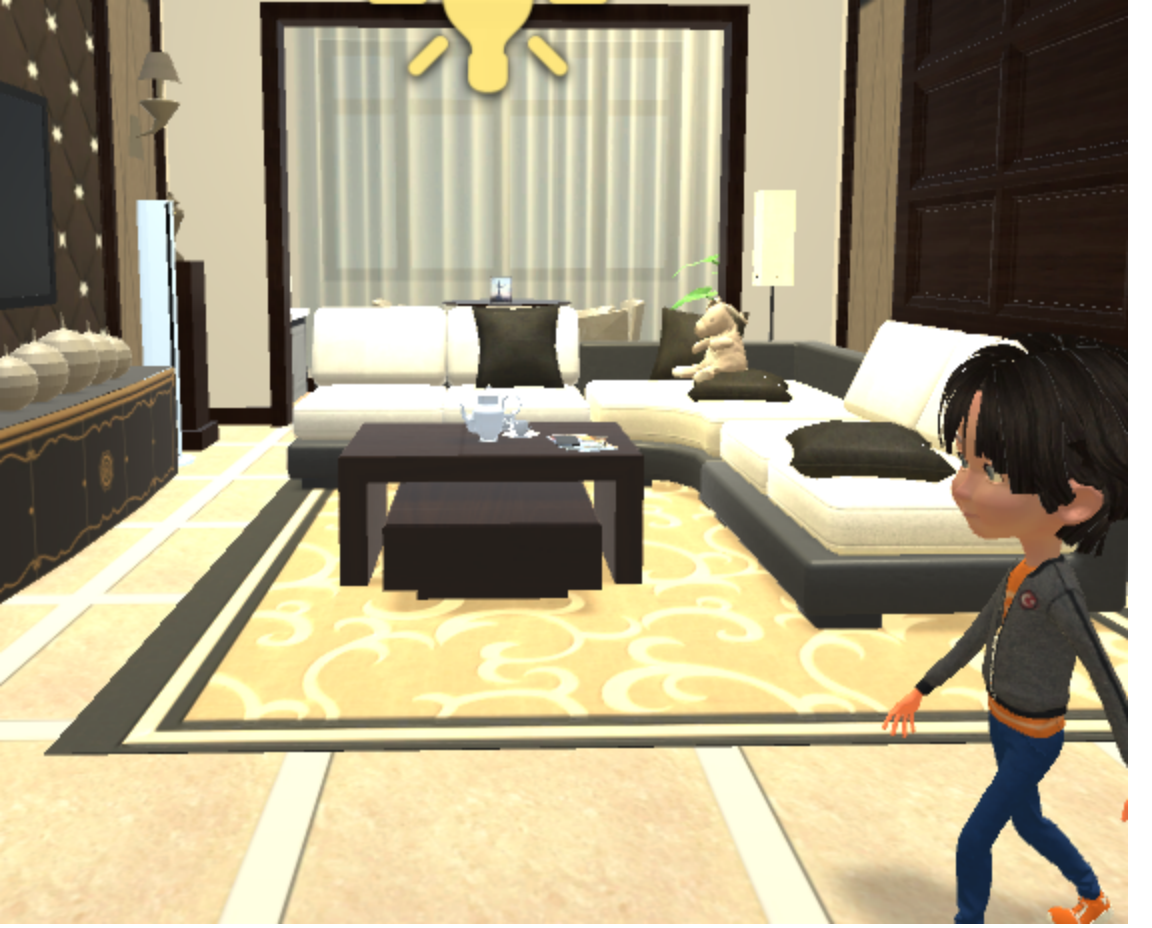
This research presents a novel 3D fire escape educational system for children, addressing the urgent need for more engaging and interactive fire safety training methods. Traditional approaches to fire safety education fall short in capturing the attention of primary and middle school students, who are crucial yet less responsive audiences for such critical knowledge. Leveraging 3D modeling and human-computer interaction technologies, our system offers an immersive learning experience that allows children to actively participate in self-rescue drills. Through autonomous navigation within a simulated environment, learners are empowered to make decisions during fire scenarios, including choosing escape routes or attempting fire extinguishment based on situational prompts. This hands-on approach not only aims to enhance the understanding of fire safety principles but also to improve the learners' ability to react appropriately in real-life emergencies. The system encompasses environmental simulations for realistic scenarios, interactive tasks tailored to provoke thoughtful responses, and educational content including videos and quizzes to consolidate the learned principles. Initial evaluations indicate that this interactive system significantly improves engagement and the acquisition of self-rescue skills among young learners, marking a significant advancement in fire safety education.
Graphical Abstract
Keywords
Funding
References
- Mystakidis, S., Besharat, J., Papantzikos, G., Christopoulos, A., Stylios, C., Agorgianitis, S., & Tselentis, D. (2022). Design, development, and evaluation of a virtual reality serious game for school fire preparedness training. Education Sciences, 12(4), 281.
[Google Scholar] - Salas, E., Tannenbaum, S. I., Kraiger, K., & Smith-Jentsch, K. A. (2012). The science of training and development in organizations: What matters in practice. Psychological science in the public interest, 13(2), 74-101.
[Google Scholar] - Wang, Y., Li, H., & Li, X. (2016, November). Re-architecting the on-chip memory sub-system of machine-learning accelerator for embedded devices. In 2016 IEEE/ACM International Conference on Computer-Aided Design (ICCAD) (pp. 1-6). IEEE.
[Google Scholar] - Liang, S., Liu, C., Wang, Y., Li, H., & Li, X. (2020, November). Deepburning-gl: an automated framework for generating graph neural network accelerators. In Proceedings of the 39th International Conference on Computer-Aided Design (pp. 1-9).
[Google Scholar] - Lian, S., Han, Y., Chen, X., Wang, Y., & Xiao, H. (2018, June). Dadu-p: A scalable accelerator for robot motion planning in a dynamic environment. In Proceedings of the 55th Annual Design Automation Conference (pp. 1-6).
[Google Scholar] - Rhoads, R. A., Wang, X., Shi, X., & Chang, Y. (2014). China’s rising research universities: A new era of global ambition. JHU Press.
[Google Scholar] - Wu, B., Wang, C., Wang, Z., Wang, Y., Zhang, D., Liu, D., ... & Hu, X. S. (2020). Field-free 3T2SOT MRAM for non-volatile cache memories. IEEE Transactions on Circuits and Systems I: Regular Papers, 67(12), 4660-4669.
[Google Scholar] - Wang, C., Wang, Y., Han, Y., Song, L., Quan, Z., Li, J., & Li, X. (2017, January). CNN-based object detection solutions for embedded heterogeneous multicore SoCs. In 2017 22nd Asia and South Pacific design automation conference (ASP-DAC) (pp. 105-110). IEEE.
[Google Scholar] - Liu, B., Chen, X., Wang, Y., Han, Y., Li, J., Xu, H., & Li, X. (2019, January). Addressing the issue of processing element under-utilization in general-purpose systolic deep learning accelerators. In Proceedings of the 24th Asia and South Pacific Design Automation Conference (pp. 733-738).
[Google Scholar] - Cowpe, J., Plasschaert, A., Harzer, W., Vinkka-Puhakka, H., & Walmsley, A. D. (2010). Profile and competences for the graduating European dentist–update 2009. European Journal of Dental Education, 14(4), 193-202.
[Google Scholar] - Dai, A., Chang, A. X., Savva, M., Halber, M., Funkhouser, T., & Nießner, M. (2017). Scannet: Richly-annotated 3d reconstructions of indoor scenes. In Proceedings of the IEEE conference on computer vision and pattern recognition (pp. 5828-5839).
[Google Scholar] - Bus, A. G., Takacs, Z. K., & Kegel, C. A. (2015). Affordances and limitations of electronic storybooks for young children’s emergent literacy. Developmental review, 35, 79-97.
[Google Scholar] - Messaoudi, F., Ksentini, A., Simon, G., & Bertin, P. (2017). Performance analysis of game engines on mobile and fixed devices. ACM Transactions on Multimedia Computing, Communications, and Applications (TOMM), 13(4), 1-28.
[Google Scholar] - Hughes, K. (2019). Teacher perceptions of school safety and security; security based changes in a rural school system (Doctoral dissertation, Northcentral University).
[Google Scholar] - Clifton, I. G. (2015). Android user interface design: Implementing material design for developers. Addison-Wesley Professional.
[Google Scholar] - Liu, C., Chu, C., Xu, D., Wang, Y., Wang, Q., Li, H., ... & Cheng, K. T. (2021). HyCA: A hybrid computing architecture for fault-tolerant deep learning. IEEE Transactions on Computer-Aided Design of Integrated Circuits and Systems, 41(10), 3400-3413.
[Google Scholar] - Hamdioui, S., Pouyan, P., Li, H., Wang, Y., Raychowdhur, A., & Yoon, I. (2017, November). Test and reliability of emerging non-volatile memories. In 2017 IEEE 26th Asian Test Symposium (ATS) (pp. 175-183). IEEE.
[Google Scholar] - Zhao, X., Wang, Y., Liu, C., Shi, C., Tu, K., & Zhang, L. (2020, July). BitPruner: Network pruning for bit-serial accelerators. In 2020 57th ACM/IEEE Design Automation Conference (DAC) (pp. 1-6). IEEE.
[Google Scholar]
Cite This Article
TY  - JOUR
AU  - Dong, Sihan
AU  - Wang, Xingdong
PY  - 2024
DA  - 2024/11/02
TI  - Designing and Evaluating a 3D Fire Escape Educational System for Enhancing Safety Skills in Children
JO  - ICCK Transactions on Computer Science
T2  - ICCK Transactions on Computer Science
JF  - ICCK Transactions on Computer Science
VL  - 1
IS  - 1
SP  - 14
EP  - 20
DO  - 10.62762/TCS.2024.118608
UR  - https://www.icck.org/article/abs/TCS.2024.118608
KW  - 3DS Max
KW  - 3D modeling
KW  - fire escape
KW  - unity3D
AB  - This research presents a novel 3D fire escape educational system for children, addressing the urgent need for more engaging and interactive fire safety training methods. Traditional approaches to fire safety education fall short in capturing the attention of primary and middle school students, who are crucial yet less responsive audiences for such critical knowledge. Leveraging 3D modeling and human-computer interaction technologies, our system offers an immersive learning experience that allows children to actively participate in self-rescue drills. Through autonomous navigation within a simulated environment, learners are empowered to make decisions during fire scenarios, including choosing escape routes or attempting fire extinguishment based on situational prompts. This hands-on approach not only aims to enhance the understanding of fire safety principles but also to improve the learners' ability to react appropriately in real-life emergencies. The system encompasses environmental simulations for realistic scenarios, interactive tasks tailored to provoke thoughtful responses, and educational content including videos and quizzes to consolidate the learned principles. Initial evaluations indicate that this interactive system significantly improves engagement and the acquisition of self-rescue skills among young learners, marking a significant advancement in fire safety education.
SN  - request pending
PB  - Institute of Central Computation and Knowledge
LA  - English
ER  -
@article{Dong2024Designing,
  author = {Sihan Dong and Xingdong Wang},
  title = {Designing and Evaluating a 3D Fire Escape Educational System for Enhancing Safety Skills in Children},
  journal = {ICCK Transactions on Computer Science},
  year = {2024},
  volume = {1},
  number = {1},
  pages = {14-20},
  doi = {10.62762/TCS.2024.118608},
  url = {https://www.icck.org/article/abs/TCS.2024.118608},
  abstract = {This research presents a novel 3D fire escape educational system for children, addressing the urgent need for more engaging and interactive fire safety training methods. Traditional approaches to fire safety education fall short in capturing the attention of primary and middle school students, who are crucial yet less responsive audiences for such critical knowledge. Leveraging 3D modeling and human-computer interaction technologies, our system offers an immersive learning experience that allows children to actively participate in self-rescue drills. Through autonomous navigation within a simulated environment, learners are empowered to make decisions during fire scenarios, including choosing escape routes or attempting fire extinguishment based on situational prompts. This hands-on approach not only aims to enhance the understanding of fire safety principles but also to improve the learners' ability to react appropriately in real-life emergencies. The system encompasses environmental simulations for realistic scenarios, interactive tasks tailored to provoke thoughtful responses, and educational content including videos and quizzes to consolidate the learned principles. Initial evaluations indicate that this interactive system significantly improves engagement and the acquisition of self-rescue skills among young learners, marking a significant advancement in fire safety education.},
  keywords = {3DS Max, 3D modeling, fire escape, unity3D},
  issn = {request pending},
  publisher = {Institute of Central Computation and Knowledge}
}
Article Metrics
Publisher's Note
ICCK stays neutral with regard to jurisdictional claims in published maps and institutional affiliations.
Rights and Permissions


Portico