Reforming Curriculum Ideology and Political Construction: A Case Study of the ’Information Security’ Course


Article Information
Abstract
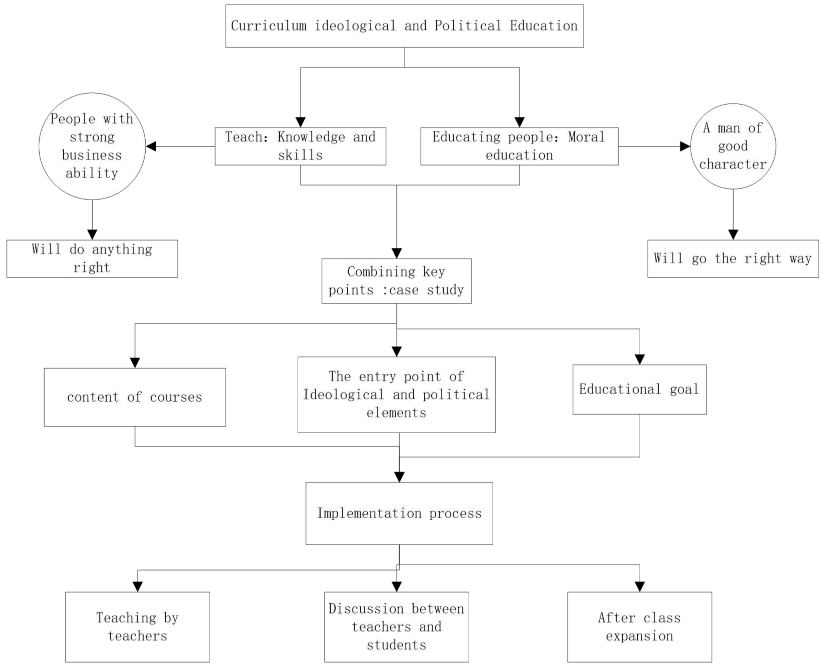
In alignment with the objective of integrating ideological and political education within curricula, this study uses the "Information Security" course as a model to illustrate the approach of embedding core ideologies pertinent to the forefront of international scientific application, national key needs, and the primary battlegrounds of the economy. By weaving frontier science and technology along with national security regulations into the educational practice, this research delves into teaching cases within the information security domain to construct a curriculum system that seamlessly integrates ideological, political, and academic content. The system aims to foster the cultivation and practice of socialist core values, guiding students towards proper personal and professional conduct. This abstract presents a methodology for curriculum reform that not only enriches academic content but also instills ethical and social responsibilities in students, contributing to the holistic development of future professionals.
Graphical Abstract
Keywords
Funding
References
- Hu Aiqun, Li Guyue, Peng linning, Li Tao. Teaching exploration of Cyberspace Security Frontier Technology integrated with ideological and Political Education [J]. Journal of network and information security, 2019, 5(3):54-66.
[Google Scholar] - Xu Jianguang. Adhere to the whole curriculum education and deepen the curriculum ideological and political reform [J]. Shanghai Education, 2017 (12):14-14.
[Google Scholar] - Liu Lei, Liu Li. Connotation and significance of "Three Orientations" science and technology policy [J]. Global science and technology economy outlook, 2018, 33 (11):25-30.
[Google Scholar] - Si Jin. Exploration and practice of Ideological and political education in professional and technical courses [J]. Computer age, 2020, 332 (02):98-100.
[Google Scholar] - Ding Zhiguo. Exploration on the teaching reform of science and engineering courses from the perspective of "Curriculum Ideology and politics" – Taking "software quality assurance and testing" as an example [J]. China information technology education, 2020, 334 (10):101-103.
[Google Scholar] - Feng Jianwen, Miao Liming. Reform and practice of Ideological and political education of software engineering course in Colleges and universities [J]. Education modernization, 2020, 7 (01):29-31.
[Google Scholar] - Lu Yulin. Thinking on the collaborative education of various courses and ideological and political theory courses [J]. Science and education Wenhui, 2017, 12 (34):32-33.
[Google Scholar] - Bai Yinhua. Effective ways to enhance the affinity of Ideological and political theory courses in Colleges and Universities under the new situation [J]. Changjiang series, 2017 (28):250.
[Google Scholar] - Hu Aiqun, Li Guyue, Peng linning, Li Tao. Teaching exploration of Cyberspace Security Frontier Technology integrated with ideological and Political Education [J]. Journal of network and information security, 2019, 5(3):54-66.
[Google Scholar] - Xu Jing. Teaching reform and practice of Ideological and political education in the course of introduction to information security guided by law-abiding [J]. Education modernization, 201, 6 (59):66-68.
[Google Scholar] - Wang, Y., Li, H., & Li, X. (2017). A case of on-chip memory subsystem design for low-power CNN accelerators. IEEE Transactions on Computer-Aided Design of Integrated Circuits and Systems, 37(10), 1971-1984.
[Google Scholar] - Liu, C., Chu, C., Xu, D., Wang, Y., Wang, Q., Li, H., ... & Cheng, K. T. (2021). HyCA: A hybrid computing architecture for fault-tolerant deep learning. IEEE Transactions on Computer-Aided Design of Integrated Circuits and Systems, 41(10), 3400-3413.
[Google Scholar] - Xu, D., Chu, C., Wang, Q., Liu, C., Wang, Y., Zhang, L., ... & Cheng, K. T. (2020, October). A hybrid computing architecture for fault-tolerant deep learning accelerators. In 2020 IEEE 38th International Conference on Computer Design (ICCD) (pp. 478-485). IEEE.
[Google Scholar] - Ma, X., Wang, Y., Wang, Y., Cai, X., & Han, Y. (2022). Survey on chiplets: interface, interconnect and integration methodology. CCF Transactions on High Performance Computing, 4(1), 43-52.
[Google Scholar] - Wu, B., Wang, C., Wang, Z., Wang, Y., Zhang, D., Liu, D., ... & Hu, X. S. (2020). Field-free 3T2SOT MRAM for non-volatile cache memories. IEEE Transactions on Circuits and Systems I: Regular Papers, 67(12), 4660-4669.
[Google Scholar]
Cite This Article
TY  - JOUR
AU  - Zheng, Pengyi
AU  - Wang, Xijuan
AU  - Li, Juanjuan
PY  - 2024
DA  - 2024/11/23
TI  - Reforming Curriculum Ideology and Political Construction: A Case Study of the ’Information Security’ Course
JO  - ICCK Transactions on Computer Science
T2  - ICCK Transactions on Computer Science
JF  - ICCK Transactions on Computer Science
VL  - 1
IS  - 1
SP  - 26
EP  - 31
DO  - 10.62762/TCS.2024.210691
UR  - https://www.icck.org/article/abs/TCS.2024.210691
KW  - curriculum ideological and political education
KW  - information safety
KW  - curriculum system
AB  - In alignment with the objective of integrating ideological and political education within curricula, this study uses the "Information Security" course as a model to illustrate the approach of embedding core ideologies pertinent to the forefront of international scientific application, national key needs, and the primary battlegrounds of the economy. By weaving frontier science and technology along with national security regulations into the educational practice, this research delves into teaching cases within the information security domain to construct a curriculum system that seamlessly integrates ideological, political, and academic content. The system aims to foster the cultivation and practice of socialist core values, guiding students towards proper personal and professional conduct. This abstract presents a methodology for curriculum reform that not only enriches academic content but also instills ethical and social responsibilities in students, contributing to the holistic development of future professionals.
SN  - request pending
PB  - Institute of Central Computation and Knowledge
LA  - English
ER  -
@article{Zheng2024Reforming,
  author = {Pengyi Zheng and Xijuan Wang and Juanjuan Li},
  title = {Reforming Curriculum Ideology and Political Construction: A Case Study of the ’Information Security’ Course},
  journal = {ICCK Transactions on Computer Science},
  year = {2024},
  volume = {1},
  number = {1},
  pages = {26-31},
  doi = {10.62762/TCS.2024.210691},
  url = {https://www.icck.org/article/abs/TCS.2024.210691},
  abstract = {In alignment with the objective of integrating ideological and political education within curricula, this study uses the "Information Security" course as a model to illustrate the approach of embedding core ideologies pertinent to the forefront of international scientific application, national key needs, and the primary battlegrounds of the economy. By weaving frontier science and technology along with national security regulations into the educational practice, this research delves into teaching cases within the information security domain to construct a curriculum system that seamlessly integrates ideological, political, and academic content. The system aims to foster the cultivation and practice of socialist core values, guiding students towards proper personal and professional conduct. This abstract presents a methodology for curriculum reform that not only enriches academic content but also instills ethical and social responsibilities in students, contributing to the holistic development of future professionals.},
  keywords = {curriculum ideological and political education, information safety, curriculum system},
  issn = {request pending},
  publisher = {Institute of Central Computation and Knowledge}
}
Article Metrics
Publisher's Note
ICCK stays neutral with regard to jurisdictional claims in published maps and institutional affiliations.
Rights and Permissions

Portico