










Chinese Journal of Information Fusion

Partner Journal of The Chinese Society of Aeronautics and Astronautics

Publishing Model:
ISSN:
Online ISSN: 2998-3371 | Print ISSN: 2998-3363
Indexing: Google Scholar, Dimensions, J-Gate, OpenAIRE, Lens, ResearchGate, OpenAlex, WorldCat, EuroPub
Chinese Journal of Information Fusion is a peer-reviewed academic journal reflecting the achievements of cutting-edge research and application of information fusion technology, mainly publishing academic papers in the field of information fusion.
DOI Prefix: 10.62762/CJIF

Journal Metrics

-
Impact Factor
-
CiteScore

Recent Articles

Open Access | Research Article | 30 December 2024 | Cited: Crossref logo  2 , Scopus 3
Robust Distributed State Estimation in Power Systems: A Multi-Estimator Data Fusion Approach to Counteract Cyber-Attacks
Chinese Journal of Information Fusion | Volume 1, Issue 3: 212-225, 2024 | DOI: 10.62762/CJIF.2024.740709
Abstract
Cyber security in power systems has become increasingly critical with the rise of network attacks such as Denial-of-Service (DoS) attacks and False Data Injection (FDI) attacks. These threats can severely compromise the integrity and reliability of state estimation, which are fundamental to the operation and control of power systems. In this manuscript, an estimation algorithm based on the fusion of information from multiple estimators is proposed to ensure that state estimation at critical buses can function properly in case of attacks. Our approach leverages a network of estimators that can dynamically adjust to maintain system stability and accuracy. Furthermore, a new detector is adopted... More >

Graphical Abstract
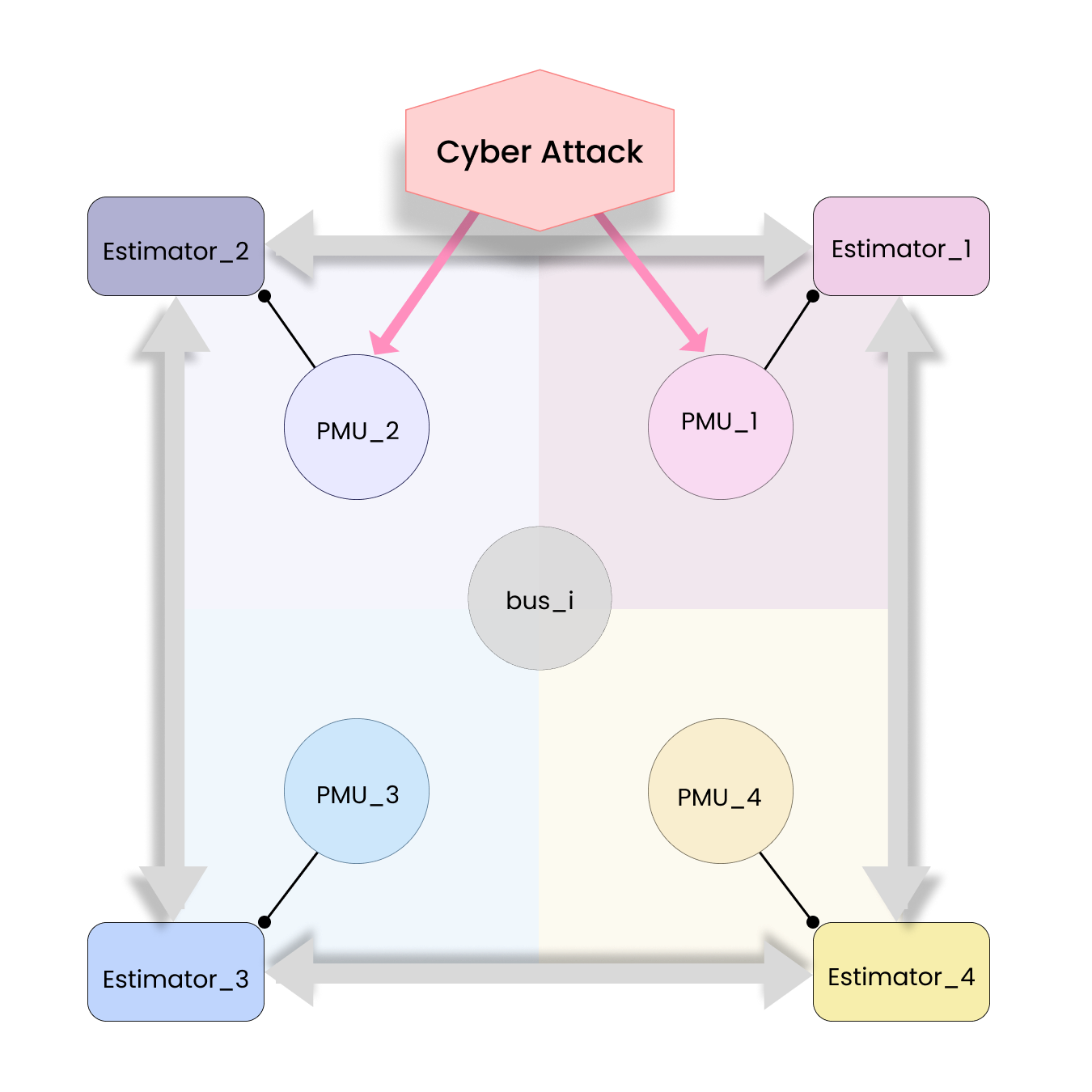
Robust Distributed State Estimation in Power Systems: A Multi-Estimator Data Fusion Approach to Counteract Cyber-Attacks
Code (Data) Available | Open Access | Review Article | 15 December 2024 | Cited: Crossref logo  6 , Scopus 3
A Comprehensive Survey on Emerging Techniques and Fusion Technologies in Spatio-Temporal EEG Data Analysis
Chinese Journal of Information Fusion | Volume 1, Issue 3: 183-211, 2024 | DOI: 10.62762/CJIF.2024.876830
Abstract
In recent years, the field of electroencephalography (EEG) analysis has witnessed remarkable advancements, driven by the integration of machine learning and artificial intelligence. This survey aims to encapsulate the latest developments, focusing on emerging methods and technologies that are poised to transform our comprehension and interpretation of brain activity. The structure of this paper is organized according to the categorization within the machine learning community, with representation learning as the foundational concept that encompasses both discriminative and generative approaches. We delve into self-supervised learning methods that enable the robust representation of brain sig... More >

Graphical Abstract

A Comprehensive Survey on Emerging Techniques and Fusion Technologies in Spatio-Temporal EEG Data Analysis
Open Access | Research Article | 07 December 2024 | Cited: Crossref logo  6 , Scopus 7
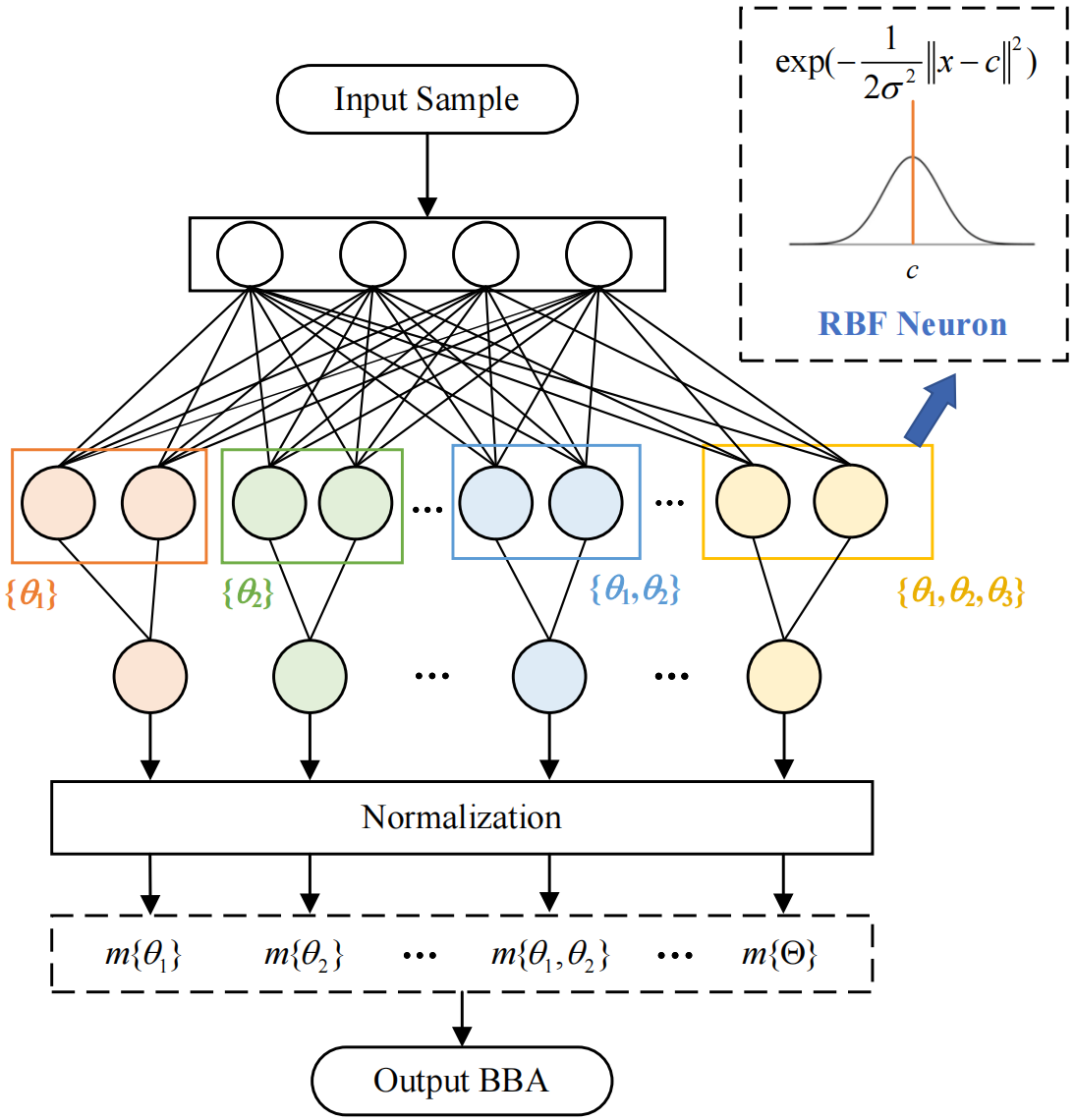
Basic Belief Assignment Determination Based on Radial Basis Function Network
Chinese Journal of Information Fusion | Volume 1, Issue 3: 175-182, 2024 | DOI: 10.62762/CJIF.2024.841250
Abstract
In Dempster-Shafer evidence theory (DST), the determination of basic belief assignment (BBA) is an important yet challenging issue before the evidence fusion. The rational mass determination of compound focal elements is crucial for fully taking advantage of DST, i.e., the ability to represent the ambiguity. In this paper, for the compound focal elements, we select and construct the compound-class samples with ambiguous class membership. Then, we use these samples to construct an end-to-end model called Evidential Radial Basis Function Network (E-RBFN), with the input as the sample and the output as the corresponding BBA. The E-RBFN can directly determine the mass values for all focal elemen... More >

Graphical Abstract

Basic Belief Assignment Determination Based on Radial Basis Function Network
Open Access | Research Article | 30 September 2024 | Cited: Crossref logo  6 , Scopus 8
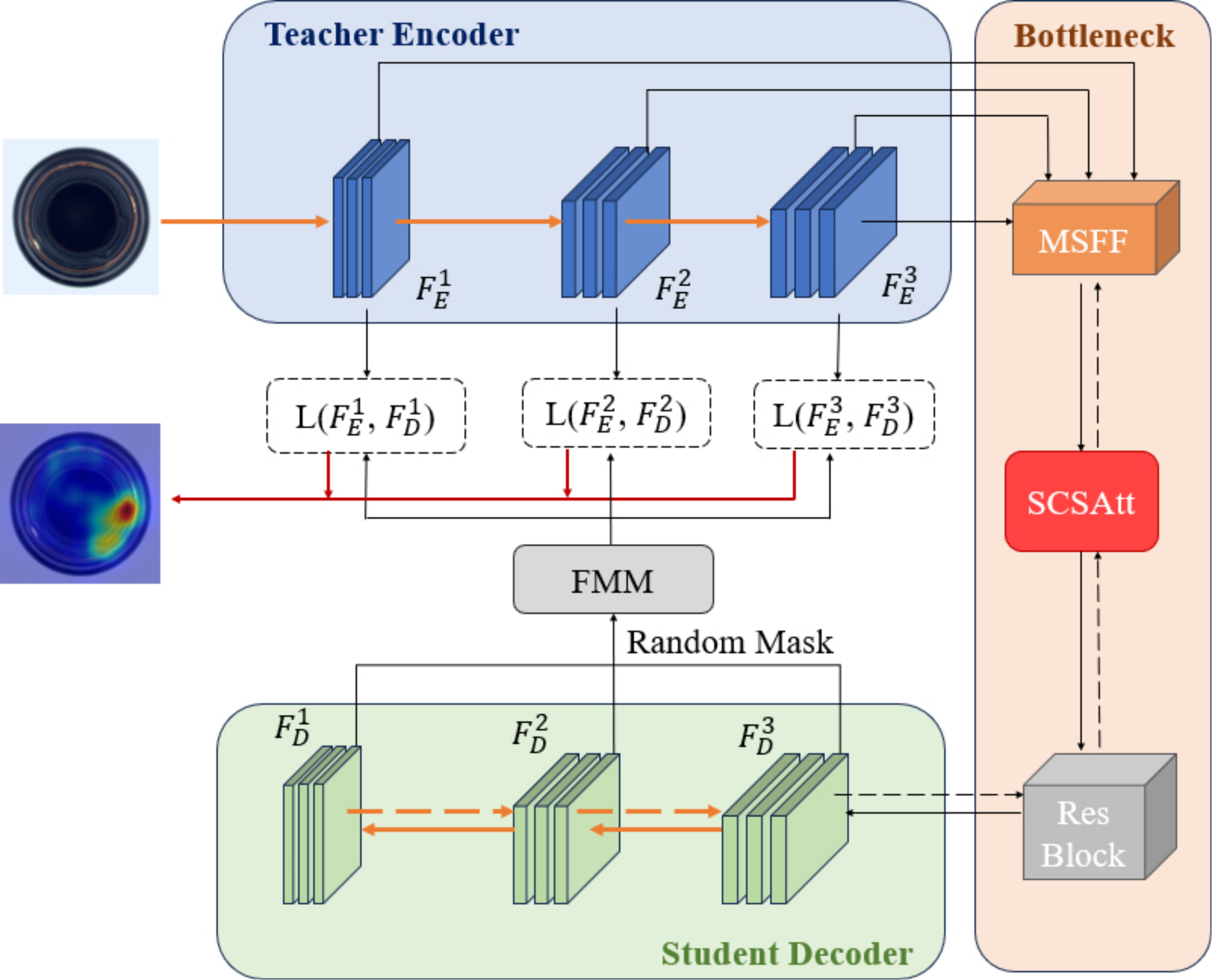
Unsupervised Industrial Anomaly Detection Based on Feature Mask Generation and Reverse Distillation
Chinese Journal of Information Fusion | Volume 1, Issue 2: 160-174, 2024 | DOI: 10.62762/CJIF.2024.734267
Abstract
In the realm of industrial defect detection, unsupervised anomaly detection methods draw considerable attention as a result of their exceptional accomplishments. Among these, knowledge distillation-based methods have emerged as a prominent research focus, favored for their streamlined architecture, precision, and efficiency. However, the challenge of characterizing the variability in anomaly samples hinders the accuracy of detection. To address this issue, our research presents a novel approach for anomaly detection and localization, leveraging feature fusion through inverse knowledge distillation as its cornerstone. We employ the encoder as the guiding teacher model and designate the decode... More >

Graphical Abstract

Unsupervised Industrial Anomaly Detection Based on Feature Mask Generation and Reverse Distillation
Open Access | Review Article | Feature Paper | 30 September 2024 | Cited: Crossref logo  36 , Scopus 40
Complex Evidence Theory for Multisource Data Fusion
Chinese Journal of Information Fusion | Volume 1, Issue 2: 134-159, 2024 | DOI: 10.62762/CJIF.2024.999646
Abstract
Data fusion is a prevalent technique for assembling imperfect raw data coming from multiple sources to capture reliable and accurate information. Dempster–Shafer evidence theory is one of useful methodologies in the fusion of uncertain multisource information. The existing literature lacks a thorough and comprehensive review of the recent advances of Dempster– Shafer evidence theory for data fusion. Therefore, the state of the art has to be surveyed to gain insight into how Dempster–Shafer evidence theory is beneficial for data fusion and how it evolved over time. In this paper, we first provide a comprehensive review of data fusion methods based on Dempster–Shafer evidence theory an... More >

Graphical Abstract
Complex Evidence Theory for Multisource Data Fusion
Open Access | Research Article | 29 September 2024 | Cited: Crossref logo  4 , Scopus 4
Explainable Classification of Remote Sensing Ship Images Based on Graph Network
Chinese Journal of Information Fusion | Volume 1, Issue 2: 126-133, 2024 | DOI: 10.62762/CJIF.2024.932552
Abstract
Remote sensing image plays an important role in maritime surveillance, and as a result there is increasingly becoming a prominent focus on the detection and recognition of maritime objects. However, most existing studies in remote sensing image classification pay more attention on the performance of model, thus neglecting the transparency and explainability in it. To address the issue, an explainable classification method based on graph network is proposed in the present study, which seeks to make use of the relationship between objects' regions to infer the category information. First, the local visual attention module is designed to focus on different but important regions of the object. T... More >

Graphical Abstract

Explainable Classification of Remote Sensing Ship Images Based on Graph Network
Open Access | Research Article | 27 September 2024 | Cited: Crossref logo  4 , Scopus 3
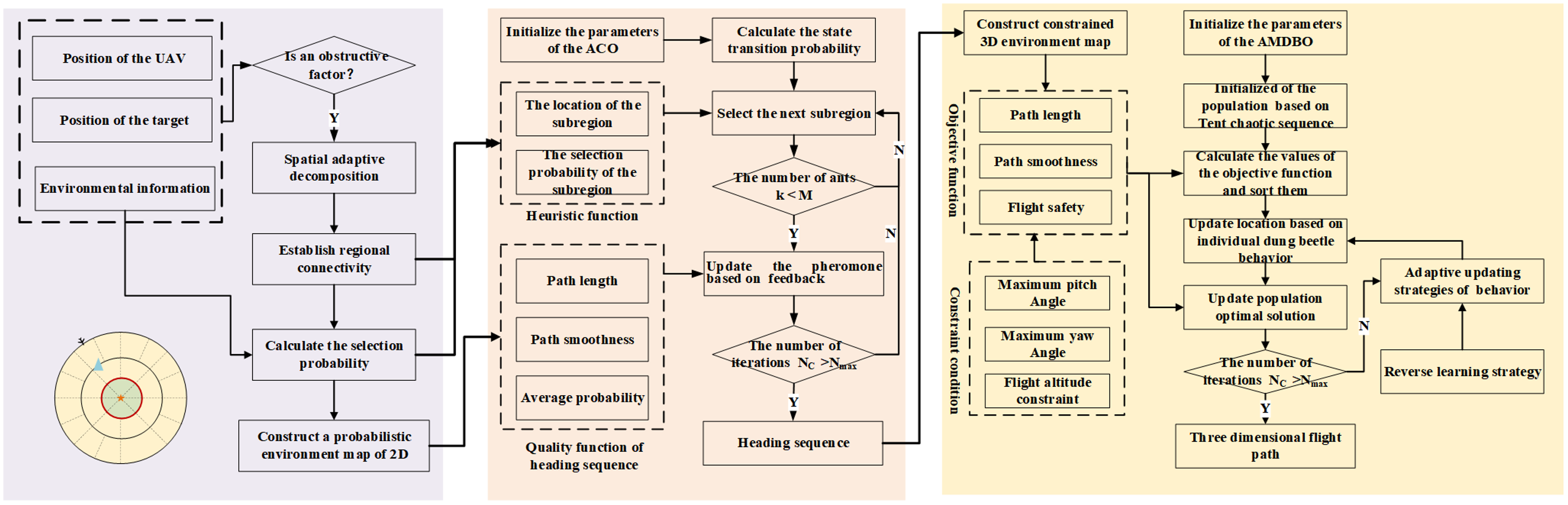
A High-Efficiency Two-Layer Path Planning Method for UAVs in Vast Airspace
Chinese Journal of Information Fusion | Volume 1, Issue 2: 109-125, 2024 | DOI: 10.62762/CJIF.2024.596648
Abstract
Facing the challenges of low efficiency and poor quality in UAV 3D path planning within large-scale airspace complex environments, this paper introduces a divide-and-conquer approach, proposing a dual-layer path planning method based on multi-source information fusion. The method decomposes traditional path planning into two steps: heading planning and trajectory planning, ensuring both planning efficiency and path quality. This method segregates the solution process into two distinct stages: heading planning and path planning, thereby ensuring the planning of both efficiency and path quality. Firstly, the path planning phase is formulated as a multi-objective optimization problem, taking in... More >

Graphical Abstract

A High-Efficiency Two-Layer Path Planning Method for UAVs in Vast Airspace
Open Access | Research Article | 23 September 2024 | Cited: Crossref logo  4 , Scopus 5
Convolutional Neural Network for Ellipse Extended Target Tracking
Chinese Journal of Information Fusion | Volume 1, Issue 2: 93-108, 2024 | DOI: 10.62762/CJIF.2024.160538
Abstract
In the field of extended target tracking and information fusion, constrained by the sparse measurement set from radar, the target contour is commonly estimated as an elliptical shape. This paper uses convolutional neural networks to estimate the size and orientation information of extended targets. First, by establishing a systematic model for elliptical extended targets and modeling its measurement information, data normalization, and length equalization operations were conducted to provide reliable measurement data for subsequent neural network processing. Subsequently, through the construction of a convolutional neural network model, accurate estimation of the contour parameters of ellipt... More >

Graphical Abstract

Convolutional Neural Network for Ellipse Extended Target Tracking

Journal Statistics

224
Authors
16
Countries / Regions
55
Articles
220
Scopus Citations
85.5% Cited
2024
Published Since
291,894
Article Views
42,929
Article Downloads
Chinese Journal of Information Fusion
eISSN: 2998-3371 | pISSN: 2998-3363
Crossref
Crossref
Member of Crossref
Visit Crossref →
Portico
Portico
All published articles are preserved here permanently
View Archive →