-
CiteScore
-
Impact Factor
Volume 1, Issue 2 (In Progress) - Table of Contents

×

Call for papers
Citations: 0, 0,  0   |   Viewed: 1888, Download: 326

Open Access | News & Buzz | 26 October 2025
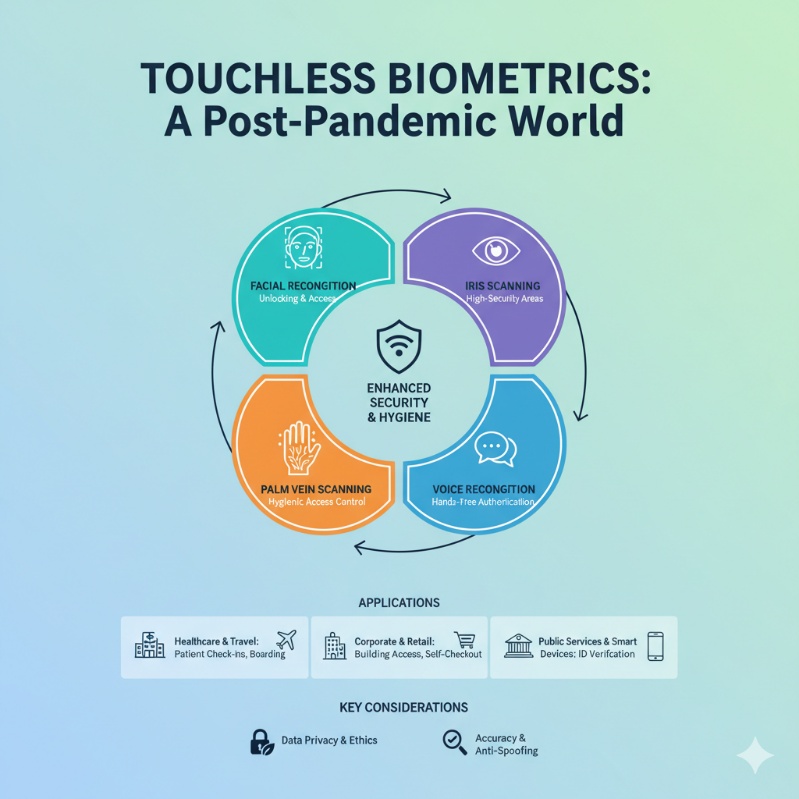
Touchless Biometrics: Securing a Post-Pandemic World
Journal of Artificial Intelligence in Bioinformatics | Volume 1, Issue 2: 69-71, 2025 | DOI: 10.62762/JAIB.2025.861394
Abstract
The COVID-19 pandemic irrevocably altered our perception of public health, hygiene, and personal interaction, accelerating the demand for solutions that minimize physical contact. Once, using a fingerprint scanner, pressing a PIN, or touching a shared surface felt routine. During the pandemic, these simple actions suddenly became potential vectors for contagion. Touchless biometrics — technologies that capture unique biological characteristics without physical contact — have emerged as a crucial response. From facial recognition at airports to voice authentication in banking apps, “no touch required” is becoming the new standard, combining hygiene, convenience, and security. More >

Graphical Abstract
Touchless Biometrics: Securing a Post-Pandemic World

Open Access | Research Article | 25 October 2025
RetinoNet: An Efficient MobileNetV3-Based Model for Diabetic Retinopathy Detection Using Multi-Scale Feature Fusion
Journal of Artificial Intelligence in Bioinformatics | Volume 1, Issue 2: 58-68, 2025 | DOI: 10.62762/JAIB.2025.322062
Abstract
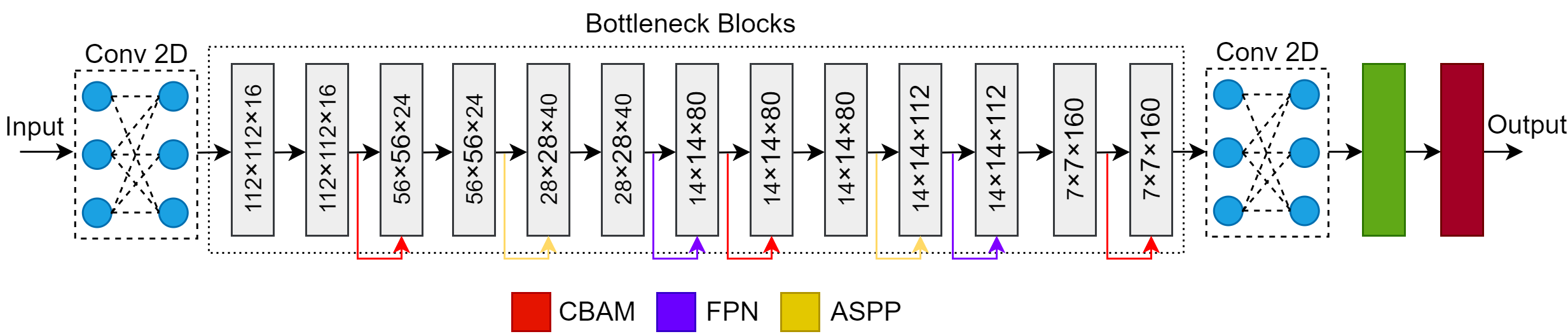
Diabetic retinopathy (DR) is a leading cause of blindness globally, requiring timely detection and classification to prevent vision loss. Deep learning techniques offer significant potential for automating DR detection by analyzing retinal fundus images with high precision. This paper proposes a RetinoNet model that consists of MobileNetV3, Convolutional Block Attention Module (CBAM), Atrous Spatial Pyramid Pooling (ASPP), and Feature Pyramid Network (FPN). MobileNetV3 provides a lightweight and efficient foundation for feature extraction, while CBAM emphasizes critical spatial and channel information, enabling the detection of subtle retinal abnormalities. ASPP captures multi-scale contextu... More >

Graphical Abstract
RetinoNet: An Efficient MobileNetV3-Based Model for Diabetic Retinopathy Detection Using Multi-Scale Feature Fusion

Open Access | Perspective | 26 September 2025
The Future of DNA Storage in Revolutionizing Biological Data Management
Journal of Artificial Intelligence in Bioinformatics | Volume 1, Issue 2: 51-57, 2025 | DOI: 10.62762/JAIB.2025.924847
Abstract
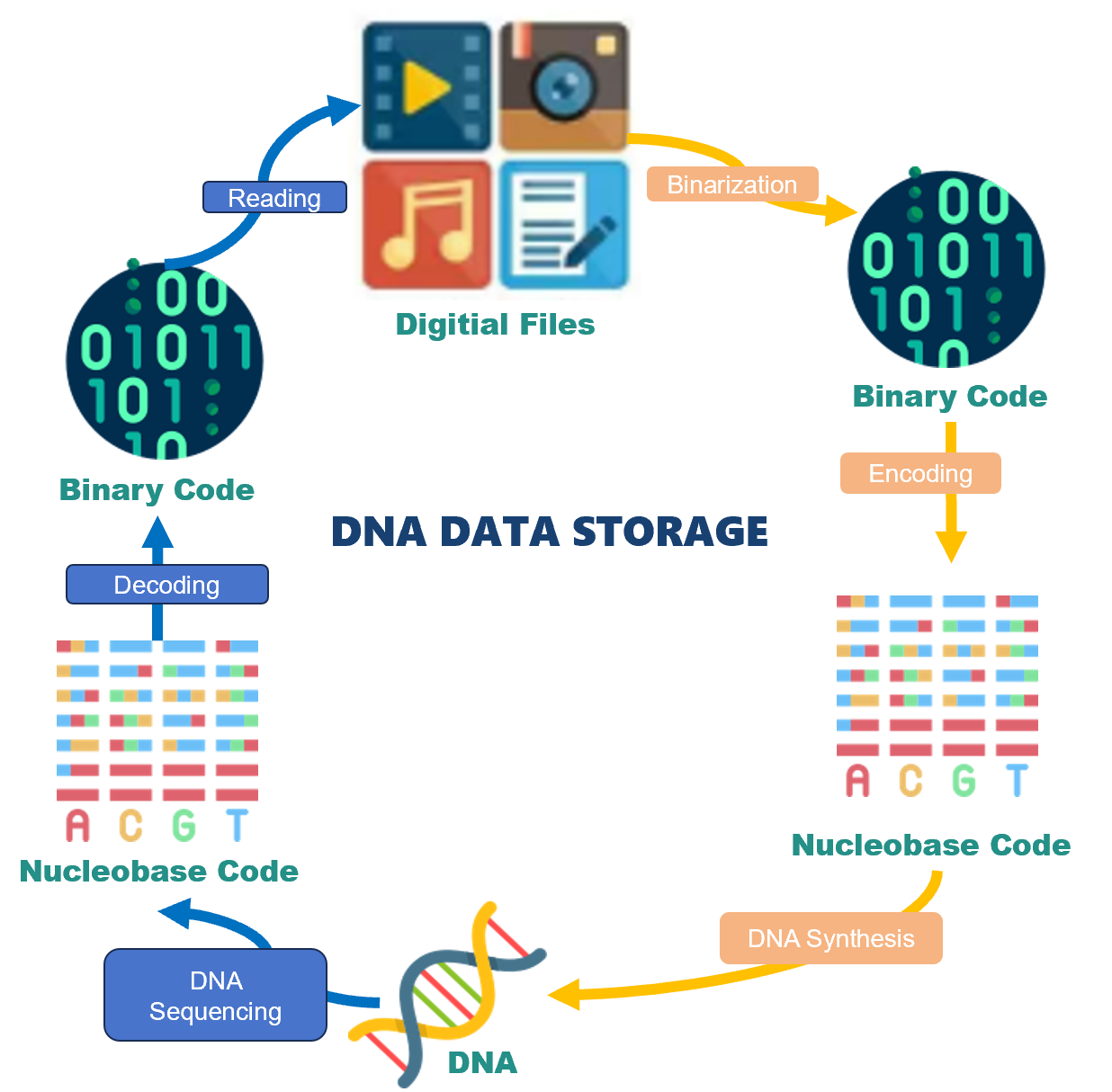
Compared with traditional storage media, biological data storage has advanced more rapidly in capacity, diversity, and lifespan, and it also enables continuous data retention. The DNA molecule, as Nature's own archival medium, provides unparalleled density, longevity, and passive durability, making it a compelling foundation for the next generation of "cold" and "deeply cold" archives. Since 2019, progress across the stack—coding for insertion–deletion–missing channels, large-scale random access, enzyme writing, nanopore-native retrieval, and chemically robust expansion—has transformed DNA storage from provocative demonstrations into mature technologies with early end-to-end prototyp... More >

Graphical Abstract
The Future of DNA Storage in Revolutionizing Biological Data Management