-
CiteScore
-
Impact Factor
Volume 1, Issue 2, Journal of Artificial Intelligence in Bioinformatics
Volume 1, Issue 2, 2025
Submit Manuscript Edit a Special Issue
Article QR Code
Article QR Code
Scan the QR code for reading
Popular articles
Journal of Artificial Intelligence in Bioinformatics, Volume 1, Issue 2, 2025: 72-78

Open Access | Editorial | 09 December 2025
Navigating Ethical Boundaries in Federated Learning for Biomedical Research
1 Applied Data Science, Noroff University College, Kristiansand, Norway
2 School of Computer Science and Engineering, Kyungpook National University, Daegu, Republic of Korea
3 School of Electrical Engineering and Computer Science, National Univsersity of Sciences and Technology, Islamabad, Pakistan
* Corresponding Author: Xiao Kong, [email protected]
Received: 22 August 2025, Accepted: 29 September 2025, Published: 09 December 2025  
Abstract
Biomedical research is increasingly shaped by vast and diverse datasets, yet their integration is constrained by privacy concerns, regulatory barriers, and fragmented infrastructures. Federated learning (FL) has emerged as a promising paradigm that enables institutions to collaboratively train machine learning models while keeping sensitive data local. This approach has the potential to accelerate discovery in areas such as precision medicine, rare disease research, and population health by pooling knowledge without centralizing data. However, federated learning also introduces new ethical and governance challenges. Risks of information leakage, inequitable participation, algorithmic bias, unclear accountability, and regulatory complexity must be carefully addressed. This editorial highlights these boundaries and emphasizes that technical solutions alone are insufficient. We argue that responsible deployment of FL requires dedicated ethical frameworks, innovative governance structures, continuous auditing, and inclusive global participation. By embedding responsibility into its design and implementation, federated learning can not only advance biomedical science but also foster trust, equity, and sustainability in the future of data-driven health research.

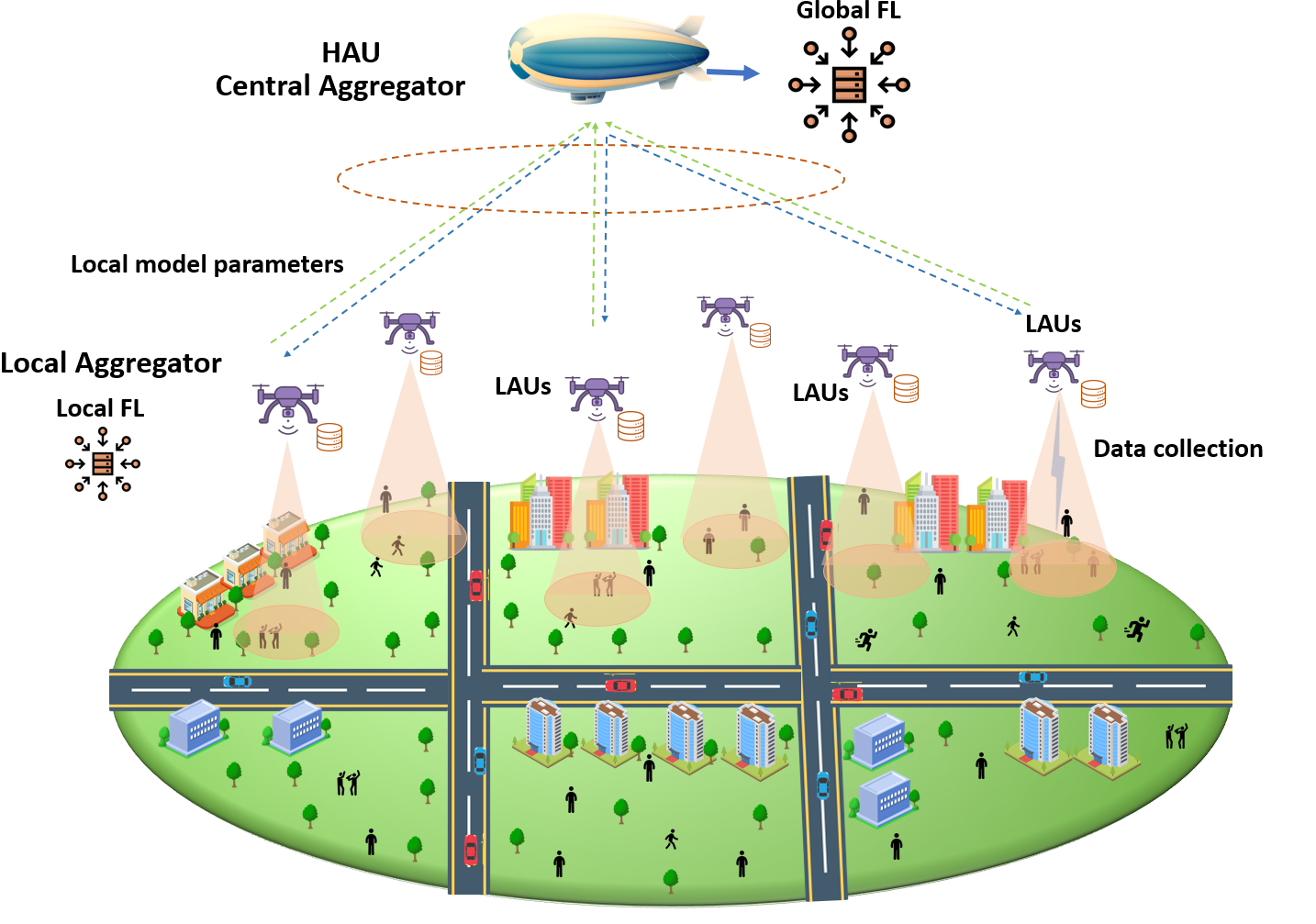
Graphical Abstract
Navigating Ethical Boundaries in Federated Learning for Biomedical Research

Keywords
federated learning
biomedical ethics
data privacy
precision medicine
AI governance
fairness

Data Availability Statement
Not applicable.

Funding
This work was supported without any funding.

Conflicts of Interest
The authors declare no conflicts of interest.

Ethical Approval and Consent to Participate
Not applicable.

References
  1. Sheller, M. J., Edwards, B., Reina, G. A., Martin, J., Pati, S., Kotrotsou, A., ... & Bakas, S. (2020). Federated learning in medicine: facilitating multi-institutional collaborations without sharing patient data. Scientific reports, 10(1), 12598.
    [CrossRef]   [Google Scholar]
  2. Li, X., Gu, Y., Dvornek, N., Staib, L. H., Ventola, P., & Duncan, J. S. (2020). Multi-site fMRI analysis using privacy-preserving federated learning and domain adaptation: ABIDE results. Medical image analysis, 65, 101765.
    [CrossRef]   [Google Scholar]
  3. Li, T., Sahu, A. K., Talwalkar, A., & Smith, V. (2020). Federated learning: Challenges, methods, and future directions. IEEE signal processing magazine, 37(3), 50-60.
    [CrossRef]   [Google Scholar]
  4. Hitaj, B., Ateniese, G., & Perez-Cruz, F. (2017, October). Deep models under the GAN: Information leakage from collaborative deep learning. In Proceedings of the 2017 ACM SIGSAC conference on computer and communications security (pp. 603-618).
    [CrossRef]   [Google Scholar]
  5. Melis, L., Song, C., De Cristofaro, E., & Shmatikov, V. (2019, May). Exploiting unintended feature leakage in collaborative learning. In 2019 IEEE symposium on security and privacy (SP) (pp. 691-706). IEEE.
    [CrossRef]   [Google Scholar]
  6. Kaissis, G. A., Makowski, M. R., Rückert, D., & Braren, R. F. (2020). Secure, privacy-preserving and federated machine learning in medical imaging. Nature Machine Intelligence, 2(6), 305-311.
    [CrossRef]   [Google Scholar]
  7. World Health Organization. (2024). Ethics and governance of artificial intelligence for health: large multi-modal models. WHO guidance. World Health Organization.
    [Google Scholar]
  8. Cannarsa, M. (2021). Ethics guidelines for trustworthy AI. The Cambridge handbook of lawyering in the digital age, 283-297.
    [CrossRef]   [Google Scholar]
  9. Delacroix, S., & Lawrence, N. D. (2019). Bottom-up data trusts: Disturbing the ‘one size fits all’approach to data governance. International data privacy law, 9(4), 236-252.
    [CrossRef]   [Google Scholar]
  10. Morley, J., Murphy, L., Mishra, A., Joshi, I., & Karpathakis, K. (2022). Governing data and artificial intelligence for health care: developing an international understanding. JMIR formative research, 6(1), e31623.
    [CrossRef]   [Google Scholar]
  11. Rieke, N., Hancox, J., Li, W., Milletari, F., Roth, H. R., Albarqouni, S., ... & Cardoso, M. J. (2020). The future of digital health with federated learning. NPJ digital medicine, 3(1), 119.
    [CrossRef]   [Google Scholar]
  12. Bonawitz, K., Eichner, H., Grieskamp, W., Huba, D., Ingerman, A., Ivanov, V., ... & Roselander, J. (2019). Towards federated learning at scale: System design. Proceedings of machine learning and systems, 1, 374-388.
    [Google Scholar]
  13. Zhang, C., Xie, Y., Bai, H., Yu, B., Li, J., & Gao, Y. (2021). A survey on federated learning. Knowledge-Based Systems, 216, 106775.
    [CrossRef]   [Google Scholar]
  14. Kairouz, P., McMahan, H. B., Avent, B., Bellet, A., Bennis, M., Bhagoji, A. N., ... & Zhao, S. (2021). Advances and open problems in federated learning. Foundations and trends® in machine learning, 14(1–2), 1-210. http://dx.doi.org/10.1561/2200000083
    [Google Scholar]
  15. López-Blanco, R., Alonso, R. S., González-Arrieta, A., Chamoso, P., & Prieto, J. (2023, July). Federated learning of explainable artificial intelligence (FED-XAI): A review. In International Symposium on Distributed Computing and Artificial Intelligence (pp. 318-326). Cham: Springer Nature Switzerland.
    [CrossRef]   [Google Scholar]
  16. Terry, S. F. (2014). The global alliance for genomics & health. Genetic testing and molecular biomarkers, 18(6), 375-376.
    [CrossRef]   [Google Scholar]
  17. Yeung, K. (2020). Recommendation of the council on artificial intelligence (OECD). International legal materials, 59(1), 27-34.
    [CrossRef]   [Google Scholar]
  18. Topol, E. J. (2019). High-performance medicine: the convergence of human and artificial intelligence. Nature medicine, 25(1), 44-56.
    [CrossRef]   [Google Scholar]
  19. Esteva, A., Robicquet, A., Ramsundar, B., Kuleshov, V., DePristo, M., Chou, K., ... & Dean, J. (2019). A guide to deep learning in healthcare. Nature medicine, 25(1), 24-29.
    [CrossRef]   [Google Scholar]
  20. Shabani, M., Dyke, S. O., Joly, Y., & Borry, P. (2015). Controlled access under review: improving the governance of genomic data access. PLoS Biology, 13(12), e1002339.
    [CrossRef]   [Google Scholar]
  21. Mittelstadt, B. D., Allo, P., Taddeo, M., Wachter, S., & Floridi, L. (2016). The ethics of algorithms: Mapping the debate. Big Data & Society, 3(2), 2053951716679679.
    [CrossRef]   [Google Scholar]
  22. Pfitzner, B., Steckhan, N., & Arnrich, B. (2021). Federated learning in a medical context: a systematic literature review. ACM Transactions on Internet Technology (TOIT), 21(2), 1-31.
    [CrossRef]   [Google Scholar]
  23. Dayan, I., Roth, H. R., Zhong, A., Harouni, A., Gentili, A., Abidin, A. Z., ... & Li, Q. (2021). Federated learning for predicting clinical outcomes in patients with COVID-19. Nature medicine, 27(10), 1735-1743.
    [CrossRef]   [Google Scholar]
  24. Pati, S., Baid, U., Edwards, B., Sheller, M., Wang, S. H., Reina, G. A., ... & Poisson, L. (2022). Federated learning enables big data for rare cancer boundary detection. Nature communications, 13(1), 7346.
    [CrossRef]   [Google Scholar]

Cite This Article
APA Style
Rahim, S., Kong, X., & Abdullah, F. (2025). Navigating Ethical Boundaries in Federated Learning for Biomedical Research. Journal of Artificial Intelligence in Bioinformatics, 1(2), 72–78. https://doi.org/10.62762/JAIB.2025.703433
Export Citation
RIS Format
Compatible with EndNote, Zotero, Mendeley, and other reference managers
RIS format data for reference managers
TY  - JOUR
AU  - Rahim, Shahnila
AU  - Kong, Xiao
AU  - Abdullah, Fatima
PY  - 2025
DA  - 2025/12/09
TI  - Navigating Ethical Boundaries in Federated Learning for Biomedical Research
JO  - Journal of Artificial Intelligence in Bioinformatics
T2  - Journal of Artificial Intelligence in Bioinformatics
JF  - Journal of Artificial Intelligence in Bioinformatics
VL  - 1
IS  - 2
SP  - 72
EP  - 78
DO  - 10.62762/JAIB.2025.703433
UR  - https://www.icck.org/article/abs/JAIB.2025.703433
KW  - federated learning
KW  - biomedical ethics
KW  - data privacy
KW  - precision medicine
KW  - AI governance
KW  - fairness
AB  - Biomedical research is increasingly shaped by vast and diverse datasets, yet their integration is constrained by privacy concerns, regulatory barriers, and fragmented infrastructures. Federated learning (FL) has emerged as a promising paradigm that enables institutions to collaboratively train machine learning models while keeping sensitive data local. This approach has the potential to accelerate discovery in areas such as precision medicine, rare disease research, and population health by pooling knowledge without centralizing data. However, federated learning also introduces new ethical and governance challenges. Risks of information leakage, inequitable participation, algorithmic bias, unclear accountability, and regulatory complexity must be carefully addressed. This editorial highlights these boundaries and emphasizes that technical solutions alone are insufficient. We argue that responsible deployment of FL requires dedicated ethical frameworks, innovative governance structures, continuous auditing, and inclusive global participation. By embedding responsibility into its design and implementation, federated learning can not only advance biomedical science but also foster trust, equity, and sustainability in the future of data-driven health research.
SN  - 3068-7535
PB  - Institute of Central Computation and Knowledge
LA  - English
ER  - 
BibTeX Format
Compatible with LaTeX, BibTeX, and other reference managers
BibTeX format data for LaTeX and reference managers
@article{Rahim2025Navigating,
  author = {Shahnila Rahim and Xiao Kong and Fatima Abdullah},
  title = {Navigating Ethical Boundaries in Federated Learning for Biomedical Research},
  journal = {Journal of Artificial Intelligence in Bioinformatics},
  year = {2025},
  volume = {1},
  number = {2},
  pages = {72-78},
  doi = {10.62762/JAIB.2025.703433},
  url = {https://www.icck.org/article/abs/JAIB.2025.703433},
  abstract = {Biomedical research is increasingly shaped by vast and diverse datasets, yet their integration is constrained by privacy concerns, regulatory barriers, and fragmented infrastructures. Federated learning (FL) has emerged as a promising paradigm that enables institutions to collaboratively train machine learning models while keeping sensitive data local. This approach has the potential to accelerate discovery in areas such as precision medicine, rare disease research, and population health by pooling knowledge without centralizing data. However, federated learning also introduces new ethical and governance challenges. Risks of information leakage, inequitable participation, algorithmic bias, unclear accountability, and regulatory complexity must be carefully addressed. This editorial highlights these boundaries and emphasizes that technical solutions alone are insufficient. We argue that responsible deployment of FL requires dedicated ethical frameworks, innovative governance structures, continuous auditing, and inclusive global participation. By embedding responsibility into its design and implementation, federated learning can not only advance biomedical science but also foster trust, equity, and sustainability in the future of data-driven health research.},
  keywords = {federated learning, biomedical ethics, data privacy, precision medicine, AI governance, fairness},
  issn = {3068-7535},
  publisher = {Institute of Central Computation and Knowledge}
}

Article Metrics
Citations:

Crossref

0

Scopus

0

Web of Science

0
Article Access Statistics:
Views: 53
PDF Downloads: 26

Publisher's Note
ICCK stays neutral with regard to jurisdictional claims in published maps and institutional affiliations.

Rights and Permissions
CC BY Copyright © 2025 by the Author(s). Published by Institute of Central Computation and Knowledge. This article is an open access article distributed under the terms and conditions of the Creative Commons Attribution (CC BY) license (https://creativecommons.org/licenses/by/4.0/), which permits use, sharing, adaptation, distribution and reproduction in any medium or format, as long as you give appropriate credit to the original author(s) and the source, provide a link to the Creative Commons licence, and indicate if changes were made.
Journal of Artificial Intelligence in Bioinformatics

Journal of Artificial Intelligence in Bioinformatics

ISSN: 3068-7535 (Online)

Email: [email protected]

Portico

Portico

All published articles are preserved here permanently:
https://www.portico.org/publishers/icck/