-
CiteScore
-
Impact Factor
Volume 2, Issue 1 (In Progress) - Table of Contents

×

Online First
Citations: 0, 0,  0   |   Viewed: 624, Download: 230

Open Access | Perspective | 09 December 2025
Role of Model Compounds in Advancing Aquathermolysis-Based Technologies for Heavy Oil Upgrading
Journal of Chemical Engineering and Renewable Fuels | Volume 2, Issue 1: 23-27, 2026 | DOI: 10.62762/JCERF.2025.239270
Abstract
Using model compounds to study the aquathermolysis reaction mechanism has been a cornerstone in understanding the complex chemistry underlying in-reservoir upgrading of unconventional oil resources, including oil shale, bitumen, and heavy and extra-heavy crude oils. These compounds, often selected to represent key structural features such as alkyl or polyaromatic hydrocarbons and heteroatom-containing molecules, act as simplified analogs of the chemically complex constituents present in real oil systems. Their use in controlled experimental setups enables the isolation and analysis of specific reaction pathways, providing mechanistic insights that are difficult to extract from real oil resou... More >

Open Access | Research Article | 08 December 2025
Oxygen Insertion in Propylene to Make Propylene Oxide Over a Highly Stable and Efficient Titanium Silicate Catalyst
Journal of Chemical Engineering and Renewable Fuels | Volume 2, Issue 1: 13-22, 2026 | DOI: 10.62762/JCERF.2025.147821
Abstract
Propylene oxide (PO) is a crucial intermediate in the chemical industry, serving as a precursor for polyether polyols, propylene glycol, and various polymers. Traditional industrial PO production methods, such as the chlorohydrin and hydroperoxide routes, are hampered by significant environmental concerns and the generation of undesirable by-products. This study explores the direct transformation of propylene to PO using titanium silicate (TS-1) catalyst. The catalyst (TS-1) was synthesized and characterized by BET surface analysis, X-ray diffraction (XRD), scanning and transmission electron microscopy (SEM/TEM), and X-ray photoelectron spectroscopy (XPS). These analyses confirmed the format... More >

Graphical Abstract
Oxygen Insertion in Propylene to Make Propylene Oxide Over a Highly Stable and Efficient Titanium Silicate Catalyst

Open Access | Perspective | 07 December 2025
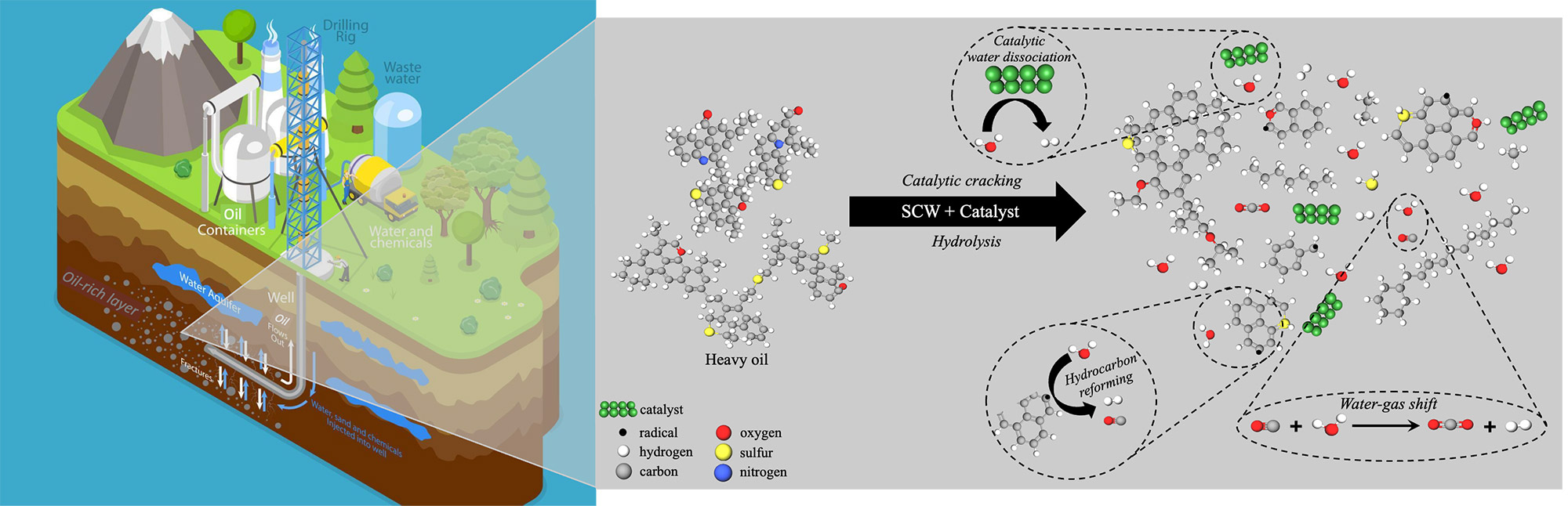
Integrating Supercritical Water and Catalysts: A Synergistic Approach for Heavy Oil Upgrading
Journal of Chemical Engineering and Renewable Fuels | Volume 2, Issue 1: 9-12, 2026 | DOI: 10.62762/JCERF.2025.734454
Abstract
The depletion of conventional hydrocarbons has forced researchers to focus on unconventional petroleum, i.e., heavy crude oils. However, the typical methods to recover the former are not suitable for the latter. Therefore, new technologies, such as supercritical water (SCW) upgrading, commercial and novel catalytic compounds have been proposed individually and in combination to solve the difficulties in recovering these reserves. In this work, the advantages and disadvantages, mechanisms, reactions, and challenges when using SCW and catalysts for heavy oil upgrading are discussed, giving a perspective for new synergetic approaches. More >

Graphical Abstract
Integrating Supercritical Water and Catalysts: A Synergistic Approach for Heavy Oil Upgrading

Open Access | Commentary | 06 November 2025
From Slide Rules to AI: Reflections on the Evolution of Chemical Engineering Tools
Journal of Chemical Engineering and Renewable Fuels | Volume 2, Issue 1: 6-8, 2026 | DOI: 10.62762/JCERF.2025.832895
Abstract
Chemical engineering, like other engineering disciplines, has evolved from manual calculations to advanced process simulators and artificial intelligence tools. This perspective piece reflects on how such technological shifts have transformed both professional practice and engineering education. Drawing from historical perspectives and current teaching experiences, it examines the balance between leveraging modern tools and fostering deep conceptual understanding. The discussion invites educators to critically assess how and when to integrate digital resources into the chemical engineering curriculum. More >

Open Access | Perspective | 24 October 2025
Bridging Refinery and Biorefinery: Modular Hydrotreating Pathways for Co-Processing Refractory Streams and Bio-Oils
Journal of Chemical Engineering and Renewable Fuels | Volume 2, Issue 1: 1-5, 2026 | DOI: 10.62762/JCERF.2025.769005
Abstract
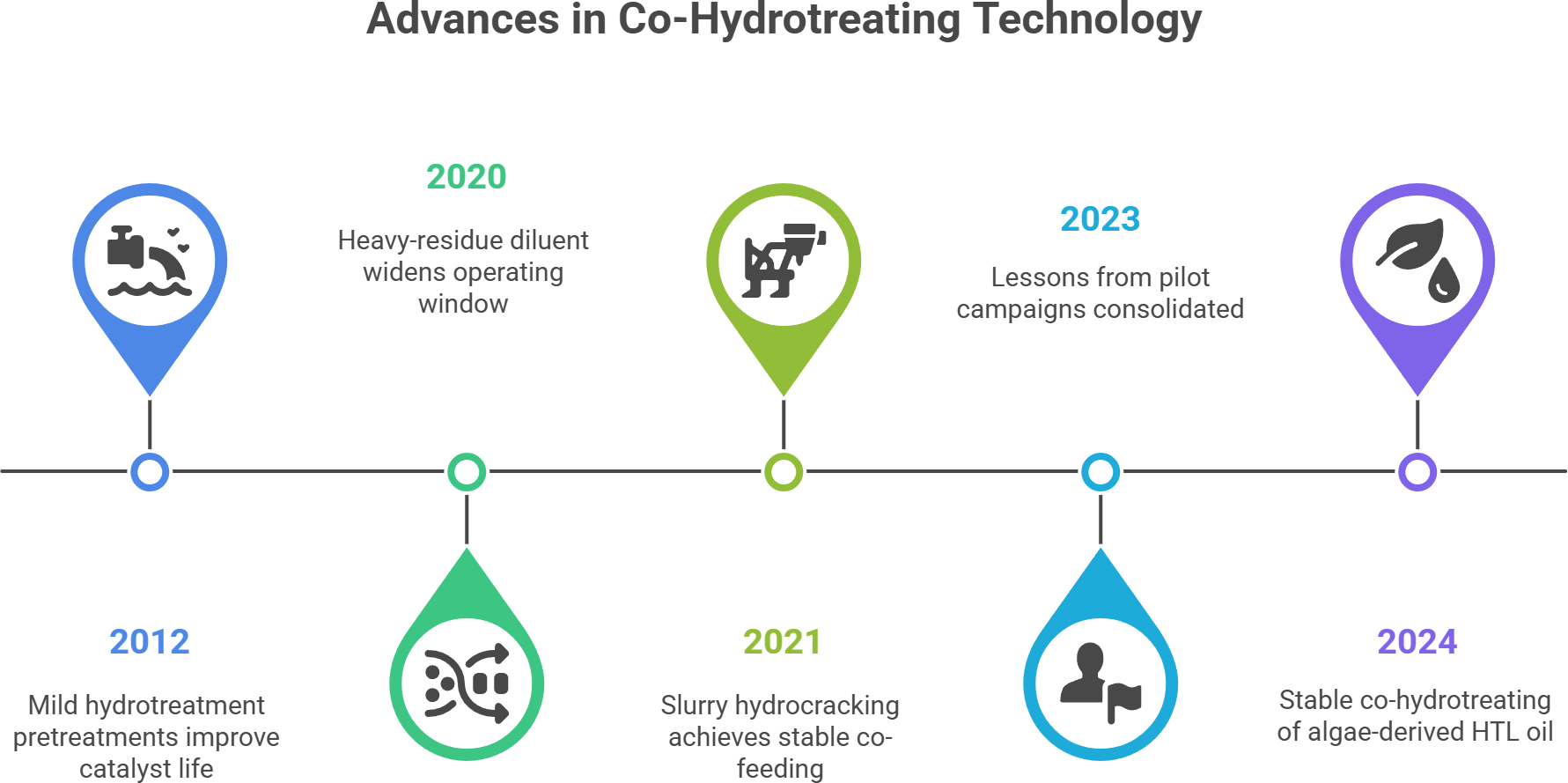
Integrating biomass-derived oils into existing petroleum refineries is one of the fastest routes toward large-scale deployment of renewable liquid fuels. Yet co-processing bio-oils with refractory fossil streams, such as vacuum gas oil, cycle oils or coker gas oils, poses persistent hurdles: their high oxygen content, thermal instability and heteroatom-rich matrices accelerate catalyst fouling and drive hydrogen consumption. This Perspective argues that a modular hydrotreating strategy, in which tailored pretreatment, grading and active catalyst beds are arranged as interchangeable cartridges, offers a pragmatic path to bridge refinery and biorefinery operations. Drawing from recent continuo... More >

Graphical Abstract
Bridging Refinery and Biorefinery: Modular Hydrotreating Pathways for Co-Processing Refractory Streams and Bio-Oils