


Journal of Chemical Engineering and Renewable Fuels | Volume 2, Issue 3: 82-90, 2026 | DOI: 10.62762/JCERF.2026.855881
Abstract
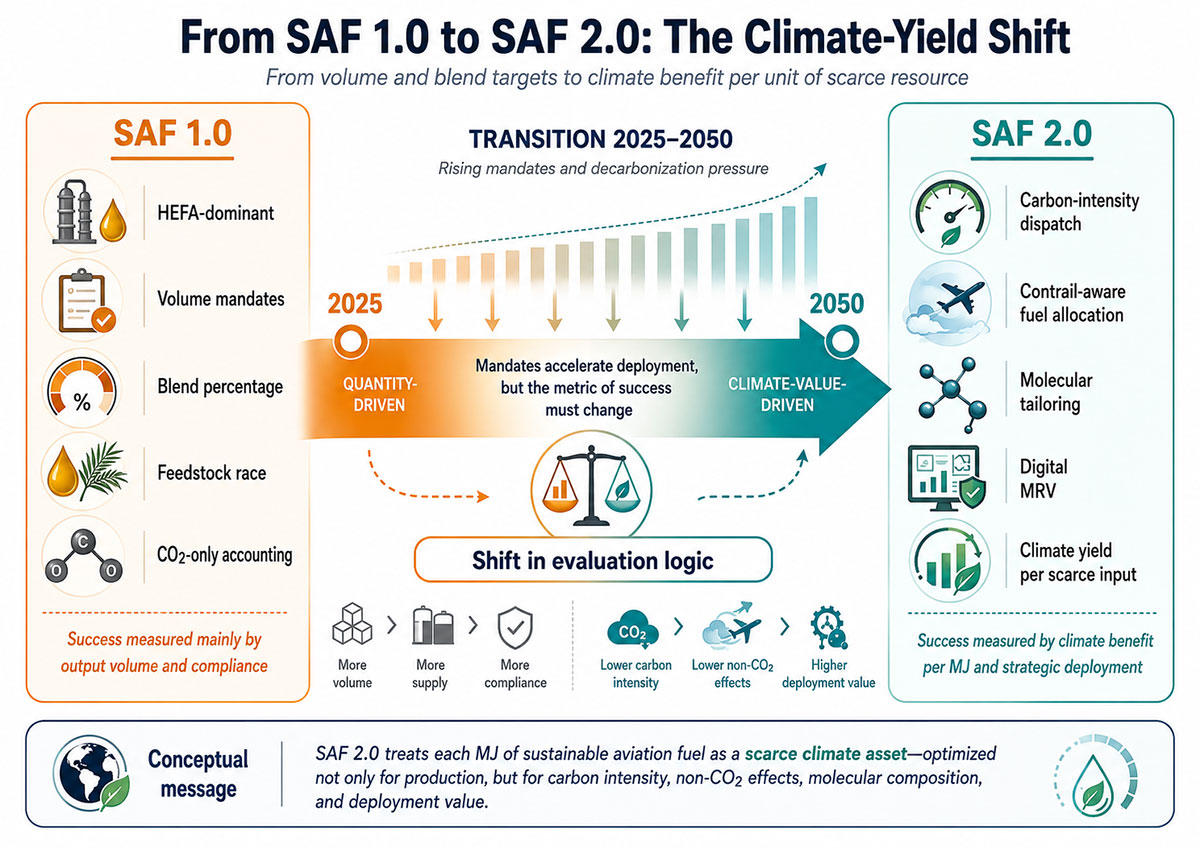
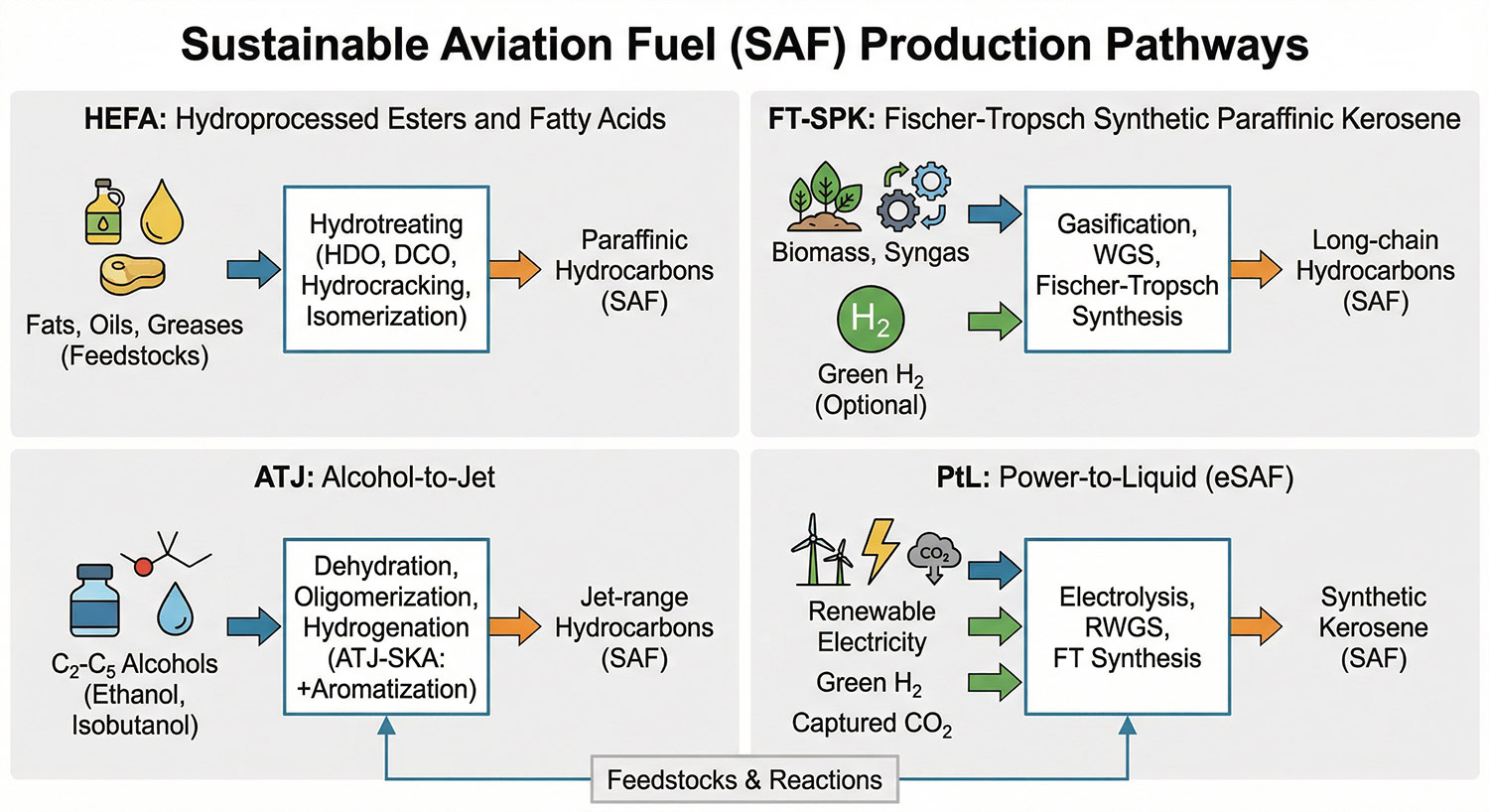
Sustainable aviation fuel (SAF) is entering the mandate era while still representing a sub-percent share of global aviation fuel. This Perspective argues that the next bottleneck is not only production capacity, but climate allocation: which carbon sources, hydrogen, renewable electrons and molecular structures should become jet fuel, and where that fuel should be deployed to deliver the greatest avoided climate impact. SAF 2.0 is proposed as a carbon- and contrail-intensity managed refinery–airport architecture that links certified HEFA, Fischer–Tropsch, alcohol-to-jet, power-to-liquid/e-SAF and co-processing modules with molecular finishing, digital monitoring, reporting and verificati... More >
Graphical Abstract