Volume 2, Issue 4


Volume 2, Issue 4 (December, 2026) – 5 articles
Citations: Crossref logo 18,   12   |   Viewed: 2325, Download: 700

Table of Contents

Open Access | Review Article | 01 September 2026
Digital Twin-Enabled Environmentally Resilient Recovery of Geo-Energy Infrastructure after Disasters
Journal of Geo-Energy and Environment | Volume 2, Issue 4: 300-318, 2026 | DOI: 10.62762/JGEE.2026.334943
Abstract
Geo-energy infrastructure—comprising oil and gas systems, CCUS, geothermal installations, and subsurface storage—is critical for energy security and low-carbon transitions. Yet disasters and engineering failures can trigger hazardous leaks and contaminant transport through complex geological media, posing cascading risks to subsurface and surface ecosystems. While urban resilience has been widely studied, environmentally resilient recovery strategies that explicitly integrate leakage risk, contaminant migration, and resource optimization remain underexplored. This review presents a digital twin framework for disaster-driven environmental recovery, unifying real-time monitoring, geologica... More >

Graphical Abstract
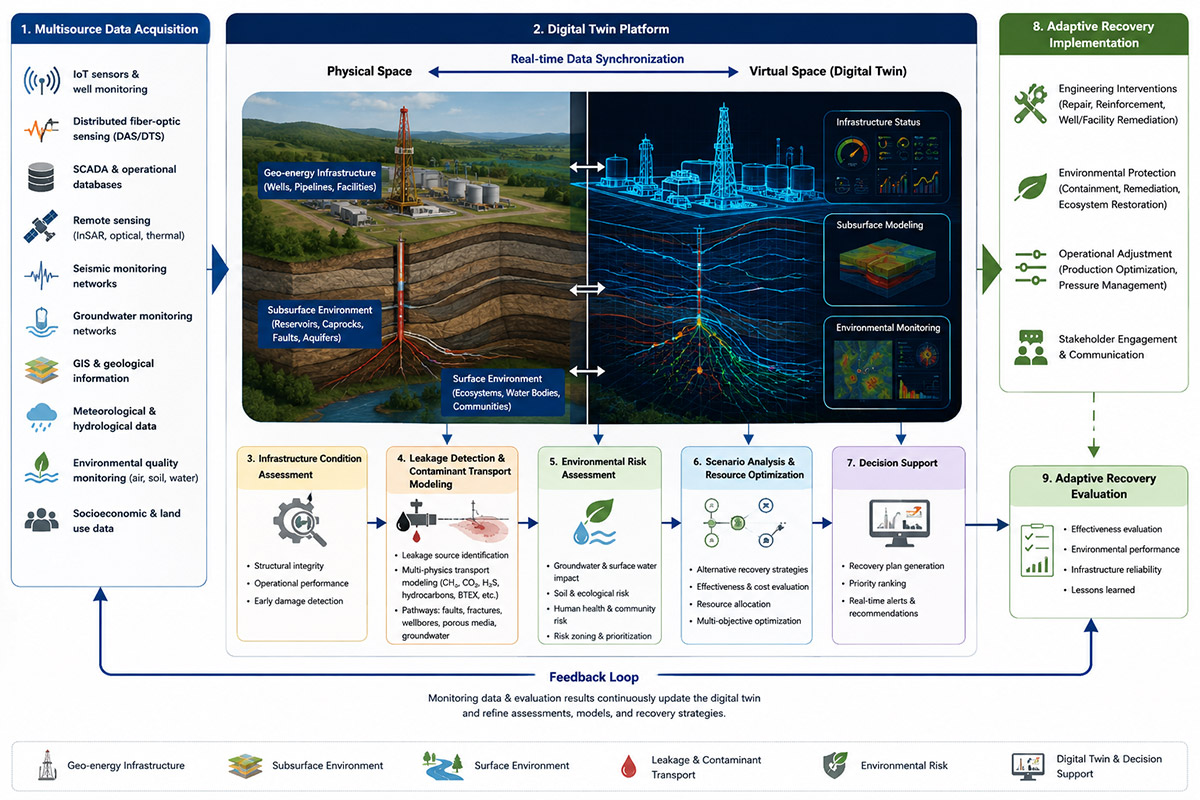
Digital Twin-Enabled Environmentally Resilient Recovery of Geo-Energy Infrastructure after Disasters
Open Access | Review Article | 30 August 2026 | Cited: Crossref logo  1
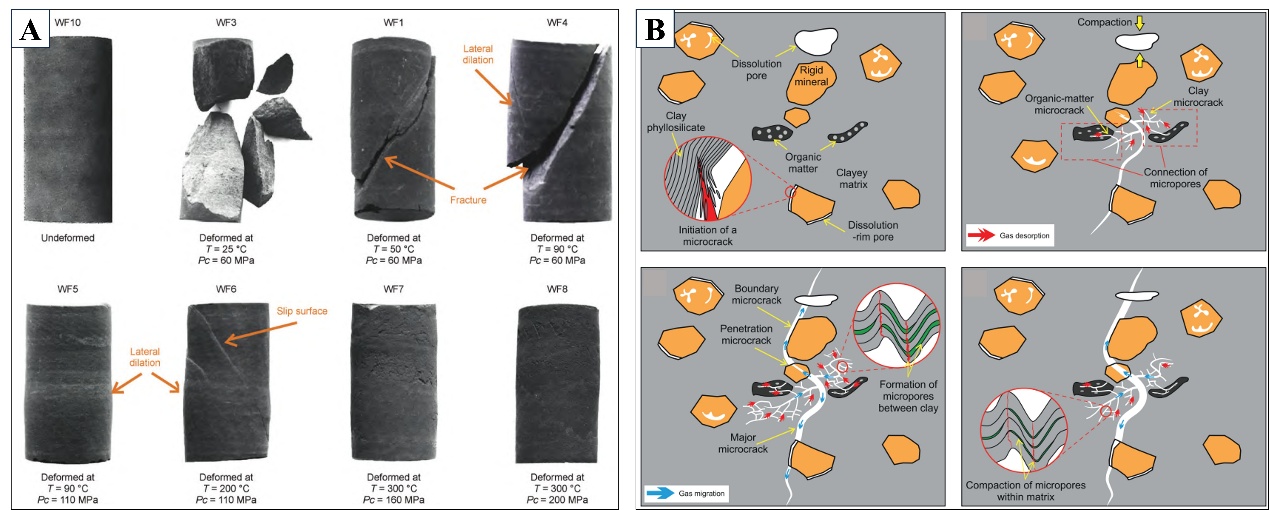
A Critical Review of Tectonic Effect on the Nanopore Structure Evolution of Shale Gas Reservoirs
Journal of Geo-Energy and Environment | Volume 2, Issue 4: 287-299, 2026 | DOI: 10.62762/JGEE.2026.738726
Abstract
Nanopores in shale are critical controls on shale gas storage and transport, and their formation, transformation, and preservation during geological evolution have long been major research topics in unconventional oil and gas geology. Considerable progress has been made in understanding the evolution of shale nanopore structures during sedimentation, diagenesis, and hydrocarbon generation from organic matter. However, the modification of shale nanopores by tectonic stress and the underlying mechanisms remain insufficiently understood. Organic-rich shale formations in South China commonly serve as regionally important detachment layers and have undergone multiple phases of tectonic activity i... More >

Graphical Abstract
A Critical Review of Tectonic Effect on the Nanopore Structure Evolution of Shale Gas Reservoirs
Open Access | Research Article | 08 August 2026 | Cited: Crossref logo  7 , Scopus 5
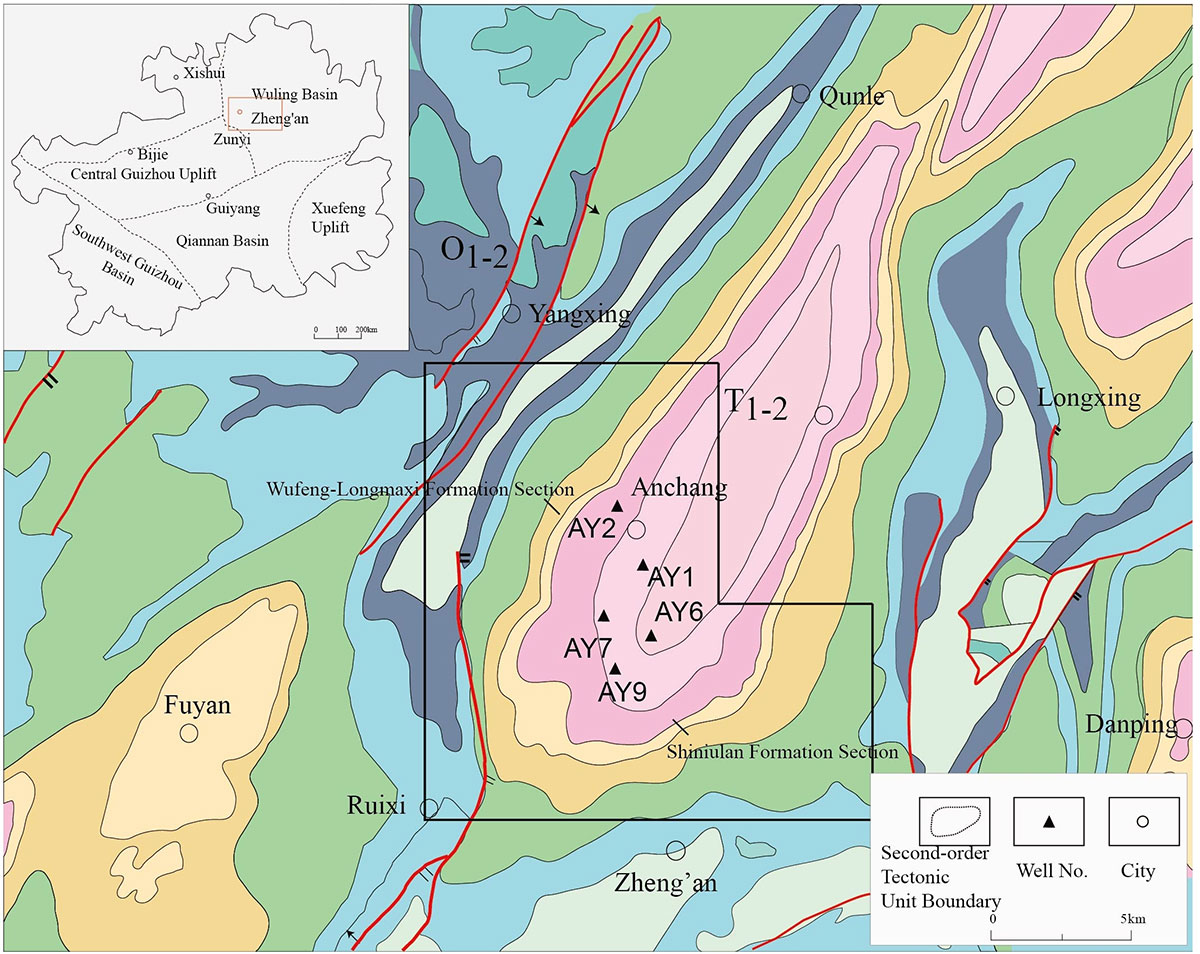
Geochemical Characteristics and Significance of shale Gas Well Flowback Fluid in Zheng’An Block, Guizhou
Journal of Geo-Energy and Environment | Volume 2, Issue 4: 276-286, 2026 | DOI: 10.62762/JGEE.2026.556688
Abstract
Analysis of fracturing flowback fluids from 14 shale gas wells across 7 platforms in the Zheng'an block, Guizhou, reveals that the fluids are characterized by high salinity, elevated Na\(^+\) and Cl\(^-\) concentrations, and high levels of chemical oxygen demand (COD) and ammonia nitrogen. Na\(^+\) concentrations range from 7370 to 27396~mg/L (mean 18689~mg/L), Cl\(^-\) from 9000 to 43000~mg/L (mean 29438~mg/L), and total salinity from 17074 to 70950~mg/L (mean 48744~mg/L). The dominant microbial populations comprise iron bacteria (FEB), saprophytic bacteria (TGB), and sulfate-reducing bacteria (SRB). These characteristics indicate that the flowback fluid cannot be discharged directly withou... More >

Graphical Abstract
Geochemical Characteristics and Significance of shale Gas Well Flowback Fluid in Zheng’An Block, Guizhou
Open Access | Research Article | 07 August 2026 | Cited: Crossref logo  3 , Scopus 3
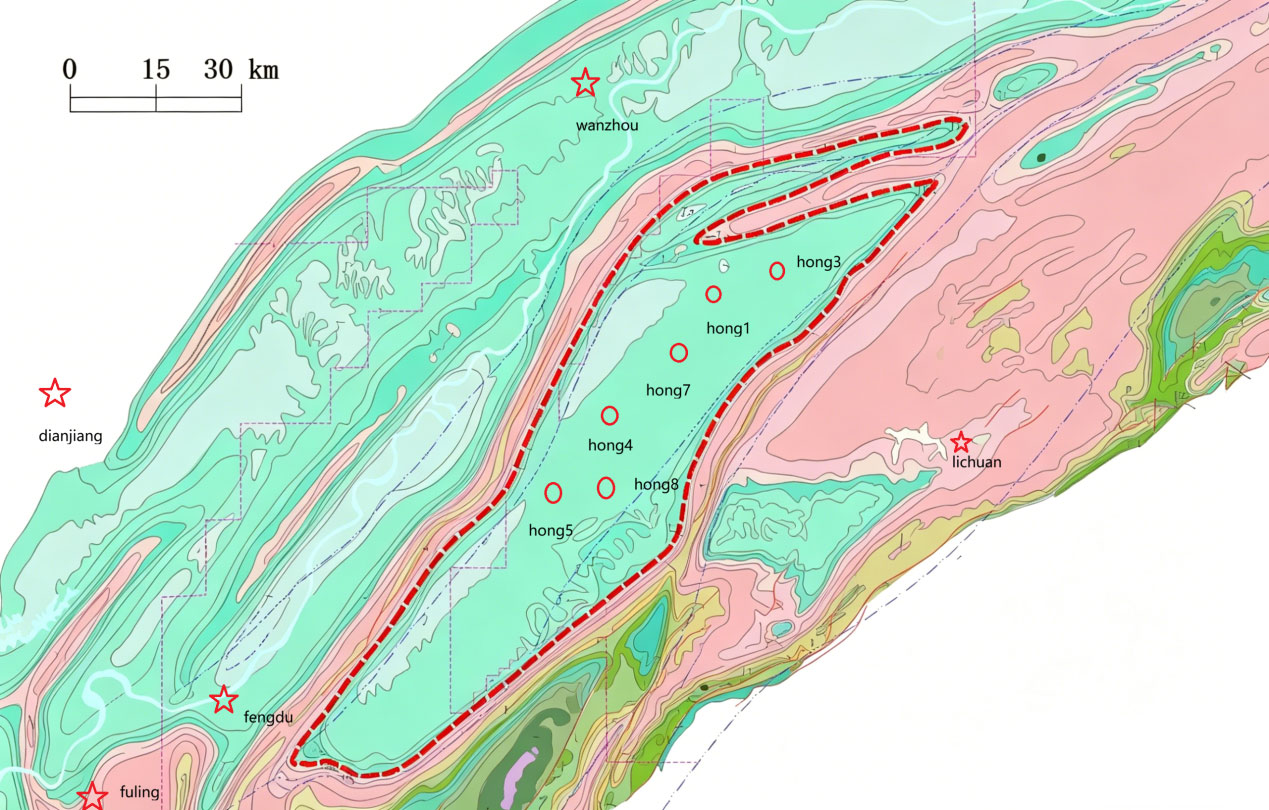
Displacement and Pressure Control for Reaming of Blocked Horizontal Shale Gas Wells
Journal of Geo-Energy and Environment | Volume 2, Issue 4: 265-275, 2026 | DOI: 10.62762/JGEE.2026.569527
Abstract
Shale gas horizontal wells in the Hongxing Block are challenged by long horizontal sections, narrow annular clearances, well-developed fractures, and the coexistence of lost circulation and wellbore collapse. Complexities such as pipe sticking, pump surging, annular blockage, and cuttings accumulation frequently occur during reaming, severely affecting operational safety and efficiency. To overcome the drawbacks of conventional empirical methods, this paper establishes four quantitative models: displacement-pressure coupling, bottomhole Equivalent Circulating Density (ECD) constraint, critical cuttings transport displacement, and drill string safety loading. An integrated reaming technology... More >

Graphical Abstract
Displacement and Pressure Control for Reaming of Blocked Horizontal Shale Gas Wells
Open Access | Research Article | 09 July 2026 | Cited: Crossref logo  7 , Scopus 4
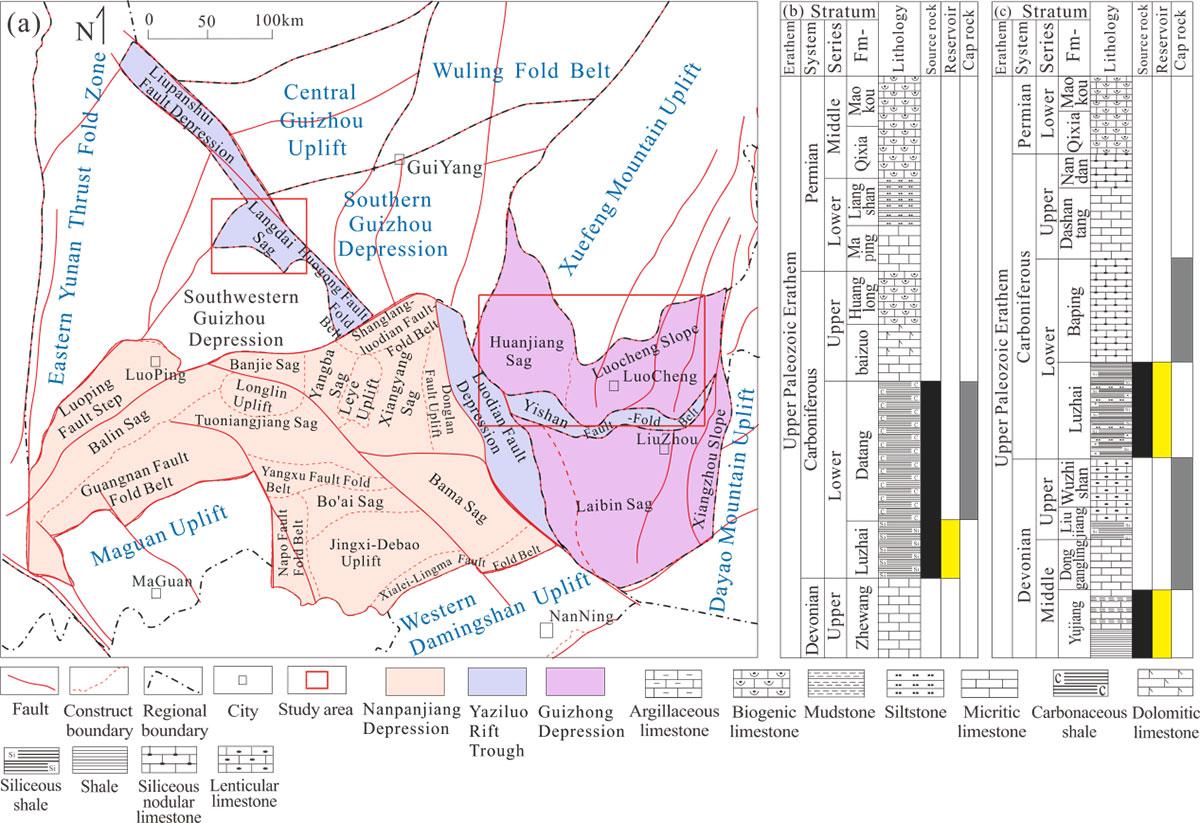
Evaluation of Structural Preservation Conditions for Shale Gas in Relict Syncline: A Case Study of Devonian-Carboniferous Strata in the Guizhou-Guangxi Area
Journal of Geo-Energy and Environment | Volume 2, Issue 4: 244-264, 2026 | DOI: 10.62762/JGEE.2026.303617
Abstract
This study investigates the key factors controlling marine shale gas preservation in Devonian–Carboniferous strata, focusing on four representative synclines in the Nanpanjiang Basin and the northern margin of the Guizhong Depression: Langdai, Xinzhai, West Yizhou, and North Yizhou. Through tectonic characterization and balanced cross-section restoration, we clarify the effects of structural style, tectonic deformation intensity, and fault properties on shale gas preservation. Wide-gentle bidirectional thrust synclines (Xinzhai and West Yizhou) offer the most favorable preservation conditions, followed by the wide-gentle unidirectional thrust syncline (Langdai); the wide-gentle nappe-type... More >

Graphical Abstract
Evaluation of Structural Preservation Conditions for Shale Gas in Relict Syncline: A Case Study of Devonian-Carboniferous Strata in the Guizhou-Guangxi Area