Volume 3, Issue 1 (In Progress)


In Progress
Citations: Crossref logo 0,   0   |   Viewed: 1167, Download: 341

Table of Contents

Open Access | Perspective | 22 October 2026
From Data-Driven to Geology-Informed Learning: Geometry-Aware Graph Transformer Learning for Geo-Energy Systems
Journal of Geo-Energy and Environment | Volume 3, Issue 1: 72-83, 2027 | DOI: 10.62762/JGEE.2026.158449
Abstract
Geo-energy systems involve heterogeneous subsurface properties, irregular spatial structures, and complex interactions. Conventional data-driven models either treat observations independently or rely on graph connectivity without explicitly encoding relative geometry, which limits their ability to distinguish spatially different configurations. This study develops a Geometry-Aware Graph Transformer (GAGT) that integrates node attributes, graph structure, and relative geometric information through a learnable geometric bias in the attention mechanism. A controlled synthetic experiment with 300 irregularly distributed three-dimensional nodes compares a multilayer perceptron (MLP), a Graph Tran... More >

Graphical Abstract
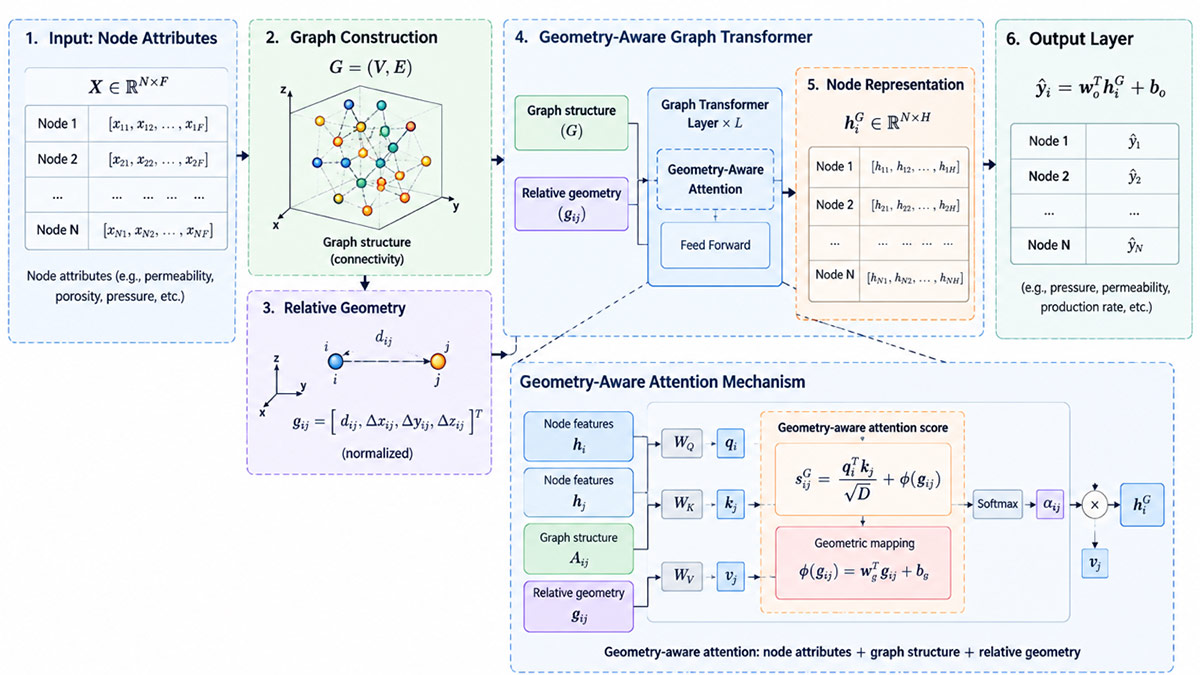
From Data-Driven to Geology-Informed Learning: Geometry-Aware Graph Transformer Learning for Geo-Energy Systems
Open Access | Research Article | 14 October 2026
Anchored Targeted Projection Pursuit for Hypothesis-Driven Quality Control of Drill-Cuttings Geochemical Data
Journal of Geo-Energy and Environment | Volume 3, Issue 1: 48-71, 2027 | DOI: 10.62762/JGEE.2026.403029
Abstract
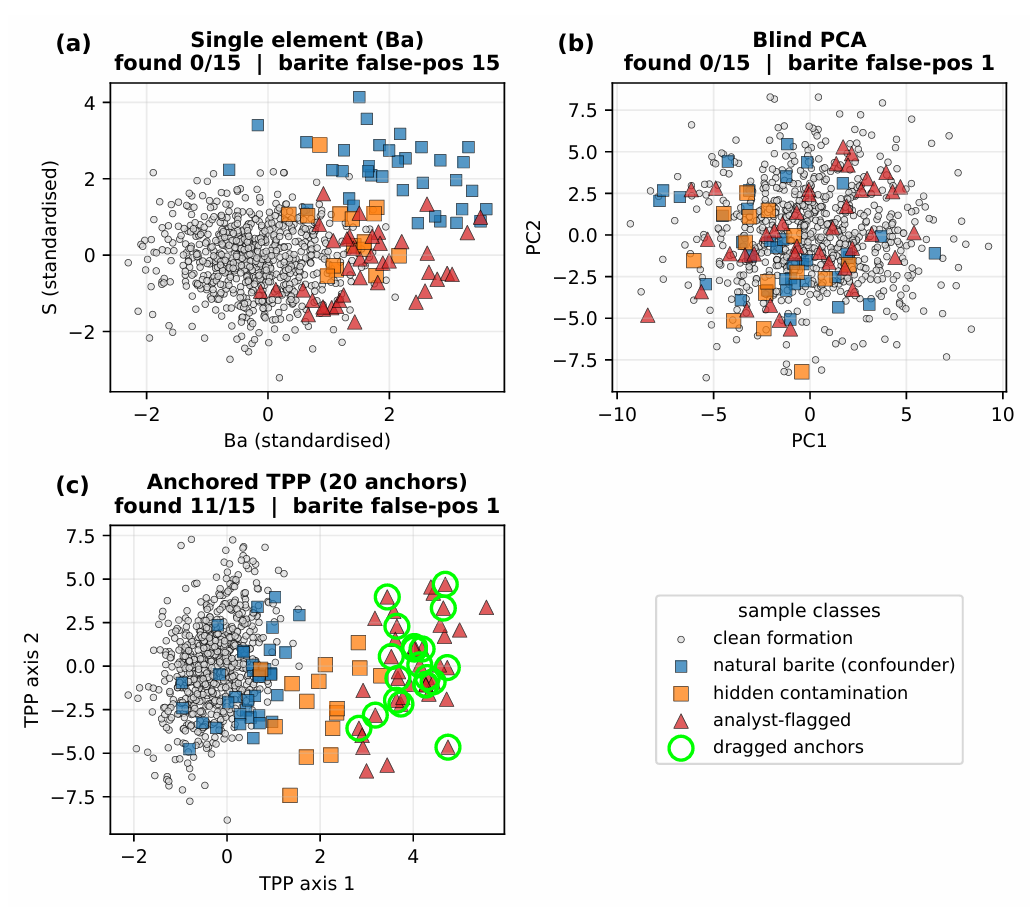
Wellsite X-ray fluorescence (XRF) analysis of drill cuttings provides multi-element profiles for chemostratigraphy, well correlation and reservoir characterization, but the data are exposed to artefacts of the drilling workflow, such as drilling-fluid residue, carry-over between samples and detector drift. Quality control (QC) usually relies on principal component analysis (PCA), which ranks samples by variance rather than geological meaning, or on supervised classifiers, which need labels that do not exist at the QC stage. In practice, analysts often suspect a problem and can point to a few samples that show it. We introduce anchored targeted projection pursuit (anchored TPP), which builds... More >

Graphical Abstract
Anchored Targeted Projection Pursuit for Hypothesis-Driven Quality Control of Drill-Cuttings Geochemical Data
Open Access | Research Article | 30 September 2026
Reservoir Characteristics and Controlling Factors of the Upper Permian Changxing Formation Reef‑Shoal Carbonate Reservoirs in the Huanglongchang Structure, Eastern Sichuan Basin
Journal of Geo-Energy and Environment | Volume 3, Issue 1: 28-47, 2027 | DOI: 10.62762/JGEE.2026.460493
Abstract
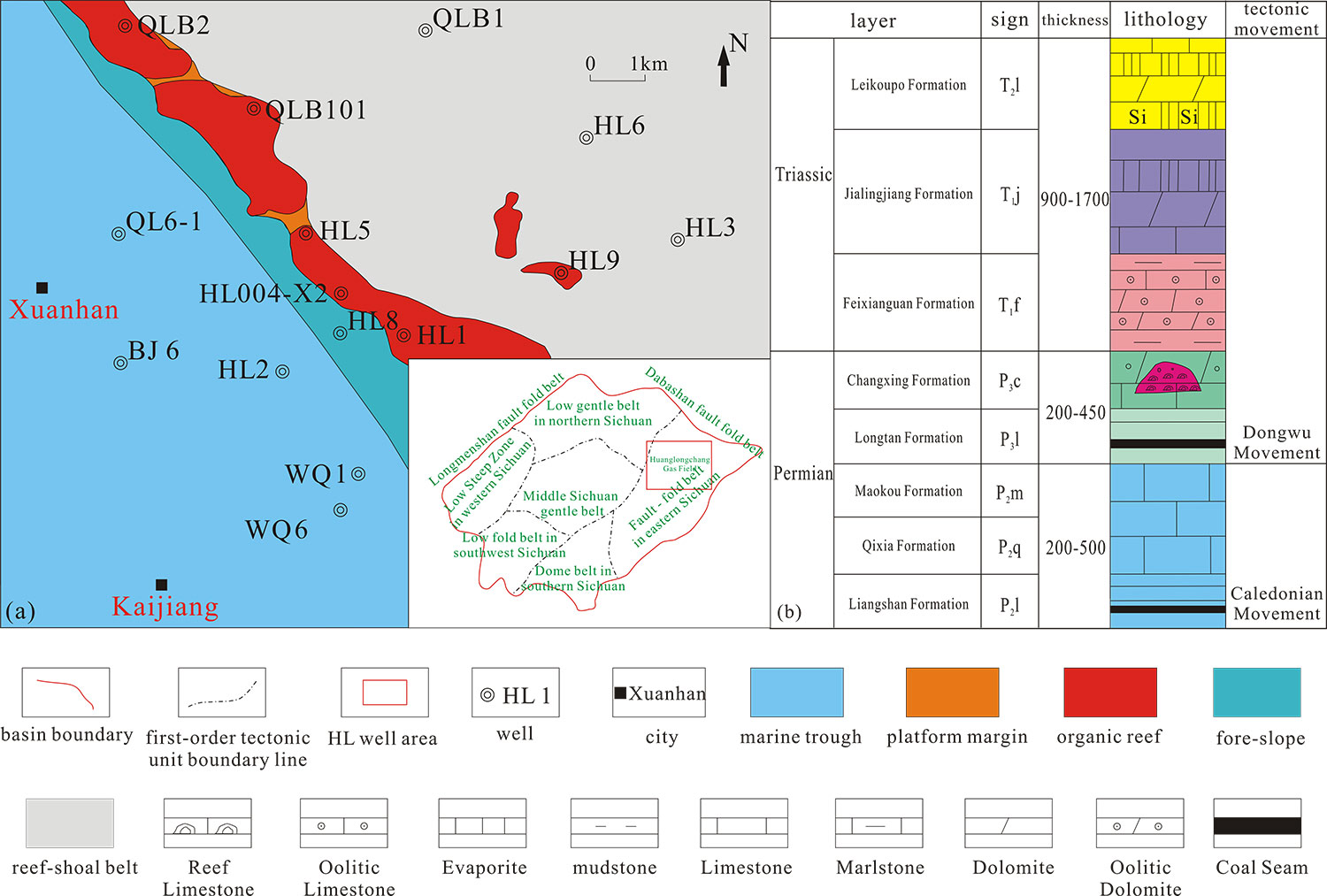
The Upper Permian Changxing Formation reef-shoal carbonates in the Huanglongchang Structure, eastern Sichuan Basin, are important gas reservoirs, yet their characteristics and controlling mechanisms remain poorly understood. We integrated 481 core samples and 126 cast thin sections from 8 wells with logging, petrophysical, and structural data to characterize reservoir properties and controls. The results show that: (1) Reservoirs are dominated by oolitic, reef breccia, and rudstone dolomites, with secondary dissolution pores as the main storage space. They exhibit low porosity, low permeability, and strong heterogeneity, with porosity of 4%-12% and permeability of 0.1-10 mD. (2) The thermoge... More >

Graphical Abstract
Reservoir Characteristics and Controlling Factors of the Upper Permian Changxing Formation Reef‑Shoal Carbonate Reservoirs in the Huanglongchang Structure, Eastern Sichuan Basin
Open Access | Research Article | 21 September 2026
Comprehensive Provenance Analysis of the Es3$^3$ Sub - Member in the Eastern Shichang Sub - Sag, Nanpu Sag, Bohai Bay Basin
Journal of Geo-Energy and Environment | Volume 3, Issue 1: 16-27, 2027 | DOI: 10.62762/JGEE.2026.797398
Abstract
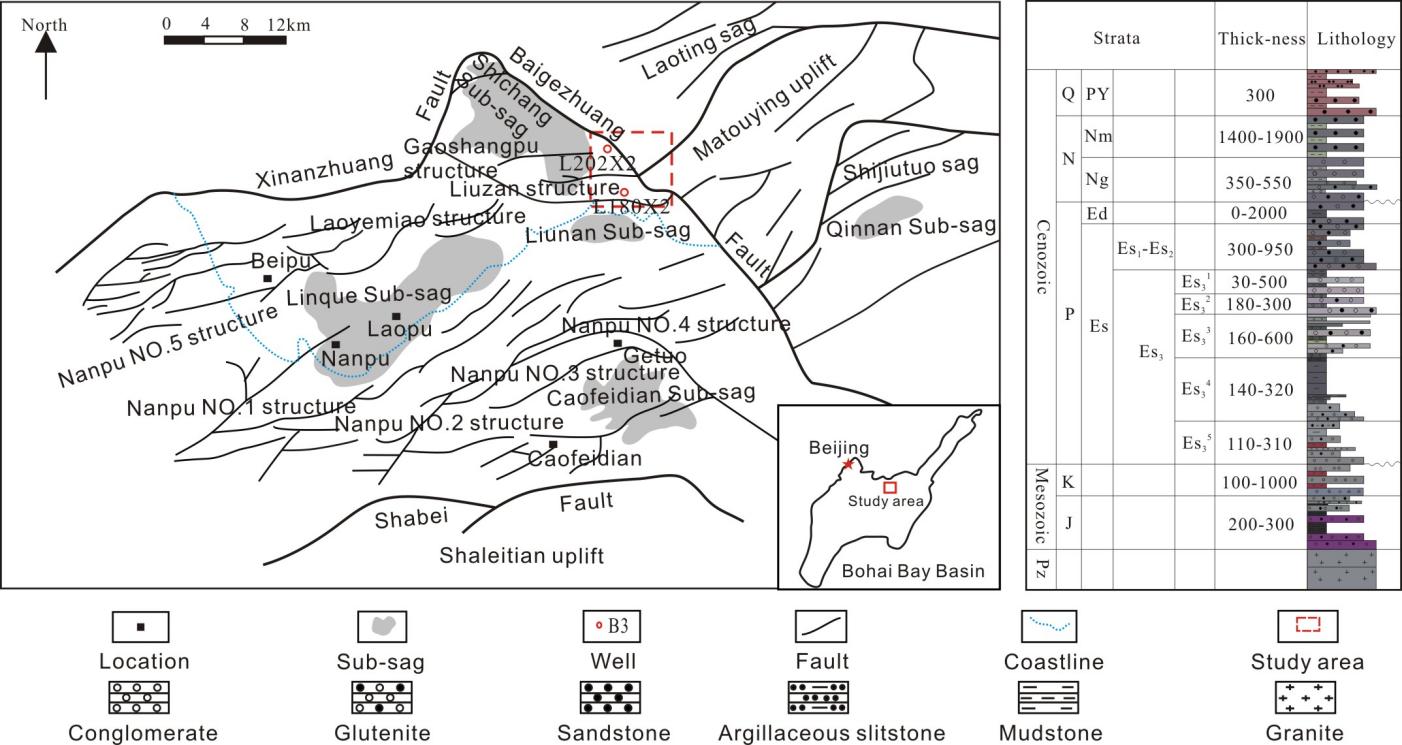
The eastern part of the Shichang Sub-sag in the Nanpu Sag is influenced by multiple provenance systems. However, there are divergent opinions regarding the directions of sediment supply and the relative contributions of different provenances to this area, which have led to controversies over the types of slope-breaks, the depositional models, and the sand-body distribution under different provenance regimes. These uncertainties have severely constrained the exploration of lithologic hydrocarbon reservoirs in the western slope area of the sub-sag. The provenance systems and the distribution range of sand bodies were clarified through Dickinson ternary diagrams, seismic reflection characterist... More >

Graphical Abstract
Comprehensive Provenance Analysis of the Es3$^3$ Sub - Member in the Eastern Shichang Sub - Sag, Nanpu Sag, Bohai Bay Basin
Open Access | Research Article | 02 September 2026 | Cited: Crossref logo  1
Study on Reservoir Space Characteristics and Gas Storage Mechanism of Low-Rank Coal Reservoir in Junggar Basin
Journal of Geo-Energy and Environment | Volume 3, Issue 1: 1-15, 2027 | DOI: 10.62762/JGEE.2026.780406
Abstract
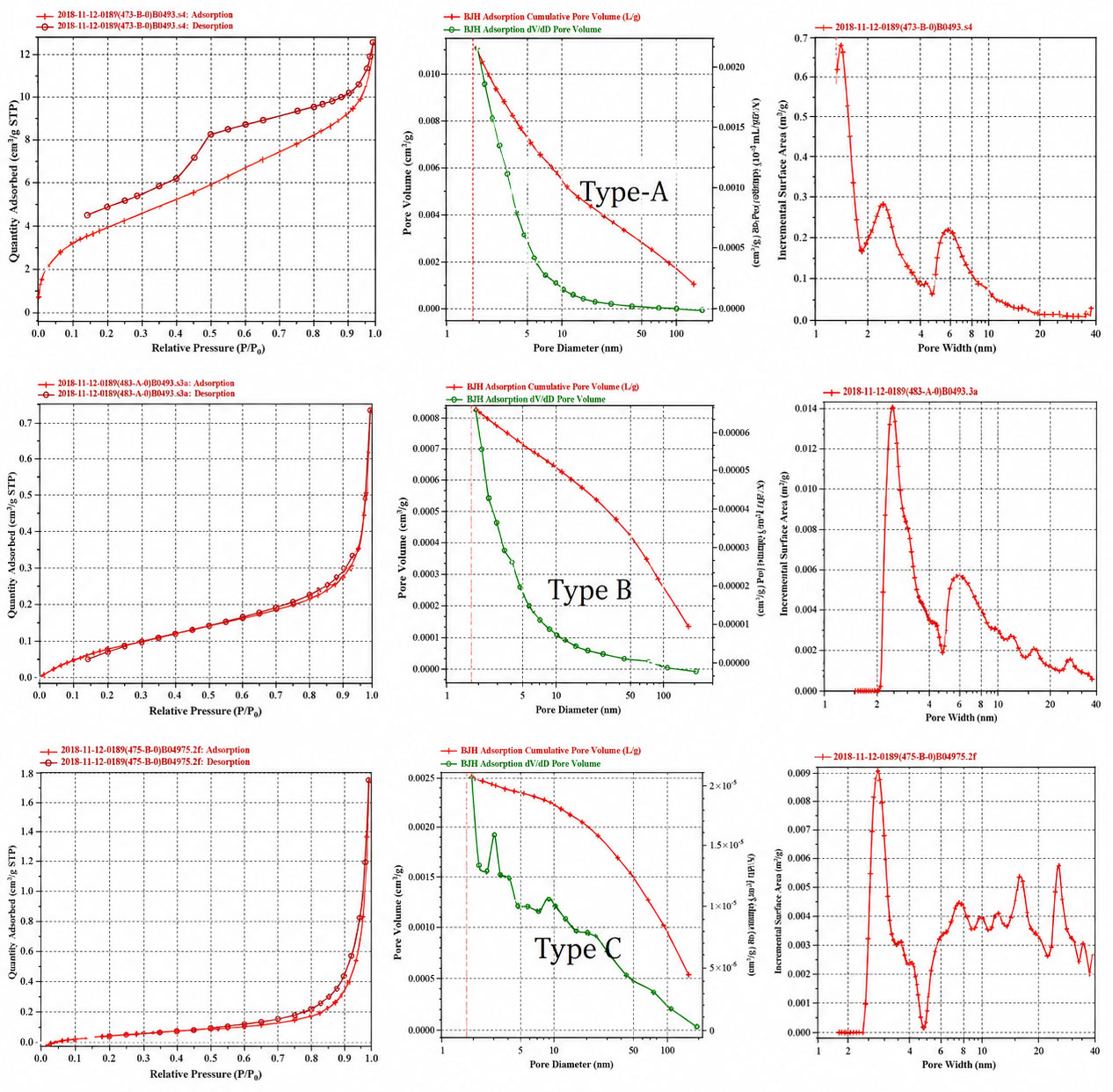
The Junggar Basin contains widely distributed Jurassic low-rank coal seams (Badaowan Fm. J\(_1\)b, Xishanyao Fm. J\(_2\)x) with abundant coalbed methane (CBM) resources. Integrating proximate analysis, maceral identification, vitrinite reflectance, low-temperature N\(_2\) adsorption, high-pressure mercury intrusion, and NMR, this study characterizes the petrological properties, pore-space characteristics, and gas storage mechanisms of J\(_1\)b and J\(_2\)x low-rank coals in the Baijiahai-Dinan area. Results show: J\(_1\)b is bright coal (vitrinite: 74.1%-88.3%, R\(_o\): 0.67%), while J\(_2\)x ranges from semibright to dull coal (vitrinite: 57.2%, R\(_o\): 0.71%), corresponding to long-flame... More >

Graphical Abstract
Study on Reservoir Space Characteristics and Gas Storage Mechanism of Low-Rank Coal Reservoir in Junggar Basin