-
CiteScore
-
Impact Factor
Volume 1, Issue 4 - Table of Contents

×

Volume 1, Issue 4 (December, 2025) – 5 articles
Citations: 0, 0,  0   |   Viewed: 1435, Download: 433

Open Access | Research Article | 18 December 2025
Interpretable Deep Learning for Diabetic Retinopathy Grading using Regression Activation Maps
ICCK Journal of Image Analysis and Processing | Volume 1, Issue 4: 196-209, 2025 | DOI: 10.62762/JIAP.2025.346328
Abstract
The escalating global prevalence of diabetes renders effective screening for Diabetic Retinopathy (DR) indispensable to prevent irreversible vision loss. Although deep learning models, particularly Convolutional Neural Networks (CNNs), attain diagnostic accuracy comparable to that of human experts, their black-box nature erodes clinical trust. To harmonize accuracy with interpretability, this paper proposes a novel CNN architecture that reformulates DR grading as a regression task. By substituting traditional dense layers with a Global Average Pooling (GAP) layer, our approach substantially reduces model complexity and training time while enabling the generation of Regression Activation Maps... More >

Graphical Abstract
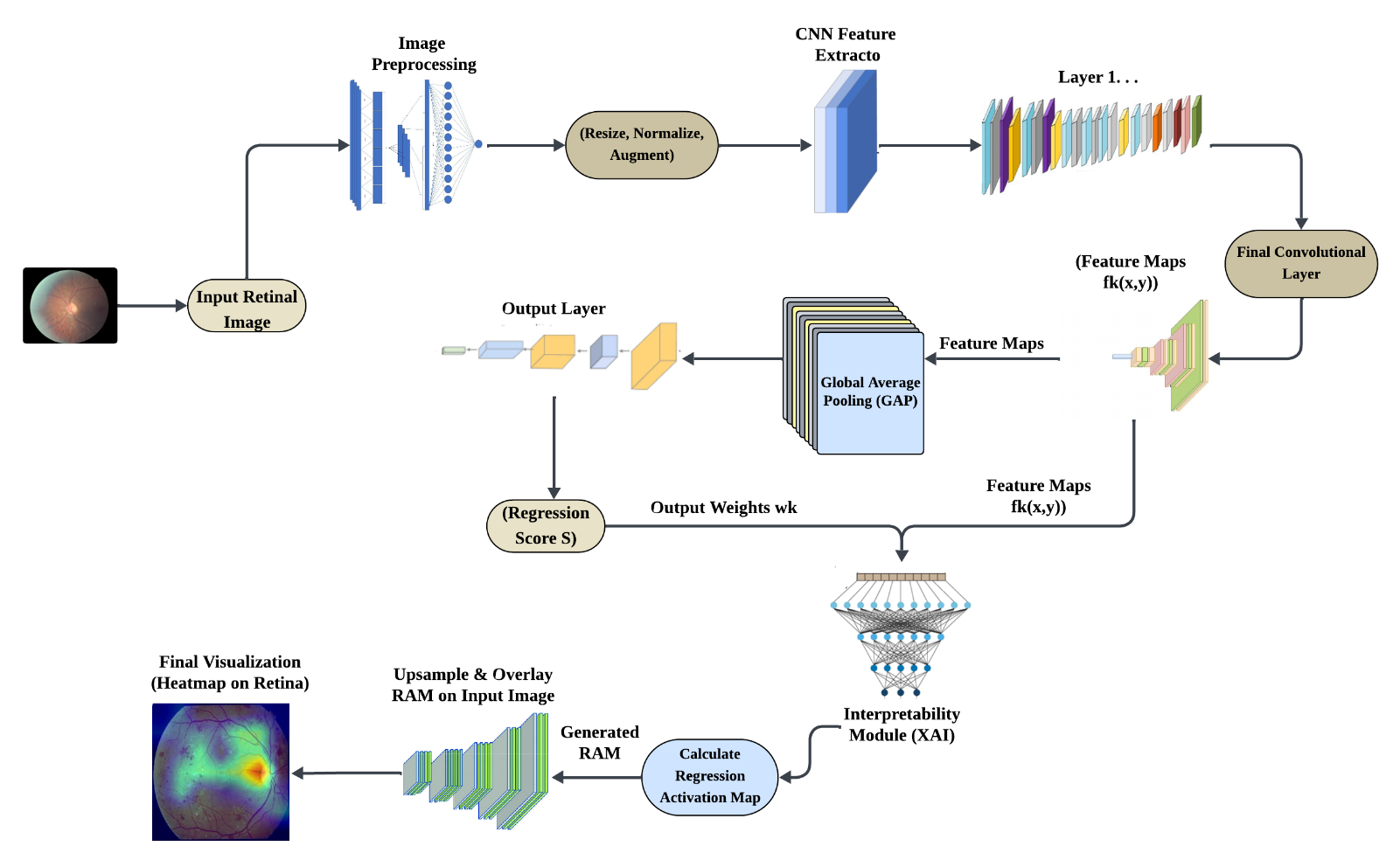
Interpretable Deep Learning for Diabetic Retinopathy Grading using Regression Activation Maps

Open Access | Research Article | 15 December 2025
Fuzzy Logic-Based Mixed Noise Reduction in Ultrasound Images
ICCK Journal of Image Analysis and Processing | Volume 1, Issue 4: 184-195, 2025 | DOI: 10.62762/JIAP.2025.159583
Abstract
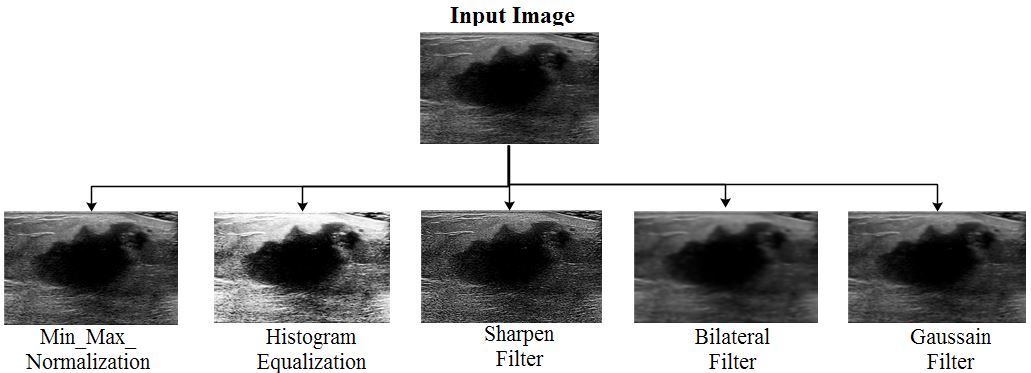
Ultrasound (US) imaging is widely employed in medical diagnostics due to its non-invasive nature and real-time imaging ability. The existence of mixed noise, consisting of Gaussian and speckle noise, significantly impairs image quality, hindering accurate diagnosis. This study introduces an advanced fuzzy logic-based technique for noise reduction to enhance US image quality while preserving essential structural information. The proposed approach utilizes a modified Gaussian membership function to improve the filtering process, ensuring adaptive noise reduction across varying noise levels. The system is evaluated on synthetic and clinical US images using diverse image quality assessment metri... More >

Graphical Abstract
Fuzzy Logic-Based Mixed Noise Reduction in Ultrasound Images

Open Access | Research Article | 14 December 2025
An Integrated Deep Learning Framework for Real-Time Monitoring of Student Engagement in Smart Classrooms
ICCK Journal of Image Analysis and Processing | Volume 1, Issue 4: 172-183, 2025 | DOI: 10.62762/JIAP.2025.377388
Abstract
Studies have established that an ideal environment is critical for maximizing a student's learning potential. For educators, monitoring student behavior, engagement, and psychological state is essential for ensuring effective instruction. This paper introduces an automated learning analytics system designed to assist teachers by analyzing these parameters and providing actionable feedback. The system utilizes multiple cameras in conjunction with deep learning and computer vision to record and analyze classroom sessions, assessing student movement, gestures, and posture to generate summary reports. The framework integrates several high-performance models to achieve this. For facial recognitio... More >

Graphical Abstract
An Integrated Deep Learning Framework for Real-Time Monitoring of Student Engagement in Smart Classrooms

Open Access | Research Article | 08 November 2025
Application and Deployment of a Fine-Tuned Pre-trained Deep Model for Breast Cancer Classification
ICCK Journal of Image Analysis and Processing | Volume 1, Issue 4: 162-171, 2025 | DOI: 10.62762/JIAP.2025.421429
Abstract
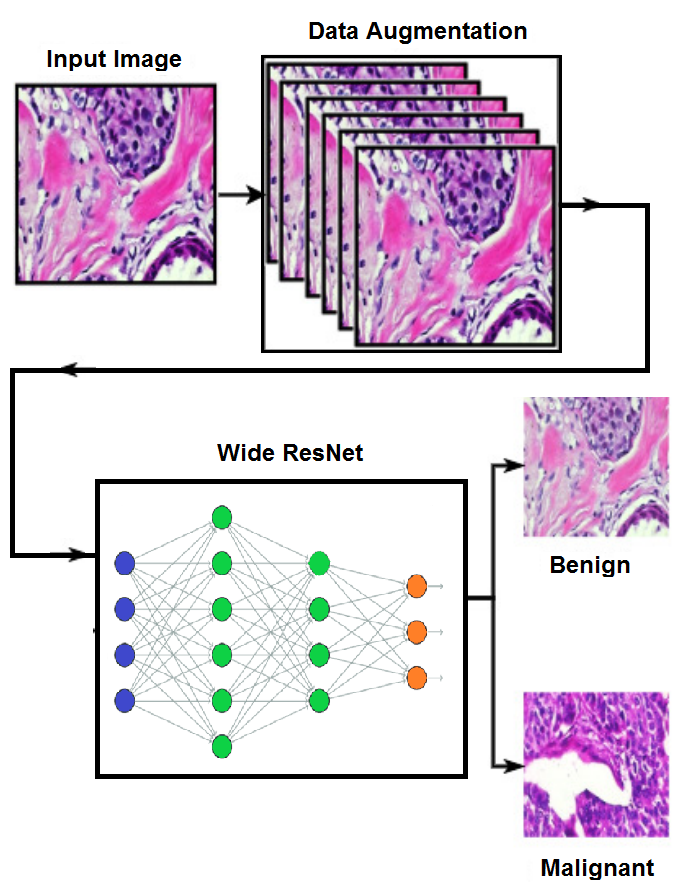
Breast cancer remains one of the most significant health challenges, being the second leading cause of death among women worldwide. Early and accurate diagnosis is critical to improving treatment outcomes and increasing survival rates. In this study, we present an innovative application of the WRN-28-2 model, a deep convolutional neural network pre-trained on ImageNet, for the classification of histopathological breast cancer images from the BreakHis dataset. By leveraging transfer learning, the model was fine-tuned to differentiate between benign and malignant cases, achieving a remarkable classification accuracy of 99.16% on the test set. Moreover, the model outperformed existing state-of-... More >

Graphical Abstract
Application and Deployment of a Fine-Tuned Pre-trained Deep Model for Breast Cancer Classification

Open Access | Review Article | 07 November 2025
Recent Advances in Breast Cancer Detection: A Review on Segmentation and Classification Techniques
ICCK Journal of Image Analysis and Processing | Volume 1, Issue 4: 147-161, 2025 | DOI: 10.62762/JIAP.2025.780624
Abstract
Breast Cancer (BC) is still one of the most significant, life-threatening, and prevalent diseases that affects women all around the globe. The early recognition and strategies of effective treatment measures improve the rate of survival among patients significantly, contributing to a critical research area in medical science. This review presents a comprehensive review of recent trends and advancements in the recognition of BC recognition, diagnosis, and treatment. It covers multiple imaging modalities, including Magnetic Resonance Imaging (MRI), ultrasound, mammography, and histopathology, along with various approaches of Machine Learning (ML) and Deep Learning (DL) that enhance the efficie... More >

Graphical Abstract
Recent Advances in Breast Cancer Detection: A Review on Segmentation and Classification Techniques