Volume 1, Issue 2 (In Progress)


In Progress
Citations: Crossref logo 0,   0   |   Viewed: 1193, Download: 270

Table of Contents

Free Access | Review Article | 30 June 2026
Neuroscience-Inspired Plant Electrophysiology: From Signal Decoding to Plant-Computer Interfaces
Journal of Plant Electrobiology | Volume 1, Issue 2: 123-140, 2026 | DOI: 10.62762/JPE.2026.744863
Abstract
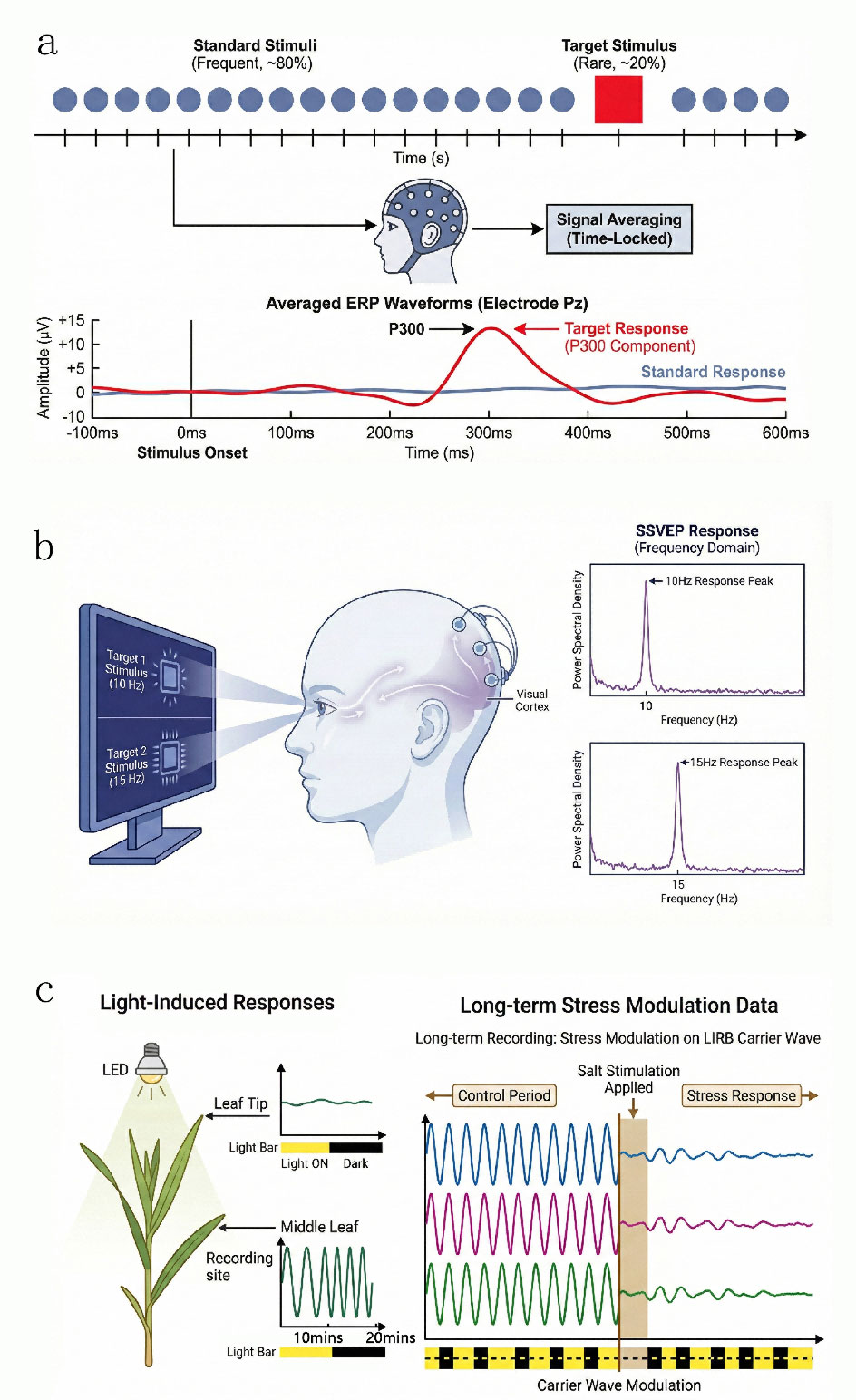
Plant electrophysiology is undergoing a profound paradigm shift from traditional phenomenological observation to systemic signal decoding, with mature methodologies from computational neuroscience and brain-computer interface technologies providing critical theoretical and engineering support for this interdisciplinary evolution. This review first systematically summarizes the evolution of flexible wearable electrodes and ultra-high impedance amplification hardware systems tailored to the ultra-slow signal dynamics and continuous morphological growth characteristics of plants. Second, we discuss the application pathways of introducing standardized sequential evoked paradigms from neuroscienc... More >

Graphical Abstract
Neuroscience-Inspired Plant Electrophysiology: From Signal Decoding to Plant-Computer Interfaces
Free Access | Research Article | 10 June 2026
Electrophysiological Immunity to Plasmodiophora Brassicae Infection of Gaoshan Brassica Rapa under Various Selenite Levels
Journal of Plant Electrobiology | Volume 1, Issue 2: 108-122, 2026 | DOI: 10.62762/JPE.2026.316376
Abstract
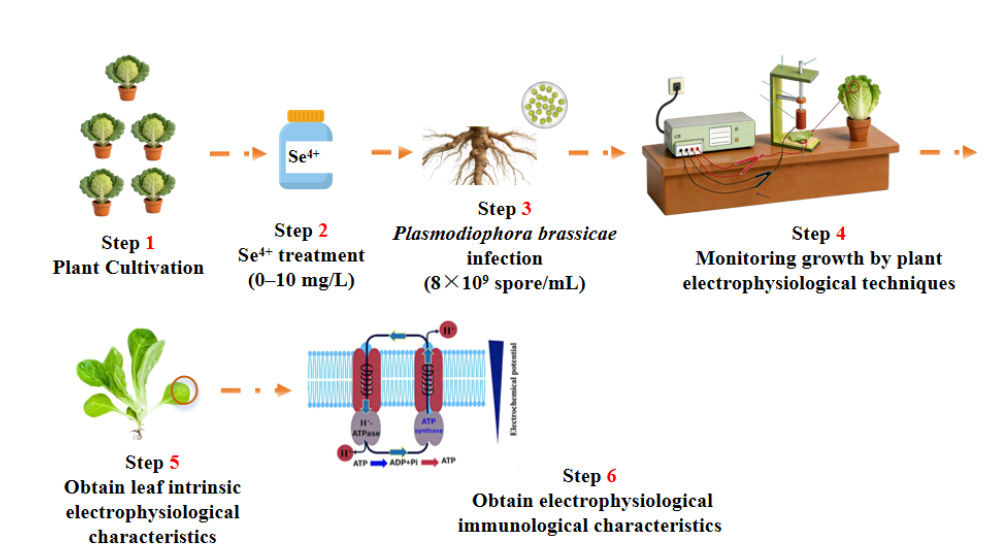
Enshi is a high-incidence area for Plasmodiophora brassicae infection in Brassica rapa in China; however, the differential immunomodulatory effects of selenite (Se\(^{4+}\)) on the infection of Brassica rapa by the Plasmodiophora brassicae (Pb) remain unclear. In this study, Enshi Gaoshan Brassica rapa (GBr) was selected. Pre-treatment with 0–10 mg/L Se\(^{4+}\) was applied, followed by artificial inoculation with Plasmodiophora brassicae spores (8×10\(^9\) spore/mL). Growth characteristics, photosynthesis, and electrophysiological and nutritional metabolic features of GBr leaves were measured. The results indicate that electrophysiological techniques provide more significant distinctions... More >

Graphical Abstract
Electrophysiological Immunity to Plasmodiophora Brassicae Infection of Gaoshan Brassica Rapa under Various Selenite Levels
Free Access | Review Article | 31 May 2026
Digital Monitoring of Electromagnetic Radiation Associated with Biodiversity (One Health) in Natural Parks: A Narrative Review
Journal of Plant Electrobiology | Volume 1, Issue 2: 94-107, 2026 | DOI: 10.62762/JPE.2026.885819
Abstract
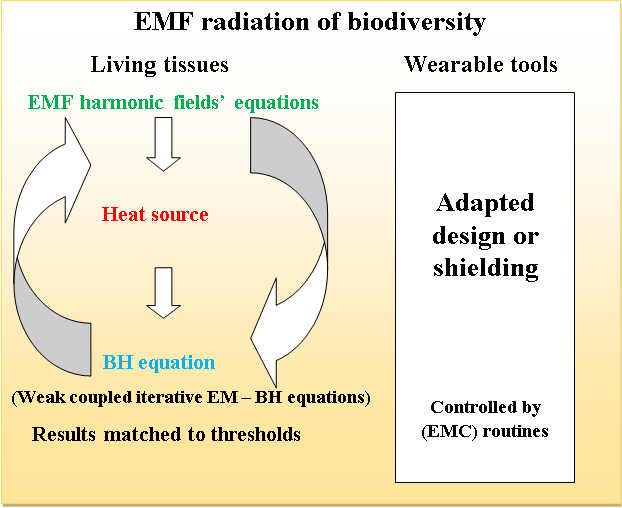
Up to date technologies, created by humans and utilizing electromagnetic fields (EMFs), present both anticipated benefits and undesirable side effects. These effects can influence the living tissues of all exposed biodiversity, in accordance with the "One Health" principle. The operation of modern natural parks encourages Internet connections via antennas, linked to park management, security, and telecommunications. These connectivity needs are tied to the functioning of all living organisms within the park, which depend on environmental conditions, according to the time and season. The antenna providing Internet access is a source of EMF; this coverage/exposure relationship can be monitored... More >

Graphical Abstract
Digital Monitoring of Electromagnetic Radiation Associated with Biodiversity (One Health) in Natural Parks: A Narrative Review
Free Access | Perspective | 13 May 2026
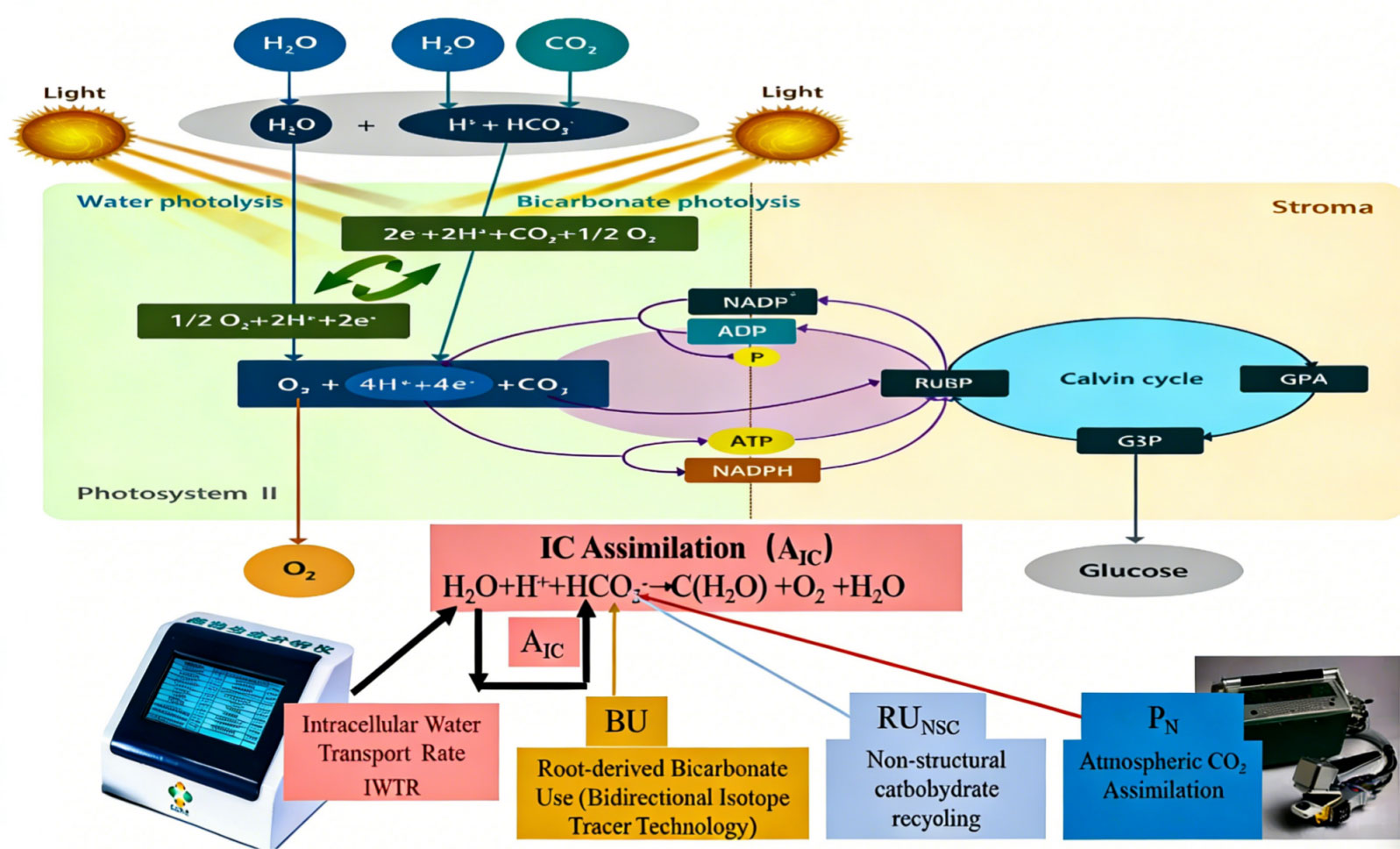
Rethinking Photosynthesis: Intracellular Water Dynamics, Bicarbonate Photolysis, and Electrophysiological Coupling in Inorganic Carbon Assimilation
Journal of Plant Electrobiology | Volume 1, Issue 2: 82-93, 2026 | DOI: 10.62762/JPE.2026.900219
Abstract
Photosynthesis is the fundamental biochemical process driving Earth's biogeochemical cycles. The traditional theory holds that water is the sole source of photosynthetic oxygen and atmospheric CO$_2$ the only inorganic carbon substrate. However, electrophysiological, isotopic, and physiological evidence from our systematic research prompts a re-examination of this paradigm, revealing an unrecognized coupling between plant inorganic carbon assimilation and intracellular water utilization. Our key findings are: (i) Intracellular water utilization rate is decoupled from atmospheric CO$_2$ assimilation, suggesting that terrestrial plants assimilate inorganic carbon from atmospheric CO$_2$, soil... More >

Graphical Abstract
Rethinking Photosynthesis: Intracellular Water Dynamics, Bicarbonate Photolysis, and Electrophysiological Coupling in Inorganic Carbon Assimilation
Free Access | Research Article | 10 May 2026
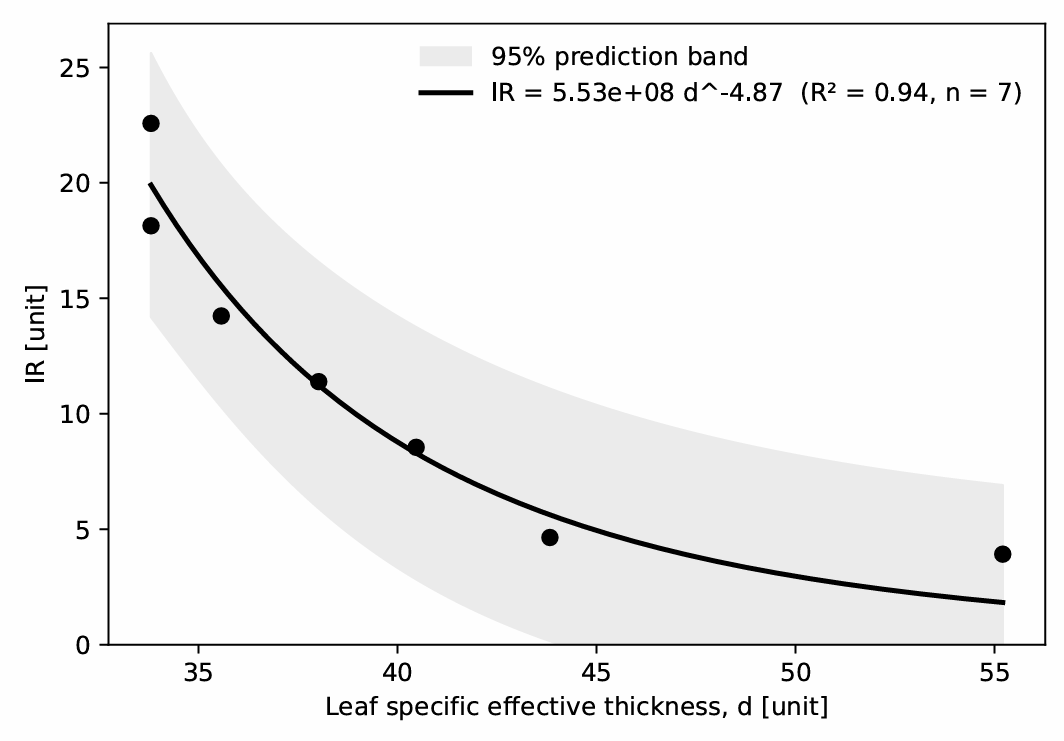
Electrophysiological Profiling Reveals the “Slow” Physiological Strategy and Endangerment Mechanism of the Rare and Endangered Orchid Cremastra appendiculata
Journal of Plant Electrobiology | Volume 1, Issue 2: 74-81, 2026 | DOI: 10.62762/JPE.2026.747319
Abstract
The conservation of rare and endangered medicinal plants, such as Cremastra appendiculata, is hindered by a limited understanding of their intrinsic endangerment mechanisms. This study employed a plant vitality analyzer (model: ZT-FIA-1, Jiangsu Zhongtian Zhigan Life Data Co., Ltd., China) to systematically measure 50 electrophysiological kinetic parameters in the leaves of C. appendiculata and the fast-growing reference species Isatis tinctoria. Parameters encompassed water metabolism, nutrient transport, dielectric substance translocation, energy metabolism, and comprehensive stress resistance. Compared with I. tinctoria, C. appendiculata exhibited significantly higher intrinsic resistance... More >