Volume 2, Issue 1 (In Progress)


In Progress
Citations: 15, 15,  15   |   Viewed: 2431, Download: 527

Table of Contents

Open Access | Research Article | 26 January 2026
Mechanism of Penetration Rate Improvement in Hot Dry Rock Under the Coupling of Impact Load and Confining Pressure Release
Reservoir Science | Volume 2, Issue 1: 52-64, 2026 | DOI: 10.62762/RS.2025.804345
Abstract
Deep geothermal resources are environmentally friendly and represent a highly competitive form of clean energy. However, low rock-breaking energy combined with high rock strength results in a low rate of penetration (ROP), which significantly restricts the efficient utilization of geothermal resources. Previous studies have shown that rock failure is primarily caused by shear stress. Therefore, this paper aims to enhance the shear stress level by increasing the impact load and releasing the confining pressure, thereby improving the ROP. Specifically, the rock-breaking efficiency under the coupling of impact load and confining pressure releasing is analyzed to reveal the influence of confinin... More >

Graphical Abstract
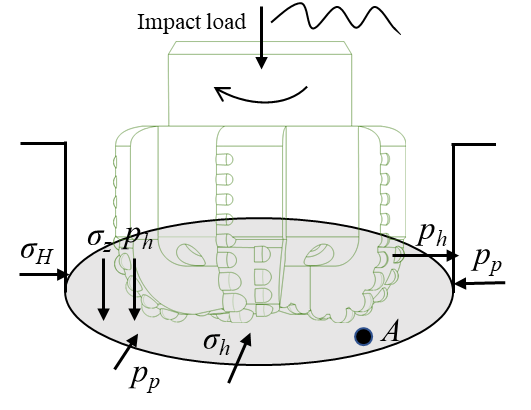
Mechanism of Penetration Rate Improvement in Hot Dry Rock Under the Coupling of Impact Load and Confining Pressure Release
Open Access | Research Article | 18 January 2026 | Cited: 3 , Scopus 3
Preliminary Investigation of Fracture Behavior during Carbon Dioxide Fracturing of Natural Hydrogen Reservoir with Hard-Core Imperfections
Reservoir Science | Volume 2, Issue 1: 34-51, 2026 | DOI: 10.62762/RS.2025.759326
Abstract
The low concentration and poor reservoir properties of natural hydrogen suggest that reservoir stimulation measures such as fracturing is required for its efficient development. Nevertheless, the presence of reservoir imperfections, including hard and soft cores, can significantly affect fracture behavior during the fracturing operations. Moreover, there is currently a lack of relevant simulation and experimental studies addressing these effects. In the present work, the effects and mechanisms of hard cores on fracture propagation in natural hydrogen reservoirs in the Songliao basin were numerically simulated. In addition, various factors affecting propagation behavior of fracture were also... More >

Graphical Abstract
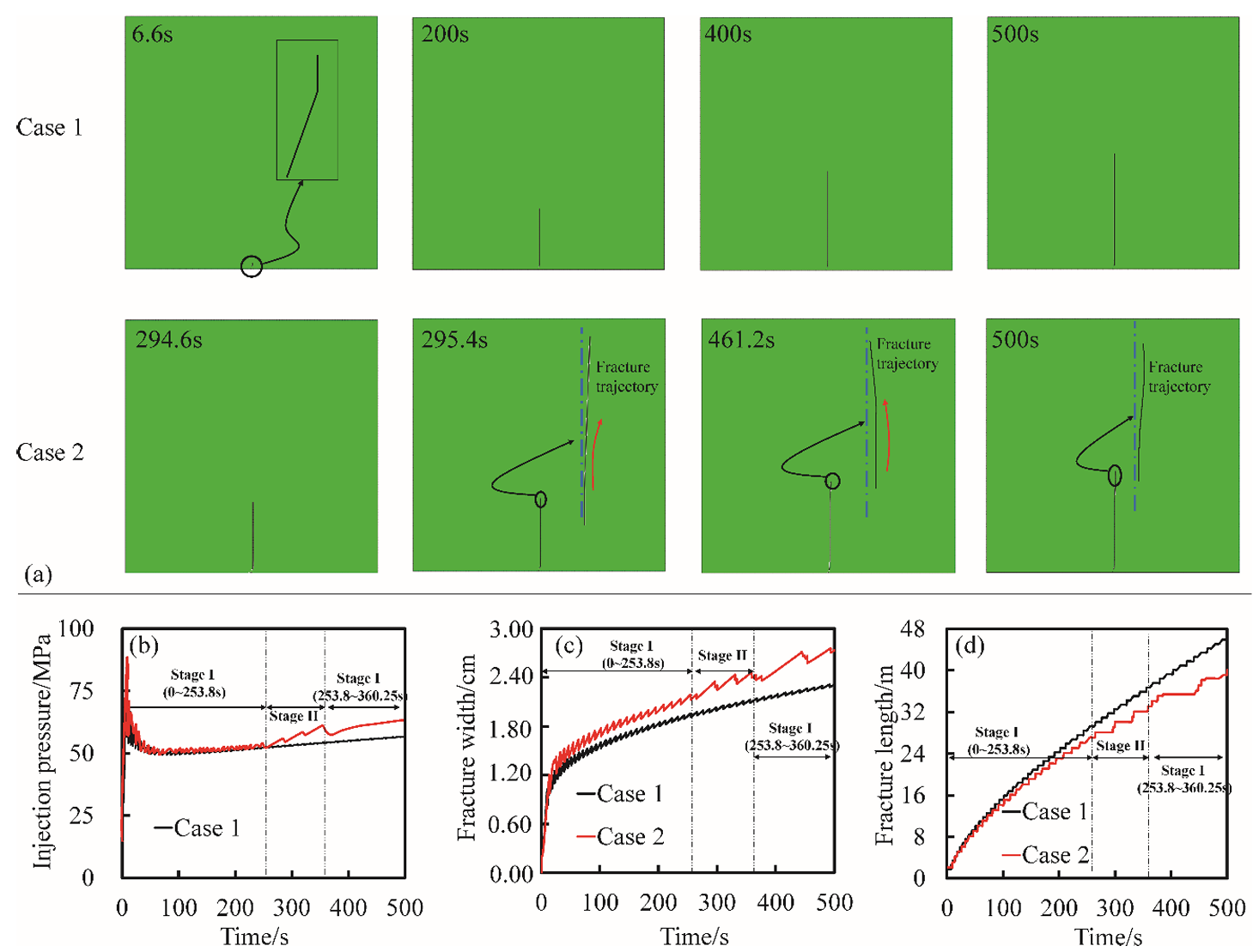
Preliminary Investigation of Fracture Behavior during Carbon Dioxide Fracturing of Natural Hydrogen Reservoir with Hard-Core Imperfections
Open Access | Research Article | 15 January 2026 | Cited: 5 , Scopus 5
Microscopic Analysis of Flow Resistance of Oil Displacement Fluid in Reservoir Fractures
Reservoir Science | Volume 2, Issue 1: 16-33, 2026 | DOI: 10.62762/RS.2025.837826
Abstract
The flow resistance of displacement fluids within reservoir fractures directly influences oil recovery efficiency and sweep efficiency, thereby exerting a substantial impact on reservoir recovery and overall oilfield production. To address the significant flow resistance of contemporary displacement fluids, this study developed a multi-performance evaluation apparatus capable of simultaneously measuring fluid viscosity, flow resistance, and displacement efficiency. The effects of various reservoir parameters and fluid compositions on flow resistance and sweep area were systematically analyzed. Elevated reservoir temperatures clearly reduce fluid flow resistance within fractures, allowing dis... More >

Graphical Abstract
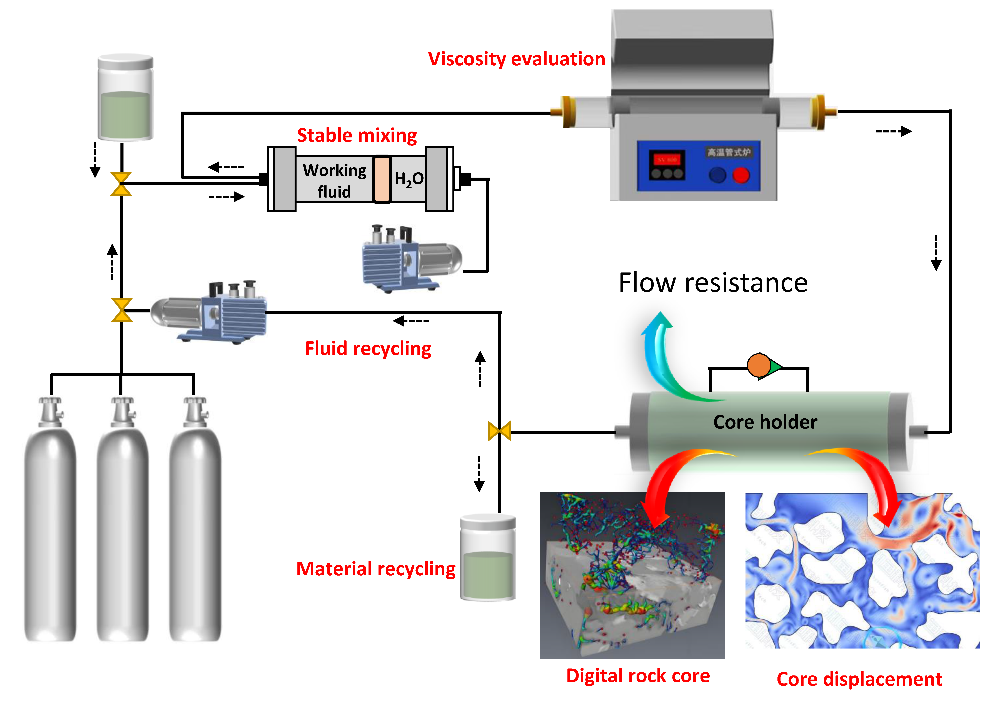
Microscopic Analysis of Flow Resistance of Oil Displacement Fluid in Reservoir Fractures
Open Access | Research Article | 06 January 2026 | Cited: 7 , Scopus 7
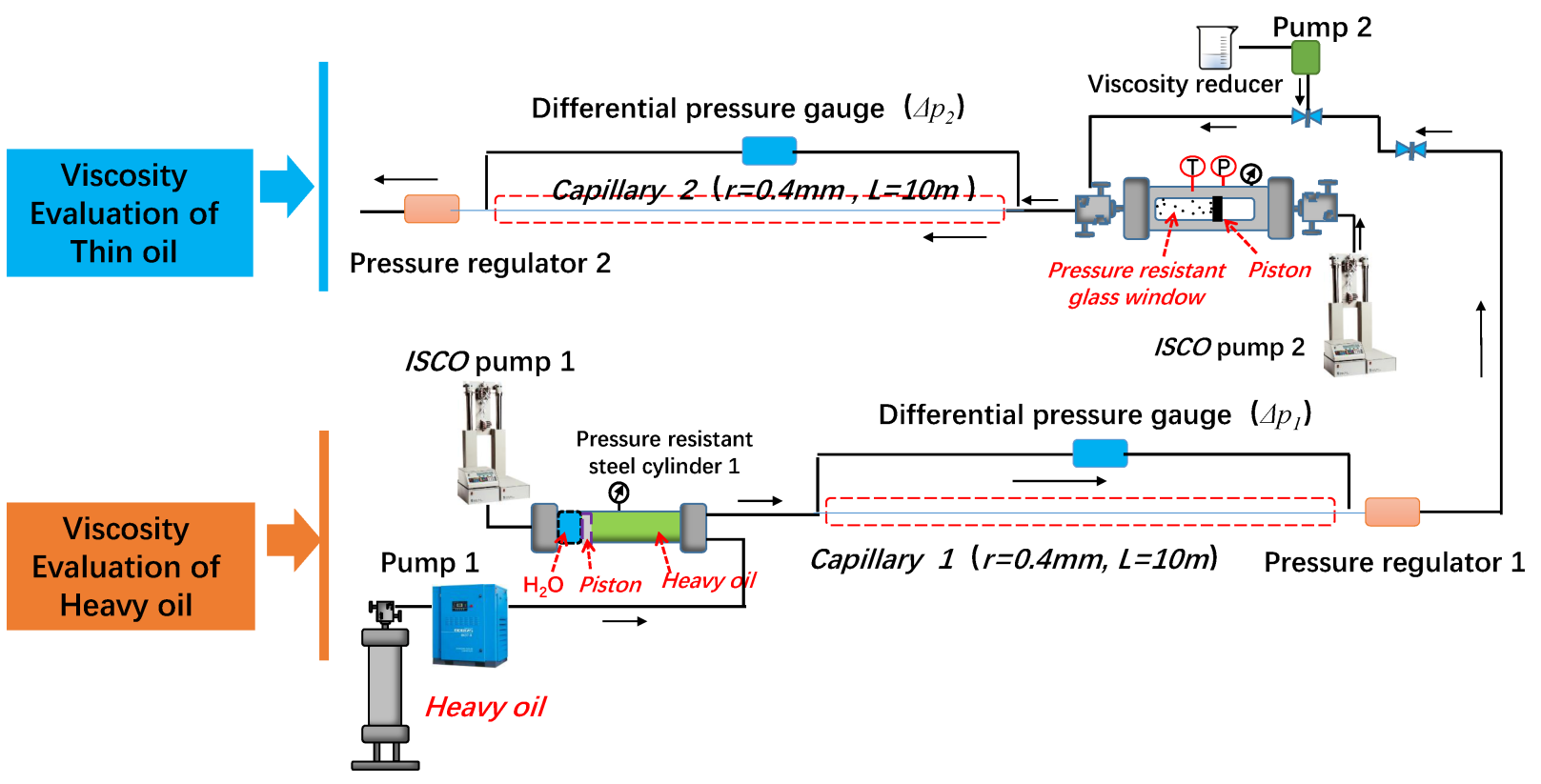
Effect of Nanomaterials on Improving the Apparent Viscosity of Heavy Oil and the Environmental Evaluation of Reservoir Environment
Reservoir Science | Volume 2, Issue 1: 1-15, 2026 | DOI: 10.62762/RS.2025.277961
Abstract
Heavy oil reservoirs have become an important potential for alleviating energy shortages and supporting economic development. This investigation aims to explore the influence of a nano heavy oil viscosity reducer and reservoir characteristics on crude oil viscosity and flow rate during the underground extraction process, and to reveal the viscosity reduction mechanism of reservoir crude oil. The results indicate that the prepared nano viscosity reducer can significantly weaken oil viscosity compared with the commercial viscosity reducer. Moreover, the nano viscosity reducer NVR (acting as a catalyst) achieves a much higher viscosity reduction performance than the commercial viscosity reducer... More >

Graphical Abstract
Effect of Nanomaterials on Improving the Apparent Viscosity of Heavy Oil and the Environmental Evaluation of Reservoir Environment