


ICCK Transactions on Educational Data Mining

Publishing Model:
ISSN:
ISSN: 3070-5843
ICCK Transactions on Educational Data Mining is an international, peer-reviewed journal dedicated to advancing research, innovation, and applications in educational data mining (EDM) and its intersections with learning sciences, artificial intelligence, and educational technology.
DOI Prefix: 10.62762/TEDM

Journal Metrics

-
Impact Factor
-
CiteScore

Recent Articles

Free Access | Perspective | 11 April 2026
Beyond Accuracy: Toward Interpretable, Multi-Objective, and Trustworthy Educational Data Mining Systems
ICCK Transactions on Educational Data Mining | Volume 2, Issue 2: 52-55, 2026 | DOI: 10.62762/TEDM.2026.988161
Abstract
Educational Data Mining (EDM) has achieved substantial gains in predictive performance, yet many existing approaches remain centered on single-objective optimization, most often accuracy. This does not adequately reflect the multi-dimensional nature of real-world educational decision-making, which requires balancing interpretability, fairness, robustness, efficiency, and timeliness. This perspective advocates a shift toward multi-objective, interpretable, and trustworthy EDM frameworks. We highlight the role of multi-objective optimization in modeling trade-offs through Pareto-optimal solutions and address the challenge of actionable decision-making through bargaining-based mechanisms, such... More >
Free Access | Research Article | 31 March 2026
A Data-Driven Framework for Personalized Learning Using Machine Learning Techniques in Rwanda
ICCK Transactions on Educational Data Mining | Volume 2, Issue 1: 38-51, 2026 | DOI: 10.62762/TEDM.2026.319371
Abstract
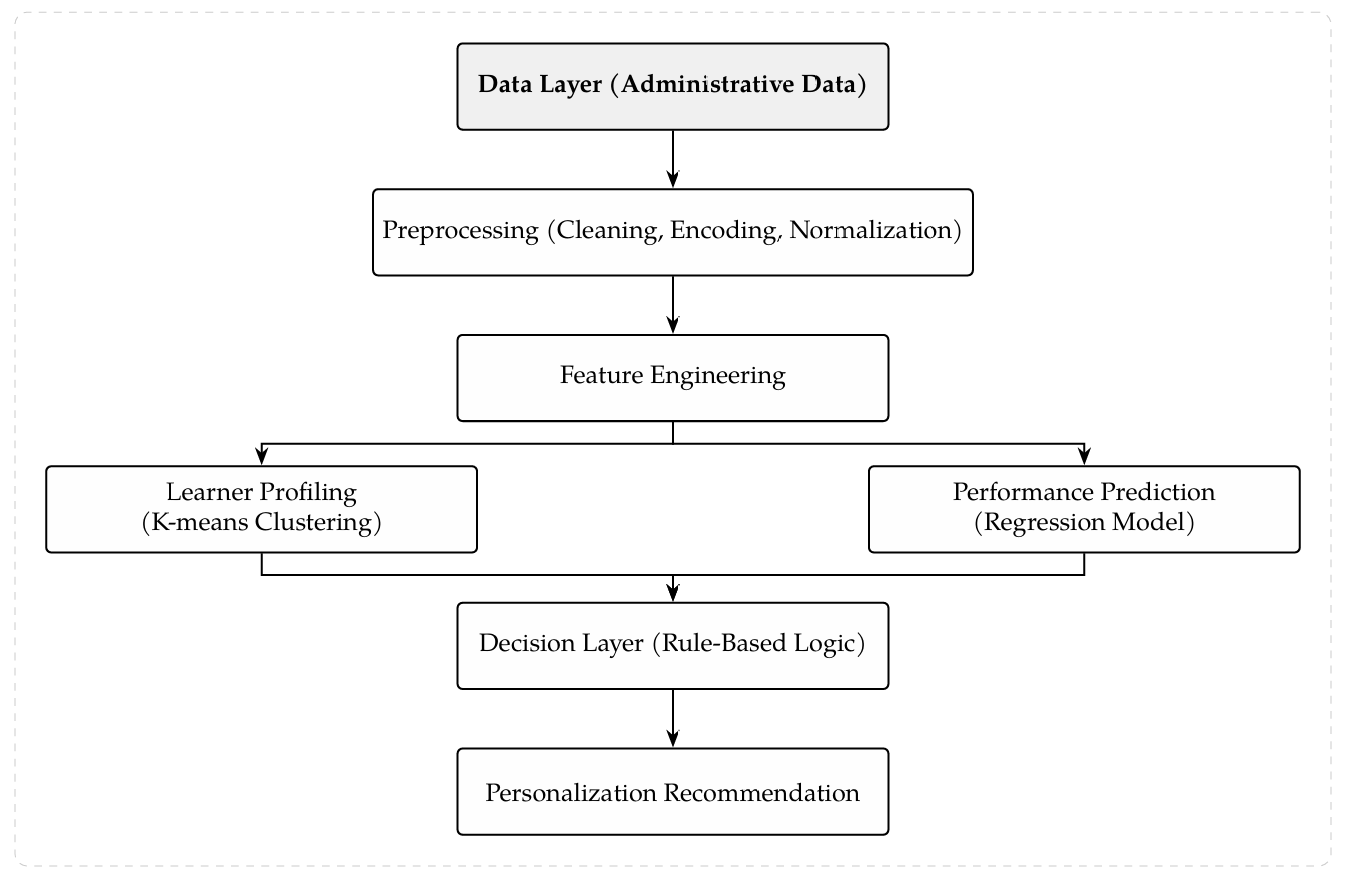
Personalized learning has become a popular term in education to address learner diversity and enhance student performance. However, its implementation remains a practical challenge in many developing countries due to the lack of fine-grained learning data and platforms. This study proposes a data-driven machine learning approach for personalized learning using routine administrative education data from Rwanda. The approach is scalable, interpretable, and aligned with existing national education information systems. Following a design science research approach, the study combines unsupervised learner profiling via clustering and supervised performance prediction via regression models. The pro... More >

Graphical Abstract
A Data-Driven Framework for Personalized Learning Using Machine Learning Techniques in Rwanda
Free Access | Perspective | 26 March 2026
A Perspective on Student Behavior Analytics via Approximate Fast Clustering and Deep Learning
ICCK Transactions on Educational Data Mining | Volume 2, Issue 1: 33-37, 2026 | DOI: 10.62762/TEDM.2026.361754
Abstract
The rapid digitization of education has generated massive, heterogeneous student behavioral data, creating both opportunities and methodological challenges for educational data mining. This perspective paper discusses an emerging paradigm that integrates approximate fast clustering algorithms with deep learning techniques to enable scalable, high-resolution student behavior analysis. By leveraging approximate computation, clustering efficiency can be significantly improved without sacrificing analytical fidelity, while deep learning models facilitate the extraction of high-level representations from multimodal behavioral data. The synergy between these approaches could enable robust applicat... More >
Free Access | Perspective | 25 March 2026
Advancing Educational Data Mining through Multi-Source Data Fusion and Explainable Knowledge
ICCK Transactions on Educational Data Mining | Volume 2, Issue 1: 29-32, 2026 | DOI: 10.62762/TEDM.2026.793467
Abstract
The rapid digitalization of education has led to an explosive growth of multi-source and multi-modal learning data, providing new opportunities for advancing Educational Data Mining (EDM). By learning diverse data such as learning behaviors, assessment records, and interaction logs, EDM enables deeper insights into student learning processes and supports the development of personalized and intelligent education. However, several critical challenges remain, including the heterogeneity and fragmentation of multi-source data, the difficulty of extracting meaningful knowledge through effective data fusion, and the limited interpretability of high-performance predictive models. To address these c... More >
Free Access | Research Article | 07 March 2026
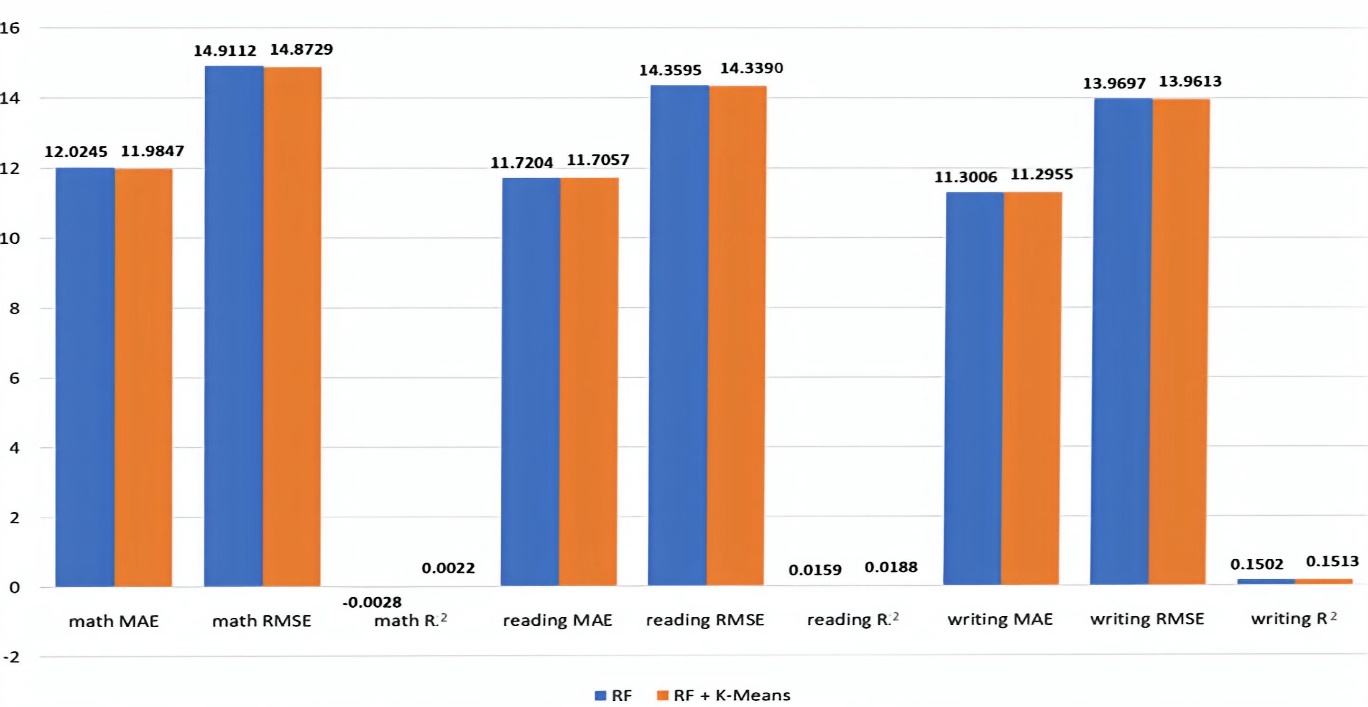
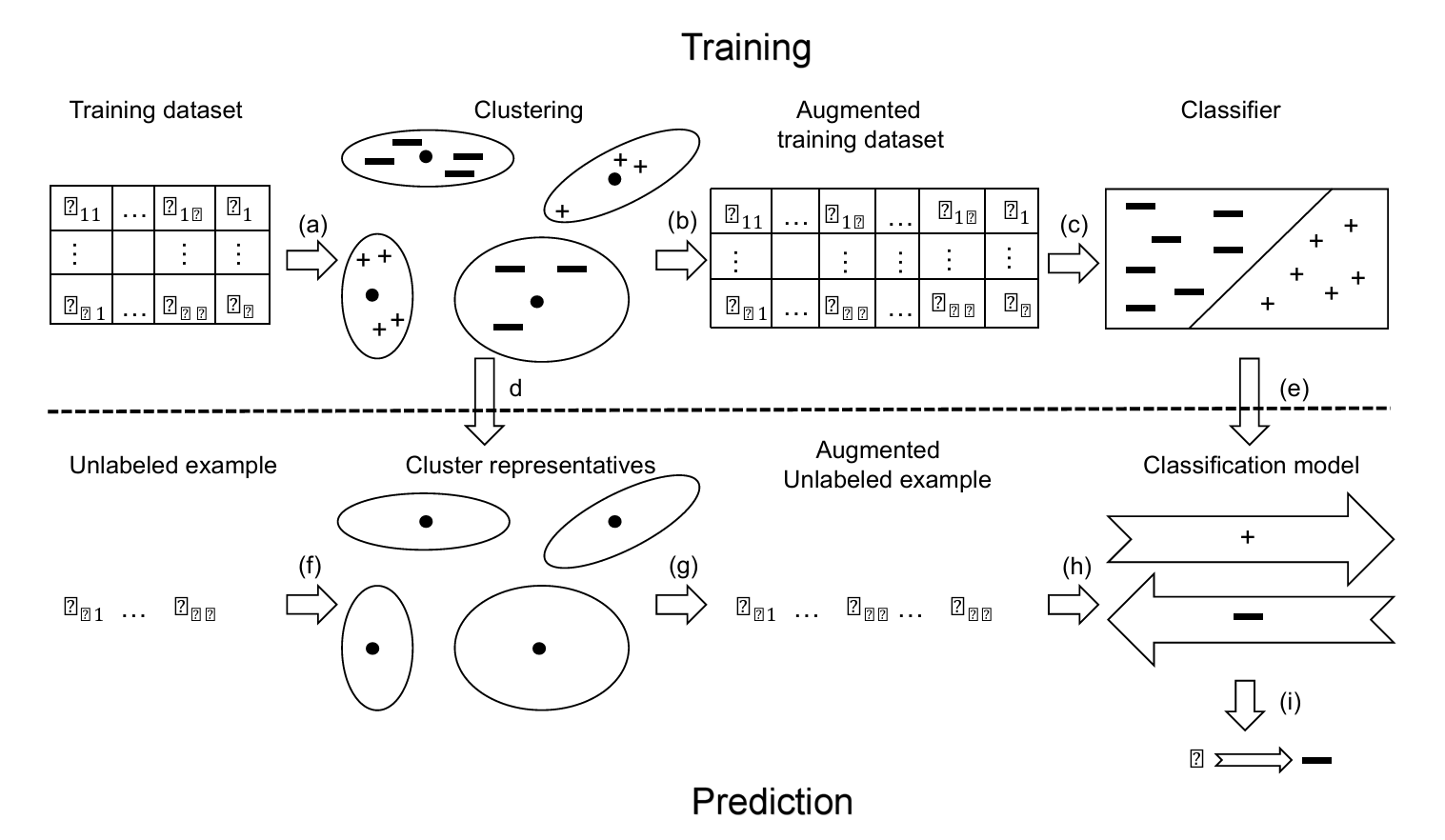
K-Means Clustering-Based Feature Generation for Student Performance Prediction
ICCK Transactions on Educational Data Mining | Volume 2, Issue 1: 14-28, 2026 | DOI: 10.62762/TEDM.2026.716076
Abstract
With the development of educational technology and the accumulation of big data, student performance prediction has become a hot topic in the field of education. However, traditional manual statistical methods have limitations in dealing with complex data and are difficult to achieve high-precision prediction. To address this gap, this study proposes a clustering-based feature generation framework to enhance prediction performance. Firstly, the multilayer perceptron (MLP) model is employed to evaluate the effectiveness of the clustering algorithms (K-Means, DBSCAN, and hierarchical clustering) for feature generation. Then, the best clustering algorithm (K-Means) is applied to generate featur... More >

Graphical Abstract
K-Means Clustering-Based Feature Generation for Student Performance Prediction
Free Access | Research Article | 28 February 2026
KFWAdaBoost-Based Soft Label Learning Framework for Student Performance Prediction
ICCK Transactions on Educational Data Mining | Volume 2, Issue 1: 1-13, 2026 | DOI: 10.62762/TEDM.2026.459733
Abstract
Student performance prediction is a core task in educational data mining, as it enables early intervention, personalized learning support, and data-driven decision-making. Although existing machine learning models have shown promising results in this domain, challenges persist due to hard-to-classify samples—particularly students exhibiting borderline performance—and the discrete nature of hard labels, which together limit predictive effectiveness. To overcome these limitations, this paper proposes a KFWAdaBoost-based soft label learning framework that systematically enhances baseline model performance through a two-stage synergistic mechanism. In the first stage, K-means++ clustering is... More >

Graphical Abstract
KFWAdaBoost-Based Soft Label Learning Framework for Student Performance Prediction
Research Article | 25 December 2025
Enhancing Student Dropout and Academic Success Prediction Using Machine Learning and Over-sampling Techniques
ICCK Transactions on Educational Data Mining | Volume 1, Issue 1: 36-43, 2025 | DOI: 10.62762/TEDM.2025.732573
Abstract
Predicting student dropout and academic success is important for higher education institutions for enhancing retention and deliver timely interventions. However, educational datasets often exhibit severe class imbalance, particularly when multiple academic outcomes (i.e., dropout, enrolled, and graduate) are considered simultaneously. Thus this study examines the effectiveness of three widely used over-sampling techniques (i.e., RandomOverSampler, synthetic minority oversampling technique, and adaptive synthetic sampling) for mitigating class imbalance and enhancing prediction performance. These sampling strategies are evaluated in combination with several machine learning classifiers to ass... More >
Research Article | 28 November 2025
A Gradient Boosting-Based Feature Selection Framework for Predicting Student Performance
ICCK Transactions on Educational Data Mining | Volume 1, Issue 1: 25-35, 2025 | DOI: 10.62762/TEDM.2025.414136
Abstract
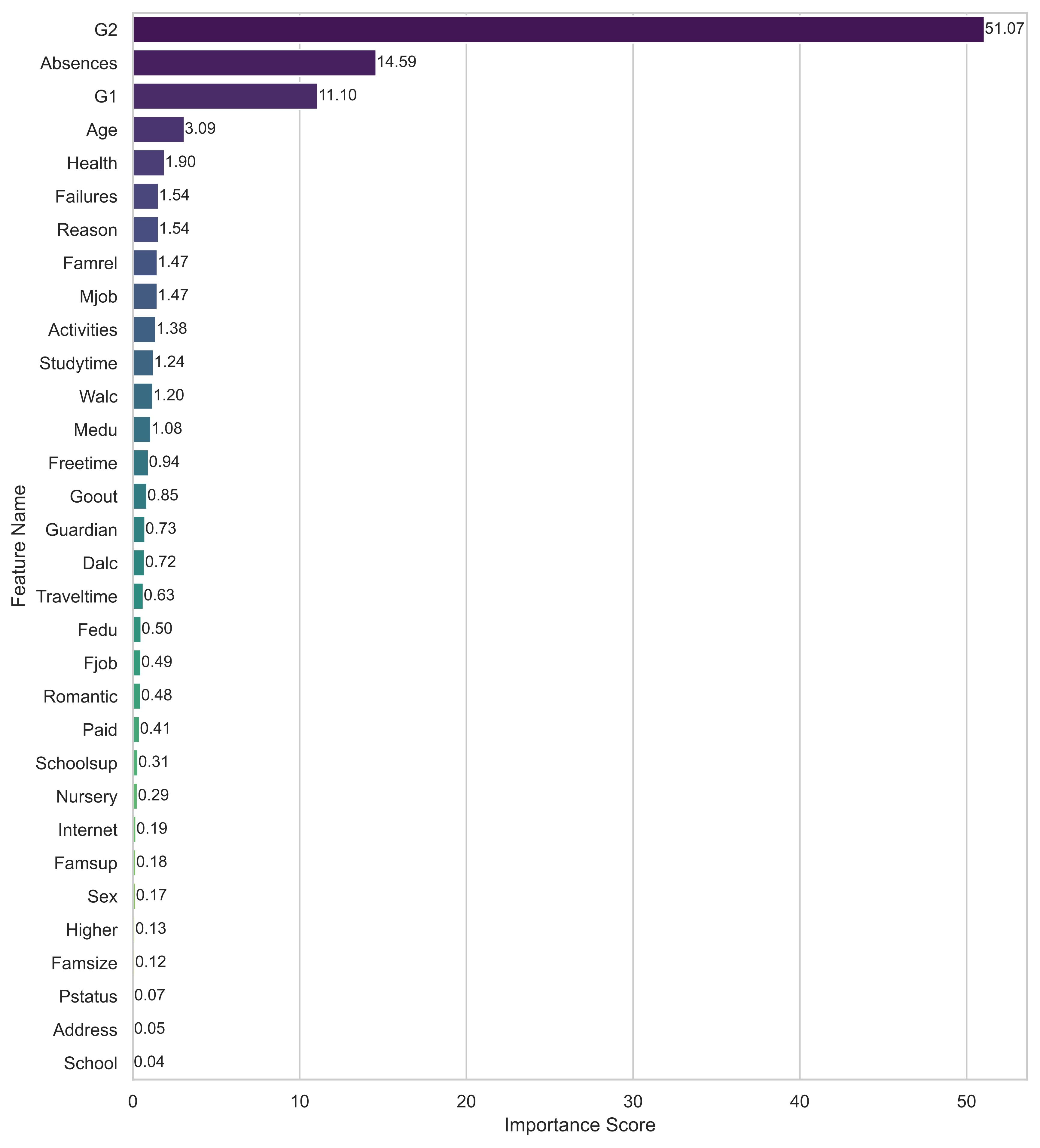
In educational data mining, accurate prediction of student performance is important for supporting timely intervention for at-risk students. However, educational datasets often include irrelevant or redundant features that could reduce the performance of prediction models. To tackle this issue, this study proposes a gradient boosting-based feature selection framework that can automatically identify and obtain the most important features for student performance prediction. The proposed framework leverages the gradient boosting model to calculate feature importance and refine the feature subset, aiming to achieve comparable or superior prediction performance using fewer but important input fea... More >

Graphical Abstract
A Gradient Boosting-Based Feature Selection Framework for Predicting Student Performance

Journal Statistics

17
Authors
5
Countries / Regions
11
Articles
Scopus: 0
Citations
2025
Published Since
8,562
Article Views
1,817
Article Downloads
ICCK Transactions on Educational Data Mining
eISSN: 3070-5843
Crossref
Crossref
Member of Crossref
Visit Crossref →