Volume 1, Issue 2


Volume 1, Issue 2 (December, 2025) – 5 articles
Citations: 1, 1,  1   |   Viewed: 2578, Download: 635

Table of Contents

Free Access | Research Article | 30 December 2025
A Hybrid RUL Prediction Approach for Lithium-ion Batteries Based on CEEMDAN-SSA-SVR-BiGRU
ICCK Transactions on Systems Safety and Reliability | Volume 1, Issue 2: 136-148, 2025 | DOI: 10.62762/TSSR.2025.657859
Abstract
The capacity regeneration phenomenon in lithium-ion batteries is inevitable and leads to non-monotonic fluctuations in capacity degradation trajectories, significantly complicating accurate remaining useful life (RUL) prediction. To address this challenge, this paper proposes a hybrid prediction model based on CEEMDAN-SSA-SVR-BiGRU. The method first employs Complete Ensemble Empirical Mode Decomposition with Adaptive Noise (CEEMDAN) to decompose the original capacity sequence into multiple Intrinsic Mode Functions (IMFs) representing local regeneration fluctuations, and a residual component (RES) referring to the global degradation trend, thereby achieving effective signal decoupling. Subseq... More >

Graphical Abstract
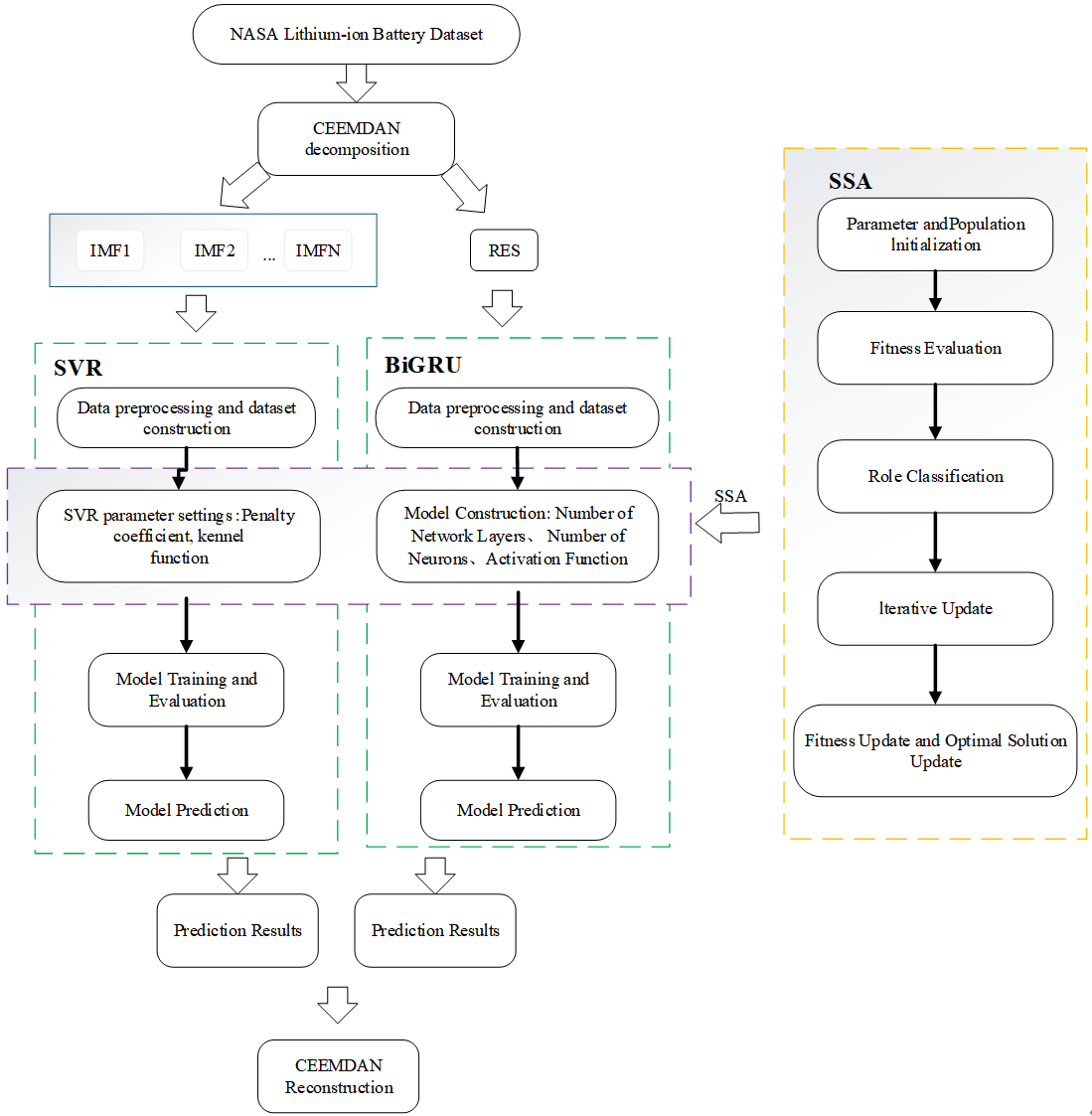
A Hybrid RUL Prediction Approach for Lithium-ion Batteries Based on CEEMDAN-SSA-SVR-BiGRU
Free Access | Research Article | 29 December 2025
Non-invasive Continuous Glucose Monitoring (CGM) System Reliability Analysis Based on the DFMEA Model
ICCK Transactions on Systems Safety and Reliability | Volume 1, Issue 2: 128-135, 2025 | DOI: 10.62762/TSSR.2025.581880
Abstract
Non-invasive continuous glucose monitoring (CGM) systems offer the advantage of non-invasive, real-time dynamic glucose monitoring, marking a significant advancement in diabetes management. However, the complexity of their sensing principles and operational mechanisms make systems vulnerable to various factors, which may introduce measurement bias or cause system interruptions and thereby compromise patient safety and monitoring effectiveness. To address these challenges, the Design Failure Mode and Effects Analysis (DFMEA) method is employed to identify and prioritize risks by assigning expert-based scores to critical components, ultimately enabling targeted improvements for high-risk failu... More >

Graphical Abstract
Non-invasive Continuous Glucose Monitoring (CGM) System Reliability Analysis Based on the DFMEA Model
Free Access | Research Article | 12 November 2025
Remaining Useful Life Prediction Using Optimized Multi-source Features and Model Fusion
ICCK Transactions on Systems Safety and Reliability | Volume 1, Issue 2: 114-127, 2025 | DOI: 10.62762/TSSR.2025.167369
Abstract
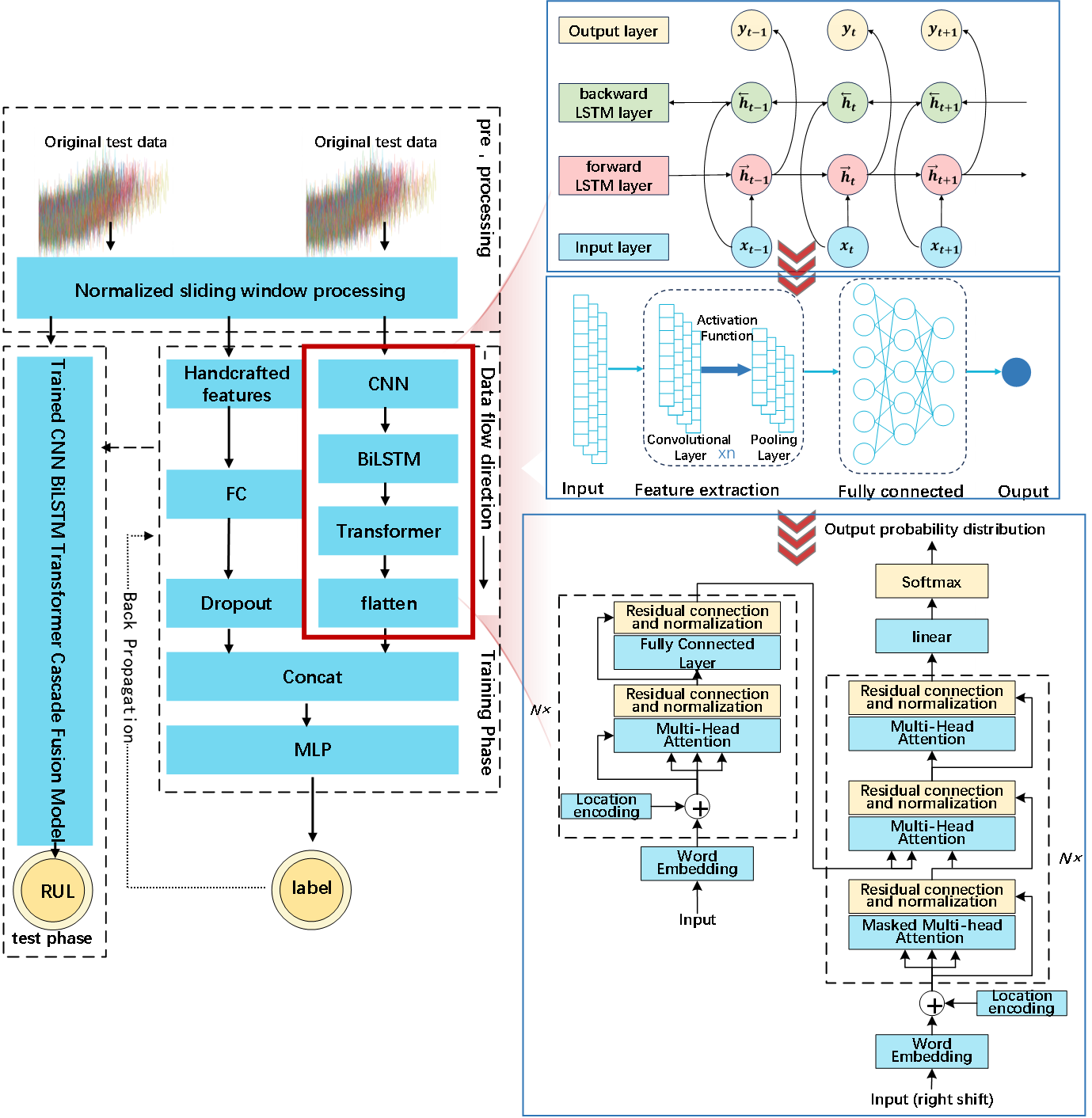
Remaining Useful Life (RUL) prediction is critical for ensuring equipment safety and optimizing maintenance schedules, directly impacting system reliability and maintenance efficiency. However, in real-world industrial scenarios, factors such as operating condition fluctuations and load variations lead to inconsistent data distributions, making it challenging for existing models to achieve satisfactory adaptability and accuracy. To address this issue, this paper proposes a deep learning framework based on a multi-branch serial-parallel fusion of CNN-BiLSTM-Transformer architectures. Through innovative model architecture design and optimized training strategies, the framework aims to enhance... More >

Graphical Abstract
Remaining Useful Life Prediction Using Optimized Multi-source Features and Model Fusion
Free Access | Research Article | 11 November 2025
Optimization and Control of Discrete-Time Production-Inventory Systems Using Reinforcement Learning
ICCK Transactions on Systems Safety and Reliability | Volume 1, Issue 2: 98-113, 2025 | DOI: 10.62762/TSSR.2025.621059
Abstract
This study introduces a novel approach for enhancing production decision-making by applying Reinforcement Learning to optimize the Economic Manufacturing Quantity (EMQ) model within discrete-time production-inventory systems. By incorporating machine status, inventory levels, and production choices, a Markov Decision Process (MDP) is constructed and combined with the Q-learning algorithm to derive an adaptive control method. This method enables the dynamic adaptation of production decisions, by effectively balancing the normal operation and shutdown for rest states. Numerical simulations show that the suggested Reinforcement Learning model surpasses conventional EMQ models and steady-state p... More >

Graphical Abstract
Optimization and Control of Discrete-Time Production-Inventory Systems Using Reinforcement Learning
Free Access | Review Article | 31 October 2025 | Cited: 1 , Scopus 1
Performability Analysis for Large-Scale Multi-State Computing Systems: Methodologies, Advances, and Future Directions
ICCK Transactions on Systems Safety and Reliability | Volume 1, Issue 2: 81-97, 2025 | DOI: 10.62762/TSSR.2025.527003
Abstract
Large-scale computing systems, such as cloud data centers, grid infrastructures, and high-performance computing clusters, are the backbone of modern information technology ecosystems. These systems typically consist of numerous heterogeneous, multi-state computing nodes that exhibit varying performance levels due to component failures, degradation, or dynamic resource allocation. Performability analysis, which integrates both system reliability and performance evaluations to quantify the probability of the system operating at a specified performance level, is critical for ensuring the efficient, reliable, and cost-effective operation of these complex systems. This paper presents a comprehens... More >

Graphical Abstract
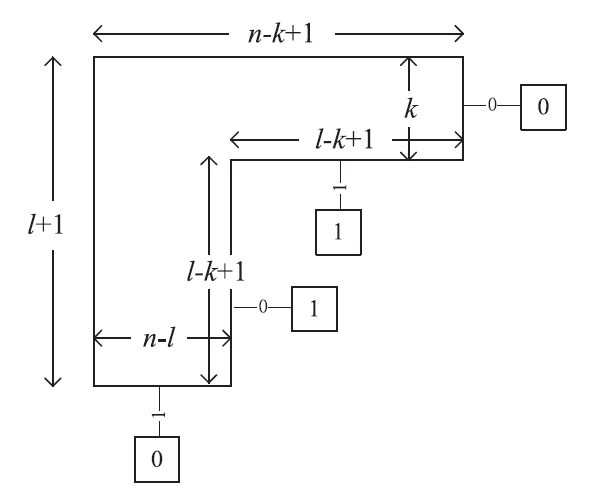
Performability Analysis for Large-Scale Multi-State Computing Systems: Methodologies, Advances, and Future Directions