ICCK

Kaveh Kavianpour

Amirkabir University of Technology

Section 01

Academic Profile

No academic profile information available at the moment.

Section 02

Editorial Roles

This user currently does not serve as an editor for any ICCK journals.

Section 03

ICCK Publications

Open Access | Research Article | 02 March 2026
Adaptive Manifold Concept with Regularized Autoencoders (AMRAE) for Effective Dimensionality Reduction
Frontiers in Biomedical Signal Processing | Volume 1, Issue 2: 79-104, 2026 | DOI: 10.62762/FBSP.2025.800185
Abstract
The Adaptive Manifold Concept with Regularized Autoencoders (AMRAE) algorithm is introduced as a novel dimensionality reduction technique that integrates manifold learning with autoencoders to capture the intrinsic geometry of high-dimensional data effectively. The study evaluates the impact of various adjustments and enhancements within the "Manifold Adjustment Box," including different regularization techniques, activation functions, and architectural choices, across diverse datasets. Key findings demonstrate that configurations such as Leaky ReLU Activation and Batch Norm Layer consistently improve accuracy, results highlight the flexibility and robustness of AMRAE. The results underscore... More >

Graphical Abstract
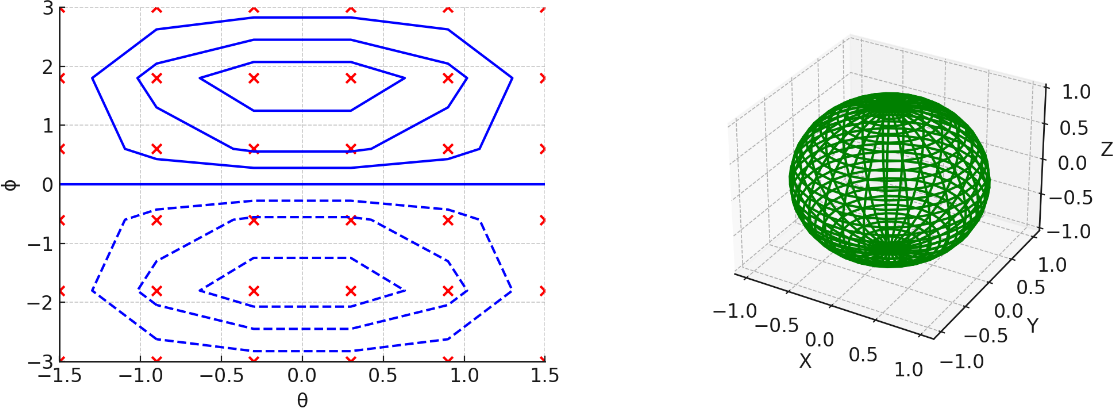
Adaptive Manifold Concept with Regularized Autoencoders (AMRAE) for Effective Dimensionality Reduction
Open Access | Research Article | 26 February 2026
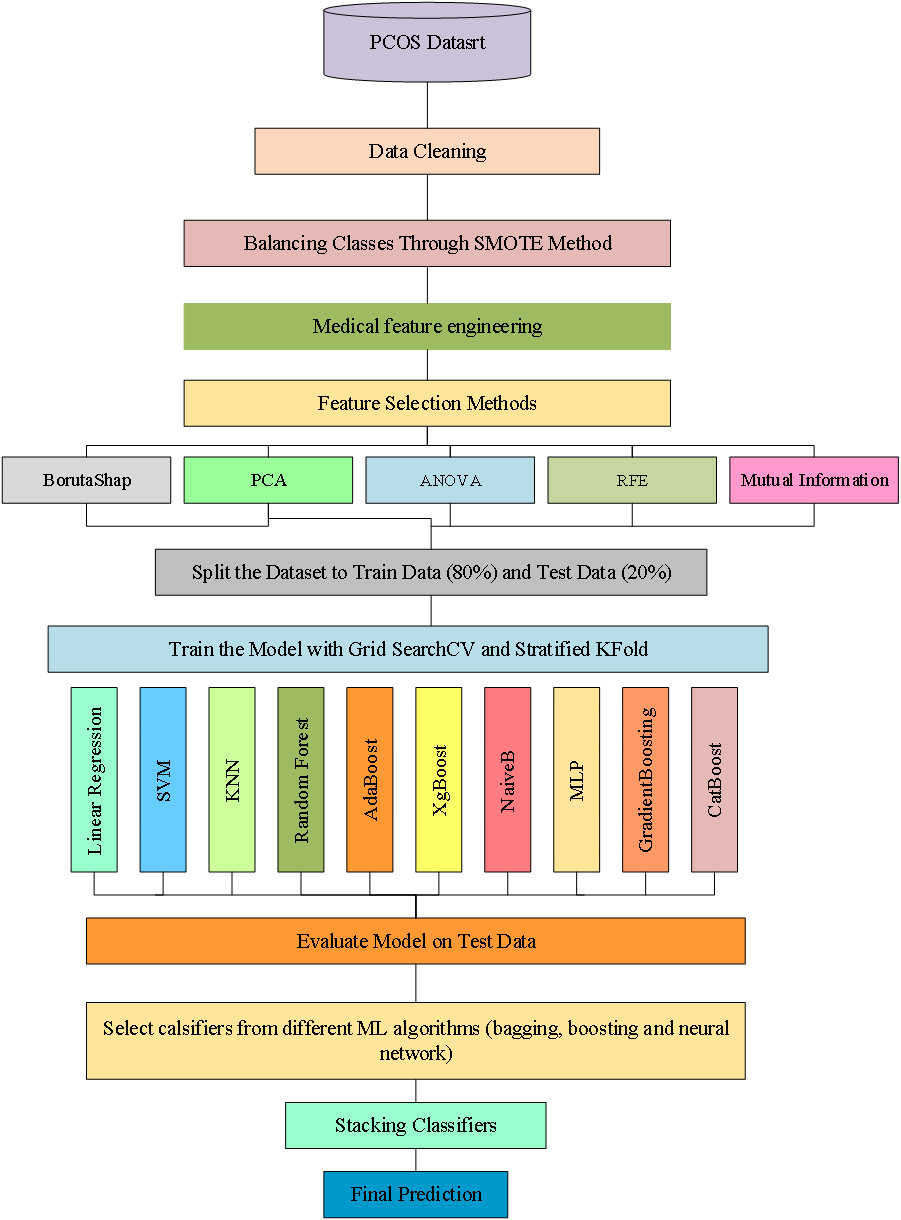
Advancing PCOS Diagnosis: Harnessing the Power of AI and Machine Learning for Enhanced Accuracy and Efficiency
Frontiers in Biomedical Signal Processing | Volume 1, Issue 1: 49-70, 2026 | DOI: 10.62762/FBSP.2025.529389
Abstract
This research presents a diagnostic method for Polycystic Ovary Syndrome (PCOS), a common hormonal disorder among women of childbearing age. The study applied machine learning classifiers—Random Forest, CatBoost, and MLP—to the Kaggle PCOS dataset, enhanced by BorutaShap and SMOTE feature selection methods. The ensemble classifier achieved an F1 score of 93.54% and an accuracy of 96.71%. These results demonstrate AI's potential to improve PCOS diagnosis for broader clinical applications. Future research should integrate genetic and epigenetic factors into AI models, validated through clinical trials. Key contributions include: using an ensemble of machine learning classifiers, advanced f... More >

Graphical Abstract
Advancing PCOS Diagnosis: Harnessing the Power of AI and Machine Learning for Enhanced Accuracy and Efficiency