Academic Profile

Academic Profile

No academic profile information available at the moment.

Editorial Roles

No Editorial Roles

This user currently does not serve as an editor for any ICCK journals.

ICCK Publications

Total Publications: 2
Open Access | Research Article | 02 March 2026
Adaptive Manifold Concept with Regularized Autoencoders (AMRAE) for Effective Dimensionality Reduction
Frontiers in Biomedical Signal Processing | Volume 1, Issue 2: 79-104, 2026 | DOI: 10.62762/FBSP.2025.800185
Abstract
The Adaptive Manifold Concept with Regularized Autoencoders (AMRAE) algorithm is introduced as a novel dimensionality reduction technique that integrates manifold learning with autoencoders to capture the intrinsic geometry of high-dimensional data effectively. The study evaluates the impact of various adjustments and enhancements within the "Manifold Adjustment Box," including different regularization techniques, activation functions, and architectural choices, across diverse datasets. Key findings demonstrate that configurations such as Leaky ReLU Activation and Batch Norm Layer consistently improve accuracy, results highlight the flexibility and robustness of AMRAE. The results underscore... More >

Graphical Abstract
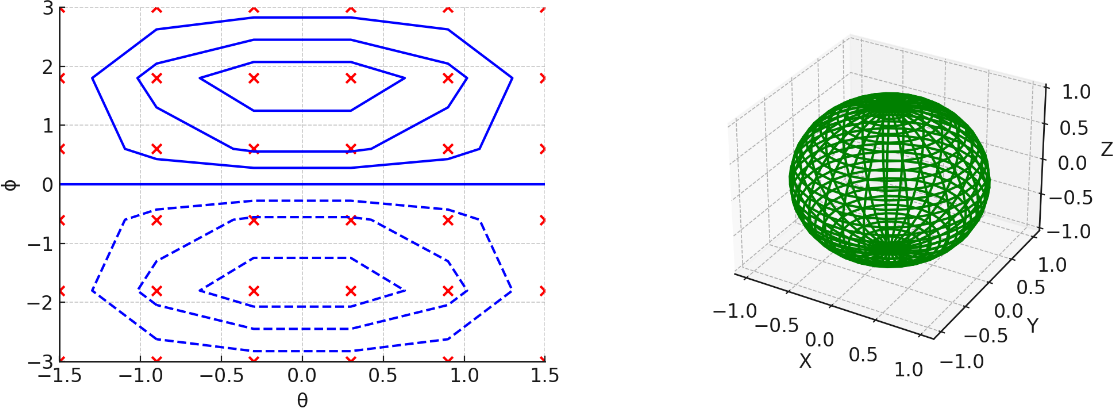
Adaptive Manifold Concept with Regularized Autoencoders (AMRAE) for Effective Dimensionality Reduction
Open Access | Research Article | 06 July 2025
Multi-Task Machine Learning for Prenatal Risk Stratification: Integrating Biomarkers, Maternal Age, and Ultrasound Measurements to Predict the Risk of Down Syndrome, Trisomy 18, Trisomy 13, and Neural Tube Defects
Frontiers in Biomedical Signal Processing | Volume 1, Issue 1: 24-36, 2025 | DOI: 10.62762/FBSP.2025.954863
Abstract
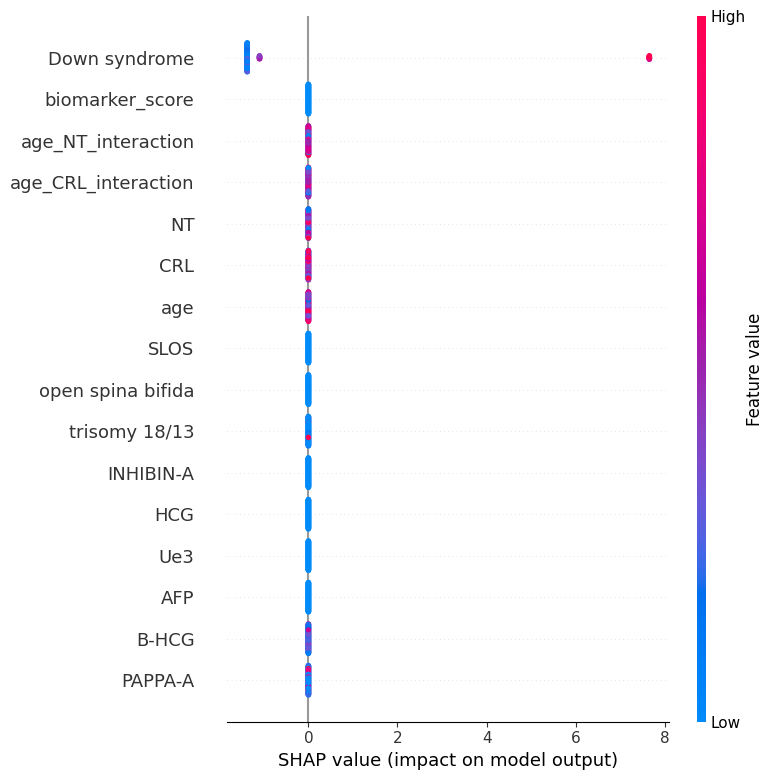
This study developed a machine learning model for early risk stratification of Down syndrome by integrating maternal serum biomarkers and ultrasound measurements. A retrospective multicentre dataset was used, including maternal age, AFP, HCG, INHIBIN-A, and ultrasound parameters (NT, CRL). After imputing missing data and engineering features (e.g., Age_NT_interaction), a Gradient Boosting Machine (GBM) was trained and evaluated using AUROC, precision, recall, and F1-score. The model achieved high performance (AUROC: 0.9921; precision: 1.00; F1-score: 0.91; accuracy: 0.97). SHAP analysis identified key interactions—particularly Age_NT, Age_HCG, and Age_PAPP-A—as major contributors. High m... More >

Graphical Abstract
Multi-Task Machine Learning for Prenatal Risk Stratification: Integrating Biomarkers, Maternal Age, and Ultrasound Measurements to Predict the Risk of Down Syndrome, Trisomy 18, Trisomy 13, and Neural Tube Defects