
Academic Profile

Academic Profile

No academic profile information available at the moment.

Editorial Roles

No Editorial Roles

This user currently does not serve as an editor for any ICCK journals.

ICCK Publications

Total Publications: 3
Open Access | Research Article | 13 January 2026
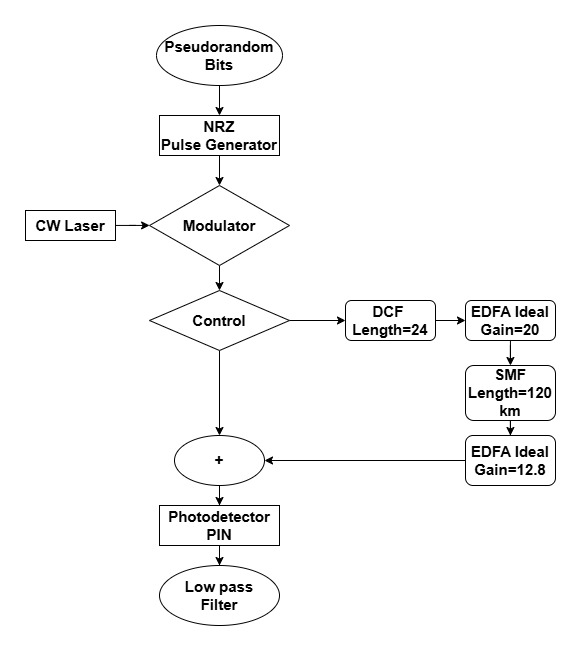
Dispersion-Compensating Method for High-Capacity Fiber-Optic Communication System
ICCK Transactions on Advanced Computing and Systems | Volume 2, Issue 1: 53-60, 2026 | DOI: 10.62762/TACS.2025.603512
Abstract
Designing a reliable fiber optic communication network is crucial. High-speed optical networks are now a vital part of the communication system and the foundation of wireless and mobile networks, driven by their constant expansion and increasing demand. The high transmission rate improves spectral utilization, increases system capacity, and reduces overall system expenditure. To improve the communication channel and achieve high transmission performance and data rates, a spread-spectrum compensation scheme is required. The goal of fiber optic communication systems is to transmit as many bits per second as possible over the longest possible distance at an acceptable data rate. Two methods are... More >

Graphical Abstract
Dispersion-Compensating Method for High-Capacity Fiber-Optic Communication System
Free Access | Research Article | 23 July 2025 | Cited: 3 , Scopus 3
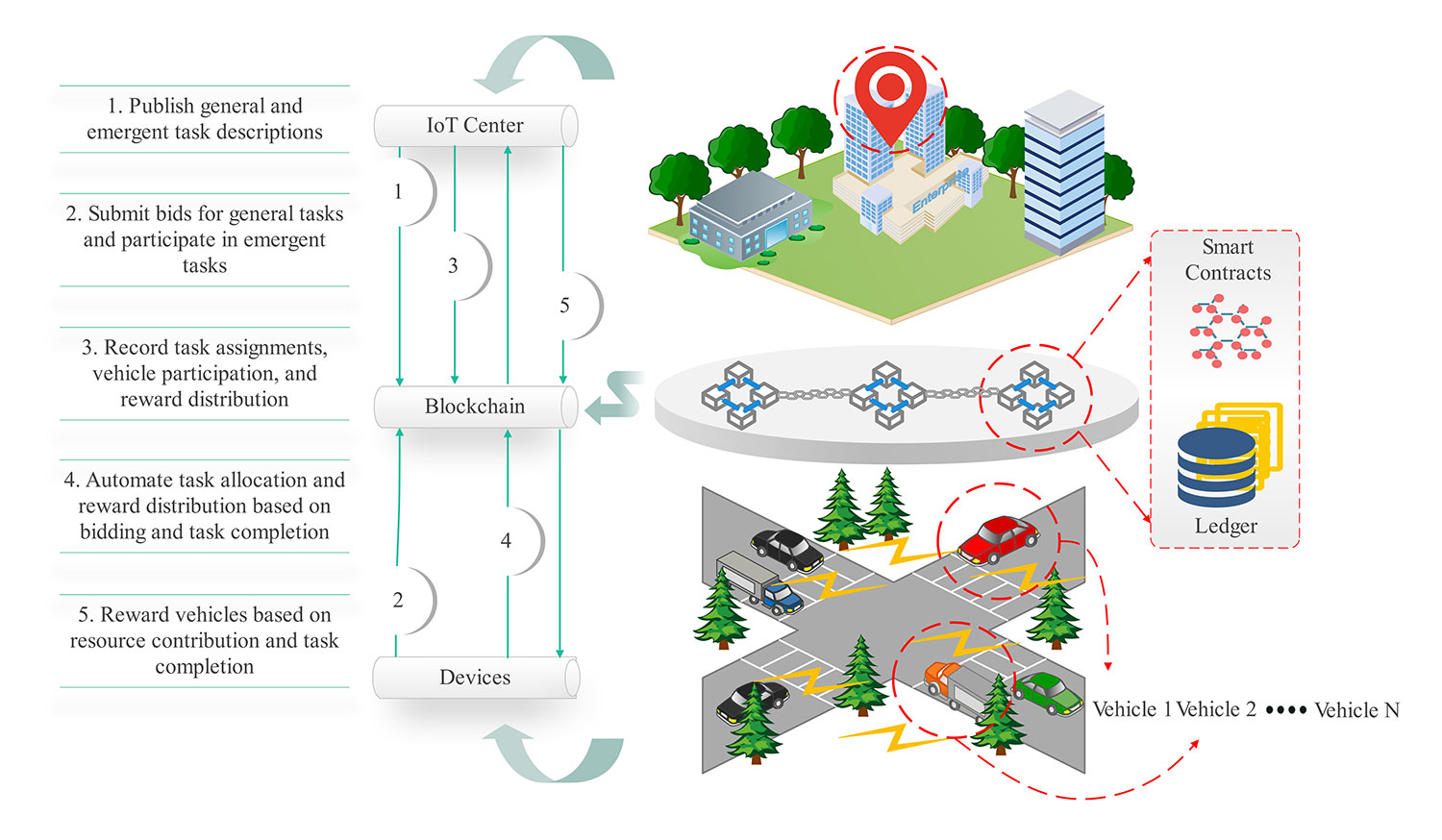
Optimizing Collaborative Task Allocation in Internet of Vehicles (IoV) through Blockchain-Enabled Incentive Mechanisms
ICCK Transactions on Sensing, Communication, and Control | Volume 2, Issue 3: 147-167, 2025 | DOI: 10.62762/TSCC.2025.962030
Abstract
The Internet of Vehicles (IoV) is a core component of smart transportation systems, making it feasible to exchange information among vehicles, infrastructure, and central systems in real time. However, the effective use of resources and the efficient distribution of tasks in these dynamic environments is a challenging task. This paper presents a blockchain-based collaborative task allocation framework method that can solve these problems by using a greedy algorithm for general task allocation and adopting a dynamic collaboration scheduling algorithm for emergent tasks. Employing the blockchain-based reward mechanism, the transparency, fairness, and security in dynamic mobile crowdsensing (MC... More >

Graphical Abstract
Optimizing Collaborative Task Allocation in Internet of Vehicles (IoV) through Blockchain-Enabled Incentive Mechanisms
Open Access | Research Article | 31 March 2025 | Cited: 5 , Scopus 5
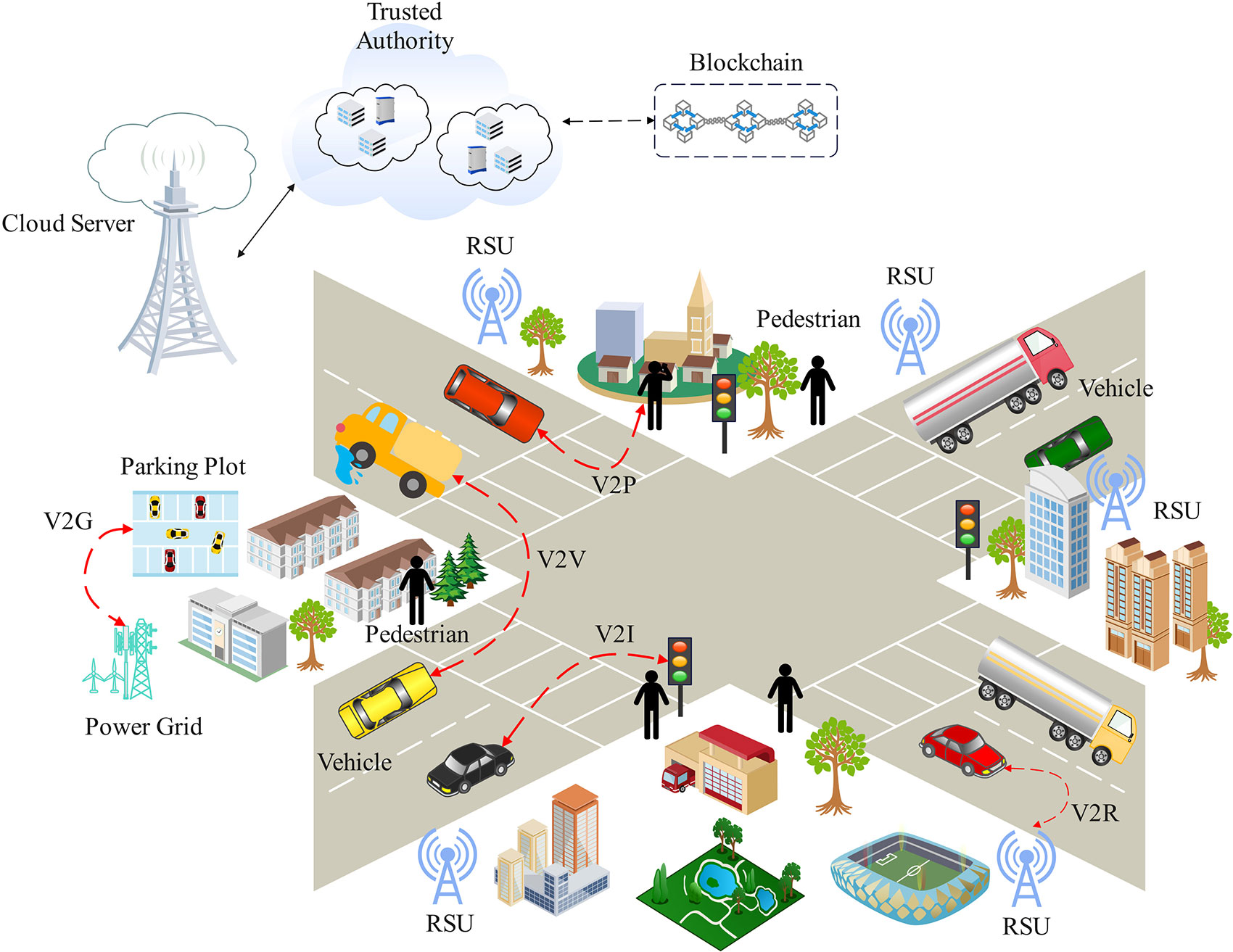
Enhancing Authentication Security in Internet of Vehicles: A Blockchain-Driven Approach for Trustworthy Communication
ICCK Transactions on Advanced Computing and Systems | Volume 1, Issue 1: 48-62, 2025 | DOI: 10.62762/TACS.2025.835144
Abstract
The Internet of Vehicles (IoVs) is an emerging technology that enhances transportation systems by enabling interactions between vehicles, infrastructure, and other entities. Securing IoV networks from cyber threats like eavesdropping, data tampering, and intrusions is a major challenge. This research presents a Blockchain-Enabled Secure Authentication Protocol for IoVs (BESA-IOV), which leverages blockchain’s decentralized and tamper-resistant nature for secure communication in vehicular networks. By utilizing ECC-based lightweight cryptography and blockchain-based public key management, it ensures strong authentication, confidentiality, and integrity. The results show that BESA-IOV signif... More >

Graphical Abstract
Enhancing Authentication Security in Internet of Vehicles: A Blockchain-Driven Approach for Trustworthy Communication