Advancements in Multi-Year Ice Concentration Estimation from SSM/I 91.6GHz Observations
Research Article  ·  Published: 12 March 2024
Issue cover
ICCK Transactions on Internet of Things
Volume 2, Issue 1, 2024: 26-35
Research Article Free to Read

Advancements in Multi-Year Ice Concentration Estimation from SSM/I 91.6GHz Observations

1 College of Information Science and Engineering, Henan University of Technology, Zhengzhou 450001, China
Corresponding Author: Yue Zhao, [email protected]
Volume 2, Issue 1

Article Information

Abstract

To enhance the LOMAX algorithm for sea ice concentration analysis in the polar regions, SSM/I 91.6GHz data was utilized, addressing the underuse of higher frequency data. The refinement process involved redefining PCT values for one-year and multi-year ice regions through both interpolation and least squares methods. Moreover, band operations were conducted to facilitate Arctic multi-year ice concentration retrieval. Comparative analyses with the NT algorithm indicated that the Arctic sea ice extents determined by both algorithms were similar, affirming the credibility of the modified LOMAX algorithm. When examining the results for March and September, the updated LOMAX algorithm demonstrated improved accuracy over the NT algorithm, especially under summer ice melt conditions, highlighting the enhanced performance and reliability of the refined algorithm in various seasonal contexts.

Graphical Abstract

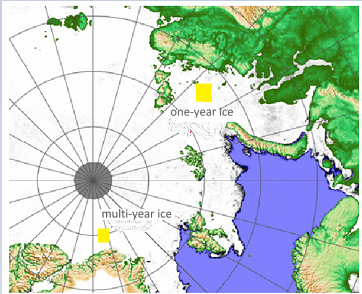
Advancements in Multi-Year Ice Concentration Estimation from SSM/I 91.6GHz Observations

Keywords

LOMAX Multi-year ice concentration 91.6 GHz

Funding

This work was supported without any funding.

References

  1. Cavalieri D J. (1994). A microwave technique for mapping thin sea ice[U]. Journal of Geophysical Research Oceans. 99(C6):12561-12572.
    [Google Scholar]
  2. Cavalieri, D. J., Gloersen, P., & Campbell, W. J. (1984). Determination of sea ice parameters with the Nimbus 7 SMMR. Journal of Geophysical Research: Atmospheres, 89(D4), 5355-5369.
    [Google Scholar]
  3. Cavalieri, D. J., & Parkinson, C. L. (2012). Arctic sea ice variability and trends, 1979–2010. The Cryosphere, 6(4), 881-889.
    [Google Scholar]
  4. Comiso, J. C., & Nishio, F. (2008). Trends in the sea ice cover using enhanced and compatible AMSR-E, SSM/I, and SMMR data. Journal of Geophysical Research: Oceans, 113(C2).
    [Google Scholar]
  5. Comiso, J. C. (1986). Characteristics of Arctic winter sea ice from satellite multispectral microwave observations. Journal of Geophysical Research: Oceans, 91(C1), 975-994.
    [Google Scholar]
  6. Ulaby, F. T., Kouyate, F., Brisco, B., & Williams, T. L. (1986). Textural infornation in SAR images. IEEE Transactions on Geoscience and Remote Sensing, (2), 235-245.
    [Google Scholar]
  7. Soh, L. K., Tsatsoulis, C., Gineris, D., & Bertoia, C. (2004). ARKTOS: An intelligent system for SAR sea ice image classification. IEEE Transactions on geoscience and remote sensing, 42(1), 229-248.
    [Google Scholar]
  8. Ressel, R., Frost, A., & Lehner, S. (2015). A neural network-based classification for sea ice types on X-band SAR images. IEEE Journal of Selected Topics in Applied Earth Observations and Remote Sensing, 8(7), 3672-3680.
    [Google Scholar]
  9. Cavalieri, D. J., Parkinson, C. L., Gloersen, P., Comiso, J. C., & Zwally, H. J. (1999). Deriving long-term time series of sea ice cover from satellite passive-microwave multisensor data sets. Journal of Geophysical Research: Oceans, 104(C7), 15803-15814.
    [Google Scholar]
  10. Nghiem, S. V., Steffen, K., Kwok, R., & Tsai, W. Y. (2001). Detection of snowmelt regions on the Greenland ice sheet using diurnal backscatter change. Journal of Glaciology, 47(159), 539-547.
    [Google Scholar]
  11. Gough, S. R. (1972). A low temperature dielectric cell and the permittivity of hexagonal ice to 2 K. Canadian Journal of Chemistry, 50(18), 3046-3051.
    [Google Scholar]
  12. Li, Y., & Cao, J. (2023). Adaptive Binary Particle Swarm Optimization for WSN Node Optimal Deployment Algorithm. IECE Transactions on Internet of Things, 1(1), 1-8.
    [Google Scholar]
  13. Spreen, G., Kaleschke, L., & Heygster, G. (2008). Sea ice remote sensing using AMSR-E 89-GHz channels. Journal of Geophysical Research: Oceans, 113(C2).
    [Google Scholar]
  14. Y. Hua & X. Wang (2023). Forest Fire Assessment and Analysisin Liangshan, Sichuan Province Based on Remote Sensing. IECE Transactions on Internet of Things, 1(1), 15–21.
    [Google Scholar]
  15. Lv, Y., Fang, F. A. N. G., Yang, T., & Romero, C. E. (2020). An early fault detection method for induced draft fans based on MSET with informative memory matrix selection. ISA transactions, 102, 325-334.
    [Google Scholar]
  16. Fang, F. A. N. G., Tan, W., & Liu, J. Z. (2005). Tuning of coordinated controllers for boiler-turbine units. Acta Automatica Sinica, 31(2), 291-296.
    [Google Scholar]
  17. Fang, F., Jizhen, L., & Wen, T. (2004). Nonlinear internal model control for the boiler-turbine coordinate systems of power unit. PROCEEDINGS-CHINESE SOCIETY OF ELECTRICAL ENGINEERING, 24(4), 195-199.
    [Google Scholar]
  18. Wang, N., Fang, F., & Feng, M. (2014, May). Multi-objective optimal analysis of comfort and energy management for intelligent buildings. In The 26th Chinese control and decision conference (2014 CCDC) (pp. 2783-2788). IEEE.
    [Google Scholar]

Cite This Article

APA Style
Zhao, Y., Wang, X., & Zhang, Z. (2024). Advancements in Multi-Year Ice Concentration Estimation from SSM/I 91.6GHz Observations. ICCK Transactions on Internet of Things, 2(1), 26–35. https://doi.org/10.62762/TIOT.2024.682080
Export Citation
RIS Format
Compatible with EndNote, Zotero, Mendeley, and other reference managers
TY  - JOUR
AU  - Zhao, Yue
AU  - Wang, Xingdong
AU  - Zhang, Zifan
PY  - 2024
DA  - 2024/03/12
TI  - Advancements in Multi-Year Ice Concentration Estimation from SSM/I 91.6GHz Observations
JO  - ICCK Transactions on Internet of Things
T2  - ICCK Transactions on Internet of Things
JF  - ICCK Transactions on Internet of Things
VL  - 2
IS  - 1
SP  - 26
EP  - 35
DO  - 10.62762/TIOT.2024.682080
UR  - https://www.icck.org/article/abs/TIOT.2024.682080
KW  - LOMAX
KW  - Multi-year ice concentration
KW  - 91.6 GHz
AB  - To enhance the LOMAX algorithm for sea ice concentration analysis in the polar regions, SSM/I 91.6GHz data was utilized, addressing the underuse of higher frequency data. The refinement process involved redefining PCT values for one-year and multi-year ice regions through both interpolation and least squares methods. Moreover, band operations were conducted to facilitate Arctic multi-year ice concentration retrieval. Comparative analyses with the NT algorithm indicated that the Arctic sea ice extents determined by both algorithms were similar, affirming the credibility of the modified LOMAX algorithm. When examining the results for March and September, the updated LOMAX algorithm demonstrated improved accuracy over the NT algorithm, especially under summer ice melt conditions, highlighting the enhanced performance and reliability of the refined algorithm in various seasonal contexts.
SN  - pending
PB  - Institute of Central Computation and Knowledge
LA  - English
ER  - 
BibTeX Format
Compatible with LaTeX, BibTeX, and other reference managers
@article{Zhao2024Advancemen,
  author = {Yue Zhao and Xingdong Wang and Zifan Zhang},
  title = {Advancements in Multi-Year Ice Concentration Estimation from SSM/I 91.6GHz Observations},
  journal = {ICCK Transactions on Internet of Things},
  year = {2024},
  volume = {2},
  number = {1},
  pages = {26-35},
  doi = {10.62762/TIOT.2024.682080},
  url = {https://www.icck.org/article/abs/TIOT.2024.682080},
  abstract = {To enhance the LOMAX algorithm for sea ice concentration analysis in the polar regions, SSM/I 91.6GHz data was utilized, addressing the underuse of higher frequency data. The refinement process involved redefining PCT values for one-year and multi-year ice regions through both interpolation and least squares methods. Moreover, band operations were conducted to facilitate Arctic multi-year ice concentration retrieval. Comparative analyses with the NT algorithm indicated that the Arctic sea ice extents determined by both algorithms were similar, affirming the credibility of the modified LOMAX algorithm. When examining the results for March and September, the updated LOMAX algorithm demonstrated improved accuracy over the NT algorithm, especially under summer ice melt conditions, highlighting the enhanced performance and reliability of the refined algorithm in various seasonal contexts.},
  keywords = {LOMAX, Multi-year ice concentration, 91.6 GHz},
  issn = {pending},
  publisher = {Institute of Central Computation and Knowledge}
}

Article Metrics

Citations
Google Scholar
0
Crossref
0
Scopus
0
Web of Science
0
Views
1589
PDF Downloads
396

Publisher's Note

ICCK stays neutral with regard to jurisdictional claims in published maps and institutional affiliations.

Rights and Permissions

Institute of Central Computation and Knowledge (ICCK) or its licensor holds exclusive rights to this article under a publishing agreement with the author(s) or other rightsholder(s); author self-archiving of the accepted manuscript version of this article is solely governed by the terms of such publishing agreement and applicable law.
ICCK Transactions on Internet of Things
ISSN: pending (Online)
Portico
Preserved at
Portico