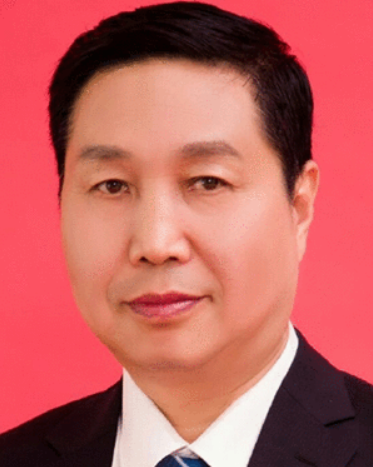
A Mimic Fusion Algorithm for Dual Channel Video Based on Possibility Distribution Synthesis Theory



Article Information
Author's Talk

Abstract
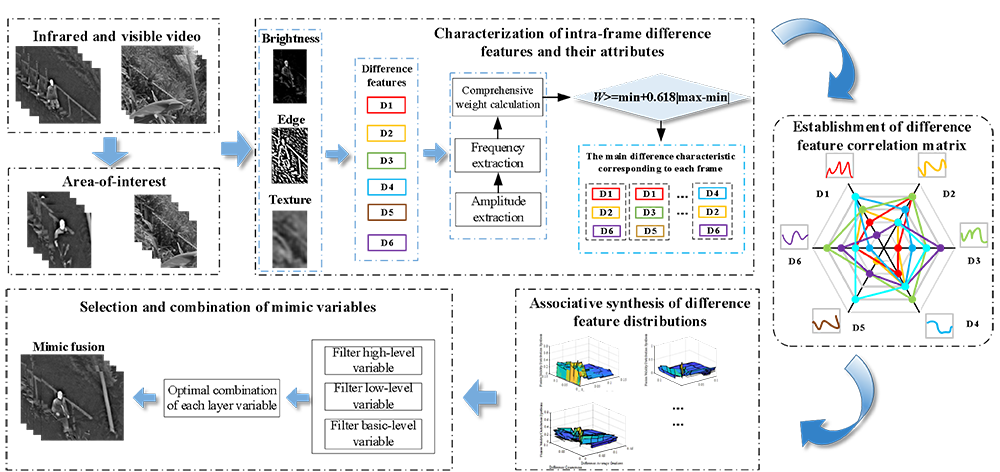
In response to the current practical fusion requirements for infrared and visible videos, which often involve collaborative fusion of difference feature information, and model cannot dynamically adjust the fusion strategy according to the difference between videos, resulting in poor fusion performance, a mimic fusion algorithm for infrared and visible videos based on the possibility distribution synthesis theory is proposed. Firstly, quantitatively describe the various difference features and their attributes of the region of interest in each frame of the dual channel video sequence, and select the main difference features corresponding to each frame. Secondly, the pearson correlation coefficient is used to measure the correlation between any two features and obtain the feature correlation matrix. Then, based on the similarity measure, the fusion effective degree distribution of each layer variables for different difference features is constructed, and the difference feature distribution is correlated and synthesized based on the possibility distribution synthesis theory. Finally, optimize the select of mimic variables to achieve mimic fusion of infrared and visible videos. The experimental results show that the proposed method achieve significant fusion results in preserving targets and details, and was significantly superior to other single fusion methods in subjective evaluation and objective analysis.
Graphical Abstract
Keywords
Data Availability Statement
Funding
Conflicts of Interest
Ethical Approval and Consent to Participate
References
- Zhang, M., Dong, L., Ma, D., & Xu, W. (2022). Infrared target detection in marine images with heavy waves via local patch similarity. Infrared Physics & Technology, 125, 104283. https://www.sciencedirect.com/science/article/pii/S135044952200264X
[Google Scholar] - Ma, J., Ma, Y., & Li, C. (2019). Infrared and visible image fusion methods and applications: A survey. Information fusion, 45, 153-178. https://www.sciencedirect.com/science/article/pii/S1566253517307972
[Google Scholar] - Chen, J., Li, X., Luo, L., Mei, X., & Ma, J. (2020). Infrared and visible image fusion based on target-enhanced multiscale transform decomposition. Information Sciences, 508, 64-78. https://www.sciencedirect.com/science/article/pii/S0020025519308163
[Google Scholar] - Li, H., Wu, X. J., & Kittler, J. (2020). MDLatLRR: A novel decomposition method for infrared and visible image fusion. IEEE Transactions on Image Processing, 29, 4733-4746. https://ieeexplore.ieee.org/abstract/document/9018389/
[Google Scholar] - Fu, Z., Wang, X., Xu, J., Zhou, N., & Zhao, Y. (2016). Infrared and visible images fusion based on RPCA and NSCT. Infrared Physics & Technology, 77, 114-123. https://www.sciencedirect.com/science/article/pii/S1350449516300330
[Google Scholar] - Zhang, Q., Wang, Y., Levine, M. D., Yuan, X., & Wang, L. (2015). Multisensor video fusion based on higher order singular value decomposition. Information Fusion, 24, 54-71. https://www.sciencedirect.com/science/article/pii/S1566253514001146
[Google Scholar] - Zhang, Q., Wang, L., Ma, Z., & Li, H. (2012). A novel video fusion framework using surfacelet transform. Optics Communications, 285(13-14), 3032-3041. https://www.sciencedirect.com/science/article/pii/S0030401812002179
[Google Scholar] - Guo, X., Ji, L., & Yang, F. (2021). Dual-mode Infrared Image Fusion Algorithm Selection Based on Possibility Information Quality Synthesis. Acta Photonica Sinica, 50(3), 167. https://www.researching.cn/articles/OJc09b5d2325a67d45
[Google Scholar] - Guo, X., Yang, F., & Ji, L. (2022). MLF: A mimic layered fusion method for infrared and visible video. Infrared Physics & Technology, 126, 104349. https://www.sciencedirect.com/science/article/pii/S1350449522003309
[Google Scholar] - Yang, F. B. (2017). Research on theory and model of mimic fusion between infrared polarization and intensity images. Journal of North University of China (Natural Science Edition), 38(1), 1-8.
[Google Scholar] - Hanlon, R. T., Conroy, L. A., & Forsythe, J. W. (2008). Mimicry and foraging behaviour of two tropical sand-flat octopus species off North Sulawesi, Indonesia. Biological Journal of the Linnean Society, 93(1), 23-38. https://academic.oup.com/biolinnean/article-abstract/93/1/23/2701347
[Google Scholar] - Ishida, T. (2021). A model of octopus epidermis pattern mimicry mechanisms using inverse operation of the Turing reaction model. Plos one, 16(8), e0256025. https://journals.plos.org/plosone/article?id=10.1371/journal.pone.0256025
[Google Scholar] - Hochberg, F. G., Norman, M. D., & Finn, J. (2006). Wunderpus photogenicus n. gen. and sp., a new octopus from the shallow waters of the Indo-Malayan Archipelago (Cephalopoda: Octopodidae). Mount Sinai Journal of Medicine, 73(8). https://www.mapress.com/mr/content/v26/2006f/n3p140.pdf
[Google Scholar] - Tomita, M., & Aoki, S. (2014). Visual Discrimination Learning in the Small Octopus O ctopus ocellatus. Ethology, 120(9), 863-872. https://onlinelibrary.wiley.com/doi/abs/10.1111/eth.12258
[Google Scholar] - Hu, H., Wu, J., Wang, Z., & Cheng, G. (2018). Mimic defense: a designed‐in cybersecurity defense framework. IET Information Security, 12(3), 226-237. https://ietresearch.onlinelibrary.wiley.com/doi/abs/10.1049/iet-ifs.2017.0086
[Google Scholar] - Gao, Y. Z., Wang, J. M., & Lei, Z. Y. (2021). Method of mimicry signal processing for distributed opportunity array radar. Mod. Radar, 43(11), 1-8.
[Google Scholar] - Xu, D. F. (2018). Research on biomimetic Robot inspired by mimicry of octopus, Hangzhou Dianzi University, 1-15.
[Google Scholar] - Guo, X., Yang, F., & Ji, L. (2023). A mimic fusion method based on difference feature association falling shadow for infrared and visible video. Infrared Physics & Technology, 132, 104721. https://www.sciencedirect.com/science/article/pii/S1350449523001792
[Google Scholar] - Mack, Y. P., & Rosenblatt, M. (1979). Multivariate k-nearest neighbor density estimates. Journal of Multivariate Analysis, 9(1), 1-15. https://www.sciencedirect.com/science/article/pii/0047259X79900654
[Google Scholar] - Langrené, N., & Warin, X. (2019). Fast and stable multivariate kernel density estimation by fast sum updating. Journal of Computational and Graphical Statistics, 28(3), 596-608. https://www.tandfonline.com/doi/abs/10.1080/10618600.2018.1549052
[Google Scholar] - Wang, J. (2013). Pearson correlation coefficient. Encyclopedia of systems biology, 1671.
[Google Scholar] - Bouhamed, S. A., Kallel, I. K., Yager, R. R., Bossé, É., & Solaiman, B. (2020). An intelligent quality-based approach to fusing multi-source possibilistic information. Information Fusion, 55, 68-90. https://www.sciencedirect.com/science/article/pii/S1566253519300685
[Google Scholar] - F. Yang, L. Ji, X. Wang, Possibility Theory and Application, Science Press, Beijing, (2019) 41-45.
[Google Scholar] - Ali, F. E., El-Dokany, I. M., Saad, A. A., & Abd El-Samie, F. E. (2010). A curvelet transform approach for the fusion of MR and CT images. Journal of Modern Optics, 57(4), 273-286. https://www.tandfonline.com/doi/abs/10.1080/09500340903541056
[Google Scholar] - Cheng, B., Jin, L., & Li, G. (2018). General fusion method for infrared and visual images via latent low-rank representation and local non-subsampled shearlet transform. Infrared Physics & Technology, 92, 68-77. https://www.sciencedirect.com/science/article/pii/S1350449517308629
[Google Scholar] - LIU, D., ZHOU, D., NIE, R., & HOU, R. (2018). Multi-focus image fusion based on phase congruency motivate pulse coupled neural network-based in NSCT domain. Journal of Computer Applications, 38(10), 3006. http://www.joca.cn/EN/Y2018/V38/I10/3006
[Google Scholar] - Bao, W., & Zhu, X. (2015). A novel remote sensing image fusion approach research based on HSV space and bi-orthogonal wavelet packet transform. Journal of the Indian Society of Remote Sensing, 43, 467-473. https://link.springer.com/article/10.1007/s12524-014-0430-4
[Google Scholar] - Bashir, R., Junejo, R., Qadri, N. N., Fleury, M., & Qadri, M. Y. (2019). SWT and PCA image fusion methods for multi-modal imagery. Multimedia tools and applications, 78, 1235-1263. https://link.springer.com/article/10.1007/s11042-018-6229-5
[Google Scholar] - Du, J., Li, W., Xiao, B., & Nawaz, Q. (2016). Union Laplacian pyramid with multiple features for medical image fusion. Neurocomputing, 194, 326-339. https://www.sciencedirect.com/science/article/pii/S0925231216002940
[Google Scholar] - Aishwarya, N., & Thangammal, C. B. (2018). Visible and infrared image fusion using DTCWT and adaptive combined clustered dictionary. Infrared Physics & Technology, 93, 300-309. https://www.sciencedirect.com/science/article/pii/S1350449518301361
[Google Scholar] - Zhao, R., Liu, L., Kong, X., Jiang, S., & Chen, X. (2019). Multi-scale fusion algorithm of intensity and polarization-difference images based on edge information enhancement. Optical and Quantum Electronics, 51, 1-24. https://link.springer.com/article/10.1007/s11082-019-1899-4
[Google Scholar] - Wang, X., Yin, J., Zhang, K., Li, S., & Yan, J. (2019). Infrared weak-small targets fusion based on latent low-rank representation and DWT. IEEE Access, 7, 112681-112692. https://ieeexplore.ieee.org/abstract/document/8794577/
[Google Scholar] - IEEE OTCBVS WS Series Bench. http://www.cse.ohio-state.edu/OTCBVS-BENCH
[Google Scholar] - Toet, A. TNO Image fusion dataset [J]. Figshare. data, 2014.
[Google Scholar] - Li, S., Yang, B., & Hu, J. (2011). Performance comparison of different multi-resolution transforms for image fusion. Information Fusion, 12(2), 74-84. https://www.sciencedirect.com/science/article/pii/S1566253510000382
[Google Scholar] - Xydeas, C. S., & Petrovic, V. (2000). Objective image fusion performance measure. Electronics letters, 36(4), 308-309. https://citeseerx.ist.psu.edu/document?repid=rep1&type=pdf&doi=4883a68d4eea3ef73908d3b1068faf94a615222b
[Google Scholar] - Wang, Z., & Bovik, A. C. (2002). A universal image quality index. IEEE signal processing letters, 9(3), 81-84. https://ieeexplore.ieee.org/abstract/document/995823/
[Google Scholar] - Piella, G., & Heijmans, H. (2003, September). A new quality metric for image fusion. In Proceedings 2003 international conference on image processing (Cat. No. 03CH37429) (Vol. 3, pp. III-173). IEEE. https://ieeexplore.ieee.org/abstract/document/1247209/
[Google Scholar]
Cited By (11)
-
Yanchen Meng, Fengbao Yang, Weiwei Du, Xiaoming Guo, Xiaoxia Wang, Linna Ji. A Salient Frame-Driven Video Mimic Fusion Method Based on Possibility Distribution Evidence Synthesis.
Optics & Laser Technology, 2026 , 195 .
[CrossRef] -
Ruixuan Cong, Hao Sheng, Da Yang, Rongshan Chen, Zhenglong Cui. Pseudo 5D hyperspectral light field for image semantic segmentation.
Information Fusion, 2025 , 121 .
[CrossRef] -
Yanfang Liu, Rui Zhou, Zheng Yao, Jiayu She, Naiming Qi. STDSD: A Spacecraft Target Detection Framework Considering Similarity and Diversity.
IEEE Transactions on Automation Science and Engineering, 2025 , 22 .
[CrossRef] -
Hengrong Ju, Jing Guo, Weiping Ding, Xibei Yang. D3WC: Deep three-way clustering with granular evidence fusion.
Information Fusion, 2025 , 114 .
[CrossRef] -
Junwu Li, Yaomin Wang, Xin Ning, Wenguang He, Weiwei Cai. FefDM-Transformer: Dual-channel multi-stage Transformer-based encoding and fusion mode for infrared–visible images.
Expert Systems with Applications, 2025 , 277 .
[CrossRef] -
Zhijing Xu, Chao Wang, Kan Huang. BiF-DETR:Remote sensing object detection based on Bidirectional information fusion.
Displays, 2024 , 84 .
[CrossRef] -
Jin Xiang, Yi Yang, Junwei Bai. Adaptive classification of artistic images using multi-scale convolutional neural networks.
PeerJ Computer Science, 2024 , 10 .
[CrossRef] -
Yun Hua, Suyan Bian, Pan Liu, Shaodong Zhu, Jing Jing, Yan Zhuang, Menglu Li, Xu Chen, Chongyou Rao, Xiaoyu Jin, Kunlun He. VesselTransGAN to CT Imaging: A Contrast Medium Free CTA Solution.
IEEE Access, 2024 , 12 .
[CrossRef] -
Fei Zhu, Cuiping Shi, Liguo Wang, Kaijie Shi. A Greedy Strategy Guided Graph Self-Attention Network for Few-Shot Hyperspectral Image Classification.
IEEE Transactions on Geoscience and Remote Sensing, 2024 , 62 .
[CrossRef] -
Pengxiang Hong, Xi Luo, Lingxin Bao. Crop disease diagnosis and prediction using two-stream hybrid convolutional neural networks.
Crop Protection, 2024 , 184 .
[CrossRef] -
Baohong Li, Hao Zhang, Ashraf Uz Zaman Robin, Qianqian Yu. Automatic identification of breech face impressions based on deep local features.
Displays, 2024 , 85 .
[CrossRef]
Cite This Article
TY  - JOUR
AU  - Guo, Xiaoming
AU  - Yang, Fengbao
AU  - Ji, Linna
PY  - 2024
DA  - 2024/05/28
TI  - A Mimic Fusion Algorithm for Dual Channel Video Based on Possibility Distribution Synthesis Theory
JO  - Chinese Journal of Information Fusion
T2  - Chinese Journal of Information Fusion
JF  - Chinese Journal of Information Fusion
VL  - 1
IS  - 1
SP  - 33
EP  - 49
DO  - 10.62762/CJIF.2024.361886
UR  - https://www.icck.org/article/abs/CJIF.2024.361886
KW  - image processing
KW  - video fusion
KW  - mimic fusion
KW  - possibility distribution synthesis theory
AB  - In response to the current practical fusion requirements for infrared and visible videos, which often involve collaborative fusion of difference feature information, and model cannot dynamically adjust the fusion strategy according to the difference between videos, resulting in poor fusion performance, a mimic fusion algorithm for infrared and visible videos based on the possibility distribution synthesis theory is proposed. Firstly, quantitatively describe the various difference features and their attributes of the region of interest in each frame of the dual channel video sequence, and select the main difference features corresponding to each frame. Secondly, the pearson correlation coefficient is used to measure the correlation between any two features and obtain the feature correlation matrix. Then, based on the similarity measure, the fusion effective degree distribution of each layer variables for different difference features is constructed, and the difference feature distribution is correlated and synthesized based on the possibility distribution synthesis theory. Finally, optimize the select of mimic variables to achieve mimic fusion of infrared and visible videos. The experimental results show that the proposed method achieve significant fusion results in preserving targets and details, and was significantly superior to other single fusion methods in subjective evaluation and objective analysis.
SN  - 2998-3371
PB  - Institute of Central Computation and Knowledge
LA  - English
ER  -
@article{Guo2024A,
  author = {Xiaoming Guo and Fengbao Yang and Linna Ji},
  title = {A Mimic Fusion Algorithm for Dual Channel Video Based on Possibility Distribution Synthesis Theory},
  journal = {Chinese Journal of Information Fusion},
  year = {2024},
  volume = {1},
  number = {1},
  pages = {33-49},
  doi = {10.62762/CJIF.2024.361886},
  url = {https://www.icck.org/article/abs/CJIF.2024.361886},
  abstract = {In response to the current practical fusion requirements for infrared and visible videos, which often involve collaborative fusion of difference feature information, and model cannot dynamically adjust the fusion strategy according to the difference between videos, resulting in poor fusion performance, a mimic fusion algorithm for infrared and visible videos based on the possibility distribution synthesis theory is proposed. Firstly, quantitatively describe the various difference features and their attributes of the region of interest in each frame of the dual channel video sequence, and select the main difference features corresponding to each frame. Secondly, the pearson correlation coefficient is used to measure the correlation between any two features and obtain the feature correlation matrix. Then, based on the similarity measure, the fusion effective degree distribution of each layer variables for different difference features is constructed, and the difference feature distribution is correlated and synthesized based on the possibility distribution synthesis theory. Finally, optimize the select of mimic variables to achieve mimic fusion of infrared and visible videos. The experimental results show that the proposed method achieve significant fusion results in preserving targets and details, and was significantly superior to other single fusion methods in subjective evaluation and objective analysis.},
  keywords = {image processing, video fusion, mimic fusion, possibility distribution synthesis theory},
  issn = {2998-3371},
  publisher = {Institute of Central Computation and Knowledge}
}
Publisher's Note
ICCK stays neutral with regard to jurisdictional claims in published maps and institutional affiliations.
Rights and Permissions
 Copyright © 2024 by the Author(s). Published by Institute of Central Computation and Knowledge. This article is an open access article distributed under the terms and conditions of the Creative Commons Attribution (CC BY) license (https://creativecommons.org/licenses/by/4.0/), which permits use, sharing, adaptation, distribution and reproduction in any medium or format, as long as you give appropriate credit to the original author(s) and the source, provide a link to the Creative Commons licence, and indicate if changes were made.


Portico