Integrating Relationship Path and Entity Neighbourhood Information for Knowledge Graph Intelligence of Social Things





Article Information
Abstract
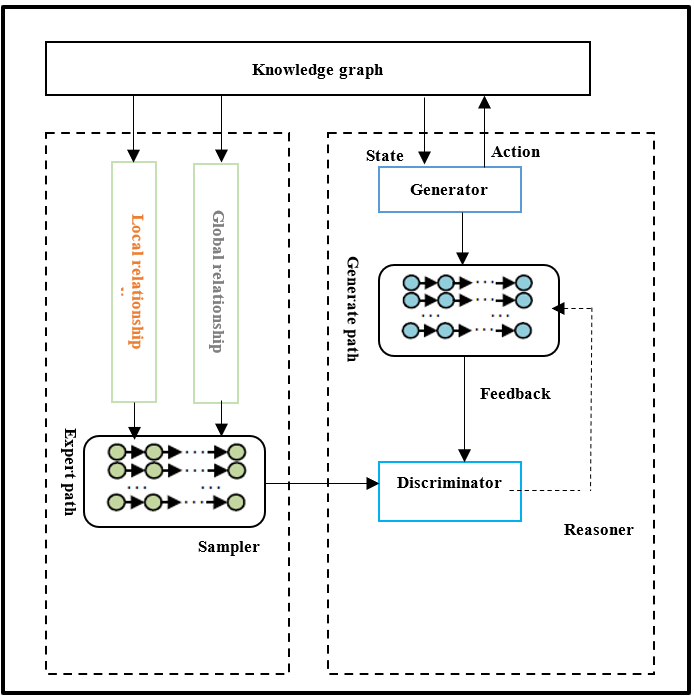
In the evolving framework of the Intelligence of Social Things (IoST), which amalgamates social networks and IoT ecosystems, knowledge graphs are essential for facilitating networked systems to efficiently process and leverage intricate relational data. Knowledge graphs offer essential technical assistance for various artificial intelligence applications, such as e-commerce, intelligent navigation, healthcare, and social media. Nonetheless, current knowledge graphs frequently lack completeness, harboring a considerable quantity of implicit knowledge that remains to be revealed. Consequently, tackling the difficulty of finalising knowledge graphs has emerged as a pressing research priority. Most contemporary methods separately analyse entity neighbourhood information or connection routes, neglecting the significance of entity neighbourhood information in the investigation of relationship paths. A novel approach, RPEN-KGC (Relationship Path and Entity Neighbourhood Knowledge Graph Completion), is suggested to enable the fusion of relationship paths and entity neighbourhood information for knowledge graph completion. RPEN-KGC comprises a sampler and an inferencer. The sampler conducts random walks between entity pairs to furnish dependable inference methods for the inferencer. The sampler utilises a contrastive method grounded in entity neighbourhood similarity to steer random walks, hence enhancing sampling efficiency and augmenting inference strategies. The inferencer derives semantic characteristics of relationship paths and deduces a greater variety of relationship paths within the semantic domain. Experiments performed on the public NELL-995 and FB15K-237 datasets for the link prediction task indicate that RPEN-KGC significantly enhances most metrics relative to baseline approaches. These findings demonstrate that RPEN-KGC proficiently forecasts absent information in knowledge graphs.
Graphical Abstract
Keywords
Data Availability Statement
Funding
Conflicts of Interest
Ethical Approval and Consent to Participate
References
- Hogan, A., Blomqvist, E., Cochez, M., d’Amato, C., Melo, G. D., Gutierrez, C., ... & Zimmermann, A. (2021). Knowledge graphs. ACM Computing Surveys (Csur), 54(4), 1-37.
[CrossRef] [Google Scholar] - Feng, S., Zhou, C., Liu, Q., Ji, X., & Huang, M. (2024). Temporal knowledge graph reasoning based on entity relationship similarity perception. Electronics, 13(12), 2417.
[CrossRef] [Google Scholar] - Xiong, H., Wang, S., Tang, M., Wang, L., & Lin, X. (2021). Knowledge graph question answering with semantic oriented fusion model. Knowledge-Based Systems, 221, 106954.
[CrossRef] [Google Scholar] - Wan, Y., Jiang, N., & Liu, Z. (2024). Dynamic Hypergraph Modeling and Robustness Analysis for SIoT. CMES - Computer Modeling in Engineering and Sciences, 140(3), 3017-3034.
[CrossRef] [Google Scholar] - Gao, H., Xu, K., Cao, M., Xiao, J., Xu, Q., & Yin, Y. (2021). The deep features and attention mechanism-based method to dish healthcare under social IoT systems: An empirical study with a hand-deep local–global net. IEEE Transactions on Computational Social Systems, 9(1), 336-347.
[CrossRef] [Google Scholar] - Dong, H., Wang, P., Xiao, M., Ning, Z., Wang, P., & Zhou, Y. (2024). Temporal inductive path neural network for temporal knowledge graph reasoning. Artificial Intelligence, 329, 104085.
[CrossRef] [Google Scholar] - Auer, S., Bizer, C., Kobilarov, G., Lehmann, J., Cyganiak, R., & Ives, Z. (2007, November). Dbpedia: A nucleus for a web of open data. In international semantic web conference (pp. 722-735). Berlin, Heidelberg: Springer Berlin Heidelberg.
[CrossRef] [Google Scholar] - Bollacker, K., Evans, C., Paritosh, P., Sturge, T., & Taylor, J. (2008, June). Freebase: a collaboratively created graph database for structuring human knowledge. In Proceedings of the 2008 ACM SIGMOD international conference on Management of data (pp. 1247-1250).
[CrossRef] [Google Scholar] - Carlson, A., Betteridge, J., Kisiel, B., Settles, B., Hruschka, E., & Mitchell, T. (2010, July). Toward an architecture for never-ending language learning. In Proceedings of the AAAI conference on artificial intelligence (Vol. 24, No. 1, pp. 1306-1313).
[CrossRef] [Google Scholar] - Fellbaum, C. (Ed.). (1998). WordNet: An electronic lexical database. MIT press.
[Google Scholar] - Destandau, M., & Fekete, J. D. (2021). The missing path: Analysing incompleteness in knowledge graphs. Information Visualization, 20(1), 66-82.
[CrossRef] [Google Scholar] - Shen, Y., Ding, N., Zheng, H. T., Li, Y., & Yang, M. (2020). Modeling relation paths for knowledge graph completion. IEEE Transactions on Knowledge and Data Engineering, 33(11), 3607-3617.
[CrossRef] [Google Scholar] - Bordes, A., Usunier, N., Garcia-Duran, A., Weston, J., & Yakhnenko, O. (2013). Translating embeddings for modeling multi-relational data. Advances in neural information processing systems, 26.
[Google Scholar] - Wang, Z., Zhang, J., Feng, J., & Chen, Z. (2014, June). Knowledge graph embedding by translating on hyperplanes. In Proceedings of the AAAI conference on artificial intelligence (Vol. 28, No. 1).
[CrossRef] [Google Scholar] - Lin, Y., Liu, Z., Sun, M., Liu, Y., & Zhu, X. (2015, February). Learning entity and relation embeddings for knowledge graph completion. In Proceedings of the AAAI conference on artificial intelligence (Vol. 29, No. 1).
[CrossRef] [Google Scholar] - Ji, G., He, S., Xu, L., Liu, K., & Zhao, J. (2015, July). Knowledge graph embedding via dynamic mapping matrix. In Proceedings of the 53rd annual meeting of the association for computational linguistics and the 7th international joint conference on natural language processing (volume 1: Long papers) (pp. 687-696).
[Google Scholar] - Nickel, M., Tresp, V., & Kriegel, H. P. (2011, June). A three-way model for collective learning on multi-relational data. In Icml (Vol. 11, No. 10.5555, pp. 3104482-3104584).
[Google Scholar] - Trouillon, T., Welbl, J., Riedel, S., Gaussier, É., & Bouchard, G. (2016, June). Complex embeddings for simple link prediction. In International conference on machine learning (pp. 2071-2080). PMLR.
[Google Scholar] - Dettmers, T., Minervini, P., Stenetorp, P., & Riedel, S. (2018, April). Convolutional 2d knowledge graph embeddings. In Proceedings of the AAAI conference on artificial intelligence (Vol. 32, No. 1).
[CrossRef] [Google Scholar] - Nguyen, D. Q., Nguyen, T. D., Nguyen, D. Q., & Phung, D. (2017). A novel embedding model for knowledge base completion based on convolutional neural network. arXiv preprint arXiv:1712.02121.
[Google Scholar] - Sun, Z., Yang, J., Zhang, J., Bozzon, A., Huang, L. K., & Xu, C. (2018, September). Recurrent knowledge graph embedding for effective recommendation. In Proceedings of the 12th ACM conference on recommender systems (pp. 297-305).
[CrossRef] [Google Scholar] - Das, R., Dhuliawala, S., Zaheer, M., Vilnis, L., Durugkar, I., Krishnamurthy, A., ... & McCallum, A. (2017). Go for a walk and arrive at the answer: Reasoning over paths in knowledge bases using reinforcement learning. arXiv preprint arXiv:1711.05851.
[Google Scholar] - Shen, Y., Chen, J., Huang, P. S., Guo, Y., & Gao, J. (2018). M-walk: Learning to walk over graphs using monte carlo tree search. Advances in Neural Information Processing Systems, 31.
[Google Scholar] - Hamaguchi, T., Oiwa, H., Shimbo, M., & Matsumoto, Y. (2017). Knowledge transfer for out-of-knowledge-base entities: A graph neural network approach. arXiv preprint arXiv:1706.05674.
[Google Scholar] - Hao, Y., Zhang, Y., Liu, K., He, S., Liu, Z., Wu, H., & Zhao, J. (2017). An end-to-end model for question answering over knowledge base with cross-attention combining global knowledge. In ACL, volume 1, 221–231.
[CrossRef] [Google Scholar] - Nguyen, H.L., Vu, D.T., & Jung, J.J. (2020). Knowledge graph fusion for smart systems: A Survey. Information Fusion, 61, 56-70.
[CrossRef] [Google Scholar] - Kinga, D., & Adam, J. B. (2015, May). A method for stochastic optimization. In International conference on learning representations (ICLR) (Vol. 5, No. 6).
[Google Scholar] - Mitchell, T., Cohen, W., Hruschka, E., Talukdar, P., Yang, B., Betteridge, J., ... & Welling, J. (2018). Never-ending learning. Communications of the ACM, 61(5), 103-115.
[CrossRef] [Google Scholar] - Toutanova, K., & Chen, D. (2015, July). Observed versus latent features for knowledge base and text inference. In Proceedings of the 3rd workshop on continuous vector space models and their compositionality (pp. 57-66).
[Google Scholar] - Yang, B., Yih, W. T., He, X., Gao, J., & Deng, L. (2014). Embedding entities and relations for learning and inference in knowledge bases. arXiv preprint arXiv:1412.6575.
[CrossRef] [Google Scholar] - Duan, L., Wang, J., Luo, B., & Sun, Q. (2024). Simple knowledge graph completion model based on PU learning and prompt learning. Knowledge and Information Systems, 66(4), 2683-2697.
[CrossRef] [Google Scholar] - Liang, S., Shao, J., Zhang, D., Zhang, J., & Cui, B. (2021). DRGI: Deep relational graph infomax for knowledge graph completion. IEEE Transactions on knowledge and data engineering, 35(3), 2486-2499.
[CrossRef] [Google Scholar] - Lin, Y., Liu, Z., Luan, H., Sun, M., Rao, S., & Liu, S. (2015). Modeling relation paths for representation learning of knowledge bases. arXiv preprint arXiv:1506.00379.
[CrossRef] [Google Scholar] - Xiong, W., Hoang, T., & Wang, W. Y. (2017). Deeppath: A reinforcement learning method for knowledge graph reasoning. arXiv preprint arXiv:1707.06690.
[CrossRef] [Google Scholar] - Huang, J., Lu, T., Zhu, J., Yu, W., & Zhang, T. (2022). Multi-relational knowledge graph completion method with local information fusion. Applied Intelligence, 52(7), 7985-7994.
[CrossRef] [Google Scholar] - Chen, X. Y., Xie, S. Y., & Chen, Q. Q. (2021). Knowledge based inference on convolutional feature extraction and path semantics. CAAI Transactions on Intelligent Systems, 16(4), 729-738.
[Google Scholar]
Cited By (1)
-
Yuchen Song, Nianqi Wei. Multi-modal affective computing framework for real-time monitoring of children's learning engagement.
Connection Science, 2026 , 38 (1).
[CrossRef]
Cite This Article
TY  - JOUR
AU  - Shabaz, Mohammad
AU  - Soni, Mukesh
PY  - 2025
DA  - 2025/03/20
TI  - Integrating Relationship Path and Entity Neighbourhood Information for Knowledge Graph Intelligence of Social Things
JO  - Chinese Journal of Information Fusion
T2  - Chinese Journal of Information Fusion
JF  - Chinese Journal of Information Fusion
VL  - 2
IS  - 1
SP  - 27
EP  - 37
DO  - 10.62762/CJIF.2025.197460
UR  - https://www.icck.org/article/abs/CJIF.2025.197460
KW  - intelligence of social things
KW  - artificial intelligence
KW  - knowledge graph
KW  - relationship path
KW  - information fusion
KW  - entity neighborhood information
KW  - graph completion
AB  - In the evolving framework of the Intelligence of Social Things (IoST), which amalgamates social networks and IoT ecosystems, knowledge graphs are essential for facilitating networked systems to efficiently process and leverage intricate relational data. Knowledge graphs offer essential technical assistance for various artificial intelligence applications, such as e-commerce, intelligent navigation, healthcare, and social media. Nonetheless, current knowledge graphs frequently lack completeness, harboring a considerable quantity of implicit knowledge that remains to be revealed. Consequently, tackling the difficulty of finalising knowledge graphs has emerged as a pressing research priority. Most contemporary methods separately analyse entity neighbourhood information or connection routes, neglecting the significance of entity neighbourhood information in the investigation of relationship paths. A novel approach, RPEN-KGC (Relationship Path and Entity Neighbourhood Knowledge Graph Completion), is suggested to enable the fusion of relationship paths and entity neighbourhood information for knowledge graph completion. RPEN-KGC comprises a sampler and an inferencer. The sampler conducts random walks between entity pairs to furnish dependable inference methods for the inferencer. The sampler utilises a contrastive method grounded in entity neighbourhood similarity to steer random walks, hence enhancing sampling efficiency and augmenting inference strategies. The inferencer derives semantic characteristics of relationship paths and deduces a greater variety of relationship paths within the semantic domain. Experiments performed on the public NELL-995 and FB15K-237 datasets for the link prediction task indicate that RPEN-KGC significantly enhances most metrics relative to baseline approaches. These findings demonstrate that RPEN-KGC proficiently forecasts absent information in knowledge graphs.
SN  - 2998-3371
PB  - Institute of Central Computation and Knowledge
LA  - English
ER  -
@article{Shabaz2025Integratin,
  author = {Mohammad Shabaz and Mukesh Soni},
  title = {Integrating Relationship Path and Entity Neighbourhood Information for Knowledge Graph Intelligence of Social Things},
  journal = {Chinese Journal of Information Fusion},
  year = {2025},
  volume = {2},
  number = {1},
  pages = {27-37},
  doi = {10.62762/CJIF.2025.197460},
  url = {https://www.icck.org/article/abs/CJIF.2025.197460},
  abstract = {In the evolving framework of the Intelligence of Social Things (IoST), which amalgamates social networks and IoT ecosystems, knowledge graphs are essential for facilitating networked systems to efficiently process and leverage intricate relational data. Knowledge graphs offer essential technical assistance for various artificial intelligence applications, such as e-commerce, intelligent navigation, healthcare, and social media. Nonetheless, current knowledge graphs frequently lack completeness, harboring a considerable quantity of implicit knowledge that remains to be revealed. Consequently, tackling the difficulty of finalising knowledge graphs has emerged as a pressing research priority. Most contemporary methods separately analyse entity neighbourhood information or connection routes, neglecting the significance of entity neighbourhood information in the investigation of relationship paths. A novel approach, RPEN-KGC (Relationship Path and Entity Neighbourhood Knowledge Graph Completion), is suggested to enable the fusion of relationship paths and entity neighbourhood information for knowledge graph completion. RPEN-KGC comprises a sampler and an inferencer. The sampler conducts random walks between entity pairs to furnish dependable inference methods for the inferencer. The sampler utilises a contrastive method grounded in entity neighbourhood similarity to steer random walks, hence enhancing sampling efficiency and augmenting inference strategies. The inferencer derives semantic characteristics of relationship paths and deduces a greater variety of relationship paths within the semantic domain. Experiments performed on the public NELL-995 and FB15K-237 datasets for the link prediction task indicate that RPEN-KGC significantly enhances most metrics relative to baseline approaches. These findings demonstrate that RPEN-KGC proficiently forecasts absent information in knowledge graphs.},
  keywords = {intelligence of social things, artificial intelligence, knowledge graph, relationship path, information fusion, entity neighborhood information, graph completion},
  issn = {2998-3371},
  publisher = {Institute of Central Computation and Knowledge}
}
Publisher's Note
ICCK stays neutral with regard to jurisdictional claims in published maps and institutional affiliations.
Rights and Permissions
 Copyright © 2025 by the Author(s). Published by Institute of Central Computation and Knowledge. This article is an open access article distributed under the terms and conditions of the Creative Commons Attribution (CC BY) license (https://creativecommons.org/licenses/by/4.0/), which permits use, sharing, adaptation, distribution and reproduction in any medium or format, as long as you give appropriate credit to the original author(s) and the source, provide a link to the Creative Commons licence, and indicate if changes were made.


Portico