Model Predictive Control for Enhanced Trajectory Tracking of Autonomous Deep-Sea Tracked Mining Vehicles


Article Information
Abstract
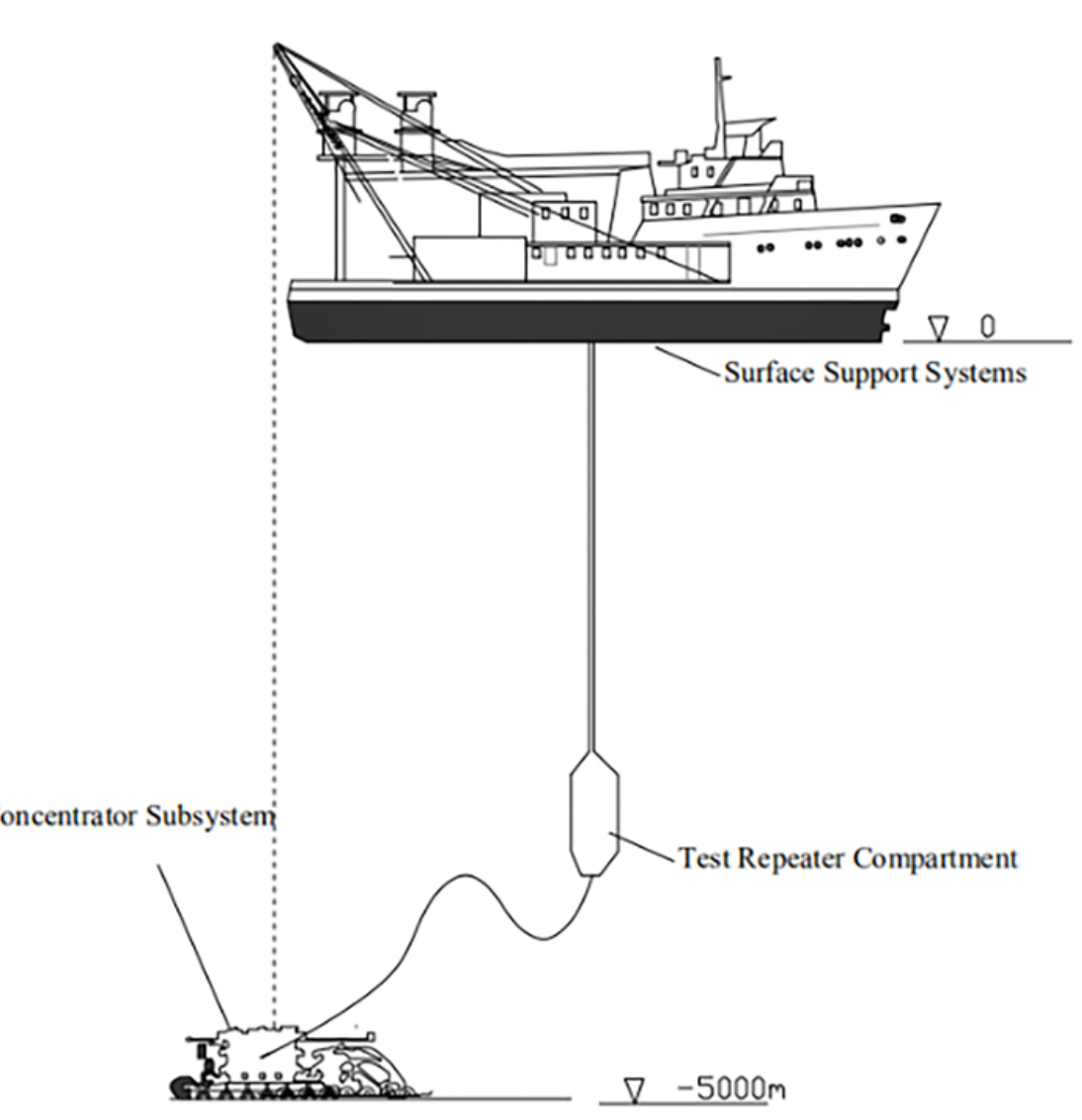
This paper explores the effectiveness of Model Predictive Control (MPC) for trajectory tracking in autonomous deep-sea tracked mining vehicles operating within polymetallic nodule mining environments, considering model uncertainties and external disturbances. Traditional applications of MPC in autonomous vehicle trajectory tracking, which typically rely on kinematic models under minimal external disturbance, often fail when faced with model inaccuracies and external disruptions. To address these challenges, we propose an MPC-based trajectory tracking algorithm that includes a speed correction controller for the drive wheel. This controller, developed through experimental data fitting, aims to mitigate issues such as vehicle body subsidence and track slippage. Tracking accuracy, particularly in curve navigation, is further enhanced through the use of Kalman Filtering (KF) and Adaptive Kalman Filtering (AKF) to counteract external disturbances. Moreover, we introduce an obstacle avoidance strategy utilizing a tri-circular arc trajectory with uniform curvature for path re-planning. This strategy effectively addresses dead zones and physical obstructions encountered during operation. The superiority of our approach compared to conventional Nonlinear MPC (NMPC) is demonstrated through extensive Simulink and Recurdyn co-simulations.
Graphical Abstract
Keywords
Funding
References
- Lesage, M., Juliani, C., & Ellefmo, S. L. (2018). Economic block model development for mining seafloor massive sulfides. Minerals, 8(10), 468.
[Google Scholar] - Volkmann, S. E., Kuhn, T., & Lehnen, F. (2018). A comprehensive approach for a techno-economic assessment of nodule mining in the deep sea. Mineral economics, 31, 319-336.
[Google Scholar] - Dai Y, Liu S. An integrated dynamic model of ocean mining system and fast simulation of its longitudinal reciprocating motion[J]. China Ocean Engineering, 2013, 27(2): 231-244.
[Google Scholar] - Dai Y, Liu S. Theoretical design and dynamic simulation of new mining paths of tracked miner on deep seafloor[J]. Journal of Central South University, 2013, 20(4): 918-923.
[Google Scholar] - Dai, Y., Liu, S., & Li, L.(2010). Dynamic analysis of the seafloor pilot miner based on single-body vehicle model and discretized track-terrain interaction model. China ocean engineering, 24(1), 145-160.
[Google Scholar] - Li, J., Liu, S., & Dai, Y. (2017). Effect of grouser height on tractive performance of tracked mining vehicle. Journal of the Brazilian Society of Mechanical Sciences and Engineering, 39, 2459-2466.
[Google Scholar] - Dai, Y., & Liu, S. J. (2013). Theoretical design and dynamic simulation of new mining paths of tracked miner on deep seafloor. Journal of Central South University, 20(4), 918-923.
[Google Scholar] - Li, L., Zheng, Z., & Chen, M. (2014) Point stabilization of seabed mining vehicle based on Lyapunov theory, Journal of Central South University, vol. 45, no. 08, pp. 2624-2628, 2014.
[Google Scholar] - Li, L., & Zou, Y. H. (2012). Tracking moving path of seabed mining vehicle based on theory of variable universe fuzzy control. Journal of Central South University, 43(02), 489-496.
[Google Scholar] - Gan, W., Zhu, D., Hu, Z., Shi, X., Yang, L., & Chen, Y. (2019). Model predictive adaptive constraint tracking control for underwater vehicles. IEEE Transactions on Industrial Electronics, 67(9), 7829-7840.
[Google Scholar] - Shen, C., Shi, Y., & Buckham, B. (2017). Trajectory tracking control of an autonomous underwater vehicle using Lyapunov-based model predictive control. IEEE Transactions on Industrial Electronics, 65(7), 5796-5805.
[Google Scholar] - Chen, Y., Xie, X., Zhang, T., Bai, J., & Hou, M. (2020). A deep residual compensation extreme learning machine and applications. Journal of Forecasting, 39(6), 986-999.
[Google Scholar] - Chen, Y., Yi, C., Xie, X., Hou, M., & Cheng, Y. (2020). Solution of ruin probability for continuous time model based on block trigonometric exponential neural network. Symmetry, 12(6), 876.
[Google Scholar] - Saback, R. M., Conceicao, A. G. S., Santos, T. L. M., Albiez, J., & Reis, M. (2019). Nonlinear model predictive control applied to an autonomous underwater vehicle. IEEE Journal of Oceanic Engineering, 45(3), 799-812.
[Google Scholar] - Zhang, B., Sun, X., Liu, S., & Deng, X. (2020). Adaptive model predictive control with extended state observer for multi-UAV formation flight. International Journal of Adaptive Control and Signal Processing, 34(10), 1341-1358.
[Google Scholar] - Song, X., Shao, Y., & Qu, Z. (2019). A vehicle trajectory tracking method with a time-varying model based on the model predictive control. IEEE Access, 8, 16573-16583.
[Google Scholar] - Wu, H., Si, Z., & Li, Z. (2020). Trajectory tracking control for four-wheel independent drive intelligent vehicle based on model predictive control. IEEE Access, 8, 73071-73081.
[Google Scholar] - Li, S., Li, Z., Yu, Z., Zhang, B., & Zhang, N. (2019). Dynamic trajectory planning and tracking for autonomous vehicle with obstacle avoidance based on model predictive control. IEEE Access, 7, 132074-132086.
[Google Scholar] - Al-Mayyahi, A., Aldair, A. A., & Rashid, A. T. (2020). Intelligent control of mobile robot via waypoints using nonlinear model predictive controller and quadratic bezier curves algorithm. Journal of Electrical Engineering & Technology, 15(4), 1857-1870.
[Google Scholar] - Kim, E., Kim, J., & Sunwoo, M. (2014). Model predictive control strategy for smooth path tracking of autonomous vehicles with steering actuator dynamics. International Journal of Automotive Technology, 15, 1155-1164.
[Google Scholar] - Britzelmeier, A., & Gerdts, M. (2020). A nonsmooth newton method for linear model-predictive control in tracking tasks for a mobile robot with obstacle avoidance. IEEE Control Systems Letters, 4(4), 886-891.
[Google Scholar] - Yao, Z., Zhao, B., Yuan, T., Jiang, H., & Jiang, Y. (2020). Reducing gasoline consumption in mixed connected automated vehicles environment: A joint optimization framework for traffic signals and vehicle trajectory. Journal of cleaner production, 265, 121836.
[Google Scholar] - Yang, X., Seethaler, R., Zhan, C., Lu, D., & Zhao, W. (2019). A model predictive contouring error precompensation method. IEEE Transactions on Industrial Electronics, 67(5), 4036-4045.
[Google Scholar] - Hide, C., Moore, T., & Smith, M. (2004, April). Adaptive Kalman filtering algorithms for integrating GPS and low cost INS. In Plans 2004. Position location and navigation symposium (ieee cat. no. 04ch37556) (pp. 227-233). IEEE.
[Google Scholar] - Bai, G., Liu, L., Meng, Y., Luo, W., Gu, Q., & Wang, J. (2019). Path tracking of wheeled mobile robots based on dynamic prediction model. IEEE Access, 7, 39690-39701.
[Google Scholar] - Bai, G., Meng, Y., Liu, L., Luo, W., Gu, Q., & Li, K. (2019). A new path tracking method based on multilayer model predictive control. Applied sciences, 9(13), 2649.
[Google Scholar] - Hang, P., Huang, S., Chen, X., & Tan, K. K. (2021). Path planning of collision avoidance for unmanned ground vehicles: A nonlinear model predictive control approach. Proceedings of the Institution of Mechanical Engineers, Part I: Journal of Systems and Control Engineering, 235(2), 222-236.
[Google Scholar] - Gia Luan, P., & Thinh, N. T. (2020). Real-time hybrid navigation system-based path planning and obstacle avoidance for mobile robots. Applied sciences, 10(10), 3355.
[Google Scholar] - C. Hong, Model Predictive control, Science Publishing House, Beijing, 2013.
[Google Scholar] - Yan, Z., Gong, P., Zhang, W., & Wu, W. (2020). Model predictive control of autonomous underwater vehicles for trajectory tracking with external disturbances. Ocean Engineering, 217, 107884.
[Google Scholar] - Howard, S., Ko, H. L., & Alexander, W. E. (1996, March). Parallel processing and stability analysis of the Kalman filter. In Conference Proceedings of the 1996 IEEE Fifteenth Annual International Phoenix Conference on Computers and Communications (pp. 366-372). IEEE.
[Google Scholar] - Oyelere, S. S. (2014). The application of model predictive control (MPC) to fast systems such as autonomous ground vehicles (AGV). IOSR Journal of Computer Engineering, 3(3), 27-37.
[Google Scholar] - Ephraim, Y., & Merhav, N. (2002). Hidden markov processes. IEEE Transactions on information theory, 48(6), 1518-1569.
[Google Scholar]
Cited By (2)
-
Yuheng Chen, Haicheng Zhang, Weisheng Zou, Hongyun Wu, Qiuhua Li. Learning-based obstacle avoidance strategy for ROV-based deep-sea mining vehicle.
Ocean Engineering, 2025 , 339 .
[CrossRef] -
Sujin Cai, Wei Tian, Taizhi Lv, Xiangchen Wang, Xin Li. Safeguarding Privacy in Real-Time Trajectory Releases for AI-Driven Consumer Applications.
IEEE Transactions on Consumer Electronics, 2025 , 71 (2).
[CrossRef]
Cite This Article
TY  - JOUR
AU  - Wu, Hongyun
AU  - Chen, Yuheng
AU  - Qin, Hongmao
PY  - 2024
DA  - 1970/01/01
TI  - Model Predictive Control for Enhanced Trajectory Tracking of Autonomous Deep-Sea Tracked Mining Vehicles
JO  - ICCK Transactions on Intelligent Unmanned Systems
T2  - ICCK Transactions on Intelligent Unmanned Systems
JF  - ICCK Transactions on Intelligent Unmanned Systems
VL  - 1
IS  - 1
SP  - 31
EP  - 43
DO  - 10.62762/TIUS.2024.557673
UR  - https://www.icck.org/article/abs/tius.2024.557673
KW  - Deep-sea tracked mining vehicle
KW  - Trajectory tracking
KW  - Model predictive control
KW  - Kalman filter
KW  - Path planning
AB  - This paper explores the effectiveness of Model Predictive Control (MPC) for trajectory tracking in autonomous deep-sea tracked mining vehicles operating within polymetallic nodule mining environments, considering model uncertainties and external disturbances. Traditional applications of MPC in autonomous vehicle trajectory tracking, which typically rely on kinematic models under minimal external disturbance, often fail when faced with model inaccuracies and external disruptions. To address these challenges, we propose an MPC-based trajectory tracking algorithm that includes a speed correction controller for the drive wheel. This controller, developed through experimental data fitting, aims to mitigate issues such as vehicle body subsidence and track slippage. Tracking accuracy, particularly in curve navigation, is further enhanced through the use of Kalman Filtering (KF) and Adaptive Kalman Filtering (AKF) to counteract external disturbances. Moreover, we introduce an obstacle avoidance strategy utilizing a tri-circular arc trajectory with uniform curvature for path re-planning. This strategy effectively addresses dead zones and physical obstructions encountered during operation. The superiority of our approach compared to conventional Nonlinear MPC (NMPC) is demonstrated through extensive Simulink and Recurdyn co-simulations.
SN  - pending
PB  - Institute of Central Computation and Knowledge
LA  - English
ER  -
@article{Wu2024Model,
  author = {Hongyun Wu and Yuheng Chen and Hongmao Qin},
  title = {Model Predictive Control for Enhanced Trajectory Tracking of Autonomous Deep-Sea Tracked Mining Vehicles},
  journal = {ICCK Transactions on Intelligent Unmanned Systems},
  year = {2024},
  volume = {1},
  number = {1},
  pages = {31-43},
  doi = {10.62762/TIUS.2024.557673},
  url = {https://www.icck.org/article/abs/tius.2024.557673},
  abstract = {This paper explores the effectiveness of Model Predictive Control (MPC) for trajectory tracking in autonomous deep-sea tracked mining vehicles operating within polymetallic nodule mining environments, considering model uncertainties and external disturbances. Traditional applications of MPC in autonomous vehicle trajectory tracking, which typically rely on kinematic models under minimal external disturbance, often fail when faced with model inaccuracies and external disruptions. To address these challenges, we propose an MPC-based trajectory tracking algorithm that includes a speed correction controller for the drive wheel. This controller, developed through experimental data fitting, aims to mitigate issues such as vehicle body subsidence and track slippage. Tracking accuracy, particularly in curve navigation, is further enhanced through the use of Kalman Filtering (KF) and Adaptive Kalman Filtering (AKF) to counteract external disturbances. Moreover, we introduce an obstacle avoidance strategy utilizing a tri-circular arc trajectory with uniform curvature for path re-planning. This strategy effectively addresses dead zones and physical obstructions encountered during operation. The superiority of our approach compared to conventional Nonlinear MPC (NMPC) is demonstrated through extensive Simulink and Recurdyn co-simulations.},
  keywords = {Deep-sea tracked mining vehicle, Trajectory tracking, Model predictive control, Kalman filter, Path planning},
  issn = {pending},
  publisher = {Institute of Central Computation and Knowledge}
}
Article Metrics
Publisher's Note
ICCK stays neutral with regard to jurisdictional claims in published maps and institutional affiliations.
Rights and Permissions


Portico