

A Review Analysis of Drug Delivery System Using Artificial Intelligence



Article Information
Abstract
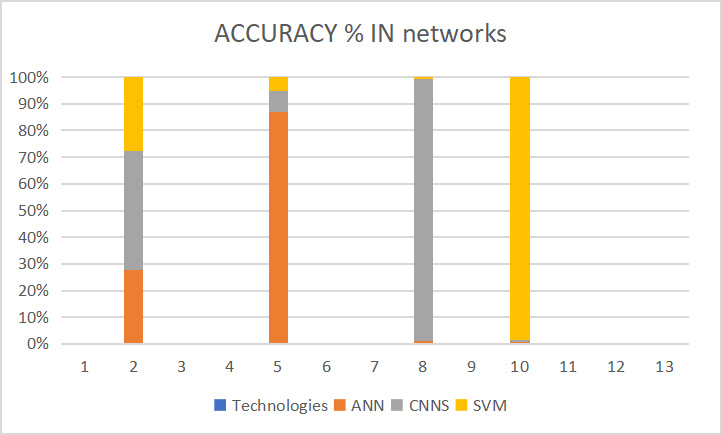
According to the President of the United Nations, AI holds enormous promise for accelerating progress towards numerous United Nations Sustainable Development Goals (SDGs). This paper focuses on various applications of technologies such as artificial neural networks (ANN) and deep learning (DL) in the development of pharmaceutical solid dosage forms. DL is a subset of machine learning (ML) that utilizes extensive experimental data to learn through advanced methods like artificial neural networks. ANNs can analyze patient data to generate customized drug delivery regimens based on genetic and medical histories. A range of AI technologies, including neural networks, fuzzy logic, and evolutionary algorithms, are employed for creating solid dosage formulations. Support vector machine (SVM), a unique machine learning approach, was applied to predict oral drug absorption in humans using descriptors derived from chemical structure. ANNs are capable of forecasting drug dissolution profiles, predicting particle flowability, anticipating storage stability, and designing stable dosage forms. The study evaluates the accuracy of ANN, CNN, and SVM in oral solid dosage forms, drug release prediction, virtual screening, and pharmacokinetics/pharmacodynamics in drug delivery systems.
Graphical Abstract
Keywords
Data Availability Statement
Funding
Conflicts of Interest
Ethical Approval and Consent to Participate
References
- Ezike, T. C., Okpala, U. S., Onoja, U. L., Nwike, C. P., Ezeako, E. C., Okpara, O. J., ... & Nwanguma, B. C. (2023). Advances in drug delivery systems, challenges and future directions. Heliyon, 9(6).
[CrossRef] [Google Scholar] - Salahshoori, I., Golriz, M., Nobre, M. A., Mahdavi, S., Malekshah, R. E., Javdani-Mallak, A., ... & Kargaran, F. (2024). Simulation-based approaches for drug delivery systems: Navigating advancements, opportunities, and challenges. Journal of Molecular Liquids, 395, 123888.
[CrossRef] [Google Scholar] - Hassanzadeh, P., Atyabi, F., & Dinarvand, R. (2019). The significance of artificial intelligence in drug delivery system design. Advanced drug delivery reviews, 151, 169-190.
[CrossRef] [Google Scholar] - Vora, L. K., Gholap, A. D., Jetha, K., Thakur, R. R. S., Solanki, H. K., & Chavda, V. P. (2023). Artificial intelligence in pharmaceutical technology and drug delivery design. Pharmaceutics, 15(7), 1916.
[CrossRef] [Google Scholar] - Yu, H., Yang, Z., Li, F., Xu, L., & Sun, Y. (2020). Cell-mediated targeting drugs delivery systems. Drug Delivery, 27(1), 1425-1437.
[CrossRef] [Google Scholar] - Saha, A., Khanna, A., Nair, A., Butola, B. S., Sharma, N., & Sharma, N. (2025). Precision Beyond Pills: The Era of Implantable Microchips in Controlled Drug Delivery. Journal of Biomedical Materials Research Part B: Applied Biomaterials, 113(9), e35645.
[CrossRef] [Google Scholar] - Hedaya, M. A. (2024). Routes of drug administration. In Pharmaceutics (pp. 537-554). Academic Press.
[CrossRef] [Google Scholar] - Asha, Goyal, P., Pooja, & Dabas, R. (2025). Fundamentals of Pharmacokinetics and Drug Delivery. In Next-Generation Drug Delivery Systems (pp. 29-52). New York, NY: Springer US.
[CrossRef] [Google Scholar] - Rajendran, R., & Kalidasan, A. (2021). Convergence of AI, ML, and DL for Enabling Smart Intelligence: Artificial Intelligence, Machine Learning, Deep Learning, Internet of Things. In Challenges and Opportunities for the Convergence of IoT, Big Data, and Cloud Computing (pp. 180-195). IGI Global Scientific Publishing.
[CrossRef] [Google Scholar] - John, M. M., Olsson, H. H., & Bosch, J. (2020, June). Developing ml/dl models: A design framework. In Proceedings of the International Conference on Software and System Processes (pp. 1-10).
[CrossRef] [Google Scholar] - Dongare, A. D., Kharde, R. R., & Kachare, A. D. (2012). Introduction to artificial neural network. International Journal of Engineering and Innovative Technology (IJEIT), 2(1), 189-194.
[Google Scholar] - O'shea, K., & Nash, R. (2015). An introduction to convolutional neural networks. arXiv preprint arXiv:1511.08458.
[Google Scholar] - Colombo, S. (2020). Applications of artificial intelligence in drug delivery and pharmaceutical development. In Artificial intelligence in healthcare (pp. 85-116). Academic Press.
[CrossRef] [Google Scholar] - Li, Q., Li, X., & Zhao, C. (2020). Strategies to obtain encapsulation and controlled release of small hydrophilic molecules. Frontiers in bioengineering and biotechnology, 8, 437.
[CrossRef] [Google Scholar] - Schork, N. J. (2019). Artificial intelligence and personalized medicine. In Precision medicine in Cancer therapy (pp. 265-283). Cham: Springer International Publishing.
[CrossRef] [Google Scholar] - Asediya, V., Anjaria, P., Dhial, K., & Pathak, A. (2025). Artificial Intelligence and Machine Learning in Drug Delivery Optimization. In Next-Generation Drug Delivery Systems (pp. 499-521). New York, NY: Springer US.
[CrossRef] [Google Scholar] - Dong, J., Gao, H., & Ouyang, D. (2021). PharmSD: A novel AI-based computational platform for solid dispersion formulation design. International Journal of Pharmaceutics, 604, 120705.
[CrossRef] [Google Scholar] - Han, R., Xiong, H., Ye, Z., Yang, Y., Huang, T., Jing, Q., ... & Ouyang, D. (2019). Predicting physical stability of solid dispersions by machine learning techniques. Journal of Controlled Release, 311, 16-25.
[CrossRef] [Google Scholar] - Yang, Q., Liu, Y., Cheng, J., Li, Y., Liu, S., Duan, Y., ... & Luo, S. (2022). An Ensemble Structure and Physicochemical (SPOC) Descriptor for Machine‐Learning Prediction of Chemical Reaction and Molecular Properties. ChemPhysChem, 23(14), e202200255.
[CrossRef] [Google Scholar] - Mahdi, W. A., Alhowyan, A., & Obaidullah, A. J. (2025). Combination of machine learning and Raman spectroscopy for prediction of drug release in targeted drug delivery formulations. Scientific Reports, 15(1), 25139.
[CrossRef] [Google Scholar] - Goh, W. Y., Lim, C. P., Peh, K. K., & Subari, K. (2002). Application of a recurrent neural network to prediction of drug dissolution profiles. Neural Computing & Applications, 10(4), 311-317.
[CrossRef] [Google Scholar] - Navya, K., Kamaraj, R., & Bharathi, M. (2022). The trending role of artificial intelligence and its applications in formulation of solid dosage forms: a review. ECS Transactions, 107(1), 20049.
[CrossRef] [Google Scholar] - Ghourichay, M. P., Kiaie, S. H., Nokhodchi, A., & Javadzadeh, Y. (2021). Formulation and quality control of orally disintegrating tablets (ODTs): recent advances and perspectives. BioMed Research International, 2021(1), 6618934.
[CrossRef] [Google Scholar] - Ma, X., Kittikunakorn, N., Sorman, B., Xi, H., Chen, A., Marsh, M., ... & Skomski, D. (2020). Application of deep learning convolutional neural networks for internal tablet defect detection: high accuracy, throughput, and adaptability. Journal of Pharmaceutical Sciences, 109(4), 1547-1557.
[CrossRef] [Google Scholar] - Galata, D. L., Könyves, Z., Nagy, B., Novák, M., Mészáros, L. A., Szabó, E., ... & Nagy, Z. K. (2021). Real-time release testing of dissolution based on surrogate models developed by machine learning algorithms using NIR spectra, compression force and particle size distribution as input data. International journal of pharmaceutics, 597, 120338.
[CrossRef] [Google Scholar] - He, Y., Ye, Z., Liu, X., Wei, Z., Qiu, F., Li, H. F., ... & Ouyang, D. (2020). Can machine learning predict drug nanocrystals?. Journal of Controlled Release, 322, 274-285.
[CrossRef] [Google Scholar] - Stokes, J. M., Yang, K., Swanson, K., Jin, W., Cubillos-Ruiz, A., Donghia, N. M., ... & Collins, J. J. (2020). A deep learning approach to antibiotic discovery. Cell, 180(4), 688-702.
[CrossRef] [Google Scholar] - Petrović, J., Ibrić, S., Betz, G., & Đurić, Z. (2012). Optimization of matrix tablets controlled drug release using Elman dynamic neural networks and decision trees. International journal of pharmaceutics, 428(1-2), 57-67.
[CrossRef] [Google Scholar] - Gu, J., Wang, Z., Kuen, J., Ma, L., Shahroudy, A., Shuai, B., ... & Chen, T. (2018). Recent advances in convolutional neural networks. Pattern recognition, 77, 354-377.
[CrossRef] [Google Scholar] - Han, R., Yang, Y., Li, X., & Ouyang, D. (2018). Predicting oral disintegrating tablet formulations by neural network techniques. Asian journal of pharmaceutical sciences, 13(4), 336-342.
[CrossRef] [Google Scholar] - Vapnik, V. (2013). The nature of statistical learning theory. Springer science & business media.
[Google Scholar] - Rumelhart, D. E., Hinton, G. E., & Williams, R. J. (1986). Learning representations by back-propagating errors. nature, 323(6088), 533-536.
[CrossRef] [Google Scholar] - LeCun, Y., Bengio, Y., & Hinton, G. (2015). Deep learning. nature, 521(7553), 436-444.
[CrossRef] [Google Scholar] - Tayarani, A., Baratian, A., Sistani, M. B. N., Saberi, M. R., & Tehranizadeh, Z. (2013). Artificial neural networks analysis used to evaluate the molecular interactions between selected drugs and human cyclooxygenase2 receptor. Iranian journal of basic medical sciences, 16(11), 1196.
[CrossRef] [Google Scholar] - Winters-Hilt, S., & Merat, S. (2007). SVM clustering. BMC bioinformatics, 8(Suppl 7), S18.
[CrossRef] [Google Scholar] - Chavda, V. P., Ertas, Y. N., Walhekar, V., Modh, D., Doshi, A., Shah, N., ... & Chhabria, M. (2021). Advanced computational methodologies used in the discovery of new natural anticancer compounds. Frontiers in Pharmacology, 12, 702611.
[CrossRef] [Google Scholar] - Yamamura, S. (2003). Clinical application of artificial neural network (ANN) modeling to predict pharmacokinetic parameters of severely ill patients. Advanced Drug Delivery Reviews, 55(9), 1233-1251.
[CrossRef] [Google Scholar] - Bhattamisra, S. K., Banerjee, P., Gupta, P., Mayuren, J., Patra, S., & Candasamy, M. (2023). Artificial intelligence in pharmaceutical and healthcare research. Big Data and Cognitive Computing, 7(1), 10.
[CrossRef] [Google Scholar] - Daoui, O., Elkhattabi, S., Chtita, S., Elkhalabi, R., Zgou, H., & Benjelloun, A. T. (2021). QSAR, molecular docking and ADMET properties in silico studies of novel 4, 5, 6, 7-tetrahydrobenzo [D]-thiazol-2-Yl derivatives derived from dimedone as potent anti-tumor agents through inhibition of C-Met receptor tyrosine kinase. Heliyon, 7(7).
[CrossRef] [Google Scholar] - Sun, Y., Peng, Y., Chen, Y., & Shukla, A. J. (2003). Application of artificial neural networks in the design of controlled release drug delivery systems. Advanced drug delivery reviews, 55(9), 1201-1215.
[CrossRef] [Google Scholar] - Mukhamediev, R. I., Popova, Y., Kuchin, Y., Zaitseva, E., Kalimoldayev, A., Symagulov, A., ... & Yelis, M. (2022). Review of artificial intelligence and machine learning technologies: classification, restrictions, opportunities and challenges. Mathematics, 10(15), 2552.
[CrossRef] [Google Scholar]
Cite This Article
TY  - JOUR
AU  - Singh, Ankita
AU  - Nishad, Raghvendra
AU  - joshi, Kapil
PY  - 2025
DA  - 2025/09/24
TI  - A Review Analysis of Drug Delivery System Using Artificial Intelligence
JO  - Biomedical Informatics and Smart Healthcare
T2  - Biomedical Informatics and Smart Healthcare
JF  - Biomedical Informatics and Smart Healthcare
VL  - 1
IS  - 2
SP  - 52
EP  - 66
DO  - 10.62762/BISH.2025.806902
UR  - https://www.icck.org/article/abs/BISH.2025.806902
KW  - artificial intelligence
KW  - drug delivery systems
KW  - machine learning
KW  - pharmaceutical formulation
AB  - According to the President of the United Nations, AI holds enormous promise for accelerating progress towards numerous United Nations Sustainable Development Goals (SDGs). This paper focuses on various applications of technologies such as artificial neural networks (ANN) and deep learning (DL) in the development of pharmaceutical solid dosage forms. DL is a subset of machine learning (ML) that utilizes extensive experimental data to learn through advanced methods like artificial neural networks. ANNs can analyze patient data to generate customized drug delivery regimens based on genetic and medical histories. A range of AI technologies, including neural networks, fuzzy logic, and evolutionary algorithms, are employed for creating solid dosage formulations. Support vector machine (SVM), a unique machine learning approach, was applied to predict oral drug absorption in humans using descriptors derived from chemical structure. ANNs are capable of forecasting drug dissolution profiles, predicting particle flowability, anticipating storage stability, and designing stable dosage forms. The study evaluates the accuracy of ANN, CNN, and SVM in oral solid dosage forms, drug release prediction, virtual screening, and pharmacokinetics/pharmacodynamics in drug delivery systems.
SN  - 3068-5524
PB  - Institute of Central Computation and Knowledge
LA  - English
ER  -
@article{Singh2025A,
  author = {Ankita Singh and Raghvendra Nishad and Kapil joshi},
  title = {A Review Analysis of Drug Delivery System Using Artificial Intelligence},
  journal = {Biomedical Informatics and Smart Healthcare},
  year = {2025},
  volume = {1},
  number = {2},
  pages = {52-66},
  doi = {10.62762/BISH.2025.806902},
  url = {https://www.icck.org/article/abs/BISH.2025.806902},
  abstract = {According to the President of the United Nations, AI holds enormous promise for accelerating progress towards numerous United Nations Sustainable Development Goals (SDGs). This paper focuses on various applications of technologies such as artificial neural networks (ANN) and deep learning (DL) in the development of pharmaceutical solid dosage forms. DL is a subset of machine learning (ML) that utilizes extensive experimental data to learn through advanced methods like artificial neural networks. ANNs can analyze patient data to generate customized drug delivery regimens based on genetic and medical histories. A range of AI technologies, including neural networks, fuzzy logic, and evolutionary algorithms, are employed for creating solid dosage formulations. Support vector machine (SVM), a unique machine learning approach, was applied to predict oral drug absorption in humans using descriptors derived from chemical structure. ANNs are capable of forecasting drug dissolution profiles, predicting particle flowability, anticipating storage stability, and designing stable dosage forms. The study evaluates the accuracy of ANN, CNN, and SVM in oral solid dosage forms, drug release prediction, virtual screening, and pharmacokinetics/pharmacodynamics in drug delivery systems.},
  keywords = {artificial intelligence, drug delivery systems, machine learning, pharmaceutical formulation},
  issn = {3068-5524},
  publisher = {Institute of Central Computation and Knowledge}
}
Publisher's Note
ICCK stays neutral with regard to jurisdictional claims in published maps and institutional affiliations.
Rights and Permissions
 Copyright © 2025 by the Author(s). Published by Institute of Central Computation and Knowledge. This article is an open access article distributed under the terms and conditions of the Creative Commons Attribution (CC BY) license (https://creativecommons.org/licenses/by/4.0/), which permits use, sharing, adaptation, distribution and reproduction in any medium or format, as long as you give appropriate credit to the original author(s) and the source, provide a link to the Creative Commons licence, and indicate if changes were made.


Portico
