


Intracellular Water Dynamic Traits in Detached Leaves of Two Brassicaceae Plant Species under Saturated and Non-saturated Water Conditions



Article Information
Abstract
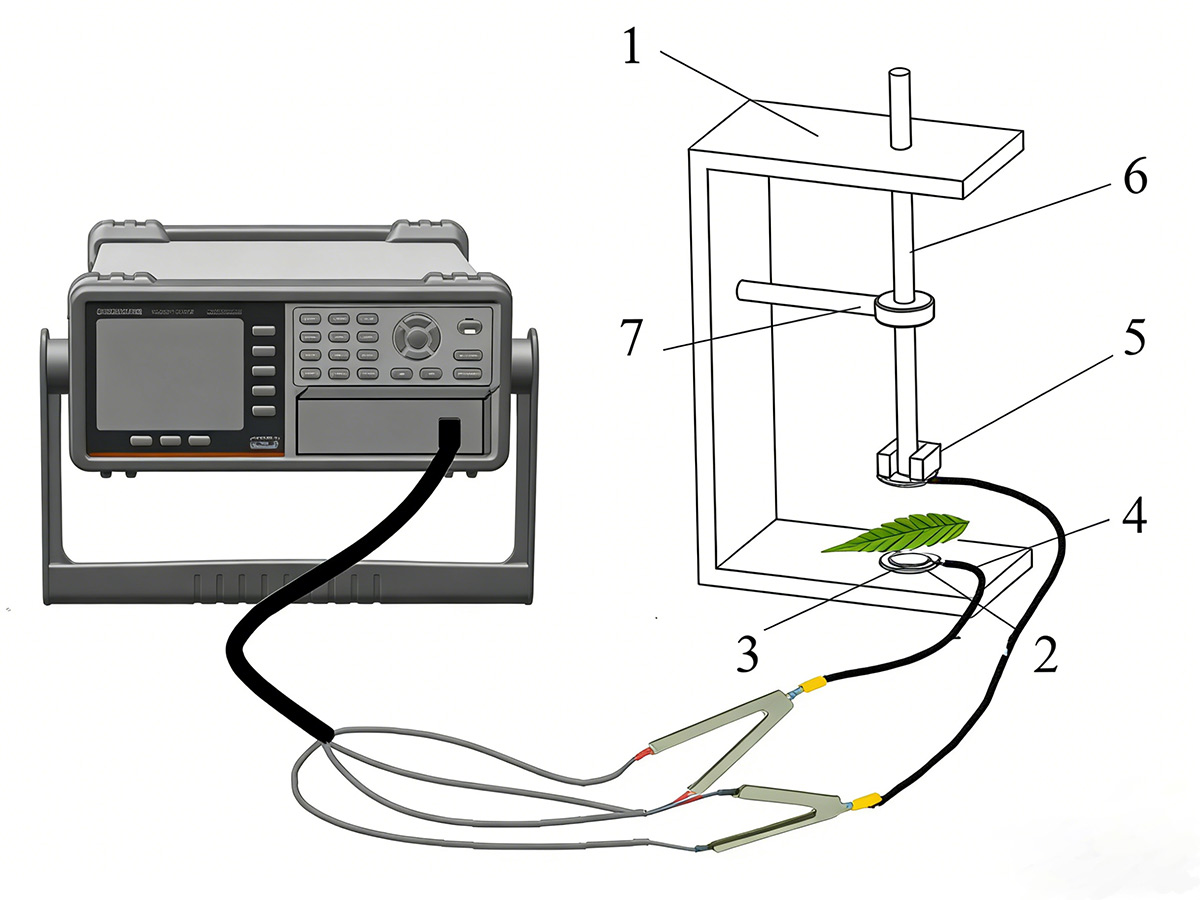
Investigating the intracellular water dynamics within leaves will clarify plant responses to different water conditions and provide a theoretical basis for enhancing water-use efficiency. Detached leaves of Chinese flowering cabbage (Brassica campestris L. ssp. chinensis var. utilis Tsen et Lee) and broccoli (Brassica oleracea L. var. italica Plenck) were used as experimental materials in this study. Electrophysiological parameters of the leaves under saturated and non-saturated conditions were measured, and the intracellular water, nutrient, and energy related indices were calculated according to Nernst equation. The acceleration (a) reflecting the change rate of water transport rate in cells was defined and calculated, and the response characteristics of the two plant species to water were analyzed. The results showed that leaf intracellular metabolic activities of the two plant species were better in the saturated condition than those in non-saturated condition, and electrophysiological parameters could reflect the intrinsic characteristics and potential of the plants. Under saturated water condition, the intracellular water transport rate, electrophysiological ion transport efficiency and low nutrient tolerance of B. campestris were significantly higher than those of B. oleracea, and B. campestris showed high cell metabolic energy and metabolic activity. From non-saturated to saturated condition, the intracellular water transport rate of B. campestris changed rapidly, but the increase rate of intracellular water holding capacity was low, while that of B. oleracea was just the opposite. Therefore, B. campestris exhibited higher water sensitivity compared to B. oleracea.
Graphical Abstract
Keywords
Data Availability Statement
Funding
Conflicts of Interest
AI Use Statement
Ethical Approval and Consent to Participate
References
- Zhang, H., Cun, Y., Wang, J., Wu, M., Li, X., Liang, Q., ... & Deng, J. (2022). Acetylsalicylic acid and salicylic acid alleviate postharvest leaf senescence in Chinese flowering cabbage (Brassica rapa var. parachinensis). Postharvest Biology and Technology, 194, 112070.
[CrossRef] [Google Scholar] - Akter, A., Akhter, S., & Hossain, M. M. (2025). Water stresses alter the growth, yield and quality of broccoli (Brassica Oleracea var. italica). Scientific Reports, 15(1), 40107.
[CrossRef] [Google Scholar] - Lin, Y., Liu, S., Fang, X., Ren, Y., You, Z., Xia, J., ... & Shangguan, L. (2023). The physiology of drought stress in two grapevine cultivars: Photosynthesis, antioxidant system, and osmotic regulation responses. Physiologia Plantarum, 175(5), e14005.
[CrossRef] [Google Scholar] - Biswas, D., Gjetvaj, B., St. Luce, M., Liu, K., & Asgedom, H. (2023). Effects of soil water and nitrogen on drought resilience, growth, yield, and grain quality of a spring wheat. Canadian Journal of Plant Science, 103(4), 401-410.
[CrossRef] [Google Scholar] - Hilário, S., Pinto, G., Monteiro, P., Santos, L., & Alves, A. (2023). The impact of two Diaporthe species on Vaccinium corymbosum physiological performance under different water availability scenarios. European Journal of Plant Pathology, 166(2), 161-177.
[CrossRef] [Google Scholar] - Duan, H., Shao, C., Luo, X., Resco de Dios, V., Tissue, D. T., & Ding, G. (2023). Root relative water content is a potential signal for impending mortality of a subtropical conifer during extreme drought stress. Plant, Cell & Environment, 46(9), 2763-2777.
[CrossRef] [Google Scholar] - Pereira, T. S., Oliveira, L. A., Andrade, M. T., Haverroth, E. J., Cardoso, A. A., & Martins, S. C. (2024). Linking water‐use strategies with drought resistance across herbaceous crops. Physiologia Plantarum, 176(1), e14114.
[CrossRef] [Google Scholar] - Qin, J., Si, J., Jia, B., Zhao, C., Zhou, D., He, X., ... & Zhu, X. (2023). Water use strategies of Nitraria tangutorum in the lake-basin region of the Badain Jaran Desert. Frontiers in Plant Science, 14, 1240656.
[CrossRef] [Google Scholar] - Xing, D., Mao, R., Li, Z., Wu, Y., Qin, X., & Fu, W. (2022). Leaf intracellular water transport rate based on physiological impedance: A possible role of leaf internal retained water in photosynthesis and growth of tomatoes. Frontiers in Plant Science, 13, 845628.
[CrossRef] [Google Scholar] - Ahmed, S., Kouser, S., Asgher, M., & Gandhi, S. G. (2021). Plant aquaporins: A frontward to make crop plants drought resistant. Physiologia Plantarum, 172(2), 1089–1105.
[CrossRef] [Google Scholar] - Kou, J., Yan, D., Qin, B., Zhou, Q., Liu, C., & Zhang, L. (2023). Physiological response mechanism of European birch (Betula pendula Roth) to PEG-induced drought stress and hydration. Frontiers in Plant Science, 14, 1226456.
[CrossRef] [Google Scholar] - Lai, Z., Zhang, K., Liao, Z., Kou, H., Pei, S., Dou, Z., ... & Fan, J. (2023). Stem hydraulic conductance, leaf photosynthesis, and carbon metabolism responses of cotton to short-term drought and rewatering. Agronomy, 14(1), 71.
[CrossRef] [Google Scholar] - Zhang, X. M., Duan, S. G., Xia, Y., Li, J. T., Liu, L. X., Tang, M., ... & Yi, Y. (2023). Transcriptomic, physiological, and metabolomic response of an alpine plant, Rhododendron delavayi, to waterlogging stress and post-waterlogging recovery. International Journal of Molecular Sciences, 24(13), 10509.
[CrossRef] [Google Scholar] - Beegum, S., Truong, V., Bheemanahalli, R., Brand, D., Reddy, V., & Reddy, K. R. (2023). Developing functional relationships between waterlogging and cotton growth and physiology-towards waterlogging modeling. Frontiers in Plant Science, 14, 1174682.
[CrossRef] [Google Scholar] - Qu, Z., Qi, X., Liu, Y., Liu, K., & Li, C. (2020). Interactive effect of irrigation and polymer-coated potassium chloride on tomato production in a greenhouse. Agricultural Water Management, 235, 106149.
[CrossRef] [Google Scholar] - Li, S., Yang, L., Huang, X., Zou, Z., Zhang, M., Guo, W., ... & Zhou, L. (2023). Mineral nutrient uptake, accumulation, and distribution in Cunninghamia lanceolata in response to drought stress. Plants, 12(11), 2140.
[CrossRef] [Google Scholar] - Song, H., Miao, Z., Jiang, G., Zhang, Y., Lu, F., Deng, F., ... & Zhao, F. (2022). Relationships between the water uptake and nutrient status of rubber trees in a monoculture rubber plantation. Agronomy, 12(9), 1999.
[CrossRef] [Google Scholar] - Zhang, F., Zhao, Y., Zhang, Y., Shi, Y., Hou, L., Khan, A., ... & Zhang, Y. (2024). Mechanism of exogenous silicon in enhancing cold stress tolerance in Solanum lycopersicum L. seedlings: insights from resistance and quality indicators. Horticulturae, 11(1), 4.
[CrossRef] [Google Scholar] - Shaaban, A., Mahfouz, H., Megawer, E. A., & Saudy, H. S. (2023). Physiological changes and nutritional value of forage clitoria grown in arid agro-ecosystem as influenced by plant density and water deficit. Journal of Soil Science and Plant Nutrition, 23(3), 3735-3750.
[CrossRef] [Google Scholar] - Bagheri, H., Hashemabadi, D., Eslam, B. P., & Sedaghathoor, S. (2023). Effects of zinc-nano oxide, salicylic acid and sodium nitroprusside on physiological properties, antioxidant enzyme activities and secondary metabolites of Viola odorata under drought stress. Acta Scientiarum Polonorum Hortorum Cultus, 22(6), 29–41.
[CrossRef] [Google Scholar] - Tikhomirova, T. S., Krutovsky, K. V., & Shestibratov, K. A. (2023). Molecular traits for adaptation to drought and salt stress in birch, oak and poplar species. Forests, 14(1), 7.
[CrossRef] [Google Scholar] - Ahl, L. I., Mravec, J., Jørgensen, B., Rudall, P. J., Rønsted, N., & Grace, O. M. (2019). Dynamics of intracellular mannan and cell wall folding in the drought responses of succulent Aloe species. Plant, cell & environment, 42(8), 2458-2471.
[CrossRef] [Google Scholar] - Polishchuk, O. V. (2021). Stress-related changes in the expression and activity of plant carbonic anhydrases. Planta, 253(2), 58.
[CrossRef] [Google Scholar] - Cao, S., Yang, F., Zhang, H., Wang, Q., Xu, G., Zhu, B., & Wu, C. (2023). Physiological and transcriptome profiling analyses reveal important roles of Streptomyces rochei D74 in improving drought tolerance of Puccinellia distans (Jacq.) Parl. Environmental and Experimental Botany, 207, 105204.
[CrossRef] [Google Scholar] - Vogler, H., Burri, J. T., Nelson, B. J., & Grossniklaus, U. (2020). Simultaneous measurement of turgor pressure and cell wall elasticity in growing pollen tubes. In Methods in cell biology (Vol. 160, pp. 297-310). Academic Press.
[CrossRef] [Google Scholar] - Rahman, A., Kawamura, Y., Maeshima, M., Rahman, A., & Uemura, M. (2020). Plasma membrane aquaporin members PIPs act in concert to regulate cold acclimation and freezing tolerance responses in Arabidopsis thaliana. Plant and Cell Physiology, 61(4), 787–802.
[CrossRef] [Google Scholar] - Kapilan, R., Vaziri, M., & Zwiazek, J. J. (2018). Regulation of aquaporins in plants under stress. Biological Research, 51(1), 4.
[CrossRef] [Google Scholar] - Fromm, J., & Lautner, S. (2007). Electrical signals and their physiological significance in plants. Plant, Cell & Environment, 30(3), 249–257.
[CrossRef] [Google Scholar] - Zhang, C., Wu, Y., Su, Y., Xing, D., Dai, Y., Wu, Y., & Fang, L. (2020). A plant’s electrical parameters indicate its physiological state: A study of intracellular water metabolism. Plants, 9(10), 1256.
[CrossRef] [Google Scholar] - Zhang, C., Su, Y., Wu, Y., Li, H., Zhou, Y., & Xing, D. (2021). Comparison on the nutrient plunder capacity of Orychophragmus violaceus and Brassica napus L. based on electrophysiological information. Horticulturae, 7(8), 206.
[CrossRef] [Google Scholar] - Zhao, X., Wu, Y., Xing, D., Li, H., & Zhang, F. (2023). Water metabolism of Lonicera japonica and Parthenocissus quinquefolia in response to heterogeneous simulated rock outcrop habitats. Plants, 12(12), 2279.
[CrossRef] [Google Scholar] - Xing, D., Wang, W., Wu, Y., Qin, X., Li, M., Chen, X., & Yu, R. (2022). Translocation and Utilization Mechanisms of Leaf Intracellular Water in Karst Plants Orychophragmus violaceus (L.) OE Schulz and Brassica napus L. Horticulturae, 8(11), 1082.
[CrossRef] [Google Scholar] - Najdenovska, E., Dutoit, F., Tran, D., Plummer, C., Wallbridge, N., Camps, C., & Raileanu, L. E. (2021). Classification of plant electrophysiology signals for detection of spider mites infestation in tomatoes. Applied Sciences, 11(4), 1414.
[CrossRef] [Google Scholar] - Zhang, C., Wu, Y., Su, Y., Li, H., Fang, L., & Xing, D. (2021). Plant’s electrophysiological information manifests the composition and nutrient transport characteristics of membrane proteins. Plant signaling & behavior, 16(7), 1918867.
[CrossRef] [Google Scholar] - Li, H., Lv, J., Su, Y., & Wu, Y. (2023). Appropriate sodium bicarbonate concentration enhances the intracellular water metabolism, nutrient transport and photosynthesis capacities of Coix lacryma-jobi L. Agronomy, 13(7), 1790.
[CrossRef] [Google Scholar] - Chen, T., Wu, Y., Xing, D., & Duan, R. (2022). Effects of NaHSO3 on Cellular Metabolic Energy, Photosynthesis and Growth of Iris pseudacorus L. Horticulturae, 8(2), 185.
[CrossRef] [Google Scholar] - Ríos-Rojas, L., Tapia, F., & Gurovich, L. A. (2014). Electrophysiological assessment of water stress in fruit-bearing woody plants. Journal of plant physiology, 171(10), 799-806.
[CrossRef] [Google Scholar] - Li, J., Zhao, X., Nishimura, Y., & Fukumoto, Y. (2010). Correlation between bolting and physiological properties in Chinese cabbage (Brassica rapa L. pekinensis group). Journal of the Japanese Society for Horticultural Science, 79(3), 294-300.
[CrossRef] [Google Scholar] - Jang, Y., Kim, J., Lee, J., Lee, S., Jung, H., & Park, G. H. (2024). Drought tolerance evaluation and growth response of Chinese cabbage seedlings to water deficit treatment. Agronomy, 14(2), 279.
[CrossRef] [Google Scholar] - Zhu, J., Cai, D., Wang, J., Cao, J., Wen, Y., He, J., ... & Zhang, S. (2021). Physiological and anatomical changes in two rapeseed (Brassica napus L.) genotypes under drought stress conditions. Oil Crop Science, 6(2), 97-104.
[CrossRef] [Google Scholar]
Cite This Article
TY  - JOUR
AU  - Gong, Yuxuan
AU  - Xing, Deke
AU  - Wu, Linpu
AU  - Chen, Huiwen
AU  - Li, Junle
AU  - Zhang, Qian
PY  - 2026
DA  - 2026/03/30
TI  - Intracellular Water Dynamic Traits in Detached Leaves of Two Brassicaceae Plant Species under Saturated and Non-saturated Water Conditions
JO  - Journal of Plant Electrobiology
T2  - Journal of Plant Electrobiology
JF  - Journal of Plant Electrobiology
VL  - 1
IS  - 1
SP  - 42
EP  - 57
DO  - 10.62762/JPE.2025.989558
UR  - https://www.icck.org/article/abs/JPE.2025.989558
KW  - intracellular water
KW  - electrophysiological ion transport efficiency
KW  - cell metabolic energy
KW  - cell metabolic activity
KW  - acceleration
AB  - Investigating the intracellular water dynamics within leaves will clarify plant responses to different water conditions and provide a theoretical basis for enhancing water-use efficiency. Detached leaves of Chinese flowering cabbage (Brassica campestris L. ssp. chinensis var. utilis Tsen et Lee) and broccoli (Brassica oleracea L. var. italica Plenck) were used as experimental materials in this study. Electrophysiological parameters of the leaves under saturated and non-saturated conditions were measured, and the intracellular water, nutrient, and energy related indices were calculated according to Nernst equation. The acceleration (a) reflecting the change rate of water transport rate in cells was defined and calculated, and the response characteristics of the two plant species to water were analyzed. The results showed that leaf intracellular metabolic activities of the two plant species were better in the saturated condition than those in non-saturated condition, and electrophysiological parameters could reflect the intrinsic characteristics and potential of the plants. Under saturated water condition, the intracellular water transport rate, electrophysiological ion transport efficiency and low nutrient tolerance of B. campestris were significantly higher than those of B. oleracea, and B. campestris showed high cell metabolic energy and metabolic activity. From non-saturated to saturated condition, the intracellular water transport rate of B. campestris changed rapidly, but the increase rate of intracellular water holding capacity was low, while that of B. oleracea was just the opposite. Therefore, B. campestris exhibited higher water sensitivity compared to B. oleracea.
SN  - 3071-6268
PB  - Institute of Central Computation and Knowledge
LA  - English
ER  -
@article{Gong2026Intracellu,
  author = {Yuxuan Gong and Deke Xing and Linpu Wu and Huiwen Chen and Junle Li and Qian Zhang},
  title = {Intracellular Water Dynamic Traits in Detached Leaves of Two Brassicaceae Plant Species under Saturated and Non-saturated Water Conditions},
  journal = {Journal of Plant Electrobiology},
  year = {2026},
  volume = {1},
  number = {1},
  pages = {42-57},
  doi = {10.62762/JPE.2025.989558},
  url = {https://www.icck.org/article/abs/JPE.2025.989558},
  abstract = {Investigating the intracellular water dynamics within leaves will clarify plant responses to different water conditions and provide a theoretical basis for enhancing water-use efficiency. Detached leaves of Chinese flowering cabbage (Brassica campestris L. ssp. chinensis var. utilis Tsen et Lee) and broccoli (Brassica oleracea L. var. italica Plenck) were used as experimental materials in this study. Electrophysiological parameters of the leaves under saturated and non-saturated conditions were measured, and the intracellular water, nutrient, and energy related indices were calculated according to Nernst equation. The acceleration (a) reflecting the change rate of water transport rate in cells was defined and calculated, and the response characteristics of the two plant species to water were analyzed. The results showed that leaf intracellular metabolic activities of the two plant species were better in the saturated condition than those in non-saturated condition, and electrophysiological parameters could reflect the intrinsic characteristics and potential of the plants. Under saturated water condition, the intracellular water transport rate, electrophysiological ion transport efficiency and low nutrient tolerance of B. campestris were significantly higher than those of B. oleracea, and B. campestris showed high cell metabolic energy and metabolic activity. From non-saturated to saturated condition, the intracellular water transport rate of B. campestris changed rapidly, but the increase rate of intracellular water holding capacity was low, while that of B. oleracea was just the opposite. Therefore, B. campestris exhibited higher water sensitivity compared to B. oleracea.},
  keywords = {intracellular water, electrophysiological ion transport efficiency, cell metabolic energy, cell metabolic activity, acceleration},
  issn = {3071-6268},
  publisher = {Institute of Central Computation and Knowledge}
}
Article Metrics
Publisher's Note
ICCK stays neutral with regard to jurisdictional claims in published maps and institutional affiliations.
Rights and Permissions

