


Electrobiological Signatures as Early Indicators of Plant Stress and Adaptation


Article Information
Abstract
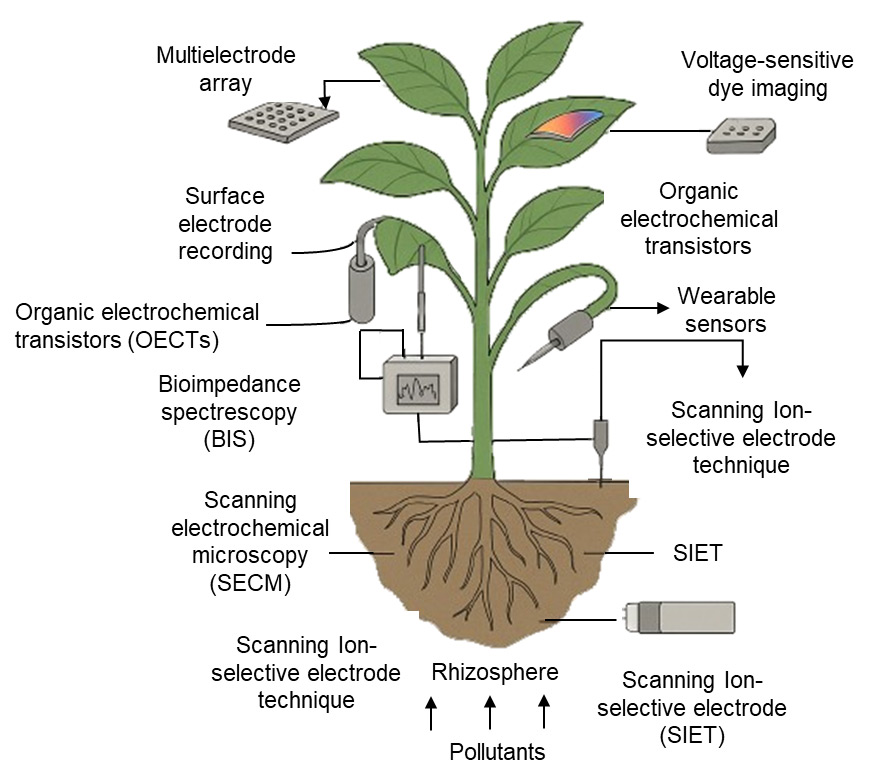
Plants, being sessile, must constantly monitor and respond to environmental fluctuations and stressors. Among the diverse signalling modalities (chemical, hydraulic, hormonal), electrical signals stand out for their rapid propagation and capacity to serve as early warning cues. In this review, we examine the concept of electrobiological signatures—distinctive patterns of electrical activity in plants as potential early indicators of stress and adaptation. This review first discusses the fundamental mechanisms such as ion fluxes, membrane transporters, coupling with calcium dynamics, reactive oxygen species (ROS), and cross-talk with hormonal networks. Next, it explores how these signatures manifest under abiotic and biotic stress and how these signatures are linked to downstream adaptive responses. Then, it shifts to agricultural applications, highlighting real-time plant monitoring, phenotyping, stress forecasting, and precision interventions. Finally, plant electrobiology is placed in an ecological context, considering how electrical signalling may mediate plant-plant communication, ecosystem resilience, and bioindication of environmental change. We emphasize that, despite technical and biological challenges such as signal noise, species variability, and decoding specificity, the integration of electrophysiological data with multi-omics approaches and AI analytics offers a promising pathway to transform plant monitoring and management. Therefore, while hurdles remain, the convergence of flexible sensors and AI positions electrobiological signatures as a transformative tool for 21st-century plant science.
Graphical Abstract
Keywords
Data Availability Statement
Funding
Conflicts of Interest
AI Use Statement
Ethical Approval and Consent to Participate
References
- Sampaio, M., Neves, J., Cardoso, T., Pissarra, J., Pereira, S., & Pereira, C. (2022). Coping with abiotic stress in plants—An endomembrane trafficking perspective. Plants, 11(3), 338.
[CrossRef] [Google Scholar] - Calvo, P., & Trewavas, A. (2021). Cognition and intelligence of green plants. Information for animal scientists. Biochemical and Biophysical Research Communications, 564, 78-85.
[CrossRef] [Google Scholar] - Ullah, S., & Junjun, N. (2026). From signals to survival: exploring chemical, electrical, and acoustic communication mechanisms in plant adaptation to environmental stressors. Plant and Soil, 518(2), 1921-1946.
[CrossRef] [Google Scholar] - Coatsworth, P., Gonzalez-Macia, L., Collins, A. S. P., Bozkurt, T., & Güder, F. (2023). Continuous monitoring of chemical signals in plants under stress. Nature Reviews Chemistry, 7(1), 7-25.
[CrossRef] [Google Scholar] - Dolfi, M., Dini, C., Morosi, S., Comparini, D., Masi, E., Pandolfi, C., & Mancuso, S. (2021). Electrical signaling related to water stress acclimation. Sensing and Bio-Sensing Research, 32, 100420.
[CrossRef] [Google Scholar] - Han, S., & Wang, H. (2025). Application of deep learning technology in monitoring plant attribute changes. Sustainability, 17(17), 7602.
[CrossRef] [Google Scholar] - Stahlberg, R. (2006). Historical overview on plant neurobiology. Plant Signaling & Behavior, 1(1), 6-8.
[CrossRef] [Google Scholar] - Mudrilov, M. A., Ladeynova, M. M., Kuznetsova, D. V., & Vodeneev, V. A. (2023). Ion channels in electrical signaling in higher plants. Biochemistry (Moscow), 88(10), 1467-87.
[CrossRef] [Google Scholar] - Pantoja, O. (2021). Recent advances in the physiology of ion channels in plants. Annual Review of Plant Biology, 72(1), 463-495.
[CrossRef] [Google Scholar] - Lee, J., & Calvo, P. (2023). The potential of plant action potentials. Synthese, 202(5), 176.
[CrossRef] [Google Scholar] - Wairimu, N. u. R., Paul Kuria, K., & Tuwei, K. A. (2021). Action and variation potential electrical signals in higher plants. African Journal of Biological Sciences, 3(1), 1-18.
[CrossRef] [Google Scholar] - Mudrilov, M., Ladeynova, M., Grinberg, M., Balalaeva, I., & Vodeneev, V. (2021). Electrical signaling of plants under abiotic stressors: Transmission of stimulus-specific information. International Journal of Molecular Sciences, 22(19), 10715.
[CrossRef] [Google Scholar] - Kozlova, E., Yudina, L., Sukhova, E., & Sukhov, V. (2025). Analysis of electrome as a tool for plant monitoring: Progress and perspectives. Plants, 14(10), 1500.
[CrossRef] [Google Scholar] - Costa, Á. V. L., Oliveira, T. F. d. C., Posso, D. A., Reissig, G. N., Parise, A. G., Barros, W. S., & Souza, G. M. (2023). Systemic signals induced by single and combined abiotic stimuli in common bean plants. Plants, 12(4), 924.
[CrossRef] [Google Scholar] - de Toledo, G. R., Reissig, G. N., Senko, L. G., Pereira, D. R., da Silva, A. F., & Souza, G. M. (2024). Common bean under different water availability reveals classifiable stimuli-specific signatures in plant electrome. Plant Signaling & Behavior, 19(1), 2333144.
[CrossRef] [Google Scholar] - Mousavi, S. A., Chauvin, A., Pascaud, F., Kellenberger, S., & Farmer, E. E. (2013). GLUTAMATE RECEPTOR-LIKE genes mediate leaf-to-leaf wound signalling. Nature, 500(7463), 422-426.
[CrossRef] [Google Scholar] - Ait Ben Brahim, K., Bendany, M., El Hamdouni, Y., Oumoussa, H., Labjar, N., Dalimi, M., ... & El Hajjaji, S. (2025). Electrochemical Sensors for Plant Health. In Agricultural Electrochemistry (pp. 209-226). American Chemical Society.
[CrossRef] [Google Scholar] - Toyota, M., Spencer, D., Sawai-Toyota, S., Jiaqi, W., Zhang, T., Koo, A. J., ... & Gilroy, S. (2018). Glutamate triggers long-distance, calcium-based plant defense signaling. Science, 361(6407), 1112-1115.
[CrossRef] [Google Scholar] - Bukhamsin, A., Kosel, J., Blilou, I., & Salama, K. N. (2025). Accelerating adoption of species-agnostic plant sensors for precision farming. Nature Reviews Electrical Engineering, 2(1), 58-70.
[CrossRef] [Google Scholar] - Dixit, S., Sivalingam, P. N., Baskaran, R. M., Senthil-Kumar, M., & Ghosh, P. K. (2024). Plant responses to concurrent abiotic and biotic stress: Unravelling physiological and morphological mechanisms. Plant Physiology Reports, 29(1), 6-17.
[CrossRef] [Google Scholar] - Sukhova, E., & Sukhov, V. (2021). Electrical signals, plant tolerance to actions of stressors, and programmed cell death: Is interaction possible? Plants, 10(8), 1704.
[CrossRef] [Google Scholar] - Kambona, C. M., Koua, P. A., Léon, J., & Ballvora, A. (2023). Stress memory and its regulation in plants experiencing recurrent drought conditions. Theoretical and Applied Genetics, 136(2), 26.
[CrossRef] [Google Scholar] - Lagiotis, G., Madesis, P., & Stavridou, E. (2023). Echoes of a stressful past: Abiotic stress memory in crop plants towards enhanced adaptation. Agriculture, 13(11), 2090.
[CrossRef] [Google Scholar] - Nguyen, C. T., Kurenda, A., Stolz, S., Chételat, A., & Farmer, E. E. (2018). Identification of cell populations necessary for leaf-to-leaf electrical signaling in a wounded plant. Proceedings of the National Academy of Sciences, 115(40), 10178-10183.
[CrossRef] [Google Scholar] - Wen, H. (2024). Flexible electronics based on PEDOT: PSS for physiological signal monitoring in plants.
[CrossRef] [Google Scholar] - Garcia-Servin, M. A., Mendoza-Sanchez, M., & Contreras-Medina, L. M. (2021). Electrical signals as an option of communication with plants: a review. Theoretical and Experimental Plant Physiology, 33(2), 125-139.
[CrossRef] [Google Scholar] - Peláez-Vico, M. Á., Rillig, M. C., & Mittler, R. (2025). Plant-to-plant signaling: Building networks for resilience to stress, or merely eavesdropping? Trends in Plant Science. Advance online publication.
[CrossRef] [Google Scholar] - Szechyńska-Hebda, M., Lewandowska, M., Witoń, D., Fichman, Y., Mittler, R., & Karpiński, S. M. (2022). Aboveground plant-to-plant electrical signaling mediates network acquired acclimation. The Plant Cell, 34(8), 3047-3065.
[CrossRef] [Google Scholar] - Farmer, E. E., Gao, Y. Q., Lenzoni, G., Wolfender, J. L., & Wu, Q. (2020). Wound‐and mechanostimulated electrical signals control hormone responses. New Phytologist, 227(4), 1037-50.
[CrossRef] [Google Scholar] - Shabala, S. (2017). Signalling by potassium: Another second messenger to add to the list? Journal of Experimental Botany, 68(15), 4003-07.
[CrossRef] [Google Scholar] - Volkov, A. G. (2018). Memristors and electrical memory in plants. In Memory and learning in plants (pp. 139-61). Springer.
[CrossRef] [Google Scholar] - Wen, G., & Ma, B. L. (2025). Decoding canola and oat crop health and productivity under drought and heat stress using bioelectrical signals and machine learning. Artificial Intelligence in Agriculture, 15(4), 696-706.
[CrossRef] [Google Scholar] - Chaparro-Cárdenas, S. L., Ramirez-Bautista, J. A., Gamboa-Contreras, W., Moreno-Chacón, A. L., & Vargas-Tangua, F. C. (2021). Plant electrophysiology: Bibliometric analysis, methods and applications in the monitoring of plant-environment interactions. Dyna, 88(218), 212-23.
[CrossRef] [Google Scholar] - Zhang, C., Wu, Y., Su, Y., Xing, D., Dai, Y., Wu, Y., & Fang, L. (2020). A plant’s electrical parameters indicate its physiological state: A study of intracellular water metabolism. Plants, 9(10), 1256.
[CrossRef] [Google Scholar] - Hedrich, R., Salvador-Recatalà, V., & Dreyer, I. (2016). Electrical wiring and long-distance plant communication. Trends in Plant Science, 21(5), 376-387.
[CrossRef] [Google Scholar] - Gilroy, S., Białasek, M., Suzuki, N., Górecka, M., Devireddy, A. R., Karpiński, S., & Mittler, R. (2016). ROS, calcium, and electric signals: key mediators of rapid systemic signaling in plants. Plant physiology, 171(3), 1606-1615.
[CrossRef] [Google Scholar] - Hedrich, R., & Kreuzer, I. (2023). Demystifying the Venus flytrap action potential. New Phytologist, 239(6), 2108-2112.
[CrossRef] [Google Scholar] - Kong, L., Wen, H., Luo, Y., Chen, X., Sheng, X., Liu, Y., & Chen, P. (2023). Dual-conductive and stiffness-morphing microneedle patch enables continuous in planta monitoring of electrophysiological signal and ion fluctuation. ACS Applied Materials & Interfaces, 15(37), 43515-43523.
[CrossRef] [Google Scholar] - Sultana, R., Imam, Z., Kumar, R. R., Banu, V. S., Nahakpam, S., Bharti, R., ... & Siddiqui, M. W. (2025). Signaling and defence mechanism of jasmonic and salicylic acid response in pulse crops: role of WRKY transcription factors in stress response. Journal of Plant Growth Regulation, 44(1), 5-21.
[CrossRef] [Google Scholar] - Roychowdhury, R., Hada, A., Biswas, S., Mishra, S., Prusty, M. R., Das, S. P., ... & Sarker, U. (2025). Jasmonic acid (JA) in plant immune response: unravelling complex molecular mechanisms and networking of defence signalling against pathogens. Journal of Plant Growth Regulation, 44(1), 89-114.
[CrossRef] [Google Scholar] - Ladeynova, M., Kuznetsova, D., Mudrilov, M., & Vodeneev, V. (2023). Integration of electrical signals and phytohormones in the control of systemic response. International Journal of Molecular Sciences, 24(1), 847.
[CrossRef] [Google Scholar] - Shabala, S., & Pottosin, I. (2014). Regulation of potassium transport in plants under hostile conditions: implications for abiotic and biotic stress tolerance. Physiologia plantarum, 151(3), 257-279.
[CrossRef] [Google Scholar] - Shabala, S., Demidchik, V., Shabala, L., Cuin, T. A., Smith, S. J., Miller, A. J., ... & Newman, I. A. (2006). Extracellular Ca2+ ameliorates NaCl-induced K+ loss from Arabidopsis root and leaf cells by controlling plasma membrane K+-permeable channels. Plant physiology, 141(4), 1653-1665.
[CrossRef] [Google Scholar] - Silva-Herrera, H., Wege, S., Franzisky, B. L., Ahmad, N., Roelfsema, M. R. G., & Geilfus, C.-M. (2025). Chloride transport and homeostasis in plants. Quantitative Plant Biology, 6, e20.
[CrossRef] [Google Scholar] - Joshi, S., Nath, J., Singh, A. K., Pareek, A., & Joshi, R. (2022). Ion transporters and their regulatory signal transduction mechanisms for salinity tolerance in plants. Physiologia Plantarum, 174(3), e13702.
[CrossRef] [Google Scholar] - Choi, W. G., Miller, G., Wallace, I., Harper, J., Mittler, R., & Gilroy, S. (2017). Orchestrating rapid long‐distance signaling in plants with Ca2+, ROS and electrical signals. The Plant Journal, 90(4), 698-707.
[CrossRef] [Google Scholar] - Fichman, Y., & Mittler, R. (2021). Integration of electric, calcium, reactive oxygen species and hydraulic signals during rapid systemic signaling in plants. The Plant Journal, 107(1), 7-20.
[CrossRef] [Google Scholar] - Li, R., Yang, Y., Lou, H., Wang, W., Yan, J., Xie, D., & Shan, X. (2025). Electrical and calcium signaling in plant systemic defense: from local wounds to global responses. New Phytologist, 247(4), 1633-1642.
[CrossRef] [Google Scholar] - Gloor, P. A. (2025). Plant Bioelectric Early Warning Systems: A Five-Year Investigation into Human-Plant Electromagnetic Communication. arXiv preprint arXiv:2506.04132.
[Google Scholar] - Canales, J., Henriquez-Valencia, C., & Brauchi, S. (2018). The integration of electrical signals originating in the root of vascular plants. Frontiers in Plant Science, 8, 2173.
[CrossRef] [Google Scholar] - van Bel, A. J., & Ehlers, K. (2005). Electrical signalling via plasmodesmata. Plasmodesmata, 263-278.
[CrossRef] [Google Scholar] - Sukhova, E., Akinchits, E., Gudkov, S. V., Pishchalnikov, R. Y., Vodeneev, V., & Sukhov, V. (2021). A theoretical analysis of relations between pressure changes along xylem vessels and propagation of variation potential in higher plants. Plants, 10(2), 372.
[CrossRef] [Google Scholar] - Boyno, G., & Demir, S. (2022). Plant-mycorrhiza communication and mycorrhizae in inter-plant communication. Symbiosis, 86(2), 155-168.
[CrossRef] [Google Scholar] - Davies, E. (2006). Electrical signals in plants: facts and hypotheses. In Plant electrophysiology: theory and methods (pp. 407-422). Berlin, Heidelberg: Springer Berlin Heidelberg.
[CrossRef] [Google Scholar] - Yin, Y., Wu, D., & Chory, J. (2002). Plant receptor kinases: systemin receptor identified. Proceedings of the National Academy of Sciences, 99(14), 9090-9092.
[CrossRef] [Google Scholar] - Souza, G. M., Ferreira, A. S., Saraiva, G. F., & Toledo, G. R. (2017). Plant “electrome” can be pushed toward a self-organized critical state by external cues: Evidences from a study with soybean seedlings subject to different environmental conditions. Plant signaling & behavior, 12(3), e1290040.
[CrossRef] [Google Scholar] - Pavlovič, A. (2024). Touch, light, wounding: How anaesthetics affect plant sensing abilities. Plant Cell Reports, 43(12), 293.
[CrossRef] [Google Scholar] - Rich-Griffin, C., Stechemesser, A., Finch, J., Lucas, E., Ott, S., & Schäfer, P. (2020). Single-cell transcriptomics: a high-resolution avenue for plant functional genomics. Trends in plant science, 25(2), 186-197.
[CrossRef] [Google Scholar] - Hedrich, R., & Neher, E. (2018). Venus flytrap: how an excitable, carnivorous plant works. Trends in Plant Science, 23(3), 220-234.
[CrossRef] [Google Scholar] - Pachú, J. K., Macedo, F. C., Malaquias, J. B., Ramalho, F. S., Oliveira, R. F., Godoy, W. A., & Salustino, A. S. (2023). Electrical signalling and plant response to herbivory: A short review. Plant Signaling & Behavior, 18(1), 2277578.
[CrossRef] [Google Scholar] - Vian, A., Stankovic, B., & Davies, E. (2015). Signalomics: Diversity and methods of analysis of systemic signals in plants. In Plantomics: The omics of plant science (pp. 459-89). Springer.
[CrossRef] [Google Scholar] - de Toledo, G. R., Parise, A. G., Simmi, F. Z., Costa, A. V., Senko, L. G., Debono, M. W., & Souza, G. M. (2019). Plant electrome: the electrical dimension of plant life. Theoretical and Experimental Plant Physiology, 31(1), 21-46.
[CrossRef] [Google Scholar] - Fromm, J., & Lautner, S. (2007). Electrical signals and their physiological significance in plants. Plant, Cell & Environment, 30(3), 249-257.
[CrossRef] [Google Scholar] - Zhou, J., Fan, P., Zhou, S., Pan, Y., & Ping, J. (2025). Machine learning-assisted implantable plant electrophysiology microneedle sensor for plant stress monitoring. Biosensors and Bioelectronics, 271, 117062.
[CrossRef] [Google Scholar] - Dufil, G., Bernacka-Wojcik, I., Armada-Moreira, A., & Stavrinidou, E. (2021). Plant bioelectronics and biohybrids: the growing contribution of organic electronic and carbon-based materials. Chemical Reviews, 122(4), 4847-4883.
[CrossRef] [Google Scholar] - Teixeira, S. C., Gomes, N. O., de Oliveira, T. V., Soares, N. F., & Raymundo-Pereira, P. A. (2025). Sustainable wearable sensors for plant monitoring and precision agriculture. Analytical Chemistry, 97(28), 14875-14884.
[CrossRef] [Google Scholar] - He, T., Wang, J., Chae, E., & Lee, C. (2025). In situ plant sensors: toward real-time, high-resolution monitoring. ACS sensors, 10(9), 6275-6291.
[CrossRef] [Google Scholar] - Hussain, M. I., El-Keblawy, A., Akhtar, N., & Elwakil, A. S. (2021). Electrical impedance spectroscopy in plant biology. In Sustainable Agriculture Reviews 52 (pp. 395-416). Cham: Springer International Publishing.
[CrossRef] [Google Scholar] - Liu, Y., Li, D., Qian, J., Di, B., Zhang, G., & Ren, Z. (2021). Electrical impedance spectroscopy (EIS) in plant roots research: A review. Plant Methods, 17(1), 118.
[CrossRef] [Google Scholar] - Martinek, R., Ladrova, M., Sidikova, M., Jaros, R., Behbehani, K., Kahankova, R., & Kawala-Sterniuk, A. (2021). Advanced bioelectrical signal processing methods: Past, present and future approach—part ii: Brain signals. Sensors, 21(19), 6343.
[CrossRef] [Google Scholar] - Najdenovska, E., Dutoit, F., Tran, D., Rochat, A., Vu, B., Mazza, M., ... & Raileanu, L. E. (2021). Identifying general stress in commercial tomatoes based on machine learning applied to plant electrophysiology. Applied Sciences, 11(12), 5640.
[CrossRef] [Google Scholar] - Cseresnyés, I., Takács, T., Sepovics, B., Kovács, R., Füzy, A., Parádi, I., & Rajkai, K. (2019). Electrical characterization of the root system: A noninvasive approach to study plant stress responses. Acta Physiologiae Plantarum, 41(10), 169.
[CrossRef] [Google Scholar] - Shabala, S., & Bose, J. (2012). Application of non-invasive microelectrode flux measurements in plant stress physiology. Plant Electrophysiology: Methods and Cell Electrophysiology, 91-126.
[CrossRef] [Google Scholar] - Zhang, T., Yin, P., Yang, X., Liu, Y., & Xu, R. (2025). Non-Invasive Micro-Test Technology in Plant Physiology Under Abiotic Stress: From Mechanism to Application. Plants, 14(13), 1932.
[CrossRef] [Google Scholar] - Zhong, N., & Zhang, D. (2024). Ecotoxicity of 2, 4-Dichlorophenol to Microsorium pteropus by High Spatial Resolution Mapping of Stoma Oxygen Emission. Water, 16(8), 1146.
[CrossRef] [Google Scholar] - Hamed, S., Altana, A., Lugli, P., Petti, L., & Ibba, P. (2024). Supervised classification and circuit parameter analysis of electrical bioimpedance spectroscopy data of water stress in tomato plants. Computers and Electronics in Agriculture, 226, 109347.
[CrossRef] [Google Scholar] - Matzke, A. J., & Matzke, M. (2015). Expression and testing in plants of arclight, a genetically–encoded voltage indicator used in neuroscience research. BMC Plant Biology, 15(1), 245.
[CrossRef] [Google Scholar] - Vurro, F. (2021). Oect-based in-vivo monitoring for plant science and smart agriculture (Doctoral dissertation). University of Parma, Italy.
[Google Scholar] - Lee, G., Wei, Q., & Zhu, Y. (2021). Emerging wearable sensors for plant health monitoring. Advanced Functional Materials, 31(52), 2106475.
[CrossRef] [Google Scholar] - Zhao, D. J., Chen, Y., Wang, Z. Y., Xue, L., Mao, T. L., Liu, Y. M., ... & Huang, L. (2015). High-resolution non-contact measurement of the electrical activity of plants in situ using optical recording. Scientific reports, 5(1), 13425.
[CrossRef] [Google Scholar] - Banerji, S., Hõrak, H., Torop, J., & Huynh, T. P. (2024). Unravelling the secrets of plants: emerging wearable sensors for plants signals and physiology. Advanced Sensor Research, 3(3), 2300023.
[CrossRef] [Google Scholar] - Faizan, M., Karabulut, F., Alam, P., Yusuf, M., Tonny, S. H., Adil, M. F., ... & Hayat, S. (2023). Nanobionics: a sustainable agricultural approach towards understanding plant response to heavy metals, drought, and salt stress. Nanomaterials, 13(6), 974.
[CrossRef] [Google Scholar] - Dong, Q., Wallrad, L., Almutairi, B. O., & Kudla, J. (2022). Ca2+ signaling in plant responses to abiotic stresses. Journal of integrative plant biology, 64(2), 287-300.
[CrossRef] [Google Scholar] - Manishankar, P., Wang, N., Köster, P., Alatar, A. A., & Kudla, J. (2018). Calcium signaling during salt stress and in the regulation of ion homeostasis. Journal of Experimental Botany, 69(17), 4215-26.
[CrossRef] [Google Scholar] - Hossain, M. A., Li, Z. G., Hoque, T. S., Burritt, D. J., Fujita, M., & Munné-Bosch, S. (2018). Heat or cold priming-induced cross-tolerance to abiotic stresses in plants: key regulators and possible mechanisms. Protoplasma, 255(1), 399-412.
[CrossRef] [Google Scholar] - Hendrix, S., Dard, A., Meyer, A. J., & Reichheld, J.-P. (2023). Redox-mediated responses to high temperature in plants. Journal of Experimental Botany, 74(8), 2489-507.
[CrossRef] [Google Scholar] - Shompa, S. N. (2025). Neuro-Responsive Farming: Integrating Plant Electrophysiology for Real-Time Crop Decision-Making Systems. Plant Adaptation Frontiers, 1(1), 1-13.
[CrossRef] [Google Scholar] - Bhatla, S. C., & Lal, M. A. (2023). Light perception and transduction. In Plant physiology, development and metabolism (pp. 363-390). Singapore: Springer Nature Singapore.
[CrossRef] [Google Scholar] - Mahdavian, K. (2024). Effects of ultraviolet radiation on plants and their protective mechanisms. Russian Journal of Plant Physiology, 71(6), 184.
[CrossRef] [Google Scholar] - Shabala, S., Cuin, T. A., Shabala, L., & Newman, I. (2012). Quantifying kinetics of net ion fluxes from plant tissues by non-invasive microelectrode measuring MIFE technique. In Plant salt tolerance: methods and protocols (pp. 119-134). Totowa, NJ: Humana Press.
[CrossRef] [Google Scholar] - Ali Solangi, K., Wu, Y., Chen, Q., Ahmed Qureshi, W., Xing, D., Hussain Tunio, M., & Ali Shaikh, S. (2021). The differential responses of Aegiceras corniculatum and Kandelia candel under salt stress and re-watering phase. A study of leaf electrophysiological and growth parameters. Journal of Plant Interactions, 16(1), 307-320.
[CrossRef] [Google Scholar] - Ali Solangi, K., Wu, Y., Xing, D., Ahmed Qureshi, W., Hussain Tunio, M., Ali Sheikh, S., & Shabbir, A. (2022). Can electrophysiological information reflect the response of mangrove species to salt stress? A case study of rewatering and Sodium nitroprusside application. Plant Signaling & Behavior, 17(1), 2073420.
[CrossRef] [Google Scholar] - Mostafa, S., Wang, Y., Zeng, W., & Jin, B. (2022). Plant responses to herbivory, wounding, and infection. International Journal of Molecular Sciences, 23(13), 7031.
[CrossRef] [Google Scholar] - Lenglet, A., Jaślan, D., Toyota, M., Mueller, M., Müller, T., Schönknecht, G., ... & Farmer, E. E. (2017). Control of basal jasmonate signalling and defence through modulation of intracellular cation flux capacity. New Phytologist, 216(4), 1161-1169.
[CrossRef] [Google Scholar] - Wen, H. (2024). Flexible electronics based on PEDOT: PSS for physiological signal monitoring in plants (Doctoral dissertation, Nanyang Technological University).
[CrossRef] [Google Scholar] - Marcec, M. J. (2022). Calcium signaling in plant immunity. Washington State University.
[CrossRef] [Google Scholar] - Tran, D., Dutoit, F., Najdenovska, E., Wallbridge, N., Plummer, C., Mazza, M., ... & Camps, C. (2019). Electrophysiological assessment of plant status outside a Faraday cage using supervised machine learning. Scientific reports, 9(1), 17073.
[CrossRef] [Google Scholar] - Gao, Y. Q., Wu, W. H., & Wang, Y. (2019). Electrophysiological identification and activity analyses of plasma membrane K+ channels in maize guard cells. Plant and Cell Physiology, 60(4), 765-777.
[CrossRef] [Google Scholar] - Jia, B., Li, Y., Sun, X., & Sun, M. (2022). Structure, function, and applications of soybean calcium transporters. International Journal of Molecular Sciences, 23(22), 14220.
[CrossRef] [Google Scholar] - Grams, T. E., Lautner, S., Felle, H. H., Matyssek, R., & Fromm, J. (2009). Heat‐induced electrical signals affect cytoplasmic and apoplastic pH as well as photosynthesis during propagation through the maize leaf. Plant, Cell & Environment, 32(4), 319-326.
[CrossRef] [Google Scholar] - Tong, T., Li, Q., Jiang, W., Chen, G., Xue, D., Deng, F., Zeng, F., & Chen, Z.-H. (2021). Molecular evolution of calcium signaling and transport in plant adaptation to abiotic stress. International Journal of Molecular Sciences, 22(22), 12308.
[CrossRef] [Google Scholar] - Yan, X., Wang, Z., Huang, L., Wang, C., Hou, R., Xu, Z., & Qiao, X. (2009). Research progress on electrical signals in higher plants. Progress in Natural Science, 19(5), 531-541.
[CrossRef] [Google Scholar] - Yu, B., Liu, N., Tang, S., Qin, T., & Huang, J. (2022). Roles of glutamate receptor-like channels (GLRs) in plant growth and response to environmental stimuli. Plants, 11(24), 3450.
[CrossRef] [Google Scholar] - Zimmermann, M. R., Mithöfer, A., Will, T., Felle, H. H., & Furch, A. C. (2016). Herbivore-triggered electrophysiological reactions: Candidates for systemic signals in higher plants and the challenge of their identification. Plant physiology, 170(4), 2407-19.
[CrossRef] [Google Scholar] - Zhang, C., Song, Y., & Kudla, J. (2026). Calcium signaling in crops. New Phytologist, 249(5), 1644-58.
[CrossRef] [Google Scholar] - Cai, L. (2020). Plant conformable electrode for mimosa soft robotics (Master's thesis). Nanyang Technological University.
[Google Scholar] - Hamed, S. (2025). Bioimpedance-Based Plant Health Classification and Sustainable Electronics from Agricultural Waste (Doctoral dissertation, Free University of Bozen-Bolzano).
[Google Scholar] - Araus, J. L., Kefauver, S. C., Vergara‐Díaz, O., Gracia‐Romero, A., Rezzouk, F. Z., Segarra, J., ... & Bort, J. (2022). Crop phenotyping in a context of global change: What to measure and how to do it. Journal of Integrative Plant Biology, 64(2), 592-618.
[CrossRef] [Google Scholar] - Attri, I., Awasthi, L. K., & Sharma, T. P. (2024). Machine learning in agriculture: a review of crop management applications. Multimedia Tools and Applications, 83(5), 12875-12915.
[CrossRef] [Google Scholar] - Pereira, D. R., Papa, J. P., Saraiva, G. F. R., & Souza, G. M. (2018). Automatic classification of plant electrophysiological responses to environmental stimuli using machine learning and interval arithmetic. Computers and Electronics in Agriculture, 145, 35-42.
[CrossRef] [Google Scholar] - Armada-Moreira, A., Dar, A. M., Zhao, Z., Cea, C., Gelinas, J., Berggren, M., Costa, A., Khodagholy, D., & Stavrinidou, E. (2023). Plant electrophysiology with conformable organic electronics: Deciphering the propagation of Venus flytrap action potentials. Science Advances, 9(30), eadh4443.
[CrossRef] [Google Scholar] - Cattani, A. M., De Riedmatten, L., Roulet, J., Smit-Sadki, T., Alfonso, E., Kurenda, A., ... & Rienth, M. (2024). Water status assessment in grapevines using plant electrophysiology. OENO One, 58(4).
[CrossRef] [Google Scholar] - Hasan, S., Pantha, T., & Arafat, M. A. (2024). Design and development of a cost-effective portable IOT enabled multi-channel physiological signal monitoring system. Biomedical Engineering Advances, 7, 100124.
[CrossRef] [Google Scholar] - Jing-Qi, S. U. N., Xi-Zheng, Z. H. A. O., Zi-Xu, Y. A. N. G., Yan, L. I. U., & Dian-Peng, Q. I. (2023). The monitoring of plant physiology and ecology: From materials to flexible devices. Chinese Journal of Analytical Chemistry, 51(2), 100211.
[CrossRef] [Google Scholar] - Sai, K., Sood, N., & Saini, I. (2023). Time series data modelling for classification of drought in tomato plants. Theoretical and Experimental Plant Physiology, 35(4), 379-394.
[CrossRef] [Google Scholar] - Yin, H., Cao, Y., Marelli, B., Zeng, X., Mason, A. J., & Cao, C. (2021). Soil sensors and plant wearables for smart and precision agriculture. Advanced Materials, 33(20), 2007764.
[CrossRef] [Google Scholar] - Yan, X., Pang, Y., Niu, K., Hu, B., Zhu, Z., Tan, Z., & Lei, H. (2025). Wearable sensors for plants: Status and prospects. Biosensors, 15(1), 53.
[CrossRef] [Google Scholar] - Thomas, M. A., & Cooper, R. L. (2022). Building bridges: Mycelium–mediated plant–plant electrophysiological communication. Plant Signaling & Behavior, 17(1), 2129291.
[CrossRef] [Google Scholar] - Wang, C., Huang, L., Wang, Z. Y., & Qiao, X. J. (2007). Monitoring and analysis of electrical signals in water‐stressed plants. New Zealand Journal of Agricultural Research, 50(5), 823-829.
[CrossRef] [Google Scholar] - Mukarram, M., Choudhary, S., Kurjak, D., Petek, A., & Khan, M. M. A. (2021). Drought: Sensing, signalling, effects and tolerance in higher plants. Physiologia Plantarum, 172(2), 1291-300.
[CrossRef] [Google Scholar] - Sukhov, V. (2016). Electrical signals as mechanism of photosynthesis regulation in plants. Photosynthesis Research, 130(1), 373-387.
[CrossRef] [Google Scholar] - Barbosa-Caro, J. C., & Wudick, M. M. (2024). Revisiting plant electric signaling: Challenging an old phenomenon with novel discoveries. Current Opinion in Plant Biology, 79, 102528-28.
[CrossRef] [Google Scholar] - Juenger, T. E., & Verslues, P. E. (2023). Time for a drought experiment: Do you know your plants’ water status? The Plant Cell, 35(1), 10-23.
[CrossRef] [Google Scholar] - Li, J. H., Fan, L. F., Zhao, D. J., Zhou, Q., Yao, J. P., Wang, Z. Y., & Huang, L. (2021). Plant electrical signals: A multidisciplinary challenge. Journal of Plant Physiology, 261, 153418.
[CrossRef] [Google Scholar] - Wu, J., Wang, J., Hui, W., Zhao, F., Wang, P., Su, C., & Gong, W. (2022). Physiology of plant responses to water stress and related genes: A review. Forests, 13(2), 324.
[CrossRef] [Google Scholar]
Cite This Article
TY  - JOUR
AU  - Javed, Qaiser
AU  - Azeem, Ahmad
PY  - 2026
DA  - 2026/03/31
TI  - Electrobiological Signatures as Early Indicators of Plant Stress and Adaptation
JO  - Journal of Plant Electrobiology
T2  - Journal of Plant Electrobiology
JF  - Journal of Plant Electrobiology
VL  - 1
IS  - 1
SP  - 58
EP  - 73
DO  - 10.62762/JPE.2026.146822
UR  - https://www.icck.org/article/abs/JPE.2026.146822
KW  - plant electrophysiology
KW  - ion fluxes
KW  - calcium signalling
KW  - abiotic stress
KW  - biotic stress
KW  - precision agriculture
KW  - real-time monitoring
AB  - Plants, being sessile, must constantly monitor and respond to environmental fluctuations and stressors. Among the diverse signalling modalities (chemical, hydraulic, hormonal), electrical signals stand out for their rapid propagation and capacity to serve as early warning cues. In this review, we examine the concept of electrobiological signatures—distinctive patterns of electrical activity in plants as potential early indicators of stress and adaptation. This review first discusses the fundamental mechanisms such as ion fluxes, membrane transporters, coupling with calcium dynamics, reactive oxygen species (ROS), and cross-talk with hormonal networks. Next, it explores how these signatures manifest under abiotic and biotic stress and how these signatures are linked to downstream adaptive responses. Then, it shifts to agricultural applications, highlighting real-time plant monitoring, phenotyping, stress forecasting, and precision interventions. Finally, plant electrobiology is placed in an ecological context, considering how electrical signalling may mediate plant-plant communication, ecosystem resilience, and bioindication of environmental change. We emphasize that, despite technical and biological challenges such as signal noise, species variability, and decoding specificity, the integration of electrophysiological data with multi-omics approaches and AI analytics offers a promising pathway to transform plant monitoring and management. Therefore, while hurdles remain, the convergence of flexible sensors and AI positions electrobiological signatures as a transformative tool for 21st-century plant science.
SN  - 3071-6268
PB  - Institute of Central Computation and Knowledge
LA  - English
ER  -
@article{Javed2026Electrobio,
  author = {Qaiser Javed and Ahmad Azeem},
  title = {Electrobiological Signatures as Early Indicators of Plant Stress and Adaptation},
  journal = {Journal of Plant Electrobiology},
  year = {2026},
  volume = {1},
  number = {1},
  pages = {58-73},
  doi = {10.62762/JPE.2026.146822},
  url = {https://www.icck.org/article/abs/JPE.2026.146822},
  abstract = {Plants, being sessile, must constantly monitor and respond to environmental fluctuations and stressors. Among the diverse signalling modalities (chemical, hydraulic, hormonal), electrical signals stand out for their rapid propagation and capacity to serve as early warning cues. In this review, we examine the concept of electrobiological signatures—distinctive patterns of electrical activity in plants as potential early indicators of stress and adaptation. This review first discusses the fundamental mechanisms such as ion fluxes, membrane transporters, coupling with calcium dynamics, reactive oxygen species (ROS), and cross-talk with hormonal networks. Next, it explores how these signatures manifest under abiotic and biotic stress and how these signatures are linked to downstream adaptive responses. Then, it shifts to agricultural applications, highlighting real-time plant monitoring, phenotyping, stress forecasting, and precision interventions. Finally, plant electrobiology is placed in an ecological context, considering how electrical signalling may mediate plant-plant communication, ecosystem resilience, and bioindication of environmental change. We emphasize that, despite technical and biological challenges such as signal noise, species variability, and decoding specificity, the integration of electrophysiological data with multi-omics approaches and AI analytics offers a promising pathway to transform plant monitoring and management. Therefore, while hurdles remain, the convergence of flexible sensors and AI positions electrobiological signatures as a transformative tool for 21st-century plant science.},
  keywords = {plant electrophysiology, ion fluxes, calcium signalling, abiotic stress, biotic stress, precision agriculture, real-time monitoring},
  issn = {3071-6268},
  publisher = {Institute of Central Computation and Knowledge}
}
Article Metrics
Publisher's Note
ICCK stays neutral with regard to jurisdictional claims in published maps and institutional affiliations.
Rights and Permissions

