


Digital Monitoring of Electromagnetic Radiation Associated with Biodiversity (One Health) in Natural Parks: A Narrative Review


Article Information
Abstract
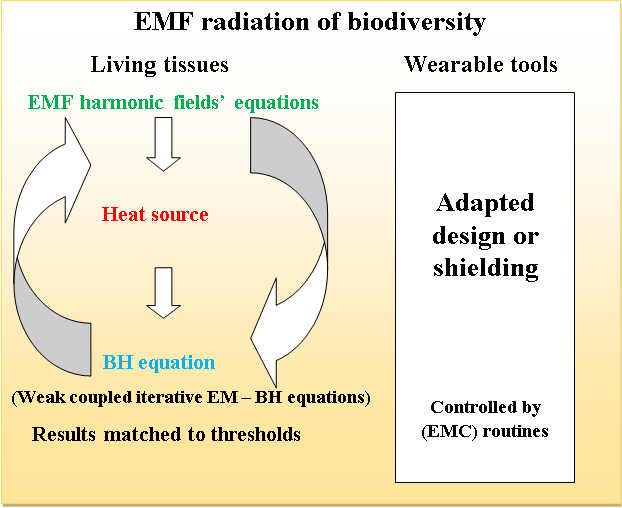
Up to date technologies, created by humans and utilizing electromagnetic fields (EMFs), present both anticipated benefits and undesirable side effects. These effects can influence the living tissues of all exposed biodiversity, in accordance with the "One Health" principle. The operation of modern natural parks encourages Internet connections via antennas, linked to park management, security, and telecommunications. These connectivity needs are tied to the functioning of all living organisms within the park, which depend on environmental conditions, according to the time and season. The antenna providing Internet access is a source of EMF; this coverage/exposure relationship can be monitored and controlled, thus enabling appropriate temporal and spatial emissions. The central scientific question of this narrative review is to analyze and highlight the continuous monitoring of emission intensity in relation to the behavior of different living tissues within the park's biodiversity, using an autonomous EMF source control procedure. The article addresses issues related to natural parks and biodiversity, the behavior of living tissues in response to environmental conditions, transmitting antennas and exposure to EMFs, autonomous control procedures, and intelligent management of emissions/exposure and biodiversity-related concerns involving an artificial intelligence-assisted autonomous procedure and digital twin-based monitoring of connected biodiversity. These are the review’s contribution to this research field. In addition, other aspects related to plants and exposure to electromagnetic fields are addressed succinctly in the discussion, for example the electrophysiology of plants, their position and relationship with the biodiversity of the park, the electromagnetic environment and plant performance and ecosystem stability, and more. Further details, focusing on plant electrophysiology and directly related to the subject of JPE, are being written for a future article. The various themes addressed in this article are supported by literature reviews that facilitate understanding.
Graphical Abstract
Keywords
Data Availability Statement
Funding
Conflicts of Interest
AI Use Statement
Ethical Approval and Consent to Participate
References
- Delie, J., Biedenweg, K., & Cerveny, L. K. (2025). Co-Occurrence of Landscape Values and Activities in Three Protected Areas. Journal of Parks, 1(1), 3.
[CrossRef] [Google Scholar] - Fratini, F. (2026). Integrating green and social infrastructure: the microforest social hub in Rome. Academia Environmental Sciences and Sustainability, 3(1).
[CrossRef] [Google Scholar] - Razek, A. (2024). One health ecological approach to sustainable wireless energy transfer aboard electric vehicles for smart cities. Energies, 17(17), 4349.
[CrossRef] [Google Scholar] - Kong, I., Sarmiento, F. O., & Mu, L. (2023). Crowdsourced text analysis to characterize the US National Parks based on cultural ecosystem services. Landscape and Urban Planning, 233, 104692.
[CrossRef] [Google Scholar] - Loomis, J., Richardson, L., Dara, P. K., Mueller, J., Zabel, J., Smalley, P., ... & Paterson, R. (2024). Ecosystem service values provided by National Parks to residential property owners. Ecological Economics, 220, 108175.
[CrossRef] [Google Scholar] - Barghchi, M., Grace, B., Edwards, N., Bolleter, J., & Hooper, P. (2024). Park thermal comfort and cooling mechanisms in present and future climate scenarios. Urban Forestry & Urban Greening, 101, 128533.
[CrossRef] [Google Scholar] - Zhao, Y., van den Berg, P. E., Ossokina, I. V., & Arentze, T. A. (2024). How do urban parks, neighborhood open spaces, and private gardens relate to individuals’ subjective well-being: Results of a structural equation model. Sustainable Cities and Society, 101, 105094.
[CrossRef] [Google Scholar] - Zhang, Y., Zhao, L., & Hu, S. (2025). Assessing perception and equity of cultural ecosystem services in urban parks using social media data. Scientific Reports, 15(1), 33127.
[CrossRef] [Google Scholar] - Fu, M., & Huang, Z. (2025). Integrating Remote Sensing, IoT, and AI for Biodiversity Monitoring in Hainan Tropical Rainforest National Park. International Journal of Agricultural and Environmental Information Systems (IJAEIS), 16(1), 1-18.
[CrossRef] [Google Scholar] - Bilson, S., Loh, T. H., Heliot, F., & Thompson, A. (2024). Physics-informed machine learning modelling of RF-EMF exposure in massive MIMO systems. IEEE Access, 12, 69410-69422.
[CrossRef] [Google Scholar] - Prokop, P. (2025). Plant Behavioral Ecology. Plants, 14(15), 2407.
[CrossRef] [Google Scholar] - Petrík, P., Hu, Y., Koubouris, G., Sperotto, R. A., & Stojnic, S. (2025). Editorial: Plant ecophysiology: responses to climate changes and stress conditions. Frontiers in Plant Science, 16, 1677128.
[CrossRef] [Google Scholar] - Levitt, B. B., Lai, H. C., Manville, A. M., & Scarato, T. (2025). Flora and fauna: how nonhuman species interact with natural and man-made EMF at ecosystem levels and public policy recommendations. Frontiers in Public Health, 13, 1693873.
[CrossRef] [Google Scholar] - Razek, A. (2025). Potential biological effects on living tissues of biodiversity subsequent to exposure to high-frequency electromagnetic fields. Thermal Science and Engineering 2025, 8(2), 11750. https://dx.doi.org/10.24294/tse11750
[Google Scholar] - Panyaram, S. (2024). Integrating artificial intelligence with big data for real-time insights and decision-making in complex systems. FMDB Transactions on Sustainable Intelligent Networks, 1(2), 85-95.
[CrossRef] [Google Scholar] - Deliu, D., & Olariu, A. (2024). The Role of Artificial Intelligence and Big Data Analytics in Shaping the Future of Professions in Industry 6.0: Perspectives from an Emerging Market. Electronics, 13(24), 4983.
[CrossRef] [Google Scholar] - Parmar, A. (2025). AI-driven data analytics for real-time decision-making. International Journal of Progressive Research in Engineering Management and Science, 5(5), 372–386.
[CrossRef] [Google Scholar] - Mallik, M., & Villemaud, G. (2025). EMF Aware Reinforcement Learning for Base Station Deployment Using Conditional GANs. IEEE Access, 14, 3806-3820.
[CrossRef] [Google Scholar] - Grieves, M., & Vickers, J. (2017). Digital twin: Mitigating unpredictable, undesirable emergent behavior in complex systems. In Transdisciplinary perspectives on complex systems: New findings and approaches (pp. 85-113). Cham: Springer International Publishing.
[CrossRef] [Google Scholar] - Tao, F., Sui, F., Liu, A., Qi, Q., Zhang, M., Song, B., ... & Nee, A. Y. (2019). Digital twin-driven product design framework. International Journal of Production Research, 57(12), 3935-3953.
[CrossRef] [Google Scholar] - Sun, T., He, X., & Li, Z. (2023). Digital twin in healthcare: Recent updates and challenges. Digital Health, 9, 20552076221149651.
[CrossRef] [Google Scholar] - Asciak, L., Kyeremeh, J., Luo, X., Kazakidi, A., Connolly, P., Picard, F., ... & Shu, W. (2025). Digital twin assisted surgery, concept, opportunities, and challenges. NPJ digital medicine, 8(1), 32.
[CrossRef] [Google Scholar] - Emmanuel, O., & Eraky, A. (2026). Evaluating How Land-Use Changes Affect the Ecosystem Services Provided by Urban Parks and Green Spaces. Journal of Parks, 1(1), 4.
[CrossRef] [Google Scholar] - Ayivi, S. H., Padilla, N. L., & Hallett IV, L. F. (2025). Assessing the Qualitative Value of Parks and Green Spaces in Kalamazoo County, MI, USA. Journal of Parks, 1(1), 2.
[CrossRef] [Google Scholar] - World Health Organization. (n.d.). One Health. Retrieved February 4, 2026, from https://www.who.int/europe/initiatives/one-health
[Google Scholar] - Deiana, G., Arghittu, A., Dettori, M., & Castiglia, P. (2024). One World, One Health: Zoonotic Diseases, Parasitic Diseases, and Infectious Diseases. Healthcare, 12(9), 922.
[CrossRef] [Google Scholar] - Miguel-Tomé, S., & Llinás, R. R. (2021). Broadening the definition of a nervous system to better understand the evolution of plants and animals. Plant Signaling & Behavior, 16(10), 1927562.
[CrossRef] [Google Scholar] - Bhatla, S. C., & Lal, M. A. (2023). Plant physiology, development and metabolism. Springer Nature.
[CrossRef] [Google Scholar] - Thill, A., Cammaerts, M. C., & Balmori, A. (2024). Biological effects of electromagnetic fields on insects: a systematic review and meta-analysis. Reviews on environmental health, 39(4), 853-869.
[CrossRef] [Google Scholar] - Balmori, A. (2021). Electromagnetic radiation as an emerging driver factor for the decline of insects. Science of the Total Environment, 767, 144913.
[CrossRef] [Google Scholar] - Cucurachi, S., Tamis, W. L., Vijver, M. G., Peijnenburg, W. J., Bolte, J. F., & de Snoo, G. R. (2013). A review of the ecological effects of radiofrequency electromagnetic fields (RF-EMF). Environment international, 51, 116-140.
[CrossRef] [Google Scholar] - Vian, A., Davies, E., Gendraud, M., & Bonnet, P. (2016). Plant responses to high frequency electromagnetic fields. BioMed research international, 2016(1), 1830262.
[CrossRef] [Google Scholar] - Dinesh, S., & Chandroth, A. (2024). Highly Directive and High Gain Multiple Beam Reconfigurable Antenna for Base Stations. International Journal of Electrical and Electronics Research, 12(4), 1337-1343.
[CrossRef] [Google Scholar] - Awan, W. A., Abbas, A., Choi, D., Hussain, N., Lee, H., Sim, D., & Kim, N. (2025). Compact and directional dual band antenna with low mutual coupling MIMO configuration for mm-wave communication. Results in Engineering, 26, 105457.
[CrossRef] [Google Scholar] - Sufian, M. A., Hussain, N., Choi, D., Lee, S. M., Gil, S. K., & Kim, N. (2024). High gain quasi-omnidirectional dipole array fed by radial power divider for millimeter-wave IoT sensing. Scientific Reports, 14(1), 16279.
[CrossRef] [Google Scholar] - Sehrai, D. A., Khan, J., Abdullah, M., Asif, M., Alibakhshikenari, M., Virdee, B., ... & Falcone, F. (2023). Design of high gain base station antenna array for mm-wave cellular communication systems. Scientific Reports, 13(1), 4907.
[CrossRef] [Google Scholar] - Choi, D., Sufian, M. A., Lee, J., Awan, W. A., Choi, Y., & Kim, N. (2024). Advanced Metamaterial-Integrated dipole array antenna for enhanced gain in 5G Millimeter-Wave bands. Applied Sciences, 14(19), 9138.
[CrossRef] [Google Scholar] - Sufian, M. A., Lee, S. M., Choi, D., Lee, J., Sim, D., Song, M., & Kim, N. (2025). A shared aperture multiport antenna for rural wireless communication and safety monitoring using TVWS, ISM, and 5G mmWave bands. Scientific Reports, 15(1), 13480.
[CrossRef] [Google Scholar] - Tiwari, P., Rai, J. K., Dwivedi, A. K., Gahlaut, V., Ranjan, P., Chowdhury, R., & Pandey, A. (2025). A high isolated, high gain millimeter wave quad-port MIMO antenna array for wideband 5G new radio application. Scientific Reports, 15(1), 34484.
[CrossRef] [Google Scholar] - Younis, F., Jabire, A. H., Ahmad, J., Khan, O., Qasim, M. J., Mustafa, S., ... & Wang, S. (2026). Hybrid Electromagnetic Decoupling-Based Isolation Enhanced Compact MIMO Antenna for ISM-Band Wireless Systems. Wireless Personal Communications, 1-26.
[CrossRef] [Google Scholar] - Sethumadhavi, R., Mishra, B., Singh, A. K., Yadav, D., Eduru, S., & Satheesha, T. Y. (2025). Dual and wideband mmWave 28/38 GHz quad port MIMO antenna for 5G and beyond applications. Scientific Reports, 15(1), 44195.
[CrossRef] [Google Scholar] - Razek, A. (2022). Biological and medical disturbances due to exposure to fields emitted by electromagnetic energy devices—a review. Energies, 15(12), 4455.
[CrossRef] [Google Scholar] - Razek, A. (2023). Thermal effects of electromagnetic origin from heating processes to biological disturbances due to field exposure-A review. Thermal Science and Engineering, 6(1), 1950.
[CrossRef] [Google Scholar] - Razek, A. (2023). Assessment of EMF Troubles of Biological and Instrumental Medical Questions and Analysis of Their Compliance with Standards. Standards, 3(2), 227–239.
[CrossRef] [Google Scholar] - International Commission on Non-Ionizing Radiation Protection. (2010). Guidelines for limiting exposure to time-varying electric and magnetic fields for low frequencies (1 Hz–100 kHz). Health Physics, 99(6), 818–836.
[Google Scholar] - International Commission on Non-Ionizing Radiation Protection. (2020). Guidelines for limiting exposure to electromagnetic fields (100 kHz to 300 GHz). Health Physics, 118(5), 483–524.
[CrossRef] [Google Scholar] - IEEE, U. (2019). IEEE standard for safety levels with respect to human exposure to electric, magnetic, and electromagnetic fields, 0 Hz to 300 GHz. IEEE Std C95. 1-2019 (Revision of IEEE Std C95. 1-2005/Incorporates IEEE Std C95. 1-2019/Cor 1-2019), 1-312.
[CrossRef] [Google Scholar] - Boeken, T., Lim, H. P. D., & Cohen, E. I. (2024). The role and future of artificial intelligence in robotic image-guided interventions. Techniques in Vascular and Interventional Radiology, 27(4), 101001.
[CrossRef] [Google Scholar] - Zhang, J. (2025). AI-based data intelligence system for sustainable ecological governance and smart environmental management. Microchemical Journal, 115850.
[CrossRef] [Google Scholar] - Olawade, D. B., Wada, O. Z., Ige, A. O., Egbewole, B. I., Olojo, A., & Oladapo, B. I. (2024). Artificial intelligence in environmental monitoring: Advancements, challenges, and future directions. Hygiene and Environmental Health Advances, 12, 100114.
[CrossRef] [Google Scholar] - Tognola, G., Plets, D., Chiaramello, E., Gallucci, S., Bonato, M., Fiocchi, S., ... & Ravazzani, P. (2021). Use of Machine Learning for the Estimation of Down‐and Up‐Link Field Exposure in Multi‐Source Indoor WiFi Scenarios. Bioelectromagnetics, 42(7), 550-561.
[CrossRef] [Google Scholar] - Borunda, M., Gallegos, J., Hernández-Aguilar, J. A., Lopez Lopez, G., Alvarado, V. M., Ruiz-Chavarría, G., & Jaramillo, O. A. (2026). A Machine Learning Framework for Predicting Regional Energy Consumption from Satellite-Derived Nighttime Light Imagery. Applied Sciences, 16(1), 449.
[CrossRef] [Google Scholar] - Ali, N., & Sultanuzzaman, M. R. (2026). Determinants of Green Energy Penetration in N-11 Countries: A Machine Learning Analysis. Energies, 19(2), 541.
[CrossRef] [Google Scholar] - Dudek, G., & Blachnik, M. (2026). Artificial Intelligence and Machine Learning Models for Forecasting, Optimization, and Control in Smart Energy Systems. Energies, 19(3), 768.
[CrossRef] [Google Scholar] - Gao, H., Wang, F., Zhao, T., & Gu, Y. (2026). MetaD-DT: A Reference Architecture Enabling Digital Twin Development for Complex Engineering Equipment. Electronics, 15(1), 38.
[CrossRef] [Google Scholar] - Perisic, A., & Perisic, B. (2025). Digital Twinning Future Trends Evaluation Framework: A Digital Twins Approach. Electronics, 15(1), 90.
[CrossRef] [Google Scholar] - Cornetta, G., Touhafi, A., Contreras, J., & Zaragoza, A. (2025). Multi-Fidelity Surrogate Models for Accelerated Multi-Objective Analog Circuit Design and Optimization. Electronics, 15(1), 105.
[CrossRef] [Google Scholar] - Qiao, L., Qin, J., Lin, B., Zhang, F., & Jiang, M. (2025). Tension–Torsion Coupling Analysis and Structural Parameter Optimization of Conductor Based on RBFNN Surrogate Model. Applied Sciences, 16(1), 408.
[CrossRef] [Google Scholar] - Hazeleger, W., Aerts, J. P. M., Bauer, P., Bierkens, M. F. P., Camps-Valls, G., Dekker, M. M., ... & Vossepoel, F. C. (2024). Digital twins of the Earth with and for humans. Communications earth & environment, 5(1), 463.
[CrossRef] [Google Scholar] - Bauer, P., Hoefler, T., Stevens, B., & Hazeleger, W. (2024). Digital twins of Earth and the computing challenge of human interaction. Nature computational science, 4(3), 154-157.
[CrossRef] [Google Scholar] - Urban, M. C., Bocedi, G., Hendry, A. P., Mihoub, J. B., Pe’er, G., Singer, A., ... & Travis, J. M. (2016). Improving the forecast for biodiversity under climate change. Science, 353(6304), aad8466.
[CrossRef] [Google Scholar] - Andrew, C., Islam, S., Weiland, C., & Endresen, D. (2024). Biodiversity data standards for the organization and dissemination of complex research projects and digital twins: a guide. arXiv preprint arXiv:2405.19857.
[CrossRef] [Google Scholar] - Islam, S., Koivula, H., Andrew, C., Gordillo, J. L., Weiland, C., Schigel, D., ... & Soiland-Reyes, S. (2026). FAIR digital twins for biodiversity: enabling data, model, and workflow integration. npj Biodiversity, 5(1), 5.
[CrossRef] [Google Scholar] - Savvidou, D., Dermitzaki, N., Baltogianni, M., Nikolaou, A., & Giapros, V. (2026). Digital Twins in Neonatology: Current Applications and Future Directions: A Narrative Review. Applied Sciences, 16(5), 2198.
[CrossRef] [Google Scholar] - Wickramasinghe, N., Ulapane, N., Sloane, E. B., & Gehlot, V. (2024). Digital twins for more precise and personalized treatment. Stud Health Technol Inform, 310, 229-33.
[CrossRef] [Google Scholar] - Nadeem, M., Kostic, S., Dornhöfer, M., Weber, C., & Fathi, M. (2025). A comprehensive review of digital twin in healthcare in the scope of simulative health-monitoring. Digital Health, 11, 20552076241304078.
[CrossRef] [Google Scholar] - Ding, P., Liu, S. Q., Chiong, R., Dhaka, S., Chen, D., Li, D., Ma, H. L., & Chung, S. H. (2026). A review of digital twins in smart industries: Concepts, milestones, trends, applications, opportunities and challenges. Computers in Industry, 174, 104398.
[CrossRef] [Google Scholar] - Zhang, X., Wang, X., Yao, H., Luo, W., Qiang, Z., & Luo, D. (2025). Multi-similarity and gradient fusion digital twins for fault detection and diagnosis of rolling bearings. Computers in Industry, 168, 104273.
[CrossRef] [Google Scholar] - Wang, S., Zhang, J., Wang, P., Law, J., Calinescu, R., & Mihaylova, L. (2024). A deep learning-enhanced Digital Twin framework for improving safety and reliability in human–robot collaborative manufacturing. Robotics and computer-integrated manufacturing, 85, 102608.
[CrossRef] [Google Scholar] - Qin, Q., Liu, Z., Zhong, R., Wang, X. V., Wang, L., Wiktorsson, M., & Wang, W. (2026). Robot digital twin systems in manufacturing: Technologies, applications, trends and challenges. Robotics and Computer-Integrated Manufacturing, 97, 103103.
[CrossRef] [Google Scholar] - Liu, C., Song, J., Tang, D., Wang, L., Zhu, H., & Cai, Q. (2026). From insight to autonomous execution: VLM-enhanced embodied agents towards digital twin-assisted human-robot collaborative assembly. Robotics and Computer-Integrated Manufacturing, 98, 103176.
[CrossRef] [Google Scholar] - Wang, X., Yu, H., McGee, W., Menassa, C. C., & Kamat, V. R. (2024). Enabling building information model-driven human-robot collaborative construction workflows with closed-loop digital twins. Computers in Industry, 161, 104112.
[CrossRef] [Google Scholar] - Bibri, S. E., & Huang, J. (2025). Artificial intelligence of things for sustainable smart city brain and digital twin systems: Pioneering Environmental synergies between real-time management and predictive planning. Environmental Science and Ecotechnology, 26, 100591.
[CrossRef] [Google Scholar] - Barricelli, B. R., Casiraghi, E., & Fogli, D. (2019). A survey on digital twin: Definitions, characteristics, applications, and design implications. IEEE Access, 7, 167653-167671.
[CrossRef] [Google Scholar] - Wang, J., Aboueldahab, M., Wu, Y., Xing, D., & Zhang, Q. (2026). Salt Adaptation in Aegiceras Corniculatum: Electrophysiology, Gene Expression, and Energy Trade-Offs. Journal of Plant Electrobiology, 1(1), 7-31.
[CrossRef] [Google Scholar] - Grinberg, M. A., Il’in, N. V., Nemtsova, Y. A., Dolinin, A. A., Ivanova, A. V., Sarafanov, F. G., ... & Mareev, E. A. (2025). Effect of Increased Ionizing Radiation and Near-Null Magnetic Field on Electrical Signals of Plants. Radiophysics and Quantum Electronics, 67(10), 788-798.
[CrossRef] [Google Scholar] - Kozlova, E., Yudina, L., Sukhova, E., & Sukhov, V. (2025). Analysis of electrome as a tool for plant monitoring: progress and perspectives. Plants, 14(10), 1500.
[CrossRef] [Google Scholar] - Zarrin Ghalami, R., Duszyn, M., & Karpiński, S. (2026). Absorption of Energy in Excess, Photoinhibition, Transpiration, and Foliar Heat Emission Feedback Loops During Global Warming. Cells, 15(1), 75.
[CrossRef] [Google Scholar] - Szechyńska-Hebda, M., Lewandowska, M., Witoń, D., Fichman, Y., Mittler, R., & Karpiński, S. M. (2022). Aboveground plant-to-plant electrical signaling mediates network acquired acclimation. The Plant Cell, 34(8), 3047-3065.
[CrossRef] [Google Scholar] - Stolarz, M. (2025). Integration of plant electrophysiology and time-lapse video analysis via artificial intelligence for the advancement of precision agriculture. Sustainability, 17(12), 5614.
[CrossRef] [Google Scholar] - Xia, A., Wu, Y., Zhai, K., Xiang, D., Li, L., Qin, Z., & Twagirayezu, G. (2025). Plant electrophysiological parameters represent leaf intracellular water–nutrient metabolism and immunoregulations in Brassica rapa during Plasmodiophora infection. Plants, 14(15), 2337.
[CrossRef] [Google Scholar] - Bertagna, F., Ahmad, S., Lewis, R., Silva, S. R. P., McFadden, J., Huang, C. L. H., ... & Jeevaratnam, K. (2025). Electromagnetic fields modulate neuronal membrane ionic currents through altered cellular calcium homeostasis. Annals of the New York Academy of Sciences, 1550(1), 273-282.
[CrossRef] [Google Scholar] - Sanan-Mishra, N. (2019). Electric signaling and long-distance communication in plants. In Sensory Biology of Plants (pp. 509-535). Singapore: Springer Singapore.
[CrossRef] [Google Scholar] - Khan, I., Sohail, Zaman, S., Li, G., & Fu, M. (2025). Adaptive responses of plants to light stress: mechanisms of photoprotection and acclimation. A review. Frontiers in plant science, 16, 1550125.
[CrossRef] [Google Scholar] - Xu, Y., Kaste, J. A., Weise, S. E., Shachar-Hill, Y., & Sharkey, T. D. (2025). The effects of photosynthetic rate on respiration in light, starch/sucrose partitioning, and other metabolic fluxes within photosynthesis. Scientific Reports, 15(1), 8389.
[CrossRef] [Google Scholar] - Levitt, B. B., Lai, H. C., & Manville, A. M. (2022). Low-level EMF effects on wildlife and plants: What research tells us about an ecosystem approach. Frontiers in Public Health, 10, 1000840.
[CrossRef] [Google Scholar] - Ayesha, S., Abideen, Z., Haider, G., Zulfiqar, F., El-Keblawy, A., Rasheed, A., ... & Radicetti, E. (2023). Enhancing sustainable plant production and food security: Understanding the mechanisms and impacts of electromagnetic fields. Plant Stress, 9, 100198.
[CrossRef] [Google Scholar] - Margarita, K., Momchil, P., Boyana, A., & Vasilij, G. (2026). From Exposure to Response: Mechanisms of Plant Interaction with Electromagnetic Fields Used in Smart Agriculture. Applied Sciences, 16(1), 370.
[CrossRef] [Google Scholar] - Lin, J. C. (2026). The WHO-Commissioned Systematic Reviews on Health Effects of Microwave and RF Radiation [Health Matters]. IEEE Microwave Magazine, 27(3), 14–17.
[CrossRef] [Google Scholar] - Vermeeren, G., Debaillie, B., Kühn, S., Torfs, G., Kuster, N., Demeester, P., ... & Joseph, W. (2026). Experimental and numerical assessment of near-field exposure of a 60 GHZ communication antenna. Radiation Protection Dosimetry, ncag007.
[CrossRef] [Google Scholar] - Dikmen, I. C. (2025). Continuous Monitoring and Modeling of High-Frequency EM Pollution Using Cutting-Edge Regression Techniques. IEEE Access, 13, 46627–46637.
[CrossRef] [Google Scholar] - Aslan, C. A., Korunur Engiz, B., Kurnaz, C., Cheema, A. A., & Karadag, T. (2025). In Situ Assessment of EMF Exposure Across Urban Districts of Samsun, Türkiye. Electronics, 15(1), 68.
[CrossRef] [Google Scholar] - Manville, A. M., Levitt, B. B., & Lai, H. C. (2024). Health and environmental effects to wildlife from radio telemetry and tracking devices—state of the science and best management practices. Frontiers in Veterinary Science, 11, 1283709.
[CrossRef] [Google Scholar] - Brzozek, C., Mate, R., Bhatt, C. R., Loughran, S., Wood, A. W., & Karipidis, K. (2024). Investigating the impact of anthropogenic radiofrequency electromagnetic fields on animals and plants in the environment: analysis from a systematic map. International Journal of Environmental Studies, 81(5), 2343-2358.
[CrossRef] [Google Scholar] - Czerwiński, M., Vian, A., Woodcock, B. A., Goliński, P., Virto, L. R., & Januszkiewicz, Ł. (2023). Do electromagnetic fields used in telecommunications affect wild plant species? A control impact study conducted in the field. Ecological Indicators, 150, 110267.
[CrossRef] [Google Scholar]
Cite This Article
TY  - JOUR
AU  - Razek, Adel
PY  - 2026
DA  - 2026/05/31
TI  - Digital Monitoring of Electromagnetic Radiation Associated with Biodiversity (One Health) in Natural Parks: A Narrative Review
JO  - Journal of Plant Electrobiology
T2  - Journal of Plant Electrobiology
JF  - Journal of Plant Electrobiology
VL  - 1
IS  - 2
SP  - 94
EP  - 107
DO  - 10.62762/JPE.2026.885819
UR  - https://www.icck.org/article/abs/JPE.2026.885819
KW  - electromagnetic fields
KW  - antennas exposures
KW  - One Health
KW  - biodiversity
KW  - natural parks
KW  - environmental conditions
KW  - autonomous procedures
KW  - artificial intelligence
KW  - digital twins
AB  - Up to date technologies, created by humans and utilizing electromagnetic fields (EMFs), present both anticipated benefits and undesirable side effects. These effects can influence the living tissues of all exposed biodiversity, in accordance with the "One Health" principle. The operation of modern natural parks encourages Internet connections via antennas, linked to park management, security, and telecommunications. These connectivity needs are tied to the functioning of all living organisms within the park, which depend on environmental conditions, according to the time and season. The antenna providing Internet access is a source of EMF; this coverage/exposure relationship can be monitored and controlled, thus enabling appropriate temporal and spatial emissions. The central scientific question of this narrative review is to analyze and highlight the continuous monitoring of emission intensity in relation to the behavior of different living tissues within the park's biodiversity, using an autonomous EMF source control procedure. The article addresses issues related to natural parks and biodiversity, the behavior of living tissues in response to environmental conditions, transmitting antennas and exposure to EMFs, autonomous control procedures, and intelligent management of emissions/exposure and biodiversity-related concerns involving an artificial intelligence-assisted autonomous procedure and digital twin-based monitoring of connected biodiversity. These are the review’s contribution to this research field. In addition, other aspects related to plants and exposure to electromagnetic fields are addressed succinctly in the discussion, for example the electrophysiology of plants, their position and relationship with the biodiversity of the park, the electromagnetic environment and plant performance and ecosystem stability, and more. Further details, focusing on plant electrophysiology and directly related to the subject of JPE, are being written for a future article. The various themes addressed in this article are supported by literature reviews that facilitate understanding.
SN  - 3071-6268
PB  - Institute of Central Computation and Knowledge
LA  - English
ER  -
@article{Razek2026Digital,
  author = {Adel Razek},
  title = {Digital Monitoring of Electromagnetic Radiation Associated with Biodiversity (One Health) in Natural Parks: A Narrative Review},
  journal = {Journal of Plant Electrobiology},
  year = {2026},
  volume = {1},
  number = {2},
  pages = {94-107},
  doi = {10.62762/JPE.2026.885819},
  url = {https://www.icck.org/article/abs/JPE.2026.885819},
  abstract = {Up to date technologies, created by humans and utilizing electromagnetic fields (EMFs), present both anticipated benefits and undesirable side effects. These effects can influence the living tissues of all exposed biodiversity, in accordance with the "One Health" principle. The operation of modern natural parks encourages Internet connections via antennas, linked to park management, security, and telecommunications. These connectivity needs are tied to the functioning of all living organisms within the park, which depend on environmental conditions, according to the time and season. The antenna providing Internet access is a source of EMF; this coverage/exposure relationship can be monitored and controlled, thus enabling appropriate temporal and spatial emissions. The central scientific question of this narrative review is to analyze and highlight the continuous monitoring of emission intensity in relation to the behavior of different living tissues within the park's biodiversity, using an autonomous EMF source control procedure. The article addresses issues related to natural parks and biodiversity, the behavior of living tissues in response to environmental conditions, transmitting antennas and exposure to EMFs, autonomous control procedures, and intelligent management of emissions/exposure and biodiversity-related concerns involving an artificial intelligence-assisted autonomous procedure and digital twin-based monitoring of connected biodiversity. These are the review’s contribution to this research field. In addition, other aspects related to plants and exposure to electromagnetic fields are addressed succinctly in the discussion, for example the electrophysiology of plants, their position and relationship with the biodiversity of the park, the electromagnetic environment and plant performance and ecosystem stability, and more. Further details, focusing on plant electrophysiology and directly related to the subject of JPE, are being written for a future article. The various themes addressed in this article are supported by literature reviews that facilitate understanding.},
  keywords = {electromagnetic fields, antennas exposures, One Health, biodiversity, natural parks, environmental conditions, autonomous procedures, artificial intelligence, digital twins},
  issn = {3071-6268},
  publisher = {Institute of Central Computation and Knowledge}
}
Article Metrics
Publisher's Note
ICCK stays neutral with regard to jurisdictional claims in published maps and institutional affiliations.
Rights and Permissions

