


CRISPR-Cas Genome Editing in Plants: Revolutionizing Precision Agriculture and Plant Biotechnology



Article Information
Abstract
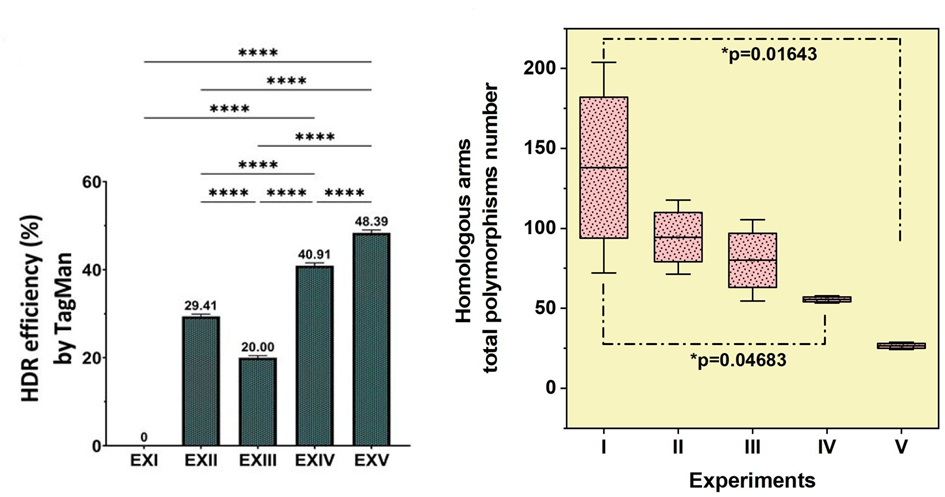
Plant biotechnology has been transformed by CRISPR-Cas genome editing, which has improved crops with previously unheard-of accuracy and efficiency. Base editing, prime editing, and enhanced delivery systems are the most recent CRISPR applications for plant genome editing. Advances like CRISPR-Act3.0 and HDR-mediated precise insertions have expanded plant genetic engineering tools. We discuss successful applications in rice, wheat, maize, and woody species that have resulted in improvements in disease resistance, stress tolerance, and yield. Despite delivery efficiency and off-target effects, CRISPR technology suggests sustainable global agriculture and climate adaptation.
Graphical Abstract
Keywords
Data Availability Statement
Funding
Conflicts of Interest
Ethical Approval and Consent to Participate
References
- Aman, R., Ali, Z., Butt, H., Mahas, A., Aljedaani, F., Khan, M. Z., ... & Mahfouz, M. (2018). RNA virus interference via CRISPR/Cas13a system in plants. Genome Biology, 19(1), 1.
[CrossRef] [Google Scholar] - Anzalone, A. V., Randolph, P. B., Davis, J. R., Sousa, A. A., Koblan, L. W., Levy, J. M., ... & Liu, D. R. (2019). Search-and-replace genome editing without double-strand breaks or donor DNA. Nature, 576(7785), 149–157.
[CrossRef] [Google Scholar] - Azameti, M. K., & Dauda, W. P. (2021). Base editing in plants: Applications, challenges, and future prospects. Frontiers in Plant Science, 12, 664997.
[CrossRef] [Google Scholar] - Chandrasekaran, J., Brumin, M., Wolf, D., Leibman, D., Klap, C., Pearlsman, M., ... & Gal-On, A. (2016). Development of broad virus resistance in non-transgenic cucumber using CRISPR/Cas9 technology. Molecular Plant Pathology, 17(7), 1140–1153.
[CrossRef] [Google Scholar] - Chen, R., Xu, Q., Liu, Y., Zhang, J., Ren, D., Wang, G., & Liu, Y. (2018). Generation of transgene-free maize male sterile lines using the CRISPR/Cas9 system. Frontiers in Plant Science, 9, 1180.
[CrossRef] [Google Scholar] - Ding, Y., Li, H., Chen, L. L., & Xie, K. (2016). Recent advances in genome editing using CRISPR/Cas9. Frontiers in Plant Science, 7, 703.
[CrossRef] [Google Scholar] - Haun, W., Coffman, A., Clasen, B. M., Demorest, Z. L., Lowy, A., Ray, E., ... & Zhang, F. (2014). Improved soybean oil quality by targeted mutagenesis of the fatty acid desaturase 2 gene family. Plant Biotechnology Journal, 12(7), 934–940.
[CrossRef] [Google Scholar] - Howells, R. M., Craze, M., Bowden, S., & Wallington, E. J. (2018). Efficient generation of stable, heritable gene edits in wheat using CRISPR/Cas9. BMC Plant Biology, 18(1), 215.
[CrossRef] [Google Scholar] - Jung, J. H., & Altpeter, F. (2016). TALEN mediated targeted mutagenesis of the caffeic acid O-methyltransferase in highly polyploid sugarcane improves cell wall composition for production of bioethanol. Plant Molecular Biology, 92(1-2), 131–142.
[CrossRef] [Google Scholar] - Kieu, N. P., Lenman, M., Wang, E. S., Petersen, B. L., & Andreasson, E. (2021). Mutations introduced in susceptibility genes through CRISPR/Cas9 genome editing confer increased late blight resistance in potatoes. Scientific Reports, 11(1), 4487.
[CrossRef] [Google Scholar] - Komor, A. C., Kim, Y. B., Packer, M. S., Zuris, J. A., & Liu, D. R. (2016). Programmable editing of a target base in genomic DNA without double-stranded DNA cleavage. Nature, 533(7603), 420–424.
[CrossRef] [Google Scholar] - Li, J. F., Norville, J. E., Aach, J., McCormack, M., Zhang, D., Bush, J., ... & Sheen, J. (2013). Multiplex and homologous recombination–mediated genome editing in Arabidopsis and Nicotiana benthamiana using guide RNA and Cas9. Nature biotechnology, 31(8), 688-691.
[CrossRef] [Google Scholar] - Mehta, D., Stürchler, A., Anjanappa, R. B., Zaidi, S. S. E. A., Hirsch-Hoffmann, M., Gruissem, W., & Vanderschuren, H. (2019). Linking CRISPR-Cas9 interference in cassava to the evolution of editing-resistant geminiviruses. Genome biology, 20(1), 80.
[CrossRef] [Google Scholar] - Molla, K. A., Sretenovic, S., Bansal, K. C., & Qi, Y. (2021). Precise plant genome editing using base editors and prime editors. Nature Plants, 7(9), 1166–1187.
[CrossRef] [Google Scholar] - Movahedi, A., Mu, Z., & Yang, L. (2025). Advancing plant gene activation with CRISPR-Act3.0. Trends in Biotechnology, 43(8), 1827–1830.
[CrossRef] [Google Scholar] - Movahedi, A., Wei, H., Zhou, X., Fountain, J. C., Chen, Z.-H., Mu, Z., ... & Zhuge, Q. (2022). Precise exogenous insertion and sequence replacements in poplar by simultaneous HDR overexpression and NHEJ suppression using CRISPR-Cas9. Horticulture Research, 9, uhac154.
[CrossRef] [Google Scholar] - Nekrasov, V., Wang, C., Win, J., Lanz, C., Weigel, D., & Kamoun, S. (2017). Rapid generation of a transgene-free powdery mildew resistant tomato by genome deletion. Scientific Reports, 7(1), 482.
[CrossRef] [Google Scholar] - Peng, A., Chen, S., Lei, T., Xu, L., He, Y., Wu, L., ... & Zou, X. (2017). Engineering canker-resistant plants through CRISPR/Cas9-targeted editing of the susceptibility gene CsLOB1 promoter in citrus. Plant Biotechnology Journal, 15(12), 1509–1519.
[CrossRef] [Google Scholar] - Ren, C., Liu, X., Zhang, Z., Wang, Y., Duan, W., Li, S., & Liang, Z. (2016). CRISPR/Cas9-mediated efficient targeted mutagenesis in Chardonnay (Vitis vinifera L.). Scientific Reports, 6, 32289.
[CrossRef] [Google Scholar] - Shi, J., Gao, H., Wang, H., Lafitte, H. R., Archibald, R. L., Yang, M., ... & Habben, J. E. (2017). ARGOS8 variants generated by CRISPR-Cas9 improve maize grain yield under field drought stress conditions. Plant Biotechnology Journal, 15(2), 207–216.
[CrossRef] [Google Scholar] - Wang, H., Yang, H., Shivalila, C. S., Dawlaty, M. M., Cheng, A. W., Zhang, F., & Jaenisch, R. (2013). One-step generation of mice carrying mutations in multiple genes by CRISPR/Cas-mediated genome engineering. Cell, 153(4), 910–918.
[CrossRef] [Google Scholar] - Wang, M., Mao, Y., Lu, Y., Tao, X., & Zhu, J. K. (2017). Multiplex gene editing in rice using the CRISPR-Cpf1 system. Molecular Plant, 10(7), 1011–1013.
[CrossRef] [Google Scholar] - Wang, Y., Cheng, X., Shan, Q., Zhang, Y., Liu, J., Gao, C., & Qiu, J. L. (2014). Simultaneous editing of three homoeoalleles in hexaploid bread wheat confers heritable resistance to powdery mildew. Nature Biotechnology, 32(9), 947–951.
[CrossRef] [Google Scholar] - Yu, Q. H., Wang, B., Li, N., Tang, Y., Yang, S., Yang, T., ... & Asmutola, P. (2017). CRISPR/Cas9-induced targeted mutagenesis and gene replacement to generate long-shelf life tomato lines. Scientific Reports, 7(1), 11874.
[CrossRef] [Google Scholar] - Zhang, Y., Malzahn, A. A., Sretenovic, S., & Qi, Y. (2019). The emerging and uncultivated potential of CRISPR technology in plant science. Nature Plants, 5(8), 778–794.
[CrossRef] [Google Scholar] - Zhang, Z., Hua, L., Gupta, A., Tricoli, D., Edwards, K. J., Yang, B., & Li, W. (2019). Development of an Agrobacterium-delivered CRISPR/Cas9 system for wheat genome editing. Plant Biotechnology Journal, 17(8), 1623–1635.
[CrossRef] [Google Scholar] - Zhou, J., Peng, Z., Long, J., Sosso, D., Liu, B., Eom, J.-S., ... & Yang, B. (2015). Gene targeting by the TAL effector PthXo2 reveals cryptic resistance gene for bacterial blight of rice. The Plant Journal, 82(4), 632–643.
[CrossRef] [Google Scholar]
Cited By (1)
-
A. Mubarak Ali, P. Saranraj, S. Kanshiya, P. S. Sruthi, K. Gayathri, M. Manigandan. .
Gene-Edited Plants for Crop Improvement, 2026 .
[CrossRef]
Cite This Article
TY  - JOUR
AU  - Movahedi, Ali
AU  - Yang, Liming
PY  - 2025
DA  - 2025/10/28
TI  - CRISPR-Cas Genome Editing in Plants: Revolutionizing Precision Agriculture and Plant Biotechnology
JO  - Plant Innovation Journal
T2  - Plant Innovation Journal
JF  - Plant Innovation Journal
VL  - 1
IS  - 1
SP  - 1
EP  - 7
DO  - 10.62762/PIJ.2025.263896
UR  - https://www.icck.org/article/abs/PIJ.2025.263896
KW  - CRISPR-Cas9
KW  - plant genome editing
KW  - crop improvement
KW  - precision breeding
AB  - Plant biotechnology has been transformed by CRISPR-Cas genome editing, which has improved crops with previously unheard-of accuracy and efficiency. Base editing, prime editing, and enhanced delivery systems are the most recent CRISPR applications for plant genome editing. Advances like CRISPR-Act3.0 and HDR-mediated precise insertions have expanded plant genetic engineering tools. We discuss successful applications in rice, wheat, maize, and woody species that have resulted in improvements in disease resistance, stress tolerance, and yield. Despite delivery efficiency and off-target effects, CRISPR technology suggests sustainable global agriculture and climate adaptation.
SN  - 3142-7596
PB  - Institute of Central Computation and Knowledge
LA  - English
ER  -
@article{Movahedi2025CRISPRCas,
  author = {Ali Movahedi and Liming Yang},
  title = {CRISPR-Cas Genome Editing in Plants: Revolutionizing Precision Agriculture and Plant Biotechnology},
  journal = {Plant Innovation Journal},
  year = {2025},
  volume = {1},
  number = {1},
  pages = {1-7},
  doi = {10.62762/PIJ.2025.263896},
  url = {https://www.icck.org/article/abs/PIJ.2025.263896},
  abstract = {Plant biotechnology has been transformed by CRISPR-Cas genome editing, which has improved crops with previously unheard-of accuracy and efficiency. Base editing, prime editing, and enhanced delivery systems are the most recent CRISPR applications for plant genome editing. Advances like CRISPR-Act3.0 and HDR-mediated precise insertions have expanded plant genetic engineering tools. We discuss successful applications in rice, wheat, maize, and woody species that have resulted in improvements in disease resistance, stress tolerance, and yield. Despite delivery efficiency and off-target effects, CRISPR technology suggests sustainable global agriculture and climate adaptation.},
  keywords = {CRISPR-Cas9, plant genome editing, crop improvement, precision breeding},
  issn = {3142-7596},
  publisher = {Institute of Central Computation and Knowledge}
}
Publisher's Note
ICCK stays neutral with regard to jurisdictional claims in published maps and institutional affiliations.
Rights and Permissions
 Copyright © 2025 by the Author(s). Published by Institute of Central Computation and Knowledge. This article is an open access article distributed under the terms and conditions of the Creative Commons Attribution (CC BY) license (https://creativecommons.org/licenses/by/4.0/), which permits use, sharing, adaptation, distribution and reproduction in any medium or format, as long as you give appropriate credit to the original author(s) and the source, provide a link to the Creative Commons licence, and indicate if changes were made.

