Volume 1, Issue 2 (In Progress)


In Progress
Citations: Crossref logo 0,   0   |   Viewed: 825, Download: 205

Table of Contents

Open Access | Research Article | 25 July 2026
Variation in Phenolic Acids, Flavonoids Contents, and Antibacterial Activity of Prosopis farcta L. During Phenological Growth Stage‎
Plant Innovation Journal | Volume 1, Issue 2: 88-98, 2026 | DOI: 10.62762/PIJ.2026.589587
Abstract
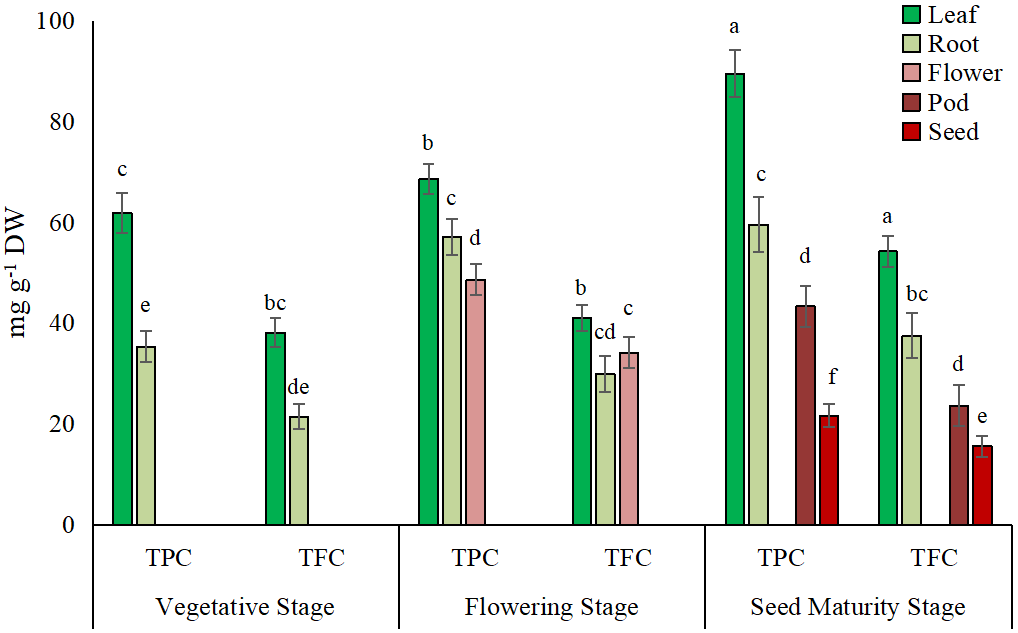
Plants are rich in phenolic chemicals, which have been demonstrated to have antibacterial activities. The current study aims to track changes in phenolic compound accumulation in Prosopis farcta organs (leaf, root, flower, pod, and seed) at various growth stages (vegetative, flowering, and seed maturity) and investigate the antibacterial activity of its extracts. At all growth stages, the highest total amount of phenolic compounds and flavonoids was observed in leaves, followed by roots, with the highest quantities measured at maturity. Flowers had the highest concentrations of several phenolics (caffeic acid, coumaric acid, luteolin, and diosmin). In P. farcta, there was a strong link betwe... More >

Graphical Abstract
Variation in Phenolic Acids, Flavonoids Contents, and Antibacterial Activity of Prosopis farcta L. During Phenological Growth Stage‎
Open Access | Research Article | 05 July 2026
Physiological and Morphological Divergence between Wild Olive (Olea ferruginea) and Grafted Commercial Cultivars: Implications for Drought Resilience and Ecosystem Services in Pakistan
Plant Innovation Journal | Volume 1, Issue 2: 72-87, 2026 | DOI: 10.62762/PIJ.2026.658461
Abstract
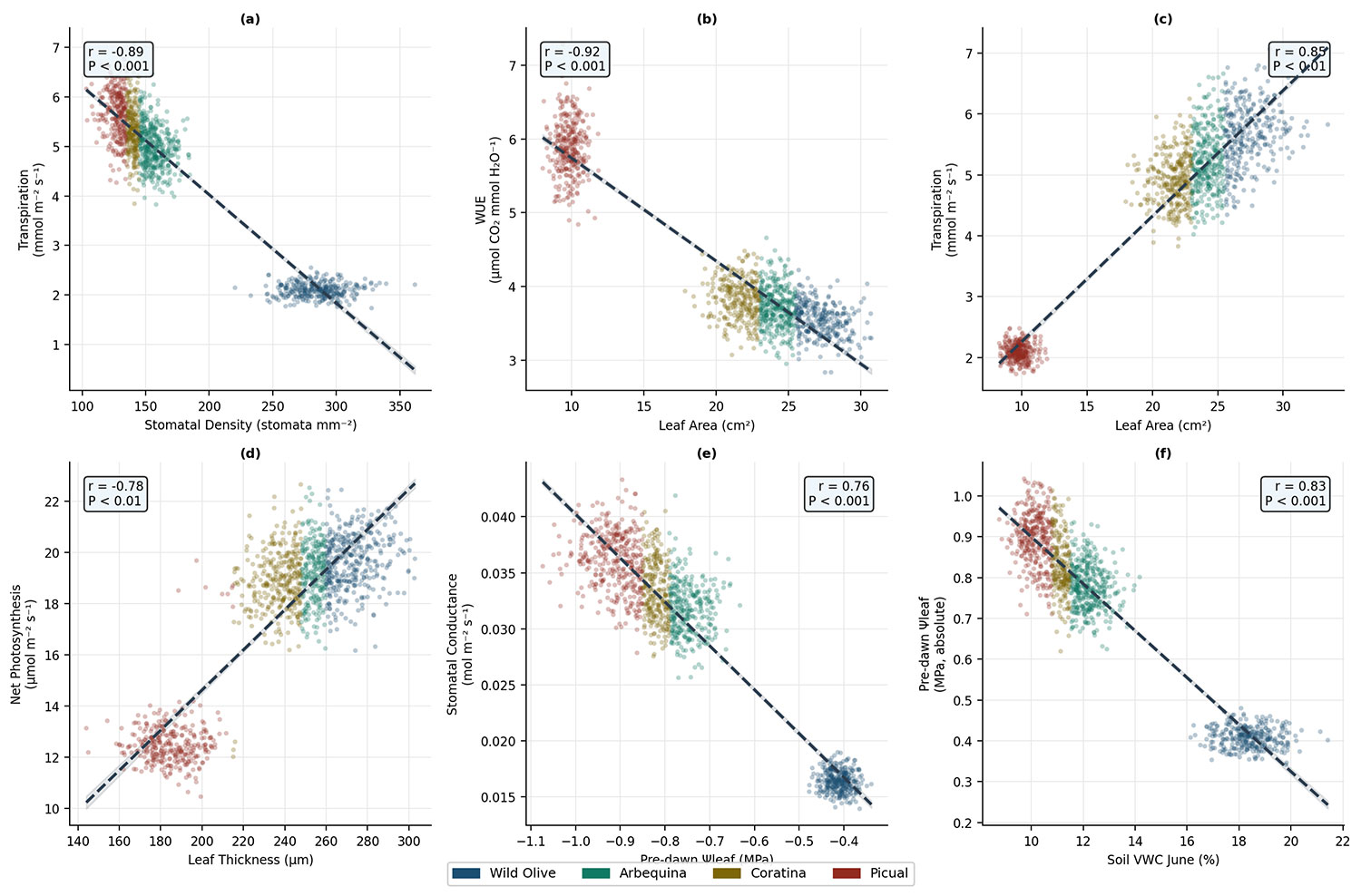
Pakistan's `50 Million Olive Tree Tsunami' targets ~10 million acres of olive expansion by grafting commercial cultivars onto wild Olea ferruginea rootstocks, but physiological/ecological impacts are unknown. This 2023--2025 field study sampled 450 trees across three Balochistan sites (wild: \( n = 150 \); Arbequina, Coratina, Picual: \( n = 100 \) each) with \( n = 1{,}240 \) leaf measurements. Wild leaves were 56--63% smaller (\( 9.8 \) vs. \( 22.4 \)--\( 26.8 \, \text{cm}^2 \); \( P < 0.001 \); \( \eta^2 = 0.926 \)), but had 83--118% higher stomatal density (\( 285 \) vs. \( 131 \)--\( 156 \, \text{mm}^{-2} \); \( \eta^2 = 0.934 \)) and 36--40% smaller stomata. This strategy reduced trans... More >

Graphical Abstract
Physiological and Morphological Divergence between Wild Olive (Olea ferruginea) and Grafted Commercial Cultivars: Implications for Drought Resilience and Ecosystem Services in Pakistan
Open Access | Research Article | 07 June 2026
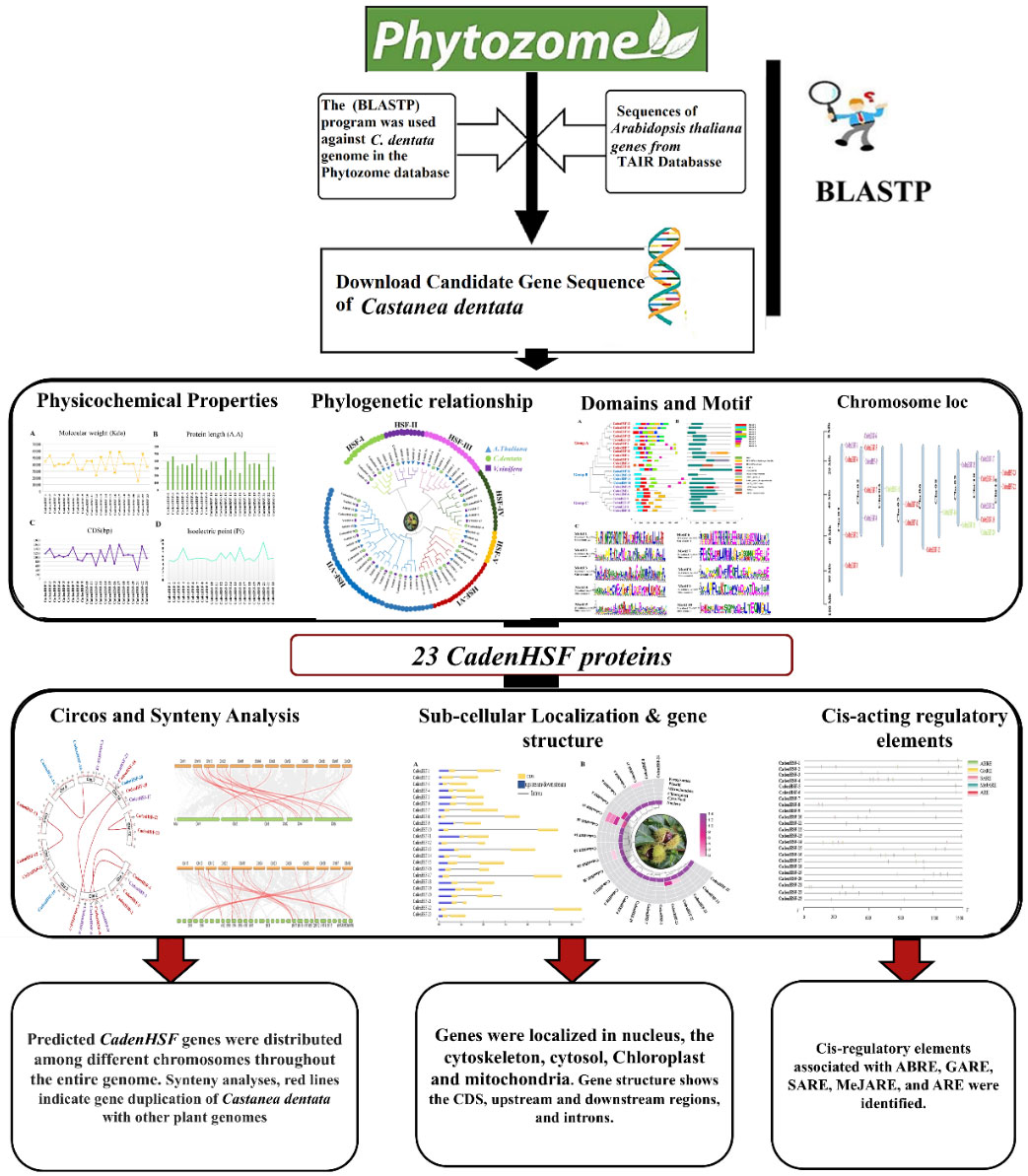
Genome-wide Identification and Evolutionary Characterization of the Heat Shock Transcription Factor (HSF) Gene Family in Castanea Dentata and Their Functional Implications
Plant Innovation Journal | Volume 1, Issue 2: 58-71, 2026 | DOI: 10.62762/PIJ.2026.449234
Abstract
Heat shock transcription factors (HSFs) act as transcriptional regulators that mediate the defense responses against heat stress. Castanea dentata plays a major role in sustaining forest and landscape ecosystems and also exhibits medicinal properties. In this study, we identified 23 CadenHSFs genes from the genome of C. dentata. In silico approaches were employed to analyze gene structure, conserved domains, chromosomal locations, motif organization, comparative evolutionary analyses, synteny analyses, subcellular localization, and cis-regulatory element analysis. Cis-regulatory element analysis revealed that the promoters of CadenHSFs genes are associated with stress responses, light signal... More >

Graphical Abstract
Genome-wide Identification and Evolutionary Characterization of the Heat Shock Transcription Factor (HSF) Gene Family in Castanea Dentata and Their Functional Implications