Volume 3, Issue 1 (In Progress)


In Progress
Citations: 0, 0,  0   |   Viewed: 1757, Download: 459

Table of Contents

Open Access | Research Article | 06 March 2026
Sequential Information Fusion for Resilient Estimation: Dynamic Observation Scheduling against Intermittent DoS Attacks
Chinese Journal of Information Fusion | Volume 3, Issue 1: 46-61, 2026 | DOI: 10.62762/CJIF.2025.922221
Abstract
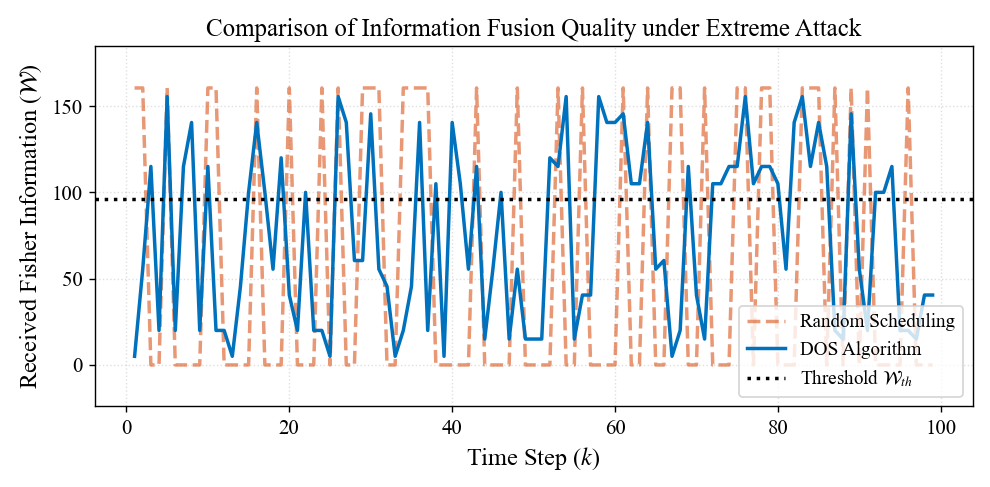
In this paper, we consider the state estimation problem in a cyber-physical system (CPS) against intermittent denial-of-service (DoS) attacks, which are usually difficult to defend due to their concealment and unpredictability. To address this issue, this paper proposes a dynamic observation scheduling method based on Fisher information to achieve efficient and resilient state estimation. Specifically, a sliding window mechanism is first employed to predict the successful transmission probability for each time window. Subsequently, the method constructs a scheduling sequence by aligning these predicted probabilities with the Fisher information of the observation's components. This strategy e... More >

Graphical Abstract

Sequential Information Fusion for Resilient Estimation: Dynamic Observation Scheduling against Intermittent DoS Attacks
Open Access | Research Article | 08 February 2026
Transformer Fusing Chromosome Conformation and Genomic Information for Soybean Trait Prediction
Chinese Journal of Information Fusion | Volume 3, Issue 1: 31-45, 2026 | DOI: 10.62762/CJIF.2025.226807
Abstract
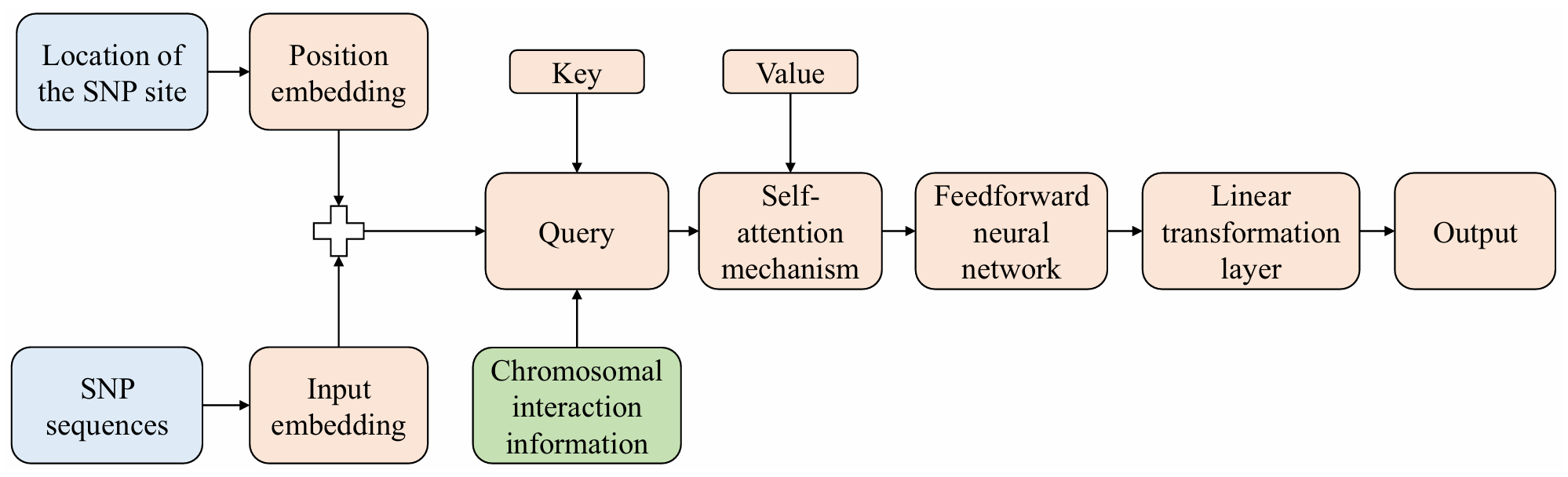
Genomic information is increasingly leveraged for the precise prediction of crop traits, with the adoption of advanced genomic prediction techniques resulting in substantial improvements in both crop yield and quality. However, traditional genomic prediction methods exhibit notable limitations in capturing long-range dependencies and fully utilizing prior information from chromosome structure. In this work, two novel Transformer models fusing chromosome conformation and genomic information have been proposed. One is the chromosomal self-attention fusion model, which captures cross-chromosomal interactions more precisely by introducing chromosomal conformation information into the self-attent... More >

Graphical Abstract

Transformer Fusing Chromosome Conformation and Genomic Information for Soybean Trait Prediction
Open Access | Research Article | 04 January 2026
Radiomic Evaluation Model on the Efficacy of Neoadjuvant Chemotherapy for Non-small Cell Lung Cancer A Multicenter Collaborative Research Based on Privacy Protection
Chinese Journal of Information Fusion | Volume 3, Issue 1: 17-30, 2026 | DOI: 10.62762/CJIF.2025.125241
Abstract
Background: Practical implementation of radiomics research faces significant data accessibility challenges due to privacy and ethical restrictions on multicenter data aggregation. Federated Learning (FL) provides a secure distributed framework that preserves data privacy through cryptographic techniques. Its adoption in radiomics is an emerging trend, enabling collaborative training without sharing sensitive imaging data. However, the inherently Non-IID data distribution across clients in FL often leads to class imbalance, which can substantially degrade global model performance. Purpose: To develop a privacy-preserving, multicenter collaborative CT-radiomics model for evaluating neoadjuvant... More >

Graphical Abstract
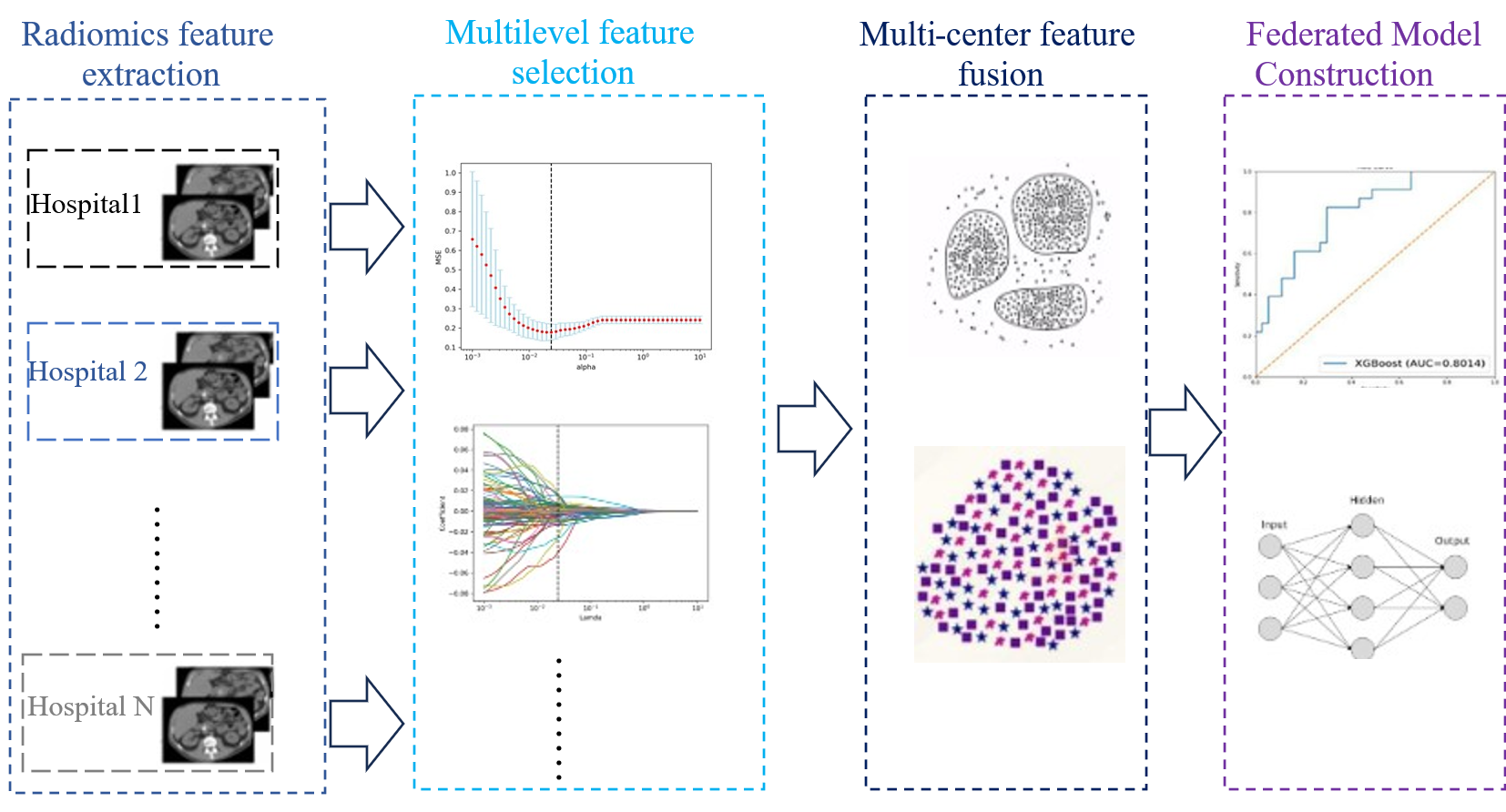
Radiomic Evaluation Model on the Efficacy of Neoadjuvant Chemotherapy for Non-small Cell Lung Cancer A Multicenter Collaborative Research Based on Privacy Protection
Open Access | Research Article | 20 November 2025
A Novel Electromagnetic Spectrum Prediction Model Based upon Multi-Dimensional Feature Fusion
Chinese Journal of Information Fusion | Volume 3, Issue 1: 1-16, 2026 | DOI: 10.62762/CJIF.2025.747641
Abstract
In the era of increasingly scarce spectrum resources, electromagnetic spectrum (EMS) prediction has emerged as a critical means for enhancing spectrum utilization efficiency. However, most of the existing EMS methods primarily exploit low-dimensional features such as temporal, frequency, or spatial characteristics in an individual fashion, which limits their ability to fully capture the inherent complexity of spectrum dynamics. To improve the performance, this paper proposes a novel EMS prediction model, which involving three operations, namely multi-dimensional decoupling, feature fusion and temporal prediction. Firstly, for multi-dimensional decoupling operation, we propose a Multi-dimensi... More >

Graphical Abstract
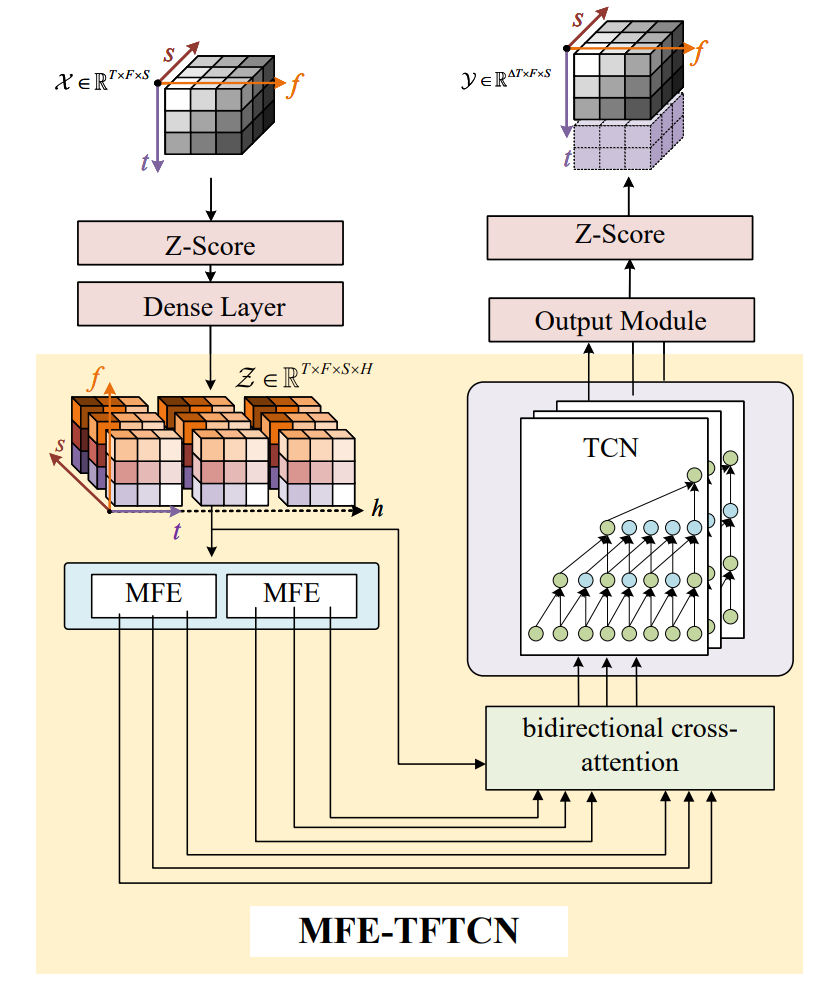
A Novel Electromagnetic Spectrum Prediction Model Based upon Multi-Dimensional Feature Fusion