Volume 2, Issue 1 (In Progress)


In Progress
Citations: 0, 0,  0   |   Viewed: 84, Download: 23

Table of Contents

Open Access | Research Article | 10 March 2026
Research Evolution and Thinking of Traditional Chinese Medicine Vocational Education Based on Knowledge Graph
Frontiers in Educational Innovation and Research | Volume 2, Issue 1: 8-19, 2026 | DOI: 10.62762/FEIR.2025.734785
Abstract
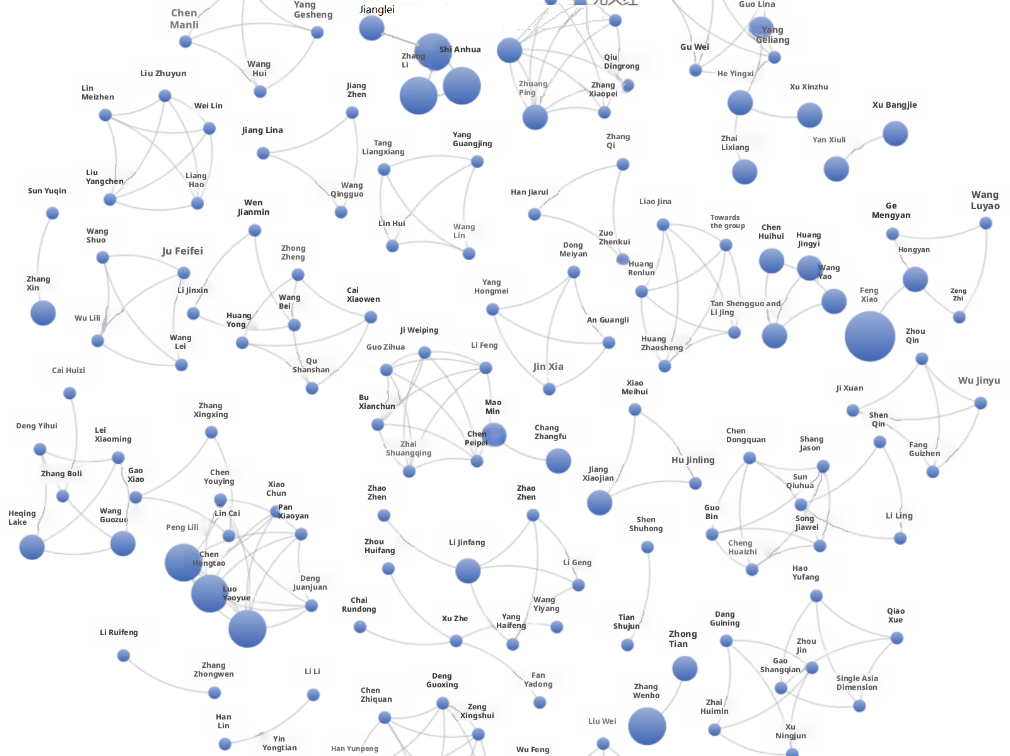
Objective: Through bibliometrics and knowledge graph visualization, this paper systematically analyzes the evolution and trends of traditional Chinese medicine (TCM) vocational education research. Methods: Literature was retrieved from CNKI, Wanfang, and VIP databases from inception to October 2025, using search terms including “traditional Chinese medicine,” “TCM theory,” “vocational education,” “vocational training,” and “skills education.” Visual analysis was performed using VOSviewer and the Bibliometrix R package. Results: Annual publications showed phased growth, peaking at 41 in 2022. Core author analysis identified Feng Xiao and Niu Yanhui as the most prolific aut... More >

Graphical Abstract
Research Evolution and Thinking of Traditional Chinese Medicine Vocational Education Based on Knowledge Graph
Open Access | Research Article | 04 March 2026
A Preliminary Study on the Teaching Reform of Course Case Database
Frontiers in Educational Innovation and Research | Volume 2, Issue 1: 1-7, 2026 | DOI: 10.62762/FEIR.2026.874830
Abstract
To address the core challenges identified in the course "New Technologies in Water Technology and Engineering"—specifically, the abstract nature of theoretical knowledge, limited relevance of existing case studies, and inadequate development of practical competencies—a customized teaching case library was developed. This initiative followed a structured four-stage methodology: knowledge decomposition, case selection, adaptive design, and solution coordination. Encompassing eight major emerging technology domains, the case library was constructed under three guiding principles: strict alignment with curricular objectives, sustained technological focus, and progressive skill advancement. I... More >